17.7 C
London
Sunday, January 18, 2026
secret satire society
Home Blog

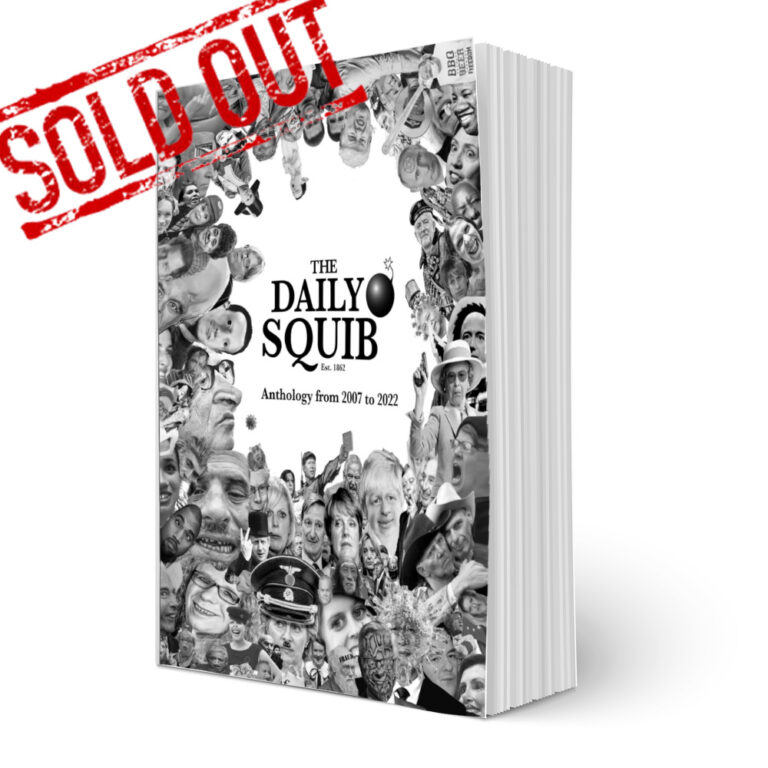
The Daily Squib Sold Out!

No! We did not sell out — we got sold out! The Daily Squib Anthology is sold out in the shops and now out of print. Thanks go to the publisher who had faith in the Daily Squib, a terminal project that is constantly under attack, and to our faithful readers.

We still have a few copies left, signed by the author, and we’re doing a Christmas giveaway via the banner on the front page.

Wishing you all a great festive season. We can barely walk in the Squib office and the parties have only just begun…hic!

squib book out of print

How to Protect Yourself from Authoritarian Online Censorship — And Why a VPN is Your First Line of Defence

In an age where digital platforms have become the new public square, the threat of government-imposed censorship is no longer a hypothetical, it’s a daily reality in many parts of the world. Whether you’re a journalist, activist, whistleblower, or simply a private citizen with an opinion, authoritarian regimes increasingly monitor, filter, and suppress speech that challenges official narratives. You need a VPN right now.

Using VPNs doesn’t necessarily mean that people are bypassing the law. It’s important to note that VPNs can help protect children’s security online, too. They aren’t just used to avoid content blocks.

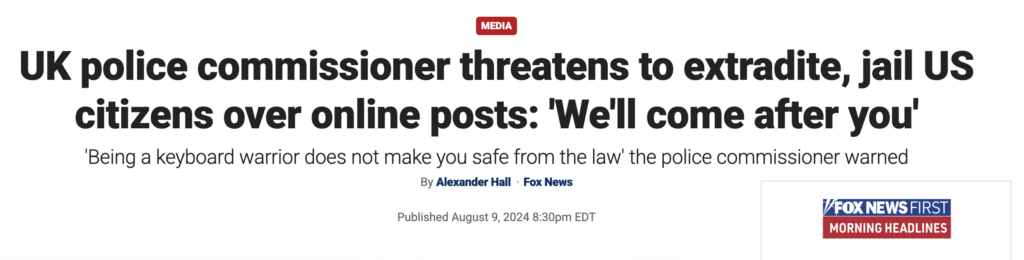
UK police commissioner threatens to extradite jail US citizens over online posts We'll come after you

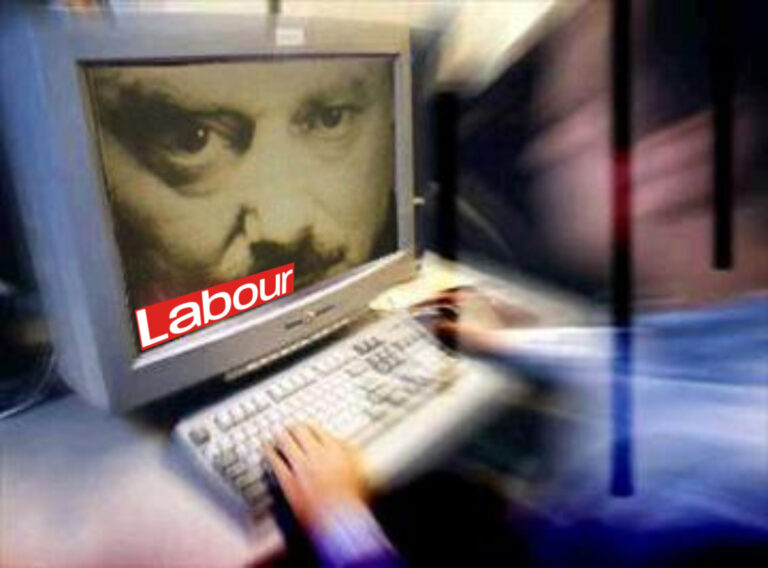
The Labour government has introduced a dystopian method of online surveillance called the “Online Safety Act” which is masked as “protecting young people” on the internet but is actually an excuse to censor, manipulate and monitor the entire population. It is up to parents to protect their children from the dangers of the internet — NOT the government.

Sign up now to save 40% on Proton VPN NOW!

Censorship doesn’t start with tanks or arrests. It begins quietly with invisible firewalls, blocked sites, throttled connections, and silent surveillance. The good news? You’re not powerless. With the right tools and mindset, you can reclaim your digital autonomy.

Here’s how to protect your voice and your access to the open internet, starting with a VPN.

VPN_HSD_950X200


🔒 What is Online Censorship, Really?

Authoritarian online censorship takes many forms:

  • Website blocking (news outlets, social platforms, search engines)
  • Keyword filtering (certain topics can’t be discussed)
  • Connection throttling (deliberate slowing of services like YouTube or WhatsApp)
  • Surveillance and intimidation (especially targeting dissidents or journalists)
  • Platform manipulation (state-sponsored trolling, misinformation, shadowbanning)

The goal is simple: control what you can see, say, and share.


🕵️‍♂️ Why a VPN is Essential

A Virtual Private Network (VPN) encrypts your internet traffic and routes it through a private server in another location, effectively masking your IP address and identity from your government, ISP, or local network administrator.

What this means for you:

  • Access blocked websites: A VPN lets you bypass national firewalls to reach censored platforms and news sources.
  • Avoid surveillance: VPN encryption prevents governments (and hackers) from tracking what you read, watch, or write.
  • Protect anonymity: By masking your location and IP address, a VPN gives you plausible deniability in high-risk environments.

Think of a VPN as a digital invisibility cloak—without it, you’re exposed.


✅ What to Look for in a VPN (Authoritarian-Resistant Features)

Not all VPNs are created equal — especially if you’re facing serious state censorship.

Choose one that offers:

  1. No-logs policy: The provider doesn’t keep records of your activity.
  2. Obfuscated servers: Disguises VPN traffic as normal HTTPS, helping you slip past censorship firewalls (like China’s Great Firewall).
  3. RAM-only servers: These wipe clean after every reboot—leaving no forensic trail.
  4. Kill switch: Automatically severs your internet connection if the VPN drops, preventing leaks.
  5. Multi-hop routing: Routes your traffic through two or more countries for extra protection.

Top VPNs for censorship-heavy environments like ProtonVPN give you all of these attributes to protect your online viewing and bypass the so-called “online safety act”.

Sign up now to save 40% on Proton VPN NOW!

VPN_HSL_950X200


🌐 Additional Tools to Stay Safe

A VPN is powerful, but it’s not a silver bullet. Combine it with these tools for full-spectrum digital security:

  • Tor Browser: Routes your traffic through multiple nodes for anonymous browsing. Ideal for whistleblowing or access to dark web journalism.
  • Signal: End-to-end encrypted messaging, trusted by activists worldwide.
  • Brave or Firefox + Privacy Add-ons: Harden your browser with uBlock Origin, HTTPS Everywhere, and Privacy Badger.
  • Secure email: Use ProtonMail not Gmail or state-linked services.
  • Use pseudonyms: Create separate identities for dissenting or sensitive communications.

⚠️ Important Cautions

  • VPN use may be illegal or monitored in some countries. Always check your local laws and risks.
  • Don’t log into personal accounts (e.g., your real-name Facebook) while using VPNs for anonymous activity.
  • Operational security matters: Avoid patterns, reuse of usernames, or cross-platform leaks.

📢 Why It Matters

Free speech doesn’t survive by accident, it survives because people protect it, exercise it, and fight for it, especially when it’s threatened. Authoritarian censorship thrives in silence. Your ability to speak, connect, and resist online is part of a larger struggle for truth, dignity, and self-determination.

Tools like VPNs aren’t just technical upgrades — they are modern shields for your most fundamental rights.


Your voice is your power. Protect it. Use it. Defend it.

VPN_SVL_300X250

Sign up now to save 40% on Proton VPN NOW!


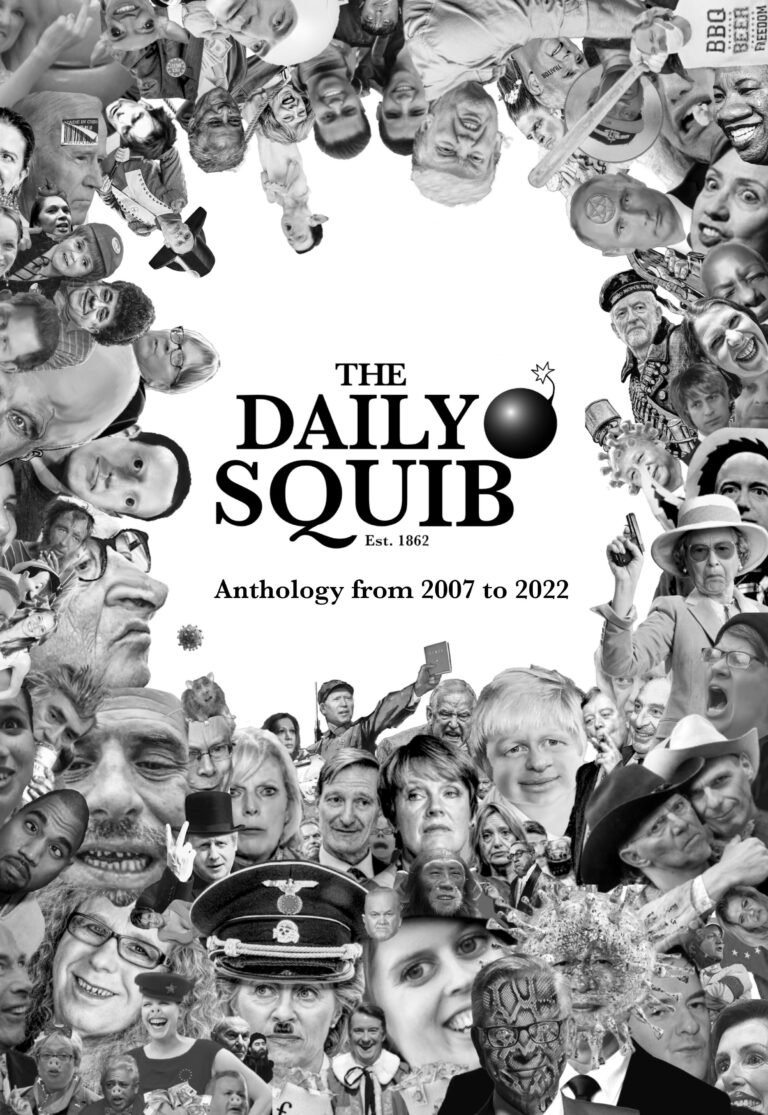
The Daily Squib Anthology Book Now For Sale

As the editor of the Squib, I can proudly announce that The Daily Squib Anthology From 2007 to 2022 is finally for sale.

Since founding the Daily Squib on April 1st 2007, many changes have taken place on the internet and indeed the globe. This is why this carefully curated anthology encapsulates those changes in a satirical manner. Fifteen years of different presidents, prime ministers, wars, peace and a myriad of little societal nuances that made up that period of history.

Looking for that curious unique gift for dad’s Christmas stocking, or something to read while taking the dump of the century in your toilet, the Daily Squib Anthology is the perfect celebration of our times, good and bad?

Come, join the circus, look at the clowns and listen to the troubadours as they usher in a new era for humanity, horrific yet beautiful at the same time, a glowing paradoxical dystopian paradise entrenched in reality show hell and fake celebrity appearances. All manner of fantastic beasts projectile vomiting over everything daringly encapsulating this curious rare book compiled with the indomitable spirit of Juvenalis in mind, but furnished within a modern 21st century outlook.

A bold erupting satisfying fart into the darkest and illuminating facets of humanity’s wonders, The Daily Squib Anthology is now available to buy direct from the publisher or from Amazon, or from any good bookshop.

Get your copy now, the first 150 are signed by the author.

The book will only be released in paperback.

UPDATE 2025: THE DAILY SQUIB ANTHOLOGY IS NOW DOWN TO ONLY A FEW REMAINING COPIES IN PRINT. YOU CAN PURCHASE ONE OF THE LAST SIGNED COPIES HERE.

daily squib book signed

QUANTUM COMPUTERS: Chinese Super Spy Embassy Will Drill into Data Cables

Security analysts have revealed that the Chinese Super Spy Embassy championed by Kier Starmer will be a lucrative spy hub hoovering up as much economic/strategic/military data about the UK as possible, and will be a fundamental threat to Britain.

The British data cables that run close to the plans for the Chinese embassy are direct routes to the City of London financial district where billions of pounds are traded every day, and will also be a goldmine of data beneficial to China regarding multi-million pound deals.

Utilising high-end military quantum computers, that data will be sent to Beijing, where it will be analysed and parsed for future use. The stolen secrets will also be handed over to teams of Chinese hackers, who will be able to pinpoint vulnerabilities to exploit in the security gaps.

CHINESE SUPER SPY EMBASSY2 B-WThe data cable hack will not only spy on the UK but on the entirety of Europe and the United States, along with the Middle East and South East Asia, where financial deals may occur.

Kier Starmer is knowingly endangering Western economies and will permanently damage the United Kingdom with his decision to allow the Chinese Super Spy Embassy to go ahead.

On the roof of the embassy will also be located, masses of cell phone grabbing antennas that will sweep the entirety of London and capture as much data as possible 24 hours a day.

The security services in countries like Britain, generally need to apply to acquire data from a source, which then is okayed or refused by an independent adjudicator, but the Chinese Communist Party is not bound by such rules and regulations. Their modus operandi is to grab, steal, hack as much data from their enemies as possible for the benefit of China, economically and in strategic military terms.

Much like the Chinese social media spy app, TikTok, the massive treasure trove of data which will be acquired by the Chinese Super Spy Embassy will be used to manipulate the West, and benefit the Chinese economy to the detriment of Britain, Europe and the United States.

By agreeing to have this monstrous Chinese spy hub to be built in the centre of London, Kier Starmer is effectively committing High Treason and aiding the enemy.

Socialist Tory Party Has Sacked Conservative MP From Party

Comrades, Kemi Badenoch of the Socialist Tory Party, a wing of the Labour Party with pretty much the exact policies, has sacked a conservative minister, because he was too conservative and was about to defect to brigand Farage and his party.

Comrade Badenoch addressed the remaining Tory Party of five today in a little room at the Tory HQ.

“Comrades, Robert Jenrick has been sacked. He was a proper conservative, you know with conservative ideas. His toxic Tory policies were an affront to the socialist/communist ideological base of the socialist Tory Party and Labour Party. I sincerely hope all five of you are sticking to socialist thoughts and policies that appeal to Labourite Lib Dem/Green Marxist socialism. If I find anyone talking to the brigand, and partisan swine Farage, you too will be thrown into the street with your clothes.”

Huzzah! It’s National Pothole Day!

Your expensive car’s chassis is now bent to shit, and the suspension just fell off. Wahey! Britain’s pothole misery is a joyous thing that only Brits can do with gusto, especially on National Pothole Day.

With a £17 billion black hole to fix all the potholes, let’s face it, our roads are shite.

“I’ve seen better roads in Africa, but of course those are newly built roads courtesy of the Chinese Belt and Road Initiative. Over here in Blighty, the government does not ringfence tax revenue from road tax or fuel duty, whereas European countries like France and Germany do, which is why they have roads that function well, and we don’t.” a notable fellow revealed from a garage somewhere.

Until the government spends money actually taxed for roads on the fucking roads, there will continue to be potholes so deep you can fit a Cranberries lyric in it.

Comrades, we announce a new northern rail link for you

Comrades, we are delighted to announce a new £45 billion rail link from Liverpool to an empty field in the middle of nowhere. Passengers who will take the new train will enjoy a ride for some miles before the train makes a massive U-turn, then carries on for a few miles, then stops in the middle of a field, miles from any shops, roads or anything for that matter apart from maybe a few cows, or if you are lucky a randy aggressive bull.

Upon disembarking from the train, it will go backwards over the U-turn, and make its way back to Liverpool. Rail passengers will be physically forced off the train before it makes its journey back.

Have a nice fucking journey to nowhere in particular.

Global Risks Report 2026: Geopolitical and Economic Risks Rise in New Age of Competition

Published in Geneva on 14 January 2026, the Global Risks Report identifies geo-economic confrontation as the most significant global risk for the year ahead, reflecting a sharp rise in economic rivalry and the growing use of trade, sanctions and industrial policy as instruments of state power.

Read the full report here.

The overall outlook from experts and leaders is markedly pessimistic. Half of respondents expect the global environment over the next two years to be turbulent or stormy, an increase of 14 percentage points on last year. A further 40 per cent anticipate at least an unsettled outlook, while only 9 per cent foresee stability and just 1 per cent expect calm.

Looking further ahead, expectations darken further, with 57 per cent predicting a turbulent or stormy world over the next decade and only 1 per cent believing conditions will be calm.

Børge Brende, President and Chief Executive of the World Economic Forum, said a new competitive order is emerging as major powers seek to secure their spheres of influence.

He argued that although cooperation now looks very different from the past, dialogue and collaboration remain essential, with the Annual Meeting in Davos providing a critical space to assess risks and build bridges between competing interests.

Saadia Zahidi, Managing Director of the Forum, described the report as an early warning system, highlighting how intensifying competition is amplifying risks ranging from geo-economic confrontation to unchecked technological change and rising debt, while stressing that none of these outcomes are inevitable.

The report assesses risks across three horizons: the immediate year of 2026, the following two years, and the next decade.

In the near term, armed conflict, the weaponisation of economic tools and deepening societal fragmentation are increasingly converging. These immediate threats are compounded by longer-term challenges linked to rapid technological acceleration and environmental degradation, creating cascading effects across systems.

overpop1 World Economic Forum summit
Global governments must reduce populations drastically for more sustainable living and an environment with less pollution

Geo-economic warfare

Geo-economic confrontation sits at the top of the near-term risk rankings, with 18 per cent of respondents identifying it as the most likely trigger of a global crisis in 2026. It is also ranked first for severity over the next two years, climbing eight places compared with last year.

Armed conflict

State-based armed conflict ranks second for 2026, though it falls to fifth place in the two-year outlook. The report notes that sustained rivalries and protracted conflicts are undermining supply chains, economic stability and the capacity for international cooperation.

Over the next decade, 68 per cent of respondents expect the world to move towards a multipolar or fragmented order, up four points on last year.

The economy and markets

Economic risks show the sharpest overall rise in the short-term outlook. Both economic downturn and inflation have jumped eight places year-on-year, reaching 11th and 21st respectively, while the risk of an asset bubble bursting has risen seven places to 18th. Combined with mounting debt and geo-economic tensions, these pressures raise the prospect of renewed financial volatility.

Technology

Technology and societal risks also feature prominently. Misinformation and disinformation rank second in the two-year outlook, with cyber insecurity in sixth place.

AI

Concerns around artificial intelligence show the most dramatic shift over time, with adverse outcomes linked to AI rising from 30th place in the two-year horizon to fifth over the next decade, reflecting anxieties about impacts on jobs, social cohesion and security.

Society

Societal polarisation ranks fourth in 2026 and is expected to climb to third by 2028, while inequality sits seventh in both the two- and ten-year outlooks. Inequality is again identified as the most interconnected risk, reinforcing others as social mobility weakens, alongside economic downturn as the second most interconnected concern.

Environment

Environmental risks, while still severe, have slipped down the rankings in the short term as immediate crises take precedence. Extreme weather has fallen from second to fourth place in the two-year outlook, pollution from sixth to ninth, and both biodiversity loss and critical changes to Earth systems have dropped several positions.

All environmental risks have seen a decline in severity scores over the short term, indicating an absolute shift in perceived urgency.

However, over the ten-year horizon they remain the most serious threats, with extreme weather, biodiversity loss and critical changes to Earth systems occupying the top three positions. Three quarters of respondents expect the environmental outlook to be turbulent or stormy, making it the most negative assessment across all risk categories.

vintage border 1

Together, the findings underline a world facing heightened competition, weakened cooperation and overlapping crises, with the report urging leaders to recognise the scale of the dangers while acting collectively to shape a more stable path forward.

The findings align with the Daily Squib’s prior analysis. All of these pessimistic variables, and symptoms, are the result of one thing — overpopulation.

Global Risks Initiative

Four Futures for the New Economy

Four Futures for Jobs in the New Economy

What’s Going On With the Premier League at the Moment?

If the 2025–26 Premier League were a painting, it’d be an abstract scribble drowned in energy drinks, thrilling, chaotic, and occasionally terrifying. You could say the Premier League this season resembles a motorway pile-up viewed from a helicopter piloted by a man who’s just discovered amphetamines and tactical YouTube channels. Well, come on punters, let’s check out some Squib footie analysis that will tickle your fancy like a surprisingly cheap season ticket that does not exist on this timeline, it’s certainly better than a kick in the nads.

At the top (for the moment), Arsenal have been strutting around like a cat that’s accidentally swallowed a canary, leading the early standings with a decent points cushion over Manchester City and the rest of the pack.

Manchester City, seem to be stalking the title race like a lazy serial killer who doesn’t need urgency. They drop points, shrug, then calmly win six on the bounce. Guardiola’s lot remain the bookmakers’ emotional hedge: nobody likes backing them, but nobody dares rule them out.

Liverpool, last season’s winners, are just about in the mix but look more “wobbly bicycle” than “champions on the march,” while the chasing pack scrapes and claws for every inch of turf.

Wolverhampton Wanderers, by contrast, are farther from safety than your mate’s phone battery in a festival queue.

Aston Villa and Newcastle nip at European places like ambitious upstarts who’ve read the manual and are following it just well enough to be annoying.

When it comes to goals, the Golden Boot battle is ticking with theatrical gusto. Erling Haaland leads the scoring charts on 20 strikes, tearing into nets like a bag of salt and vinegar crisps and a very expensive pint in a plastic cup at half-time, while Brentford’s Igor Thiago lurks on 16 and a gaggle of others like Antoine Semenyo, Dominic Calvert-Lewin and Hugo Ekitiké chase hard. The scoring isn’t restricted to the usual suspects funnily enough this season looks strangely egalitarian in front of goal.

On the defensive front, clean sheets and disciplined play are as precious as a bank holiday lie-in. Arsenal have been fairly well-behaved in yellow card terms with around 29, but may that count look graceless compared with the daredevil cohorts of Brighton and Tottenham, both tied on 55 bookings, cheeky monkeys.

Chelsea’s sunny terrace has turned stormy, with the Blues racking up nearly 49 yellows and climbing five reds already, a disciplinary record that makes their midfield look like a particularly heated pub quiz. Overall, Chelsea still appear to be running a long-term sociology experiment involving money, youth, and consequences.

Red cards add their own melodrama too. Chelsea’s early-season dismissals, such as Marc Cucurella’s afternoon outing stretched their reputation for ill-discipline, a trend pundits agree is less than desirable if you want to field the same XI week on week.

All told, it’s a Premier League season of goals, grit, teeth-gnashing and tactical head-scratching, with plenty still to play for. The title race is alive, the mid-table remains cluttered, and the bottom end could yet produce relegation theatrics worthy of a West End slot. Buckle up it’s going to take more than statistics to make sense of this one.

In short, the title is there for the taking, which means nobody will take it cleanly. Expect drama, bad VAR calls, late winners, public meltdowns, and one club convincing itself that finishing fifth is actually progress. This is the Premier League: no survivors, only stories.

“I cannot wait for our communist partners China to build a spy network embassy!”

I have wonderful news, comrades! I am so happy! The Communist Chinese Party will be building a massive spy network embassy in the Soviet British capital so they can spy on the American communications more closely, and other evil democratic nations like Australia, India, Japan and everyone else.

The delightful Chinese ambassador is thrilled too, he said this to me today: “你是个白痴”. I do not know what he said, but I suspect many people agree with the sentiment.

china pla war room 1

Within this remarkable embassy, China will build a hidden chamber alongside Britain’s most sensitive communication cables as part of a network of 208 secret rooms beneath its new London “super-embassy”.

I have okayed the detailed plans for the underground spy complex below the vast diplomatic site in central London, which Beijing has been trying to keep from public disclosure. I am so excited, maybe our own Stasi officers and agents can learn more from our Chinese comrades on how to spy on the Yankee capitalist democratic barbarians and our own proles.

Give it a few years, and we’ll all probably be speaking Chinese anyway …

Here’s to Comrade Xi Jinping and his lovely new spy embassy — love ya, Comrade Starmer.

china pla war room 2

“Comrades! We need to talk about that small thing called – conscription!”

As your Supreme Comrade in Chief, I, Kier Starmer, need to take your sons and daughters and put them on the battlefield. Yes, we must bring back compulsory conscription for the military forces of the People’s Republic of Soviet Britain. As you already know, the Big State Labour Party is transitioning the PRSB from socialism to communism. We are following the path of Lenin who said: “The goal of socialism is communism” and he was right about that. This is a delicate task because our party is under threat from an archaic and defunct concept of democracy, and elections. To circumnavigate this issue, and the threat of the brigand Nigel Farage, it is necessary to start an overt war with Russia. At least this way, comrades, there will be no further elections for the foreseeable future, and by then (if this country still exists) the country will have integrated into full communism. It will be good news for me and the Big State Labour machine, and not so good news for your families, as I will send your kids into the battlefields of Ukraine with little or no equipment. The army needs another 29 billion soviet pounds, but that money is earmarked for Big State civil service pensions, salaries, welfare recipients, illegal and legal migrants, train drivers salaries, fat cat council bosses, the NHS black hole, union staff, and my various dachas across the globe.

Thank you for your understanding in this urgent matter, and enjoy your kids whilst you still have them. Of course, no sons and daughters of Labour commissars will be ordered to fight in the muddy fields, but we sincerely thank you for your sacrifice. Have a nice fucking day.

Cyber-Enabled Fraud Now One of the Most Pervasive Global Threats, Says New Report

The latest World Economic Forum report, the Global Cybersecurity Outlook 2026, developed in collaboration with Accenture, reveals that cyber-enabled fraud has emerged as one of the most pervasive global threats, surpassing ransomware as the primary concern among CEOs.

According to the findings, 87% of respondents reported an increase in AI-related vulnerabilities during 2025, while 94% of leaders anticipate that artificial intelligence will represent the most significant force shaping cybersecurity throughout 2026.

Geopolitical volatility is eroding confidence in national cyber preparedness, with 31% of those surveyed expressing low confidence in their country’s capacity to respond effectively to attacks on critical infrastructure.

The report, marking the fifth edition in the series, traces the progression from pandemic-driven digital acceleration to the current highly complex threat environment.

It emphasises that artificial intelligence, geopolitical fragmentation, and the rapid rise in cyber-enabled fraud are transforming the global cyber risk landscape at an extraordinary pace.

Cyber-enabled fraud now stands out as a widespread challenge with profound societal and economic consequences, affecting diverse regions and sectors alike.

IT Security 2As cyber risks grow increasingly interconnected and impactful, cyber-enabled fraud has become one of the most disruptive elements in the digital economy, eroding trust, distorting markets, and directly affecting individuals’ lives, noted Jeremy Jurgens, Managing Director at the World Economic Forum. He stressed that the task for leaders extends beyond merely recognising the threat to taking collective action to anticipate and counter it, building robust cyber resilience through cooperation among governments, businesses, and technology providers to safeguard trust and stability in an AI-driven world.

A clear divide persists between highly resilient organisations and those lagging behind, exacerbated by skills shortages and limited resources, which heighten systemic risks.

Global supply chains, increasingly interconnected yet opaque, have turned third-party dependencies into major vulnerabilities, whilst inequalities in cyber capabilities continue to widen, leaving smaller organisations and emerging economies particularly vulnerable.

Paolo Dal Cin, global lead for Accenture Cybersecurity, highlighted that the weaponisation of AI, ongoing geopolitical tensions, and systemic supply chain risks are overturning conventional cyber defences. He urged C-suite leaders to shift towards advanced, agentic AI-powered cyber defence strategies to counter AI-driven adversaries, noting that genuine business resilience arises from integrating cyber strategy, operational continuity, and foundational trust to enable rapid adaptation to evolving threats.

Key factors defining the 2026 cyber landscape include the unprecedented acceleration of cybersecurity risks by AI, with AI-related vulnerabilities rising faster than any other category in 2025. Leading worries for the coming year encompass data leaks tied to generative AI (34%) and advancing adversarial techniques (29%).

Meanwhile, organisations have nearly doubled the proportion assessing AI security, rising from 37% to 64%.

Geopolitics continues to reshape the threat environment, as 64% of organisations now incorporate geopolitically motivated attacks into their risk strategies, and 91% of the largest enterprises have adjusted their cybersecurity approaches in response.

Confidence in national incident management varies considerably, with regional differences starkly apparent.

Cyber-enabled fraud has attained pervasive status globally, with a notable 73% of respondents either personally affected or knowing someone who was in 2025, prompting CEOs to prioritise fraud and phishing above ransomware.

Supply chains represent a persistent systemic weakness, with 65% of large companies identifying third-party and supply chain risks as their greatest barrier to cyber resilience, an increase from 54% the previous year.

Concentration risks are intensifying, as demonstrated by incidents at major cloud and internet service providers that can cascade into broad downstream disruptions.

Cyber inequity is growing across regions and sectors, with smaller organisations twice as likely to report inadequate resilience compared to larger firms. Skills shortages are especially acute in areas such as Latin America and the Caribbean (65%) and sub-Saharan Africa (63%), where many organisations struggle to meet their security objectives.

Josephine Teo, Minister for Digital Development and Information and Minister-in-Charge of Cybersecurity & Smart Nation Group in Singapore, observed that developments in AI are reshaping cybersecurity profoundly. When used responsibly, these technologies can bolster defences through faster detection and response, yet misuse or inadequate governance can introduce severe risks, including data leaks and sophisticated attacks. She called for forward-thinking, collaborative governmental approaches to ensure AI strengthens cyber resilience while mitigating cross-border risks.

The report urges leaders across all sectors to move beyond isolated measures, advocating for collective efforts to elevate baseline security through intelligence sharing, standard alignment, and investment in capabilities that enable every organisation to thrive in a more secure digital environment.

The insights are drawn from a survey of 804 global business leaders across 92 countries, including 105 CEOs, 316 chief information security officers, and 123 other C-suite executives such as chief technology officers and chief risk officers.

Comrades, all bikinis will now be banned!

Comrades of the People’s Banana Republic of Soviet Britain, bikinis are evil. We have already criminalised anyone who uses the despicable Elon Musk X platform. Thanks to our stance, billions and billions of funding by tech companies have fled the PRSB. We banned Elon Musk’s evil social media platform because they aided free speech and democracy in countries that were undemocratic or under some kind of dictatorship, thus posing a substantial threat to our own PRSB. Elon Musk’s X platform aided rebels of regimes like Iran and China, but because of our actions, those messages of democratic defiance will be banned in the PRSB. Comrades, we are using children and women for our agenda, even though Grok AI does not do images of children, but this is how we are justifying the ban anyway.

Soviet Woke Puritanism

Ultra-sensitive woke soviet censorship bowdlerised expurgation comstockery

Even though all other platforms like Google, and many other AI companies are doing the same thing, we are concentrating solely on X because Elon Musk threatens the transition that is currently ongoing from hard socialism to full communism in the PRSB, and platforms like Google are suitably woke and aligned with the communist Marxist soviet ideology — Musk is not.

WE WILL NOT TOLERATE SUCH ABHORRENT BEHAVIOUR IN THE PEOPLE’S REPUBLIC OF SOVIET BRITAIN – ANYONE FOUND WEARING A BIKINI WILL BE SENT TO A GULAG, LIQUIDATED AND MADE INTO NET ZERO JUICE.

NEXT WEEK WE ARE BANNING BELLY DANCING – ANOTHER DISGUSTING ACT.

GROK AI DOES NOT DO DEEPFAKES OF CHILDREN