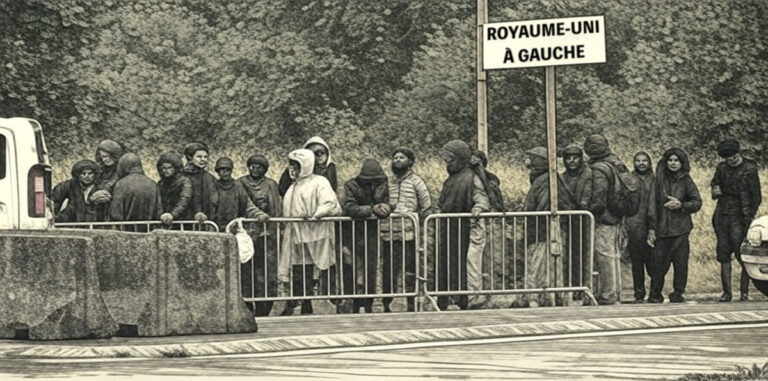
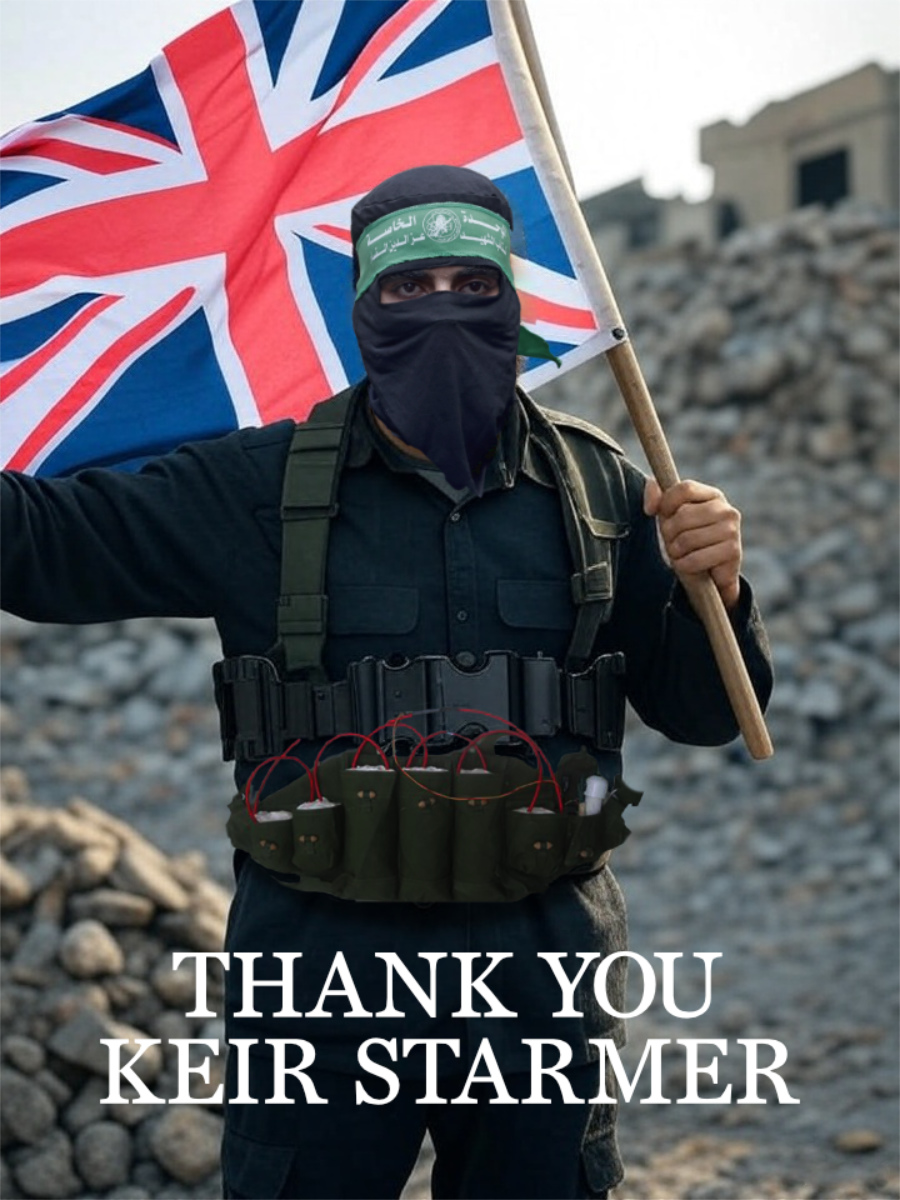
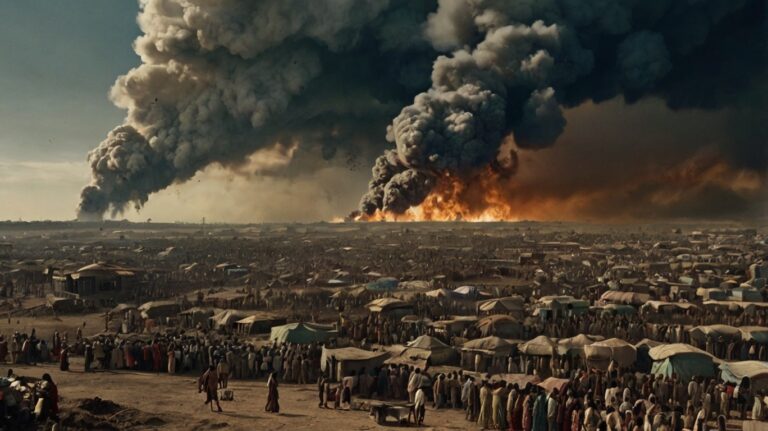
The dystopian UK Digital ID Cards scheme that is touted to stop illegal immigration will not stop one single boat full of fake asylum seekers, and will increase trade for the human traffickers. The cards are meant to be given only to British citizens but will be given to illegal immigrants.
As soon as they are towed onto British shores by the coastguard, the small boats from France will empty their cargo of illegal immigrants, and as they are bussed to their 4-star hotels they will all be given digital ID cards as they are fast-tracked to become UK citizens.
The Labour plan is to absorb illegal immigrants as quickly as possible to UK citizenship so they can vote for Labour in elections.
The digital ID cards will also be easily hackable, especially by Chinese and Russian hackers backed by their governments.
The digital ID card implementation is nothing to do with illegal immigration.
In recent years, there has been a noticeable shift in how people access and manage healthcare. Traditional models, often rigid and expensive, are giving way to more adaptable and patient-centred approaches. Flexible care solutions are increasingly being seen as essential, allowing people to balance their health needs with financial and lifestyle considerations.
Adapting to Modern Lifestyles
Today’s society demands convenience and personalisation. With busy schedules, remote working, and greater health awareness, people are looking for care options that fit seamlessly into their daily lives. Flexible solutions, such as home care services, telehealth appointments, and modular treatment plans, make it possible for patients to receive care without major disruptions. These options empower individuals to take control of their health while accommodating work, family, and personal commitments.
Financial Accessibility and Peace of Mind
Cost is a major barrier to accessing healthcare, particularly for treatments like dental care, physiotherapy, or elective procedures. Flexible payment options are transforming this landscape, allowing patients to manage their expenses in a structured and affordable way. For example, a dental care monthly payment plan enables patients to receive necessary treatments without the stress of large, upfront costs. Such solutions not only improve access but also reduce anxiety associated with healthcare expenses, making it easier for individuals to prioritise their wellbeing.
The Role of Technology in Flexibility
Technological advancements are central to the rise of flexible care. Telemedicine platforms, mobile health apps, and online appointment systems allow patients to access professional advice, track health metrics, and book services from the comfort of their homes. Remote monitoring devices enable continuous oversight for chronic conditions, reducing the need for frequent in-person visits. Technology also facilitates better communication between patients and providers, ensuring that care plans are customised and adaptable over time.
Responding to an Ageing Population
The ageing population presents both challenges and opportunities for healthcare providers. Older adults often require a mix of medical, social, and personal care, which can’t always be efficiently delivered through conventional settings. Flexible care models – such as home-based support, community health programmes, and personalised care schedules – address these needs more effectively. By prioritising convenience, accessibility, and patient autonomy, these models help improve quality of life for seniors and reduce strain on hospitals and care facilities.
Meeting Consumer Expectations
Modern healthcare consumers expect services that are responsive, transparent, and tailored to their individual needs. Flexible care solutions respond directly to these expectations. From subscription-based healthcare plans to pay-as-you-go services, the emphasis is on choice and adaptability. Providers who embrace these approaches are more likely to build long-term trust and loyalty among their patients.
The Future of Flexible Care
As demand continues to rise, flexible care solutions will become a standard feature of healthcare delivery. Providers will need to innovate constantly, integrating technology, financial flexibility, and patient-centred approaches. Whether through monthly payment plans, home-based services, or telehealth options, the trend towards adaptable care is set to grow. This evolution ensures that healthcare becomes more inclusive, accessible, and attuned to the diverse needs of modern society.
Flexible care solutions are no longer a niche offering – they’re shaping the future of healthcare. By prioritising convenience, affordability, and personalisation, they create a system that meets the demands of today’s patients while preparing for the needs of tomorrow.
Trump’s speech at the United Nations certainly ruffled a few feathers, but despite that, more than 1,000 leaders from business, government, international organisations, academia and civil society convened in New York for the World Economic Forum Summit Sustainable Development Impact Meetings 2025 (SDIM25), held alongside the UN General Assembly and Global Goals Week.
The five-day summit focused on inclusive economic growth, climate resilience, humanitarian crises, and frontier technology at a time when only 17% of the UN’s Sustainable Development Goals are on track to be achieved by 2030.
“There is no prosperity without humanity,” said André Hoffmann, Vice-Chairman of Roche Holding and Interim Co-Chair of the Forum.
“We need to develop systems that foster both business and societal well-being, alongside ecological health.”
Humanitarian Strains and Geopolitical Risks
Speakers warned of widening humanitarian emergencies.
Amy Pope, Director-General of the International Organisation for Migration, said:
“Humanitarian funding across the world is frankly running out… the need is at a scale we’ve never seen before.”
Geopolitical volatility was a recurring theme.
Victoria Nuland of Columbia University cautioned that the world could “walk back to the brink of great power conflict” without stronger cooperation.
Saleh Ahmed Jama, Somalia’s Deputy Prime Minister, underscored faith in multilateralism, while Sheba Crocker, WEF Managing Director, urged leaders to move beyond “short-term fixes.”
Economy in Transition
The World Economic Forum summit released its Chief Economists’ Outlook, warning that 72% of surveyed economists expect global growth to weaken in 2026. Long-term disruptions in trade, technology, resources and institutions signal what Managing Director Saadia Zahidi called “the contours of a new economic environment.”
Other key findings:
Global debt is projected to hit 100% of GDP by 2030.
Growth prospects are diverging sharply between advanced economies and emerging markets.
New WEF research stressed urgent investment in digital skills, labour pathways in Kenya’s digital economy, and reskilling talent worldwide.
Climate, Energy and Health
Sessions highlighted the economic toll of environmental pressures.
A WEF white paper estimated that climate-related health impacts could cost $1.5 trillion in productivity losses by 2050.
Another report showed how carbon capture and utilisation could turn CO₂ into sustainable fuels and building materials.
The Alliance of CEO Climate Leaders pressed governments to “remove roadblocks” to building a climate-smart economy.
Jesper Brodin, CEO of IKEA’s parent company INGKA Group, argued that “climate smart means resource and cost smart.”
Global initiatives announced included:
Uplink’s Nature Returns Challenge and Inclusive Plastic Action Programme, awarding innovators fighting ecosystem degradation and plastic waste.
The Dominican Republic’s National Plastic Action Roadmap, targeting 53% circularity and 87% pollution reduction by 2040.
New commitments from the Water Futures Community ahead of the 2026 UN Water Conference.
Technology and Innovation
As AI and automation advance, the Forum spotlighted responsible adoption. Twelve new facilities joined the Global Lighthouse Network, now numbering over 200, recognised for using digital technologies to boost productivity and sustainability.
The launch of the Human-Machine Collaboration initiative outlined frameworks for worker empowerment in AI-enabled industries.
Joel Kaplan of Meta said open-sourcing models like Llama creates opportunities for smaller developers, while Sebastian Niles of Salesforce warned that restrictive regulation could limit citizens’ access to emerging technologies.
A Call for Resilience
The meetings carried a sober message: the promise of growth and sustainability is under pressure from conflict, climate change, and systemic economic shifts.
“Ten years on from the adoption of the SDGs, the vision of improving lives everywhere in harmony with our planet is under unprecedented strain,” said Sebastian Buckup, WEF Managing Director.
Yet, leaders at the World Economic Forum summit expressed optimism that collective action could drive breakthroughs. As Ebru Özdemir, Chair of Limak Holding, put it:
“The last 100 metres of the race are the decisive ones — and all of us must be ready to run.”
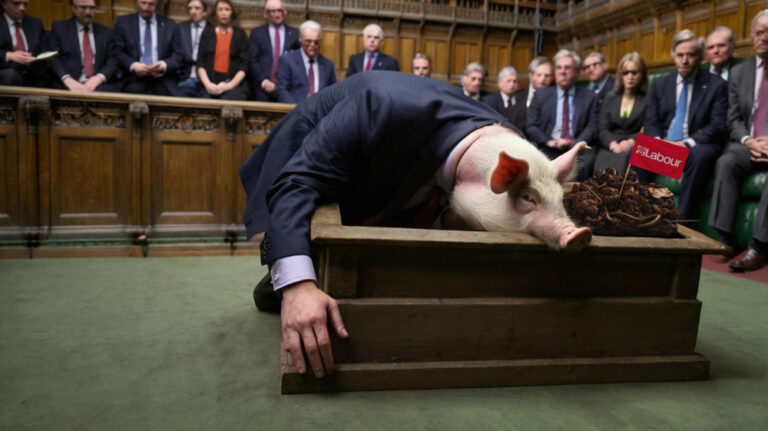
“The £750,000? Where is it? What happened to it? It was absorbed. Er…it vanished! It disappeared into various bank accounts, allegedly,” the dodgy right-hand man of equally sleazy, Kier Starmer, who makes the lawyer in Carlito’s Way look like an angel in comparison, told the BBC, yesterday. The Labour sleaze machine is in serious flow right now once again.
McSwindle’s word is law. One top party figure revealed: ‘Every Labour minister defers to him. He is Keir Starmer’s friend, confidant and enforcer. There is no higher praise at HQ than: “Morgan loves it.”’
There is some trouble on the Labour ship, though. The aides are jumping overboard faster than Justin Bieber getting rear ended by some lunatic music biz “mogul”. Dodgy deputy PM, Angela Rayner also recently took one for the team after being caught dodging a property tax payment to the HMRC.
Now there’s talk of criminal investigations by the police. Shit just hit the fan. Labour sleaze story after Labour sleaze story headlines are appearing in the media. It’s time for some serious bullshit excuses to materialise on why the missing £750,000 Labour donation was not declared.
Maybe Morgan McSwindle needs to take a little fuckin’ holiday or something …
It was Tony Blair during his awful reign as prime minister who first opened the floodgates of mass immigration from the poorest regions of Eastern Europe and Asia. Today, after decades of mass unfettered mass immigration from both Labour and the Conservatives, it is Tony Blair’s idea to capitalise on the crisis created by successive governments by implementing a tyrannical digital ID cards system on all British citizens that is being implemented by Starmer’s Labour nightmare regime of horror.
The government could have stopped mass immigration if they really wanted to, but they chose to let it get worse, and worse until there was the inevitable public outcry. The consequence of the public outcry is the imposition of the tyrannical digital ID cards scheme.
First you create the problem, then you exploit that problem to take away the little freedoms we have left. Yes, it does resemble the Hegelian dialectic, because it is exactly that.
This Labour government that is currently in play is not only eviscerating Britain’s wealth, but it is taking away the last remaining remnants of freedom British citizens have.
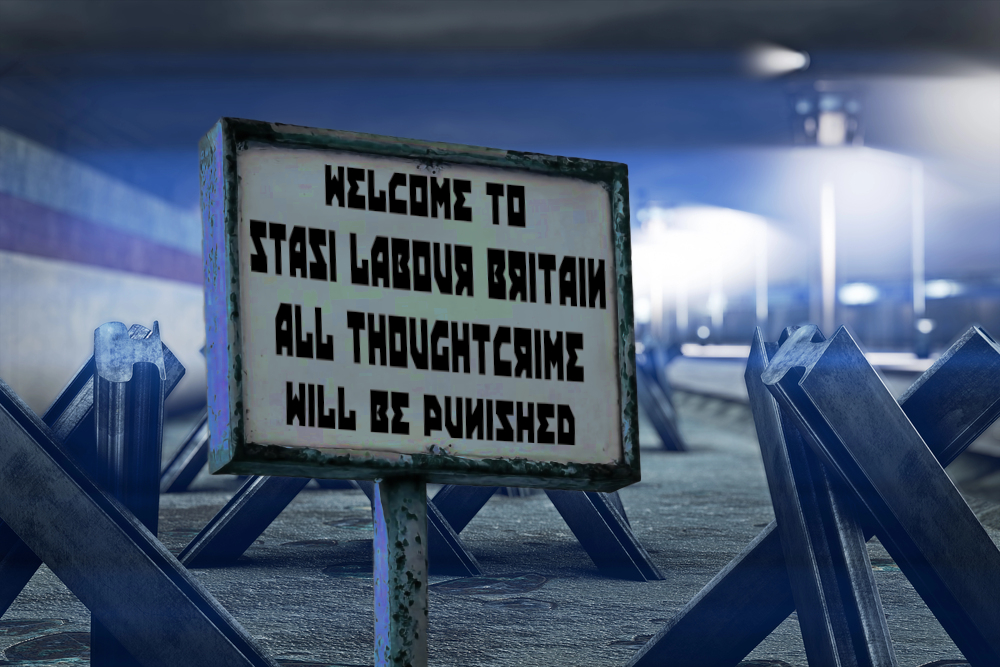
Stasi Britain, a version of East Germany during the soviet era as HMRC takes money directly from people’s bank accounts without their permission; where cameras are everywhere, where companies like Apple are forced to take down their security measures so that the government can access people’s private files, where people are arrested and jailed for social media posts, where adults are treated like children with the online safety act. The icing on the cake — checkpoints everywhere requiring people’s digital ID be displayed.
“Your papers are not in order!”
Soviet Britain is now a reality, and we are now living in a tyranny where our rights and freedoms have been unceremoniously removed.
Once freedom is gone — it’s gone, and the funny thing is — no one stood up, no one said a word, because at the end of the day — no one fucking cared enough.
Go back to watching Strictly Come Dancing, you fucking cowardly scum.
Thank you very much. Very much appreciate it. And I don’t mind making this speech without a teleprompter because the teleprompter is not working. [Laughter] I feel very happy to be up here with you nevertheless. And that way, you speak more from the heart. I can only say that whoever’s operating this teleprompter is in big trouble. [Laughter]
Hello, Madam First Lady. Thank you very much for being here, and Madam President, Mr. Secretary General, First Lady of the United States, distinguished delegates, ambassadors and world leaders. Six years have passed since I last stood in this grand hall and addressed a world that was prosperous and at peace in my first term. Since that day, the guns of war have shattered the peace I forged on two continents.
An era of calm and stability gave way to one of the great crisises of our time. And here in the United States, four years of weakness, lawlessness and radicalism under the last administration delivered our nation into a repeated set of disasters. One year ago our country was in deep trouble. But today, just eight months into my administration, we are the hottest country anywhere in the world.
And there is no other country even close. America is blessed with the strongest economy, the strongest borders, the strongest military, the strongest friendships and the strongest spirit of any nation on the face of the earth. This is indeed the Golden Age of America. We are rapidly reversing the economic calamity that we inherited from the previous administration, including ruinous price increases and record setting inflation, inflation like we’ve never had before.
Under my leadership, energy costs are down, gasoline prices are down, grocery prices are down, mortgage rates are down and inflation has been defeated. The only thing that’s up is the stock market, which just hit a record high. In fact, it’s hit a record high 48 times in the last short period of time. Growth is surging.
Manufacturing is booming. The stock market, as I said, is doing better than it’s ever done, and all of you in this room benefit by that, almost everybody. And importantly, worker’s wages are rising at the fastest pace in more than 60 years. And that’s what it’s all about, isn’t it? In four years of President Biden, we had less than $1 trillion of new investment into the United States.
In just eight months since I took office, we have secured commitments and money already paid for $17 trillion. Think of it. Four years less than a trillion, eight months much more than $17 trillion is being invested in the United States. And it’s now pouring in from all parts of the world. We’ve implemented the largest tax cuts in American history and the largest regulation cuts in American history, making this once and again the best country on earth to do business.
And many of the people in this room are investing in America, and it’s turned out to be an awfully good investment during this eight month period. In my first term, I built the greatest economy in the history of the world. We had the best economy ever, history of the world. And I’m doing the same thing again, but this time it’s actually much bigger and even better.
The numbers far surpass my record setting first term. On our southern border, we have successfully repelled a colossal invasion. And for the last four months, and that’s four months in a row, the number of illegal aliens admitted and entering our country has been zero. Hard to believe because, if you look back just a year ago, it was millions and millions of people pouring in from all over the world, from prisons, from mental institutions, drug dealers.
All over the world they came. They just poured into our country with the ridiculous open border policy of the Biden administration. Our message is very simple. If you come illegally into the United States, you’re going to jail or you’re going back to where you came from, or perhaps even further than that.
You know what that means. I want to thank the country of El Salvador for the successful and professional job they’ve done in receiving and jailing so many criminals that entered our country. And it was under the previous administration that the number became record setting, and they’re all being taken out.
We have no choice. And other countries have no choice because other countries are in the exact same situation with immigration. It’s destroying your country, and you have to do something about it. On the world stage, America is respected again like it has never been respected before. You think about two years ago, three years ago, four years ago or one year ago, we were a laughingstock all over the world.
At the NATO summit in June, virtually all NATO members formally committed to increase defense spending at my request from 2 percent to 5 percent of GDP, making our alliance far stronger and more powerful than it was ever before. In May, I traveled to the Middle East to visit my friends and rebuild our partnerships in the gulf, and those valued relationships with Saudi Arabia, Qatar and the UAE and other countries are now, I believe, closer than ever before.
My administration has negotiated one historic trade deal after another, including with the United Kingdom, the European Union, Japan, South Korea, Vietnam, Indonesia, the Philippines, Malaysia and many, many others. Likewise, in a period of just seven months, I have ended seven unending wars. They said they were unendable.
You’re never going to get them solved. Some were going for 31 years, two of them, 31 — think of it, 31 years. One was 36 years. One was 28 years. I ended seven wars. And in all cases, they were raging with countless thousands of people being killed. This includes Cambodia and Thailand, Kosovo and Serbia, the Congo and Rwanda, a vicious, violent war that was, Pakistan and India, Israel and Iran, Egypt and Ethiopia, and Armenia and Azerbaijan.
It included all of them. No president or prime minister, and for that matter no other country, has ever done anything close to that, and I did it in just seven months. It’s never happened before. There’s never been anything like that. Very honored to have done it. It’s too bad that I had to do these things instead of the United Nations doing them.
And sadly, in all cases, the United Nations did not even try to help in any of them. I ended seven wars, dealt with the leaders of each and every one of these countries, and never even received a phone call from the United Nations offering to help in finalizing the deal. All I got from the United Nations was an escalator that, on the way up, stopped right in the middle.
If the first lady wasn’t in great shape, she would have fallen, but she’s in great shape. We’re both in good shape. We both stood. [Laughter] And then a teleprompter that didn’t work. This is — these are the two things I got from the United Nations, a bad escalator and a bad teleprompter. Thank you very much.
And by the way, it’s working now. Just went on. Thank you. I think I should just do it the other way. It’s easier. Thank you very much. I didn’t think of it at the time because I was too busy working to save millions of lives, that is the saving and stopping of these wars, but later I realized that the United Nations wasn’t there for us. They weren’t there.
I thought of it really after the fact, not during, not during these negotiations, which were not easy. That being the case, what is the purpose of the United Nations? The UN has such tremendous potential. I’ve always said it. It has such tremendous, tremendous potential, but it’s not even coming close to living up to that potential for the most part.
At least for now, all they seem to do is write a really strongly worded letter and then never follow that letter up. It’s empty words, and empty words don’t solve war. The only thing that solves war and wars is action. Now after ending all these wars and also earlier negotiating the Abraham Accords — which is a very big thing for which our country received no credit, never receives credit.
Everyone says that I should get the Nobel Peace Prize for each one of these achievements. But for me, the real prize will be the sons and daughters who live to grow up with their mothers and fathers because millions of people are no longer being killed in endless and unglorious [sic] wars. What I care about is not winning prizes, it’s saving lives.
We saved millions and millions of lives with the seven wars, and we have others that we’re working on, and you know that. Many years ago, a very successful real estate developer in New York known as Donald J Trump, I bid on the renovation and rebuilding of this very United Nations complex. I remember it so well.
I said at the time that I would do it for $500 million, rebuilding everything. It would be beautiful. I used to talk about I’m going to give you marble floors. They’re going to give you terrazzo. I’m going to give you the best of everything. You’re going to have mahogany walls. They’re going to give you plastic.
But they decided to go in another direction, which was much more expensive at the time, and which actually produced a far inferior product. And I realized that they did not know what they were doing when it came to construction and that their building concepts were so wrong and the product that they were proposing to build was so bad and so costly.
It was going to cost them a fortune, and I said, and wait till you see the overruns. Well, I turned out to be right. They had massive cost overruns and spent between $2 billion and $4 billion on the building and did not even get the marble floors that I promised them. You walk on terrazzo. Do you notice that?
As far as I’m concerned, frankly, looking at the building and getting stuck on the escalator, they still haven’t finished the job. They still haven’t finished. That was years ago. The project was so corrupt that Congress actually asked me to testify before them on the tremendous waste of money because it turned out that they had no idea what it was, but they knew it was anywhere between $2 billion and $4 billion as opposed to $500 million with a guarantee.
But they had no idea. And I said it cost much more than $5 billion. Unfortunately, many things in the United Nations are happening just like that, but on an even much bigger scale, much, much bigger. Very sad to see. Whether the UN can manage to play a productive role, I’ve come here today to offer the hand of American leadership and friendship to any nation in this assembly that is willing to join us in forging a safer, more prosperous world.
And it’s a world that we’ll be much happier with. A dramatically better future is within our reach. But to get there, we must reject the failed approaches of the past and work together to confront some of the greatest threats in history. There is no more serious danger to our planet today than the most powerful and destructive weapons ever devised by man, of which the United States, as you know, has many.
Just as I did in my first term, I’ve made containing these threats a top priority, starting with the nation of Iran. My position is very simple. The world’s number one sponsor of terror can never be allowed to possess the most dangerous weapon. That’s why shortly after taking office, I sent the so-called Supreme Leader, a letter making a generous offer.
I extended a pledge of full cooperation in exchange for a suspension of Iran’s nuclear program. The regime’s answer was to continue their constant threats to their neighbors and US interests throughout the region and some great countries that are right nearby. Today, many of Iran’s former military commanders, in fact, I can say almost all of them, are no longer with us. They’re dead.
And three months ago in Operation Midnight Hammer, seven American B-2 bombers dropped the 14 30,000-pound each bombs on Iran’s key nuclear facility, totally obliterating everything. No other country on earth could have done what we did. No other country has the equipment to do what we did. We have the greatest weapons on Earth.
We hate to use them, but we did something that for 22 years people wanted to do. With Iran’s nuclear enrichment capacity demolished, I immediately brokered an end to the 12-day war, as it’s called, between Israel and Iran, with both sides agreeing to fight, fight no longer. As everyone knows, I have also been deeply engaged in seeking a cease fire in Gaza.
Have to get that done, have to get it done. Unfortunately, Hamas has repeatedly rejected reasonable offers to make peace. We can’t forget October 7th, can we? Now as if to encourage continued conflict, some of this body is seeking to unilaterally recognize a Palestinian state. The rewards would be too great for Hamas terrorists for their atrocities.
This would be a reward for these horrible atrocities. Including October 7th, even while they refused to release the hostages or accept a cease fire instead of giving to Hamas and giving so much because they’ve taken so much. They have taken so much. This could have been solved so long ago. But instead of giving in to Hamas ransom demands, those who want peace should be united with one message, release the hostages now.
Just release the hostages now. Thank you. Thank you. As we have got to come together, and we will come together, going to get it done, we have to stop the war in Gaza immediately. We have to stop it. We have to get it done. We have to negotiate, immediately have to negotiate peace. We’ve got to get the hostages back.
We want all 20 back. We don’t want two and four. As you know, I got, along with Steve Witkoff and others that helped us, Marco Rubio, we got most of them back. We were involved in all of them. But I always said the last 20 are going to be the hardest and that’s exactly what happened. We have to get them back now.
We don’t want to get back two then another two and then one and then three, have this process. No, we want them all back and we want the actually 38 dead bodies back too. Those parents came to me and they want them back and they want them back very quickly and very badly. As though they were alive, they want them.
They want them every bit as much as if their son or daughter were alive. I’ve also been working relentlessly, stopping the killing in Ukraine. I thought that would be — of the seven wars that I stopped, I thought that would be the easiest because of my relationship with President Putin, which had always been a good one.
I thought that was going to be the easiest one, but you know, in war, you never know what’s going to happen. There are always lots of surprises, both good and bad. Everyone thought Russia would win this war in three days, but it didn’t work out that way. It was supposed to be just a quick little skirmish.
It’s not making Russia look good. It’s making them look bad. No matter what happens from here on out, this was something that should have taken a matter of days, certainly less than a week, and they’ve been fighting for three and a half years and killing anywhere from 5,000 to 7,000 young soldiers mostly, mostly soldiers, on both sides.
Every single week, from 5,000 to 7,000 dead Young people and some in cities much smaller numbers where rockets are shot, where drones are dropped. This war would never have started if I were president. This was a war that should have never happened. It shows you what leadership is, what bad leadership can do to a country.
Look what happened to the United States and look where we are right now in just a short period of time. The only question now is how many more lives will be needlessly lost on both sides? China and India are the primary funders of the ongoing war by continuing to purchase Russian oil, but inexcusably, even NATO countries have not cut off much Russian energy and Russian energy products.
Which as you know, I found out about two weeks ago and I wasn’t happy. Think of it, they’re funding the war against themselves. Who the hell ever heard of that one? In the event that Russia is not ready to make a deal, to end the war then, the United States is fully prepared to impose a very strong round of tariffs, which would stop the bloodshed, I believe very quickly.
But for those tariffs to be effective, European nations, all of you are gathered here right now, would have to join us in adopting the exact same measures. I mean, you’re much closer to this. See, we have an ocean in between. You’re right there, and Europe has to step it up. They can’t be doing what they’re doing.
They’re buying oil and gas from Russia while they’re fighting Russia. It’s embarrassing to them and it was very embarrassing to them when I found out about it. I can tell you that. They have to immediately cease all energy purchases from Russia, otherwise we’re all wasting a lot of time. So I’m ready to discuss this.
We’re going to discuss it today with the European nations, all gathered here. I’m sure they’re thrilled to hear me speak about it, but that’s the way it is. I like to speak my mind and speak the truth. As we seek to reduce the threat of dangerous weapons today, I’m also calling on every nation to join us in ending the development of biological weapons once and for all.
And biological is terrible, and nuclear is even beyond. And we include nuclear in that. We want to have a cessation of the development of nuclear weapons. We know and I know, and I get to view it all the time, sir, would you like to see? And I look at weapons that are so powerful that we just can’t ever use them.
If we ever use them, the world literally might come to an end. There would be no United Nations to be talking about. There would be no nothing. Just a few years ago, reckless experiments overseas gave us a devastating global pandemic, yet despite that worldwide catastrophe, many countries are continuing extremely risky research into bioweapons and manmade pathogens.
This is unbelievably dangerous. To prevent potential disasters, I’m announcing today that my administration will lead a international effort to enforce biological weapons convention, which is going to be meeting with the top leaders of the world by pioneering an AI verification system that everyone can trust.
Hopefully, the UN can play a constructive role, and it will also go — be one of the early projects under AI. Let’s see how good it is, because a lot of people are saying it could be one of the great things ever but it also can be dangerous. But it could be put to tremendous use and tremendous good, and this would be an example of that.
Not only is the UN not solving the problems it should, too often it’s actually creating new problems for us to solve. The best example is the number one political issue of our time, the crisis of uncontrolled migration. It’s uncontrolled. Your countries are being ruined. The United Nations is funding an assault on Western countries and their borders.
In 2024, the UN budgeted $372 million in cash assistance to support an estimated 624,000 migrants journeying into the United States. Think of that. The UN is supporting people that are illegally coming into the United States, and then we have to get them out. The UN also provided food, shelter, transportation and debit cards to illegal aliens, can you believe that, on the way to infiltrate our southern border.
Millions of people came through that southern border. Just a year ago, millions and millions of people were pouring in, 25 million altogether over the four years of the incompetent Biden administration, and now we have it stopped, totally stopped. In fact, they’re not even coming anymore because they know they can’t get through.
But what took place is totally unacceptable. The UN is supposed to stop invasions, not create them and not finance them. In the United States, we reject the idea that mass numbers of people from foreign lands can be permitted to travel halfway around the world, trample our borders, violate our sovereignty, cause unmitigated crime and deplete our social safety net.
We have reasserted that America belongs to the American people. And I encourage all countries to take their own stand in defense of their citizens as well. You have to do that because I see it. I’m not mentioning names. I see it, and I can call every single one of them out. You’re destroying your countries.
They’re being destroyed. Europe is in serious trouble. They’ve been invaded by a force of illegal aliens like nobody’s ever seen before. Illegal aliens are pouring into Europe. Nobody has ever — and nobody’s doing anything to change it, to get them out. It’s not sustainable. And because they choose to be politically correct, they’re doing just absolutely nothing about it. And I have to say — I look at London, where you have a terrible mayor, terrible, terrible mayor, and it’s been so changed, so changed.
Now they want to go to Sharia law. But you’re in a different country. You can’t do that. Both the immigration and their suicidal energy ideas will be the death of Western Europe if something is not done immediately. They cannot — this cannot be sustained. What makes the world so beautiful is that each country is unique.
But to stay this way, every sovereign nation must have the right to control their own borders. You have the right to control your borders as we do now, and to limit the sheer numbers of migrants entering their countries and paid for by the people of that nation that were there and that built that particular nation at the time.
They put their blood, sweat, tears, money into that country, and now they’re being ruined. Proud nations must be allowed to protect their communities and prevent their societies from being overwhelmed by people they have never seen before, with different customs, religions, with different everything. Where migrants have violated laws, lodge false asylum claims or claimed refugee status for illegitimate reasons, they should in many cases be immediately sent home.
And while we will always have a big heart for places and people that are struggling and truly compassionate answers will be given, we have to solve the problem and we have to solve it in their countries, not create new problems in our countries. And we are very helpful to a lot of countries that are just not able to send their people anymore.
They used to send them to us in caravans of 25, 30,000 people each, these massive caravans of people pouring into our country totally unchecked and unvetted, but not anymore. According to the Council of Europe in 2024, almost 50 percent of inmates in German prisons were foreign nationals or migrants. In Austria, the number was 53 percent of the people in prisons were from places that weren’t from where they are now.
In Greece, the number was 54 percent. And in Switzerland, beautiful Switzerland, 72 percent of the people in prisons are from outside of Switzerland. When your prisons are filled with so-called asylum seekers who repaid kindness, and that’s what they did, they repaid kindness with crime, it’s time to end the failed experiment of open borders.
You have to end it now, it’s the — I can tell you. I’m really good at this stuff. Your countries are going to hell. In America, we’ve taken bold action to swiftly shut down uncontrolled migration. Once we started detaining and deporting everyone who crossed the border and removing illegal aliens from the United States, they simply stopped coming.
They’re not coming anymore. We’re getting a lot of credit, but they’re not coming anymore. This was a humanitarian act for all involved because, on the trips up, thousands of people a week were dying. Women were being raped. Nobody’s ever seen anything like it, raped, horribly beaten, raped on the trip up, the journey up. It was a long — it was a long walk.
It was a long arduous journey, indeed. And it was also a historic victory against human trafficking throughout the region. What we did was a victory, and we saved so many lives of people that wouldn’t make the journey. That journey was loaded up with death, loaded up with death, dead bodies all along, all along the roads of jungles.
To get up, they go through jungles. They go through areas so hot you couldn’t breathe. They were dying of suffocation, areas so hot that you couldn’t breathe, dead bodies all over. By them not coming, we’re saving tremendous numbers of lives. My people have done a fantastic job in doing what they did, and the American public agrees with it. I mean, I was very proud to see this morning I have the highest poll numbers I’ve ever had.
Part of it is because of what we’ve done on the border. I guess the other part is what we’ve done on the economy. Joe Biden’s policies empowered murderous gangs, human smugglers, child traffickers, drug cartels and prisoners, prisoners from all over the world. The previous administration also lost nearly 300,000 children.
Think of that. They lost more than 300,000 children, little children who were trafficked into the United States on the Biden watch, many of whom have been raped, exploited and abused, and sold, sold. Nobody talks about that. The fake news doesn’t write about it. With many others, young children who are missing or dead.
And we found a lot of these children and we’re sending them back, and we’ve been sending them back to their parents. They said nobody knows who they are. They said where do you come from, and they’ll give us a country. And we’ll find out and we’ll figure it out and we’ll bring them back to their homes. And the mother and father rush to the door and they’re — tears in their eyes.
They can’t believe that they’re seeing their son or daughter — their little son or daughter again. We’ve done almost 30,000 of them so far. Any system that results in the mass trafficking of children is inherently evil, yet that is exactly what the globalist migration agenda has done and it’s what it’s all about.
In America, those days, as you know, are over. The Trump administration is working, and we are continuing to work, to track down the villains that are causing this problem, and also, as I said, to get back the 30,000 we’ve already returned. Now I think we’re going to have another. We’re going to find a lot.
You’re not going to find all of them, 300 — more than 300,000. They’re lost or they’re dead. They’re lost or they’re dead because of the animals that did this. To protect our citizens, I’ve also designated multiple savage drug cartels as — and you see this and you see it happening right before your eyes.
Let’s put it this way, people don’t like taking big loads of drugs in boats anymore. There aren’t too many boats that are traveling on the seas by Venezuela. They tend not to want to travel very quickly anymore. And we’ve virtually stopped drugs coming into our country by sea. We call them the water drugs.
They kill hundreds of thousands of people. I’ve also designated multiple savage drug cartels as foreign terrorist organizations, along with two bloodthirsty transnational gangs, probably the worst gangs anywhere in the world, MS13 and Tren de Aragua. Tren de Aragua is from Venezuela, by the way. Such organizations torture, maim, mutilate and murder with impunity.
They’re the enemies of all humanity. And for this reason, we’ve recently begun using the supreme power of the United States military to destroy Venezuelan terrorists and trafficking networks led by Nicolas Maduro. To every terrorist thug smuggling poisonous drugs into the United States of America, please be warned that we will blow you out of existence.
That’s what we’re doing. We have no choice, can’t let it happen. They’re destroying — I believe we lost 300,000 people last year to drugs, 300,000, fentanyl and other drugs. Each boat that we sink carries drugs that would kill more than 25,000 Americans. We will not let that happen. Energy is another area where the United States is now thriving like never before.
We’re getting rid of the falsely named renewables. By the way, they’re a joke. They don’t work. They’re too expensive. They’re not strong enough to fire up the plants that you need to make your country great. The wind doesn’t blow. Those windmills are so pathetic and so bad, so expensive to operate, and they have to be rebuilt all the time and they start to rust and rot, the most expensive energy ever conceived.
And it’s actually, energy, you’re supposed to make money with energy, not lose money. You lose money, the governments have to subsidize. You can’t put them out without massive subsidies. And most of them are built in China and I give China a lot of credit. They build them, but they have very few wind farms.
So why is it that they build them and they send them all over the world, but they barely use them? You know what they use, coal. They use gas. They use almost anything, but they don’t like wind, but they sure as hell like selling the windmills. Europe, on the other hand, has a long way to go with many countries being on the brink of destruction because of the green energy agenda.
And I give a lot of credit to Germany. Germany was being led down a very sick path, both on immigration, by the way, and on energy. They were going green and they were going bankrupt. And the new leadership came in and they went back to where they were, with fossil fuel and with nuclear, which is good. It’s now safe and you can do it properly, but they went back to where they were and they opened up a lot of different plants, energy plants, energy producing plants and they’re doing well.
I give Germany a lot of credit for that. They’ve said this is a disaster, what’s happening. They were going all green. All green is all bankrupt. That’s what it represents. And it’s not politically correct. I’ll be very badly criticized for saying it, but I’m here to tell the truth. I don’t care. It doesn’t matter to me. I’m in New York City.
I’m feeling a lot safer. Crime, we’re getting crime down. And by the way, speaking of crime, Washington D.C., Washington, D.C. was the crime capital of America. Now it’s a totally — after 12 days, it’s a totally safe city. Everyone’s going out to dinner. They’re going out to restaurants. Your wife can walk down the middle of the street with or without you.
Nothing’s going to happen. My people have done a fantastic job. And yes, I called in the National Guard and the National Guard took care of business and they weren’t politically correct, but they took care of business. We got 1,700 career criminals out, brought them back to where they came from, the countries where they came from or put them in jails.
Washington D.C. is now a totally safe city again and I welcome you to come. In fact, we’ll have dinner together at a local restaurant and we’ll be able to walk. We don’t have to go buy an armor-plated vehicle. We’ll walk right over there from the White House. They’ve given up their powerful edge, a lot of the countries that we’re talking about in oil and gas, such as essentially closing the great North Sea oil.
Oh, the North Sea. I know it’s so well. Aberdeen was the oil capital of Europe and there’s tremendous oil that hasn’t been found in the North Sea, tremendous oil. And I was with the Prime Minister who I respect and like a lot. And I said, you’re sitting with the greatest asset. They essentially closed it by making it so highly taxed that no developer, no oil company can go there.
They have tremendous oil left and more importantly, they have tremendous oil that hasn’t even been found yet. And what a tremendous asset for the United Kingdom. And I hope the Prime Minister is listening because I told it to him three days in a row. That’s all he heard, North Sea oil, North Sea — because I want to see them do well.
I want to stop seeing them ruining that beautiful Scottish and English countryside with windmills and massive solar panels that go seven miles by seven miles, taking away farmland. But we’re not letting this happen in America. In 1982, the executive director of the United Nations Environmental Program predicted that by the year 2000, climate change would cause a global catastrophe.
He said that it will be irreversible as any nuclear holocaust would be. This is what they said at the United Nations. What happened? Here we are. Another U.N. official stated in 1989 that within a decade, entire nations could be wiped off the map by global warming, not happening. You know, it used to be global cooling.
If you look back years ago in the 1920s and the 1930s, they said global cooling will kill the world. We have to do something. Then they said global warming will kill the world, but then it started getting cooler. So now they just call it climate change because that way they can’t miss. Climate change because if it goes higher or lower, whatever the hell happens, there’s climate change.
It’s the greatest con job ever perpetrated on the world, in my opinion. Climate change, no matter what happens, you’re involved in that. No more global warming, no more global cooling. All of these predictions made by the United Nations and many others, often for bad reasons, were wrong. They were made by stupid people that have cost their country’s fortunes and given those same countries no chance for success.
If you don’t get away from this green scam, your country is going to fail and I’m really good at predicting things. You know, they actually said during the campaign, they had a hat, the best-selling hat, Trump was right about everything. And I don’t say that in a braggadocious way, but it’s true. I’ve been right about everything.
And I’m telling you, that if you don’t get away from the green energy scam, your country is going to fail. And if you don’t stop, people that you’ve never seen before that you have nothing in common with, your country is going to fail. I’m the president of the United States, but I worry about Europe. I love Europe.
I love the people of Europe. And I hate to see it being devastated by energy and immigration. This double-tailed monster destroys everything in its wake and they cannot let that happen any longer. You’re doing it because you want to be nice, you want to be politically correct and you’re destroying your heritage.
They must take control strongly and immediately of the unmitigated immigration disaster and the fake energy catastrophe before it’s too late. The carbon footprint is a hoax made up by people with evil intentions and they’re heading down a path of total destruction. You know the carbon footprint, it was a big, big thing a few years ago.
I remember hearing about the carbon footprint and then President Obama would get into Air Force One, a massive Boeing 747, and not a new one, an old one, with old engines that spew everything into the atmosphere. He’d talk about the carbon footprint, we must do — then he’d get in and he’d fly from Washington to Hawaii to play a round of golf.
And then he’d get back onto that big, beautiful plane and then fly back, and then talk about, again, global warming and the carbon footprint. It’s a con job. At extreme cost and expense, Europe reduced its carbon footprint by 37 percent. Think of that. Congratulations, Europe. Great job. You cost yourself a lot of jobs, a lot of factories closed, but you reduced the carbon footprint by 37 percent.
However, for all of that sacrifice and much more, it’s been totally wiped out and then some by a global increase of 54 percent, much of it coming from China and other countries that are thriving around China, which now produces more CO2 than all the other developed nations in the world. So, all of these countries are working so hard on the carbon footprint — which is nonsense, by the way.
It’s nonsense. You know, it’s interesting. In the United States we have still radicalized environmentalists, and they want the factories to stop. Everything should stop. No more cows. We don’t want cows anymore. I guess they want to kill all the cows. They want to do things that are just unbelievable, and you have it too.
But, you know, we have a border, strong, and we have a shape. And that shape doesn’t just go straight up. That shape is amorphous when it comes to the atmosphere. And if we had the most clean air — and I think we do. We have very clean air. We have the cleanest air we’ve had in many, many years. But the problem is that other countries like China, which has air that’s a little bit rough, it blows.
And no matter what you’re doing down here, the air up here tends to get very dirty because it comes in from other countries, where their air isn’t so clean. And the environmentalists refuse to acknowledge that. Same thing with garbage. In Asia, they dump much of their garbage right into the ocean. And over about a one week and two week journey, it flows right past Los Angeles.
You’ve seen it, massive amounts of garbage, almost too much to do anything about, flowing past Los Angeles, past San Francisco. And then somebody would get in trouble because he dropped a cigarette on the beach. The whole thing is crazy. The primary effect of these brutal green energy policies has not been to help the environment, but to redistribute manufacturing and industrial activity from developed countries that follow the insane rules that are put down to polluting countries that break the rules and are making a fortune.
They’re making a fortune. European electricity bills are now four to five times more expensive than those in China and two to three times higher than the United States. And our bills are coming way down. You probably see that. Our gasoline prices are way down. You know, we have an expression: drill, baby, drill.
And that’s what we’re doing. We’re going to be much lower in a year from now. But they’ve come way down over the last year. As a result, every air conditioner is like — very uncommon to see one in some of these countries because the electric costs are so high. So, while the US has approximately 1,300 heat related deaths annually, that’s a lot, Europe loses more than 175,000 people to heat deaths each year because the cost is so expensive you can’t turn on an air conditioner.
What is that all about? That’s not Europe. That’s not the Europe that I love and know, all in the name of pretending to stop the global warming hoax. The entire globalist concept of asking successful industrialized nations to inflict pain on themselves and radically disrupt their entire societies must be rejected completely and totally, and it must be immediate.
That’s why in America I withdrew from the fake Paris Climate Accord where, by the way, America was paying so much more than every country. Others weren’t paying. China didn’t have to pay until 2030. Russia was given an old standard that was easy to meet, a 1990 standard. For the United States, we’re supposed to pay like a trillion dollars.
And I said this is another scam. The fact is United States has been taken advantage of by the world for many, many years, but not any longer, as you probably noticed. I unleashed massive energy production and signed historic executive orders to hunt for oil, but we don’t have to do much hunting because we have the most oil of any nation anywhere, oil and gas, in the world.
And if you add coal, we have the most of any nation in the world. Clean — I call it clean beautiful coal. You can do things today with coal that you couldn’t have done ten years ago, 15 years. So, I have a little standing order in the White House, never use the word coal. Only use the words clean, beautiful coal.
Sounds much better, doesn’t it? But we stand ready to provide any country with abundant, affordable energy supplies if you need them when most of you do. We’re proudly exporting energy all over the world. We’re now the largest exporter in the United States. We want trade and robust commerce with all nations, everybody.
We want to help nations. We’re going to help nations, but it must also be fair and reciprocal. The challenge with trade is much the same with climate. The countries that followed the rules, all their factories have been plundered. It’s really — it’s really sad to watch. They’ve been broken. They’ve been broken by countries that broke the rules.
That’s why the United States is now applying tariffs to other countries. And much as these tariffs were for many years applied to us, uncontrollably applied to us, we’ve used tariffs as a defense mechanism under the Trump administration, including my first term, where hundreds of billions of dollars in tariffs were taken in. And by the way, we had the lowest inflation, and now we have very low inflation.
The only thing different is that we have hundreds of billions of dollars flowing into our country. But this is how we will ensure that the system works for everyone and is sustainable into the future. We’re also using tariffs to defend our sovereignty and security throughout the world, including against nations that have taken advantage of former US administrations for decades, including the most corrupt, incompetent administration in history, the Sleepy Joe Biden administration.
Brazil now faces major tariffs in response to its unprecedented efforts to interfere in the rights and freedoms of our American citizens and others with censorship, repression, weaponization, judicial corruption and targeting of political critics in the United States. I have a little problem saying this, because I must tell you I was walking in and the leader of Brazil was walking out.
We saw him and I saw him. He saw me, and we embraced. And then I’m saying can you believe I’m going to be saying this in just two minutes? [Laughter] But we actually agreed that we would meet next week. We didn’t have much time to talk, like about 20 seconds. They were — in — they were — in retrospect, I’m glad I waited because this thing didn’t work out too well, but we did talk.
We had a good talk and we agreed to meet next week, if that’s of interest. But he seemed like a very nice man, actually. He liked me. I liked him. [Laughter] But if you — and I only do business with people I like — I don’t — [Laughter] When I don’t like them — when I don’t like them, I don’t like them.
But we had — at least for about 39 seconds, we had excellent chemistry. It’s a good sign. But also in the past, Brazil, can you believe this, unfairly tariffed our nation. But now, because of our tariffs, we are hitting them back, and we’re hitting them back very hard. As president, I will always defend our national sovereignty and the rights of American citizens.
So, I’m very sorry to say this, that Brazil is doing poorly and will continue to do poorly. They can only do well when they’re working with us. Without us, they will fail, just as others have failed. It’s true. Next year, the United States will celebrate the 250th anniversary of our glorious independence, a testament to enduring power and American freedom and spirit.
We will also be proudly hosting the 2026 FIFA World Cup and, shortly thereafter, the 2028 Olympics, which is going to be very exciting. I hope you all come. I hope that countless people from all over the globe will take part of these great — these will be great celebrations of liberty and human achievement, and that together we all can rejoice in the miracles of history that began in July 4th, 1776, when we founded the light to all nations.
And it’s something really that — an amazing thing came out of that date. It’s called the United States of America. In honor of this momentous anniversary, I hope that all countries who find inspiration on our example will join us in renewing our commitment and values. And those values really that we hold so dear together, let us defend free speech and free expression, let us protect religious liberty, including for the most persecuted religion on the planet today.
It’s called Christianity. And let us safeguard our sovereignty and cherish qualities that have made each of our nation so special, incredible and extraordinary. In closing, I just want to repeat that immigration and the high cost of so-called green renewable energy is destroying a large part of the free world, and a large part of our planet.
Countries that cherish freedom are fading fast because of their policies on these two subjects. You need strong borders and traditional energy sources if you are going to be great again. Whether you have come from north or south, east or west, near or far, every leader in this beautiful hall today represents a rich culture, a noble history and a proud heritage that makes each nation majestic and unique, unlike anything else in human history or any other place on the face of the earth.
From London to Lima, from Rome to Athens, from Paris to Seoul, from Cairo to Tokyo, and Amsterdam to right here in New York City, we stand on the shoulders of the leaders and legends, generals and giants, heroes and titans who won and built our beloved nations, all of our nations, with their own courage, strength, spirit and skill.
Our ancestors climbed to mountains, conquered oceans, crossed deserts and trekked over wide open plains. They charged into thunderous battles, plunged into grave dangers and they were soldiers and farmers and workers and warriors and explorers and patriots. They built towns into cities, tribes into kingdoms, ideas into industries and small islands into mighty empires.
You’re a part of all of that. They were champions for their people who never gave up and who never ever gave in. Their values defined our national identities. Their visions forged our magnificent destiny. Everybody in this room is a part of it in your own way. Each of us inherits the deeds and the myths, the triumphs, the legacies of our own heroes and founders who so bravely showed us the way.
Our ancestors gave everything for homelands that they defended with pride, with sweat, with blood, with life and with death. Now the righteous task of protecting the nations that they built belongs to each and every one of us. So together, let us uphold our sacred duty to our people and to our citizens. Let us protect their borders, ensure their safety, preserve their cultures, treasure and traditions and fight, fight, fight for their precious dreams and their cherished freedoms.
And in friendship and really a beautiful vision, let us all work together to build a bright, beautiful planet, a planet that we all share, a planet of peace and a world that is richer, better and more beautiful than ever before. That can happen. It will happen. It will happen and I hope it can happen and start right now, right at this moment.
We’ll turn it around. We’re going to make our countries better, safer, more beautiful. We’re going to take care of our people. Thank you very much. It’s been an honor. God bless the nations of the world. Thank you very much. Bye. Thank you. Thank you very much.
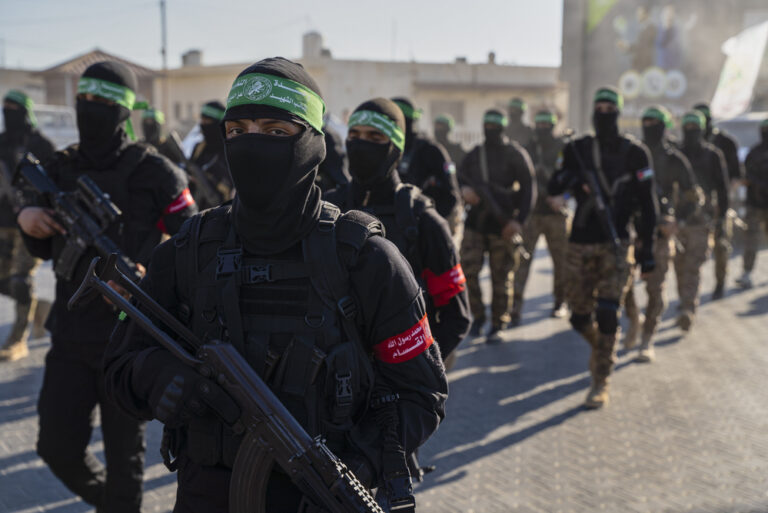
After recognising the Hamas terror group as a legitimate terrorist state in the Middle East, British PM Keir Starmer is now preparing for the new Hamas Embassy that will open in London.
“I have already met the incoming Hamas ambassador to the UK. I have to say, I did find it rather funny that he was carrying a shovel with him everywhere. I asked him what it was for, and he told me for digging tunnels under the Hamas embassy. He then drew a big X on a spot on the embassy’s floor and started tapping away with the spade.”
It is not certain if Hamas tunnels will be allowed in Knightsbridge, but it is presumed that the Hamas terrorists do not need permission from anyone, let alone the council.
Abdullah al Kalb, will be the newly appointed Hamas ambassador to Britain, and he has thanked his dear friend Keir Starmer for recognising his terrorist organisation.
“Thank you, Britain. Thank you, Keir Starmer. Thank you, Labour Party. Now excuse me, I have a lot of digging to do. Eajal! Eajal! I have a team of workers who are digging a tunnel right now. We estimate the Israeli embassy is approximately 300 yards north-east from this point. Soon, they go BOOM!”
The Hamas embassy in London will be a great addition to the already lively city atmosphere.
London mayor Sadiq Khan will also attend the opening of the new Hamas embassy in central London this Friday and will bring a goat with him which will be sacrificed on the front steps of the new embassy.
The world economy is heading into a period of sluggish global growth and structural upheaval, according to the World Economic Forum’s latest Chief Economists’ Outlook. Nearly three-quarters of top economists (72%) expect conditions to worsen in 2026, as trade disruptions, fiscal strains, and technological turbulence reshape the economic order.
The report highlights a growing split between advanced and developing economies. Emerging markets in MENA, South Asia, and East Asia-Pacific are seen as bright spots, with one in three economists forecasting robust growth.
In contrast, Europe faces weak expansion despite looser fiscal policy, while the US risks high inflation even as the Fed eases policy. China’s trajectory remains uncertain, with economists warning that deflationary pressures could linger despite moderate growth.
The consensus is stark: today’s shocks are structural, not cyclical. Majorities predict lasting disruption in energy, technology, trade, and global institutions.
As Saadia Zahidi, WEF’s Managing Director, put it: “We are not just weathering storms — the entire landscape is shifting. Leaders must act with urgency to turn instability into resilience.”
Debt concerns loom large. The global economy is built on debt. Unfettered immigration which has swarmed developed nations for decades now is a major factor in creating a huge burden on these nations. With sclerotic and weak leadership from Western nations, especially in regard to safeguarding their own borders, only economic ruin awaits them.
Once a worry mainly for emerging markets, 80% of chief economists now flag advanced economies as the centre of debt vulnerabilities. Fiscal fragility is identified as a key risk in 41% of advanced markets, compared with just 12% of developing ones.
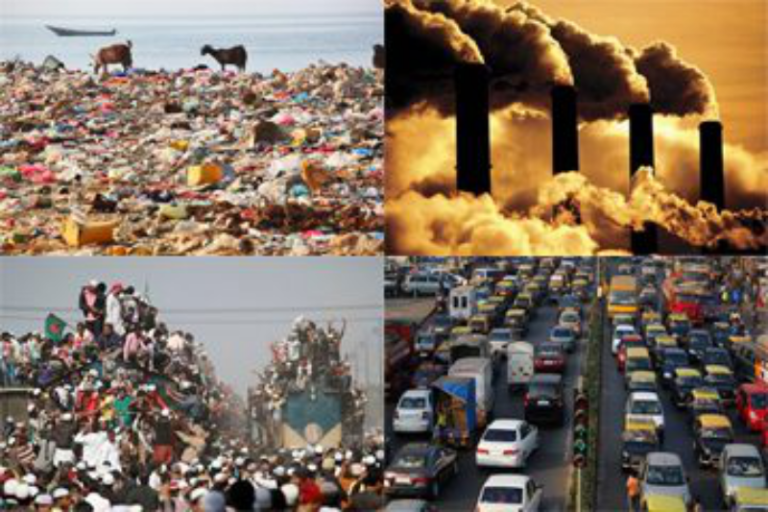
War, pestilence, pollution, poverty, debt, terrorism and mass migratory factors are all a symptom of global overpopulation which is unsustainable for the earth.
The report adds weight to warnings that global growth is moving into a new era of slower expansion, greater fragmentation, and higher systemic risk.
In another rambling 3 a.m. press conference, President Donald Trump officially designated ANTIFA a terrorist organisation, describing it as “worse than ISIS, more dangerous than TikTok, and definitely funded by George Soros who, by the way, is probably writing the cheques from a James Bond villain-esque volcano somewhere in Hungary.”
According to FBI files, ANTIFA’s shadowy network is “run out of the basement of the Democrat Party headquarters,” with Nancy Pelosi allegedly acting as “their Che Guevara, except with worse hair and saggy tits.”
When pressed for evidence, Trump waved a crumpled Whole Foods receipt he claimed was “a reimbursement form straight from a Soros shell company.”
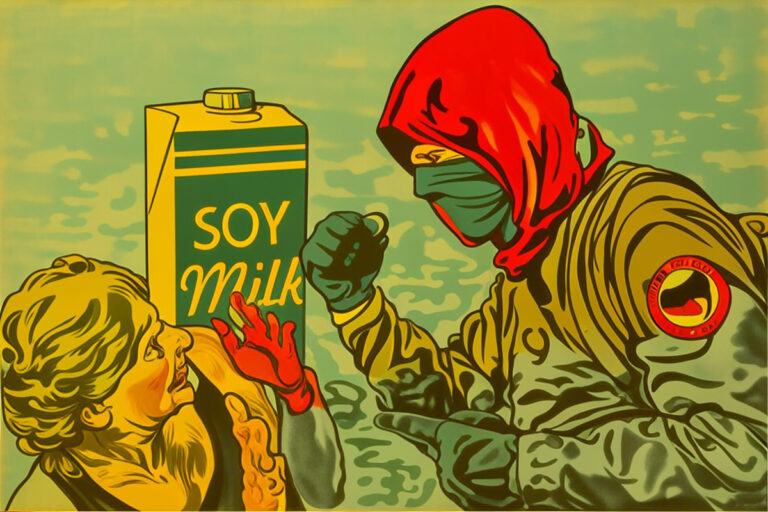
On Tuesday, the FBI’s first major counter-ANTIFA operation targeted a vegan café in Portland. Agents seized soy milk, gluten-free cakes, three Che Guevara mugs, and an anarchist zine entitled How to Compost Fascism. Four patrons were briefly detained for “suspicious latte art.”
Trump praised the raid as “a bigger victory than killing bin Laden,” while congratulating himself on personally identifying the café as “ANTIFA HQ” after spotting a Bernie Sanders sticker on the bathroom door.
Funding trails, officials say, are “clear as day.” One Pentagon briefing slide, now leaked online, connects Soros, ANTIFA, Obama, the Clintons, and a bag of kale through a series of red string diagrams resembling a toddler’s art project.
Meanwhile, the White House launched an anonymous hotline for reporting suspected ANTIFA members. Within hours, over 700,000 calls flooded in, most claiming to have spotted “ANTIFA caravans” at Trader Joe’s or “Soros-funded operatives” buying almond butter.
Despite the chaos, Trump remains adamant: “ANTIFA is everywhere! It’s at Starbucks, in your yoga class, even in the Democrat primaries. They’re invisible, they’re invincible, and they’re paid in cash by Soros. But don’t worry, we’ve got them surrounded — everywhere, except where they really are.”
It seems that attacking Israel, and putting little Jewish babies into ovens whilst still alive worked wonders for Hamas who are now designated as a legitimate state by Labour’s Britain, Australia and Canada. The atrocities, the hostages were not enough, Hamas successfully utilised the misery of the Palestinian people as a form of ransom as well, successfully igniting the wrath of the bleeding heart rent-a-Marxists who protested in prominent sight in Western countries.
Shanah Tovah
Keir Starmer also receives congratulations on keeping his job as a failed Labour leader by appeasing the far-left Marxist agitators in his party who demanded that Hamas is recognised as a functioning terrorist state.
By appeasing terrorism one legitimises terrorism, and in the eyes of the Marxists, this is perfectly valid.
Let us have more terrorism, anarchy and destruction in the world now. This is a great day for terrorist groups like Hamas, Al-Qaeda and ISIS.
Remember that using the suffering of the people is the best way to get things done, to plaster the videos constantly on televised media, social media etc. This is where the Israelis fell down, they had dignity in not blatantly plastering the images of their people being slaughtered on the October 7 Hamas attacks constantly on the media, thus they did not garner any sympathy from anyone. Hamas, on the other hand, employed the Marxists of the West to constantly televise and protest about the Israeli response to the Hamas attacks.
If Israel had a dedicated news station like Al Jazeera and the BBC to constantly churn out images of atrocities against Jews, things would have been different.
Hamas successfully won the hearts and minds of the far-left West, and this was enough for Australia, Canada and the UK, who are now currently run by far-left Marxists, to capitulate to terrorism. Hamas is the winner here. Their consistency in media saturation won the fight.
We must rejoice and embrace a new age of terror, where terrorist organisations can gain legitimate recognition for their terrorist actions.
Let us hope for more terror in the world thanks to Britain, Australia and Canada. Terrorism works — it really does, and if you commit more terror and continue doing it, you too as a terrorist can be recognised as a legitimate nation state in your own right.
Well done Hamas. Let us now hope for more global terrorism because this is proof that terrorism actually works.