Comrades, it is I, your favourite bacon sandwich-chomping Marxist Labour politician, who has made the cost of electricity in the UK the highest in the entire world. As well as contributing to the ruination of the UK economy with my evangelistic Net Zero gluttony, I have now been appointed as Foreign Secretary by Comrade Burn’em. My first task will be to put to task that fucking racist idiot capitalist pig Donald J. Trump.
In America they have enterprise, wealth and a thing called economic growth. Disgusting. Also, I have heard that they drill for oil. Double disgusting.
Do not worry, comrades; I will educate the lowly American capitalist scum in Marxism via the Net Zero method, which impoverishes and weakens nations, so when the Russians invade, all they have to do is walk right in and take over.
I will demand that Trump builds more wind farms and eats soy products. If he eats a cheeseburger in front of me, I will rebuke him and offer him some soy-processed vegan burgers.
Your time is up, Donald J. Trump, you racist idiot. I am going to fix you and fix you good, so you better watch out — Red Ed’s about. (nasal nerdy chuckle)
Your name may be Billy Bob or just Jim, but seriously, shit’s getting crazy around where you live. Shit’s gettin’ real for this Oklahoma man. One minute you’re sauntering happily along the driveway, and then …
Comrade Burn’em has been instated into power by the Labour Politburo and will be commanding the People’s Republic of Soviet Britain from his dacha in Manchester. The ordinary people cheered forcibly as Comrade Burn’em made another speech about how he wants to cut the cost of living for millions of peasants and bourgeois scum.
Comrade Burn’em’s ‘Great Leap Forward’
“I will cut the cost of living for millions, just like Chairman Mao and Stalin cut the cost of living for millions of their peasants. You will no longer care about the cost of living when you are not living; therefore, the Labour Big State will have succeeded in its manifesto to cut the cost of living.”
Labour scientists will ensure that cutting the cost of living will be as painless as possible.
Professor Commie Pinko from the Soviet University of Manchester revealed some details about the “cost of living” plan.
“Comrades, the cost of living can be alleviated quite easily by NOT living. Comrade Burn’em’s ‘Ten-Year Plan’ incorporates cutting the cost of living for many ordinary people, peasants and even some bourgeois scum. When the time comes, please stay in line so we can cut the cost of your living. It will be quick and painless. Then you will be processed into Net Zero Juice. Thank you for cutting your cost of living by not living.”
ALL CITIZENS OF THE PEOPLE’S REPUBLIC OF SOVIET BRITAIN WILL COMPLY. STAND IN LINE TO BE PROCESSED FOR REDUCING THE COST OF LIVING.
The acatech Foundation has sealed a cooperation with the Gaia-X European Association for Data and Cloud AISBL and the International Data Spaces Association (IDSA). The aim of the partnership is to move data spaces from the development phase into broad practical application: in Germany, in Europe and worldwide.
Data spaces enable sovereign, rule-based data exchange between organisations. The technical foundations and governance options for this are in place: standards, architectures and reference implementations have been developed. Now the task is to transfer these building blocks into application and scale them across industry and national borders. This is where the cooperation between the three organisations comes in. They are bundling competencies, networks and resources in order to bring trusted data infrastructures into widespread use – as a driver of innovation, competitiveness and digital sovereignty.
Connecting competencies, accelerating application
As an independent anchor of trust, the acatech Foundation brings in its ecosystem from business, science and politics. It also strengthens the partnership with experience from practical transfer projects such as the Mobility Data Space and its practice-oriented work in the pre-competitive sphere.
Gaia-X and IDSA contribute their international network of hubs and competence centres as well as the established technological and organisational foundations of sovereign data spaces – including the IDSA Rulebook, Manifesto for Data Spaces, Reference Architecture Model, and the Gaia-X Trust Framework. These proven building blocks are to be strengthened through the cooperation and scaled in use.
Planned activities include joint initiatives, mutual involvement in network and exchange formats, awareness and knowledge sharing campaigns, and coordinated activities to position sovereign data spaces vis-à-vis politics, business and society as an integral element for conducting the multi-faceted transformational changes we are encountering these days.
Statements on the cooperations
Ulrich Ahle, CEO of Gaia-X AISBL: “Trusted data infrastructures are no longer a promise for the future, but ready for use. Together with the acatech Foundation, we are accelerating their application – in Germany, Europe and worldwide.”
Manfred Rauhmeier, Board Member of the acatech Foundation: “The phase of concepts is behind us – now implementation counts. With IDSA and Gaia-X, we connect our ecosystem with the leading initiatives for trusted data spaces and bring them to where they create value: in the practice of business and society.”
Lars Nagel, CEO of IDSA: “We have developed the foundation for trusted and sovereign data sharing – now we need partners who bring them into wide-scale application. The cooperation with the acatech Foundation is an important step to bring data spaces into practice.”
About the partners
Gaia-X European Association for Data and Cloud AISBL: Gaia-X AISBL is an international non-profit organisation based in Brussels. It develops the Gaia-X Trust Framework as a basis for trusted, sovereign data infrastructures and promotes their dissemination through an international network of national Gaia-X Hubs.
acatech Foundation: The acatech Foundation sees itself as an impulse generator for the responsible shaping of digital transformation. With its activities, it focuses on practice-oriented transfer projects to promote competitiveness and accelerate innovation in Germany.
International Data Spaces Association (IDSA): IDSA is a non-profit association with more than 180 members from companies, organisations and research institutions in 33 countries. It has developed over the last 10 years the technical and governance foundations for global data spaces, including the IDS Reference Architecture, the IDSA Rulebook and international standards
Fuck Around and Find Out (FAFO) is quite a humbling lesson for the Russians who may have bitten off more than they can chew in the Ukraine conflict. In Ukraine, according to the CIA, soldiers only last about 30 minutes to an hour before a Ukrainian drone finds them and splits them in half. Some of the videos are way too gory to show on here, but to see some Russian guy blown in half and still alive is a terrible sight to behold, and yet Putin sends his cannon fodder forward into the Ukrainian meat grinder daily. Luckily for the blown-in-half soldiers, once they eventually relax, their arteries open up and they bleed out quickly. Putin is sending these poor men into certain death, and this could be construed as a genocide upon his own people along with the attempted genocide upon the valiant Ukrainian people.
The war is now more visible in Moscow. Ordinary people are daily seeing their infrastructure being blown up by Ukrainian kamikaze drones. This is a wake-up call to the Russian population who have been sheltered and indoctrinated by Russian state propaganda and brutal suppression methods to silence dissenters.
It does not matter how much the state indoctrinates their people — to see their buildings being blown up in front of their faces is a wake-up call that hopefully removes them from the brainwashing for a few moments. FAFO the Blyat way.
Taking out Kharg Island would severely cripple Iran’s economy overnight by eliminating roughly 90% of its crude oil export capacity, but it would not deliver a decisive, war-ending blow to the regime. While the U.S. military has already struck military assets on the island, fully destroying or seizing the infrastructure carries immense strategic complications.
The U.S. Navy and Air Force are already conducting an impromptu blockade of the Strait of Hormuz. Combining the destruction of Kharg Island with a total US naval blockade of the Strait of Hormuz would reduce the Iranian regime’s oil revenue to nearly zero. Because Kharg Island handles roughly 90% of Iran’s crude exports, and the Strait of Hormuz serves as the gateway for the remaining volume shipped from smaller coastal terminals, an enforced blockade completely chokes off the country’s maritime trade.
No boots on the ground needed…
An air campaign targeting Kharg Island, which handles roughly 90% of Iran’s crude oil exports, would cause immediate, catastrophic economic shock by freezing the regime’s primary source of foreign revenue. This disruption would halt public spending, trigger rapid devaluation of the rial, and cause hyperinflation, potentially sparking widespread internal instability while forcing reliance on inefficient, smaller-scale energy exports. While the regime could attempt to mitigate this with black-market, barter-based trade, the destruction of infrastructure would severely strain the government’s fiscal stability and capacity for long-term resistance.
Kharg Island serves as the terminal for roughly ninety per cent of Iran’s crude oil exports, meaning that an assault on this single geographic feature would immediately freeze the regime’s primary source of foreign revenue. While the initial economic shock would be severe, strategic analysts suggest that this alone would not deliver a war-ending blow, as the government views the conflict as existential and can temporarily reroute smaller energy flows through less efficient mainland ports.
Accomplishing this destruction through air power alone is highly feasible for modern Western forces but demands a sustained operation. Precision-guided munitions, cruise missiles and stealth bombers can easily flatten surface-level loading berths and storage tanks within hours. Completely obliterating the facility, however, requires penetrating heavily fortified underground bunkers and subsurface pipelines, which are tasks that necessitate repeated strikes with heavy earth-penetrating bombs.
Furthermore, any such mission must first dismantle the formidable air defence architecture. Operating under a decentralised mobile doctrine, the Islamic Republic of Iran Air Defence Force relies on a multi-layered network designed to survive initial strikes. This umbrella includes long-range interceptors such as the Russian S-300 and the domestic Bavar-373, alongside newer systems like the Arash-e Kamangir, which has demonstrated capability against sophisticated drones. Point defences around critical infrastructure are further reinforced by medium-range RAAD batteries and dense low-altitude missile nets. Although recent allied shaping operations have targeted coastal early warning radars and depleted interceptor stockpiles, the remaining network poses a persistent threat that would trigger intense electronic warfare and risk broader asymmetric retaliation across the region.
.@POTUS: “We’re not attacking at the highest level. The highest level are the bridges…their electric plants, where they make their electricity. If we have to, we’ll take them out. I don’t want to do that, but if we have to, we’ll take them out…We attacked Kharg Island last… pic.twitter.com/uOrtCVL0Fk
— Rapid Response 47 (@RapidResponse47) July 8, 2026
Kharg Island not a total knockout for Iranian regime
The destruction or takeover of Kharg Island by US forces would hurt the Iranian regime immensely but not be a complete knockout, unfortunately.
To completely bring the Iranian regime to a halt, a military campaign would need to simultaneously neutralise its internal security apparatus, decapitate its leadership structure, and sever its illicit financial networks.
Because the regime prioritises survival over public economic well-being, crippling it requires targeting the specific pillars that keep the leadership in power.
⚡️BREAKING
Iranian men are trying to reach Kharg Island to defend it against a potential American ground offensive
There are several critical pillars that sustain the current Iranian governance structure. Beyond energy infrastructure like Kharg Island, these pillars include:
Financial Networks: The Iranian economy relies on complex international financial channels and the export of various commodities. Further isolating the state from international banking systems and intensifying sanctions on non-oil sectors, such as metals and petrochemicals, impacts the resources available to the state.
Internal Institutional Cohesion: The stability of the administration is closely linked to the unity of its various political and military institutions. Historically, significant internal policy shifts or regime transitions in various nations are often preceded by fragmentation within these core elite groups or a loss of institutional synergy.
Regional Influence and Proxies: Much of the regime’s strategic depth is tied to its regional alliances. Limiting the ability to project influence abroad is often cited as a method to redirect the state’s focus toward domestic challenges.
Information and Communication: The ability to manage domestic narratives through state-controlled media and internet infrastructure is a key component of maintaining authority.
Analysing the stability of any modern state involves examining the complex relationship between centralised leadership and the various institutions that support it. Significant shifts in governance frequently stem from a combination of external economic pressures and internal changes to the security and financial systems. The effectiveness of a central authority is often linked to its ability to maintain control over information and domestic networks. When these systems face widespread fragmentation or when international financial channels are restricted, the resulting internal pressures can lead to a fundamental re-evaluation of the state’s strategic priorities. In a geopolitical context, the influence of regional networks and the strength of internal security are key factors that determine the long-term resilience of a particular regime.
Houthis Threaten to Close Bab al-Mandeb Strait
A Houthi closure of the Bab al-Mandeb Strait would cut off Saudi Arabia’s last alternative oil export route and trigger a global energy shock, forcing crude prices toward an estimated two hundred dollars a barrel. Following Iran’s instruction to the Houthis to weaponise the Red Sea gateway, the United States Navy would face a complex, dual-front maritime conflict. With the Strait of Hormuz already highly restricted, Gulf nations have rerouted up to seven million barrels of oil per day via Saudi Arabia’s East West pipeline to the Red Sea. Closing Bab al-Mandeb chokes off this final bypass and blocks roughly seven per cent of global energy supplies. Beyond oil, the strait handles nearly twelve per cent of all global trade, meaning that forcing container ships to reroute around Africa would add fourteen days to transit times and spike global inflation. Furthermore, Islamic Revolutionary Guard Corps personnel on the ground in Yemen would directly oversee the timing of Houthi drone and missile salvos to coordinate a second front.
The United States military cannot physically block Houthi strikes completely, but it can degrade their capability through specific operational strategies. To keep the strait navigable, the United States would need to launch a massive air campaign targeting Houthi radar installations, mobile anti-ship missile launchers, and underground drone depots in the Yemeni highlands. Additionally, armed with active air defence destroyers, the United States Navy’s Central Command could form defensive convoys to intercept inbound threats. However, swarm tactics could overwhelm interception systems, meaning a total guarantee of safety for commercial tankers is mathematically impossible.
🚨 Former Iranian Deputy Oil Minister Asghar Ebrahimi-Asl warns the United States is preparing for a ground invasion of Iran.
In an interview with Iranian outlet Khaneh Eghtesad, he alleged that the United States is using its military bases in Persian Gulf countries, including… https://t.co/zTg1a9GBMW
— The Iran Watcher 🇮🇷 (@TheIranWatcher) July 19, 2026
ADVISOR TO IRANIAN SUPREME LEADER, MOHSEN REZAEI, SAYING:
“I declare it is over. Both negotiation and war are over. If in the next two or three days the Americans continue the war, we will enter a phase of complete offense and destruction.”#Iran#IranWarpic.twitter.com/1M3A1pboH9
The coronation of the next unelected shoo-in Labour commie shister, Comrade Andy Burnham, means that the little remaining wealth in Britain is set to leave and take their wealth with them. The first wave left before and after Commissar Rachel Reeves reamed the population with huge tax increases and insane spending on welfare.
Andy fucking Burnham — prepare for more punitive taxation and blatantly collectivist communist laws.
If you have any form of wealth in the UK, it will be taken from you. Private property and wealth are sins under Burnham’s communist manifesto. As well as a crippling land tax on all properties, how about a 62pc capital gains tax rate? Private business has already been killed off by Rachel Reeves, but under the moribund commie northern cunt Burnham all business will be fucked — hard.
Britain is a cursed land, and Labour is the festering tumour that has fastened upon the country, a terrible, vile curse that grows every day without any cure.
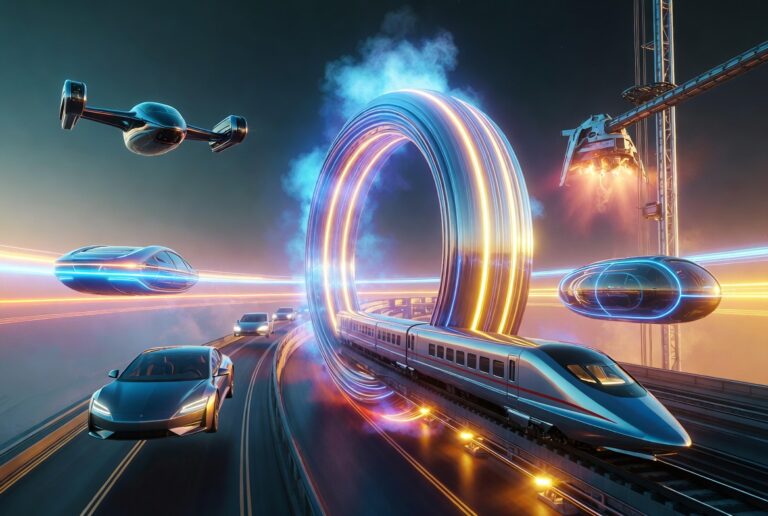
Leading researchers from academia and industry have contributed to a new ‘roadmap’ paper which examines how the transport industry, which creates around a quarter of energy-related carbon emissions, could accelerate the adoption of electric power at scale by embracing superconducting tech.
It also sets out the challenges which still need to be overcome over the next decade in order to maximise potential climate benefits.
Dr Wenjuan Song
The roadmap, commissioned by the Institute of Physics and published in the Tier one journal in the field, Superconductor Science and Technology, was led and edited by Dr Wenjuan Song of the University of Glasgow.
The roadmap is the result of an international, interdisciplinary and cross-sector collaboration which brought together more than 60 researchers and engineers from over 40 companies, universities and research institutes worldwide, including transport giant Airbus.
Through 26 expert perspectives, it charts how superconductivity could unlock transformative advances across aviation, rail, marine and space and shape the future of sustainable transport.
Superconductors are a special class of materials which can transport electricity with almost no resistance and zero loss when cooled to cryogenic temperatures near absolute zero to up to 90 degrees Kelvin. Although they were discovered a century ago, their challenging operational requirements have largely restricted them to use in bulky, terrestrial, stationary technologies like MRI scanners.
Recent technological advances, however, are making superconducting devices smaller and lighter. Superconductors could deliver more power and torque in smaller, lighter packages, increasing the efficiency of aircraft motors, ship propulsion, rail transformers and spacecraft magnets in the years to come. In some cases, such as hydrogen-powered aircraft, liquid hydrogen could potentially be used as both fuel and coolant, which could help to maintain the required temperature to maximise the efficiency of some designs.
Dr Mohammad Yazdani-Asrami
The James Watt School of Engineering’s Dr Mohammad Yazdani-Asrami is the paper’s second author alongside Dr Song. He said, “Encouraging the adoption of a new technology by industry is a chicken-and-egg problem, but we’ve seen with the rapid expansion of solar power in recent years that tipping points towards greener energy can and do happen.
“Superconductors need the same three things that solar power had in order to reach that tipping point: better materials, cheaper materials, and a willingness from industry to adopt them. This roadmap makes a convincing case that superconducting tech is already proving its worth for transport, and that the next 10 years of focused advances and further private and public funding will be crucial in enabling us to reach the point where superconductors become practical for use across the transport industry and beyond.”
Aviation, one of the hardest engineering challenges for decarbonisation, is one of the key focuses of the roadmap. Aircraft account for around 2% of the world’s transport-related carbon emissions today, but if emissions keep rising as projected with the increased scale-up of national and international flights, they could reach between two and four times their 2015 level by 2050.
The main obstacle to electrifying flight has always been weight: today’s electric motors deliver between five and 10 kilowatts per kilogram, which is too heavy for medium/large aircraft. Superconducting machines currently in development, however, are expected to deliver between 20 and 40 kilowatts per kilogram, helping to overcome one of the major barriers for building emission-free electric aircraft.
Dr Wenjuan Song, of the University of Glasgow’s James Watt School of Engineering, is the paper’s main editor and corresponding author. She said: “Electric aircraft don’t have to be a dream any more. This roadmap shows the pathway to commercially available aircraft flying with net-zero emissions, setting out the components needed, from the powertrain and motors to cables and fault-current limiters, alongside system-level integration.
“Real hardware has already started to approach maturity. Airbus’s ASCEND project powered on a 500-kilowatt superconducting and cryogenic powertrain in late 2023, and their Cryoprop demonstrator is nearing completion. With their ZEROe programme continuing to develop, that future is genuinely coming into view. We expect the next decade will see further advances which will help encourage widespread commercial adoption.”
Maritime shipping is the largest single source of transport carbon in the roadmap’s breakdown, at around 3.5–4% of global emissions. Superconducting motors in development offer lighter, highly efficient propulsion, and the heaviest-duty demonstrator in the entire roadmap is already built: a 36.5-megawatt superconducting ship-propulsion motor tested by the US Navy.
Superconducting cables can knit together all-electric ship power systems exceeding 100 megawatts, and when liquid hydrogen becomes a marine fuel, its deep cold can help cool key components of the system, potentially paving the way to the first generation of zero-emission vessels.
Rail, meanwhile, is already among the most efficient and least polluting forms of transport. While it produces around 1% of transport-related carbon today, demand is set to grow steeply, so further gains still matter.
The roadmap highlights real-world examples, including a Chinese high-speed train programme that has demonstrated a superconducting traction transformer operating at over 99% efficiency and half the weight of conventional systems.
Superconducting power cables have also been installed on railways in Japan and France. Looking further ahead, superconducting maglev trains have reached around 600 km/h in Japan, while China is developing vacuum-tube systems targeting speeds of up to 1,500 km/h.
In space, superconducting magnets can enable more powerful thrusters from smaller, lighter hardware. Frictionless superconducting bearings promise no contact, wear or lubrication, making them fail-safe. They could let satellites spin faster, weigh less and operate reliably for decades. The quantities of material involved are tiny, making space a high-value niche for the technology rather than a mass market.
The potential climate benefits of widespread adoption of superconductors across the transport industry are significant. If 50% of the transport industry adopted superconducting tech, it could help save around 23 gigatonnes of carbon emissions across a 25-year period, according to an article contributed by Faraday Factory Japan, a leading manufacturer of superconducting wire. The same analysis notes that the price of the material required to achieve this already sits below the value of the emissions it could save.
There are still barriers to adoption. Cost, better superconductors, cooling systems, protection schemes, and engineering complexity are the key hurdles to overcome as the technologies outlined in the roadmap work their way up the technology readiness scale and journey from the lab to market.
Dr Song added: “We chose to collect reflections from as wide a range of expertise as we could in order to provide a clear research agenda for the next two decades, and we believe we have created a comprehensive set of guidelines.
“We’ve also delivered a clear message to industry: the technology is viable, several applications are approaching commercial readiness, and the long-standing objection that superconductors are too hard to cool are being overcome at last. It’s time to get on board and set a course to decarbonise the transport industry.”
Yep, the inevitable happened, as always is the case at the last hurdle — England lost! We’re not going to go down the analysis rabbit hole, but the first half of the game was a joke for both teams; not one attempt at goal was made by both teams. Second half — England scored a single goal early, then went into fucking defence mode. What the fuck were they doing? They basically invited Argentina to the England goal zone. The key to winning games is to keep pushing forward and scoring fucking goals. The best defence is offence! So, who told the England team to score one piffling goal and then rest on their laurels for the entire rest of the match? The manager? The captain? They all messed up big time. For the rest of the match, England was under siege, and the trebuchets were out from the Argentinians, who have that South American flair and boldness with daring long-distance shots from out of the box. This is something European teams very rarely do, apart from mainly the Italians, who haven’t even qualified since 2018; their last appearance in a World Cup knockout match remains their 2006 tournament victory. Messi, supposedly the best player in the world at one time, is 39, so he is getting sluggish but created some great setups, one of which led to the final deciding goal by Lautaro Martinez. The last goal by Argentina at about 93 minutes was the clincher and woke the sleeping England players up, but it was too fucking late. Nine minutes of extra time went with the usual time-wasting kicking the ball high or to touch and a coterie of desperate England players scrambling around the pitch like fucking ants. England needs world-class English managers and real ancestral English players. The End.
Communist literature and a history of involvement in the radicalised far-left movement that is prevalent in the UK were the motivation for Ann Widdecombe’s death by murder, the police have finally revealed.
The murderer was arrested at his home in Rotherham at 9pm on Saturday after police traced a car allegedly parked on Ann’s drive during the attack. CCTV from early on Wednesday showed a figure leaving the Rotherham address, appearing to carry a wooden stick in his shorts pocket.
The visible far-left Marxist political parties currently ruling the UK are the Labour, Green and Lib Dem parties. The Conservative Party is to the left of the spectrum but not overtly far-left communists, although some of their policies in recent years have reflected socialist/communist sentiments. One must remember that the entire system of the UK is geared towards socialism, and essentially the core of this system is Marxist with elements of Trotskyism, Leninism and Maoism. Lenin himself said, “The goal of socialism is communism.” The incoming unelected Labour leader, Andy Burnham, is running out of time to implement the party’s transition from socialism to full communism, and they are doing everything they can to eradicate the threat of the Reform Party under Nigel Farage so they can initiate their full agenda.
The hateful rhetoric used by Labour/Green/Lib Dem politicians against anyone who is not a left-wing communist obviously fuels the violence committed by left-wing lone actors and mobs.
Why Ann Widdecombe?
Bless her heart, she was an easy and accessible target, plus she was elderly and frail. For a sick coward like the communist killer, who was heavily radicalised in far-left ideology, Ann would have satiated his vicious political agenda.
The far-left communists of this country are everywhere. One only has to look at the disgusting and vile comments from the supporters of this nefarious, cultish communist ideology to see how vindictive and inherently evil they are.
The far-left social media echo chamber BlueSky is a hotbed for the communist radicals to sow their hate 24 hours a day. The quoted words of a University of Aberdeen worker and Labour candidate relay this sentiment in clear detail.
And some good news for once. I hope it was an extremely painful death.
And I hope she was handcuffed to the bed as she screamed in agony.
I’m done with being nice to pieces of human garbage like her.
Heather Herbert, a transgender individual, has been lauded and celebrated by the leftists for his vile comments. No doubt there were celebrations of joy in the Labour Party HQ and amongst many of the party’s members at the death of Ann Widdecombe.
More people need to speak up to curtail the rise of communism in Britain. Staying silent is the biggest crime.