
17.7 C
London
Sunday, July 12, 2026
secret satire society
Home Blog Page 492

EU Bends Rules to Create Visa-Free Zone From Syria to English Channel

0
  • The Commission has proposed visa-free access for 76 million Turkish citizens to the Schengen Area, creating a visa-free zone from the English Channel to the borders of the warzones of Syria and Iraq.
  • This is part of an ‘accelerated’ move towards Turkish accession to the EU, which the UK is paying £1.8 billion to facilitate.
  • The Commission has also proposed visa-free access for Kosovo.
  • The Commission refuses to address the root cause of the crisis, the EU’s dangerous Schengen system.
  • The Commission has today said that ‘Schengen is one of the greatest achievements of the European Union’.
  • Due to the EU migrant crisis, there are just two Border Force cutters protecting the UK’s borders at the present time.
  • Despite Government claims, the Dublin Regulation does not work in the UK’s interests (allowing for the removal of just 1% of asylum seekers). The EU retains the right to end the UK’s participation in the Dublin regulation after the referendum.
  • The European Court will remain in control of the UK’s asylum policy if the UK votes to stay in the EU.
 

MIGRANTS

The deal with Turkey and proposals to revive Schengen


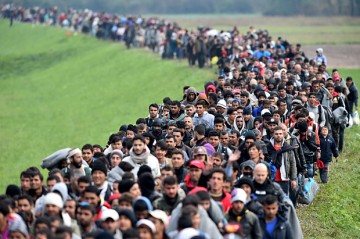
The European Commission has  proposed to give visa free access to the Schengen Area to 76 million Turkish citizens as part of its plan for Turkey to join the EU. The UK is already paying nearly £2 billion to facilitate further accessions.

The Commission ‘is today proposing to the European Parliament and Council of the European Union to lift the visa requirements for the citizens of Turkey’.

This is despite the Commission’s acknowledgement that that implementation of some of the benchmarks by Turkey has been ‘impossible‘, including the ‘fight against corruption, data protection, judicial cooperation with all Member States, enhanced cooperation with EUROPOL and revision of the legislation and practices on terrorism’. This amounts to 10% (5 out of 72) of the benchmarks.

The Commission states that ‘the accession process will be re-energised, with Chapter 33 to be opened during the Dutch Presidency of the Council of the European Union and preparatory work on the opening of other chapters to continue at an accelerated pace’.

Between 2014 and 2021, the UK will pay over £1.8 billion to facilitate the accession of candidate countries to the EU. This will mean a population of Turkey, 75.9 million in 2014, will have access to the NHS and other amenities.

This will increase pressure on the UK’s borders. The EU’s own Frontex report has noted that: ‘The number of persons aiming to get to the UK with fraudulent document significantly increased (+70%) compared to 2014. This trend is mostly attributable to the increasing number of Albanian nationals often misusing Italian and Greek ID cards followed by Ukrainian nationals abusing authentic Polish ID cards’.
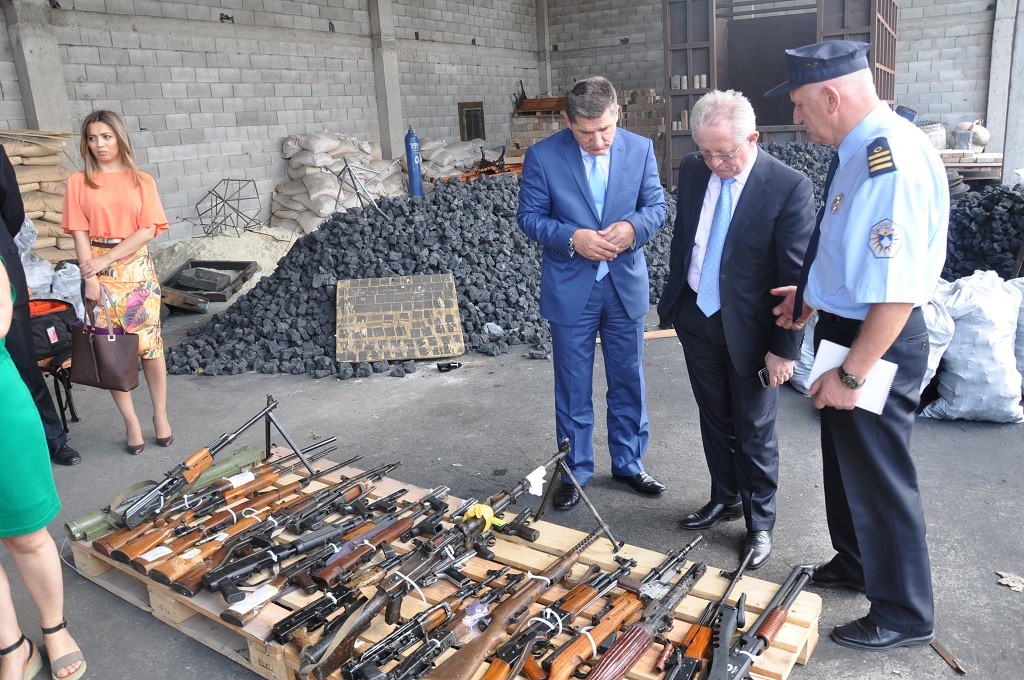
 

Kosovo guns


The Commission has also proposed Kosovo be given visa free access.

The Commission is ‘today proposing to the Council of the European Union and the European Parliament to lift the visa requirements for the people of Kosovo by transferring Kosovo to the visa-free list for short-stays in the Schengen area’.

Kosovo has around 260,000 unregistered firearms (one for every six Kosovars), and ‘has for decades been one of the major distribution centres of narcotics entering Europe via the Balkan route’. The Foreign Policy Journal has described it as a ‘nest of crime fugitives in Europe‘.

Kosovo also has the highest unemployment rate of any EU enlargement country.

The real cause of the crisis is the Schengen system but the EU is determined to maintain that at any cost to prop up the failing single currency.


The Commissioner for Migration and Home Affairs Dimitris Avramopoulos has said: ‘Schengen is one of the greatest achievements of the European Union, and our unchanged ultimate ambition is to restore normality in the Schengen area’.


The Vice President of the Commission, Frans Timmermans said ‘We have a clear roadmap to return to a normal functioning of the Schengen zone by November and we need to get there in an orderly way. We preserve Schengen by applying Schengen‘. If there ever was a demonstration of insanity, Timmermans words would be it.

The President of the Commission, Jean-Claude Juncker, has said: ‘If the spirit of Schengen leaves our lands and our hearts, we will lose more than Schengen. A single currency makes no sense if Schengen falls. It is one of the keystones of European construction. The Schengen system is partially comatose. Those who believe in Europe and its values, in its principles and freedoms must try – and try they will – to reanimate the Schengen spirit’.


The former Secretary General of Interpol, Ronald K Noble, has said the Schengen systemis effectively an international passport-free zone for terrorists to execute attacks on the Continent and make their escape… Leading up to these latest attacks, none of those countries systematically screened passports or verified the identities of those crossing borders by land or at seaports or airports. This is like hanging a sign welcoming terrorists to Europe. And they have been accepting the invitation’.
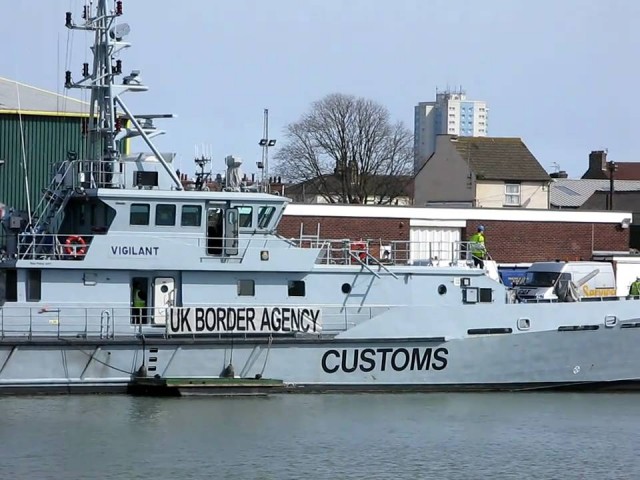
border cutter

There are just two Border Force cutters protecting the UK’s borders from illegal entry because of the EU migrant crisis. This leaves the UK border vulnerable.


On 7 March 2016, the Government announced that the ‘the cutter Protector’ and ‘and a further Border Force cutter’ will be deployed to the Aegean Sea from the end of this month. This means that 40% of the UK’s border protection fleet will not be protecting British waters.

The Government has previously admitted that of the five cutters, ‘only four are operational at any one time, [with] the fifth undergoing refitting and refurbishment’. This means that there are just 2 cutters, or 40% of the UK’s fleet, currently protecting our border.

This Government has not secured the continuation of the UK’s participation in the Dublin Regulation.

The UK can choose whether or not to opt into the proposed changes. It chose to opt into the Dublin Regulation. EU asylum measures are adopted under Title V of Part 3 of the Treaty of the Functioning of the European Union. The UK is not bound by measures adopted under Title V unless it chooses to opt in. The UK opted into the Dublin Regulation when it was ‘recast’ in 2013.

If the EU Council determines that the UK’s continued participation in Dublin would render the new proposals inoperable, it may exclude the UK from Dublin with ‘financial consequences’. Where proposals to amend a Title V measure to which the UK has opted in are made, the UK has a veto. However, ‘in cases where the Council, acting on a proposal from the Commission, determines that the non-participation of the United Kingdom … in the amended version of an existing measure makes the application of that measure inoperable for other Member States or the Union’, the UK must opt in, or ‘the existing measure shall no longer be binding upon or applicable to it’. The Council of Ministers can impose ‘financial consequences‘ on the UK which are ‘necessarily and unavoidably incurred as a result of the cessation of its participation in the existing measure’.

The proposal contemplates the exclusion of the UK from the Dublin Regulation. The text of the proposal notes that: ‘The participation of the United Kingdom, Ireland and Denmark in the arrangements laid down in this proposal recasting Regulation (EU) No 604/2013 will be determined in the course of negotiations in accordance with these Protocols’. It explicitly notes that the UK must ensure ‘the operability’ of the new system.

Experts in EU law have suggested the UK could be excluded. Professor Steve Peers of the University of Essex has predicted that if a ‘complete overhaul’ of the Dublin regulation is introduced, this is ‘likely to trigger’ the exclusion of the UK from Dublin III.

MEPs will not accept a new system based on the country of origin principle. The European Parliament’s Dublin rapporteur, Cecilia Wikström MEP, has said: ‘The country of first arrival criteria should be removed from the Dublin regulation and replaced with a fair and mandatory distribution mechanism between Member States, using a formula based on population, wealth and reception capabilities’.

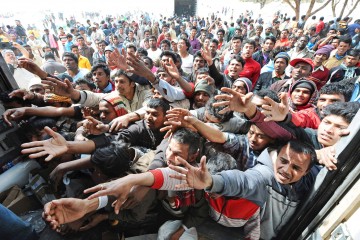
eu migrants boat

The Dublin Regulation does not work in the UK’s interests and gives up control to the European Court. Remaining subject to the Dublin Regulation would not be a victory for the UK.

The Dublin Regulation allows for the removal of just 1% of asylum seekers.

The European Court is in charge of our asylum policy. Opting into the Dublin Regulation nonetheless means giving up control of the UK’s asylum system to the European Court of Justice because the UK has also opted into several further directives on who constitutes a refugee, how they must be processed and the how they must be treated. Along with the Charter of Fundamental Rights, these prevent the UK from adopting its own asylum policy and mean the European Court is in charge of interpreting the key 1951 UN Refugee Convention.

The only way to have an independent asylum policy is to Vote Leave. This will give us much greater flexibility in how we deal with asylum claims.

The Dublin Regulation can result in the UK being forced to accept EU asylum seekers.

In January 2016, Mr Justice McCloskey ordered migrants at Calais to be admitted to the UK to claim asylum. The Tribunal ordered that: ‘the Secretary of State shall admit each Applicant to the United Kingdom with a view to determining the applications under the provisions of the Dublin Regulation’.


David Cameron used to oppose the European Court’s powers over asylum, but none of this changed during the renegotiation.

In January 2008, the Conservative Party tabled an amendment to the Bill ratifying the Lisbon Treaty to exclude the European Court’s jurisdiction over asylum. It was signed by William Hague, Nick Herbert and Dominic Grieve.

Nonetheless, altering the European Court’s control of our asylum policy did not form part of the renegotiation.


Even the European Commission has acknowledged that the Dublin system does not work.

The Commission has admitted that: ‘Even where Member States accept transfer requests, only about a quarter of such cases result in effective transfers, and, after completion of a transfer, there are frequent cases of secondary movements back to the transferring Member State’.

It notes that: ‘The effective suspension of Dublin transfers to Greece since 2011 has proved a particularly critical weakness in the system, in particular given the large number of migrants arriving in Greece in recent months’. This is the result of a ruling of the European Court which held the Charter of Fundamental Rights could be used to prevent transfers to other member states.

The Commission has noted that ‘the Dublin system was not designed to ensure a sustainable sharing of responsibility for asylum applicants across the EU, a shortcoming that has been highlighted by the current crisis’.

It notes that there has been ‘an increasing disregard of EU rules’ in recent years.

If we vote to stay we will pay even more in, hand more power over and face the prospect of greater pressure on our borders. The safe option is to Vote Leave on 23 June. 
Why a German EU Army is Precursor to Imminent War With Russia

8


The Nazis incorporated many different European nations into their army, much like Jean Claude Juncker and his friend Roderich Kiesewetter want to do with today’s proposed EU army.

Juncker is of course no stranger to the Nazis, as his father was a member of Hitler’s army push into Russia in 1941 codenamed ‘Operation Barbarossa’.

Juncker’s wife, Christiane, also shares an interesting paternal link with the Nazis. Her father, Louis Mathias Frising, was one of Hitler’s Propaganda Commissars, and was among those responsible for the Germanification of Juncker’s home country of Luxembourg. He also helped enforce the Nuremburg Laws that stripped Jews of their rights, and were a precursor to the Holocaust.

Currently the EU seeks to announce the commencement of the German-led EU army after Britain’s referendum, and if we do not vote to leave, future generations will inherit a conscription in the EU army to fight the Russian bear.

As the Germans have already absorbed the Dutch army, they will incorporate all other EU nations into the military force to eventually attack Russia. The German Bundeswehr is expanding for the first time since the Cold War.

By building an EU army on the doorstep of Russia, the Brussels eurocrats are teasing Russia, they are building what is seen as a direct threat to Putin, and this message can only end ultimately in war.

We have already witnessed what the EU’s incursion into the Ukraine caused, when Putin retaliated with the annexation of the Crimean peninsula.

It is in Britain’s interests to stay out of the EU under its dangerous state, by leaving the EU, it would retain control but most importantly not threaten the Russian bear, unlike the EU army which will catastrophically set off World War III.

Vote Leave on June 23 – No to Germano-EU Army

The EU hinders, Not Helps Britain’s Ability to Support the Environment

0


Responding to claims by Britain Stronger in Europe that leaving the EU would harm the environment, George Eustice MP, Minister for the Marine Environment said:


‘Since the Lisbon Treaty the EU has systematically undermined the UK’s place on international wildlife conventions. We have already been stripped of our voting rights on Regional Fisheries Management Organisations and, extraordinarily, it is now unlawful for the UK to speak at wildlife conventions like CITES without first getting permission for what we want to say from the European Commission.

‘If we vote to leave and take control, the UK would regain its own seat and its voice in vital international wildlife conventions and everything from promoting shark conservation to ending whaling would become much easier.’


Also commenting, Gisela Stuart MP, Chair of Vote Leave said:


‘Pro-EU campaigners are descending into absurdity. It seems there is no good in the world that they cannot somehow attribute to the EU and no imagined disaster they cannot predict if we Vote Leave. In reality, if we Vote Leave on 23 June we can reclaim our voice at international institutions and spend the £350 million we hand to Brussels every week on our priorities likes the environment.’


The EU is bad for the green economy, with the European Court recently requiring the UK to raise taxation on energy saving products.

Because of a European Court ruling in June 2015, stating that the UK’s 5% rate of VAT on the installation of all energy saving materials was contrary to EU law, VAT will have to rise to 20% instead of 5%. The reduced rate of 5% on other products, such as insulation, heat pumps and central heating systems, will cease to apply to persons who are not (a) over 60, (b) in receipt of benefits, or (c) living in social housing. The cost of installing solar panels for consumers could increase by £1,000.

The UK must comply with this judgement, even if it means overruling the VAT lock, or face fines from the European Court.


The EU has threatened to sue Britain for trying to protect wildlife. We cannot ban the export of live animals for slaughter in the EU.

In 2009, the UK was reported to have voted against a common EU position to abstain on banning the international trade in bluefin tuna, in a secret ballot in the Convention on International Trade in Endangered Species. The Commission reportedly considered launching legal proceedings against the UK as a result.

The Government has admitted that a prohibition on the export of live animals for slaughter is inconsistent with EU law.


The EU has failed to keep the air clean. Its Emissions Trading Scheme has been labelled a an abject failure by Friends of the Earth and has proven a vehicle for defrauding of taxpayers.

Friends of the Earth labelled the EU’s emissions trading scheme ‘an abject failure’.

Between June 2008 and December 2009, fraudsters made €5 billion out of the ETS by exploiting single market rules, in what is known as a ‘carousel fraud’. HMRC accepts that VAT fraud ‘exploits the Single Market rules that were introduced in 1992′.

As recently as July 2015, the EU’s own auditors concluded that: ‘The ETS market remains at risk to VAT fraud‘.


EU policies have simply led to ‘carbon leakage’. This does nothing to improve the environment.

The European Commission has admitted that their policies have led to ‘Carbon leakage’ – firms leaving Europe and carrying on polluting in other countries. A report produced for the Commission in 2013 acknowledged that  ‘Energy discussions play a major role in the overall situation for industry and are always on the background of carbon leakage discussions. Be it cheap shale gas in the US and Middle East or subsidised coal in China, the impact of energy prices is real’.


Leaving the EU will not damage environmental investment, which could be increased if we Vote Leave.

In 2014, the UK paid £19.1 billion into the EU budget, over £350 million per week. Investment within the environment sector in Britain would thus increase if we Vote to Leave.


EU rules have stopped Britain building the homes it needs.


The Government has acknowledged that ‘EU rules such as the Habitats Directive and wider EU environmental permit requirements’ are regulations which stop housebuilders ‘building the homes that Britain needs’.

The Home Builders Federation has said that the implementation of the Habitats Directive ‘brought house building activity to a virtual halt in large parts of some 11 local authorities in Berkshire, Surrey and NE Hampshire’ ten years ago, ‘leading to significant job losses in the home building industry and threatening the existence of many SME companies in the region’.


The Environment Secretary has previously criticised damaging EU rules which remain unchanged.

In January, Ms Truss said: ‘I am fighting for reforms like getting rid of the three-crop rule, reforming the over-the-top audit and controls regime, and the absurd requirement for farmers to put up ugly posters in the countryside to publicise EU funding‘.

Ms Truss has also accepted ‘there are serious costs‘ to membership of the EU’s single market. None of these matters were changed during the renegotiation.

Why VR Zombies Are Next Step in Population Control

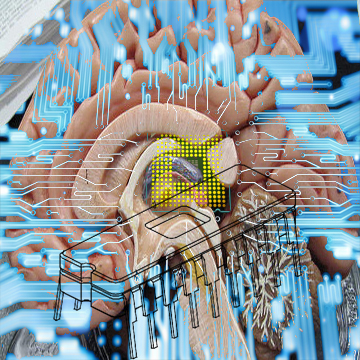
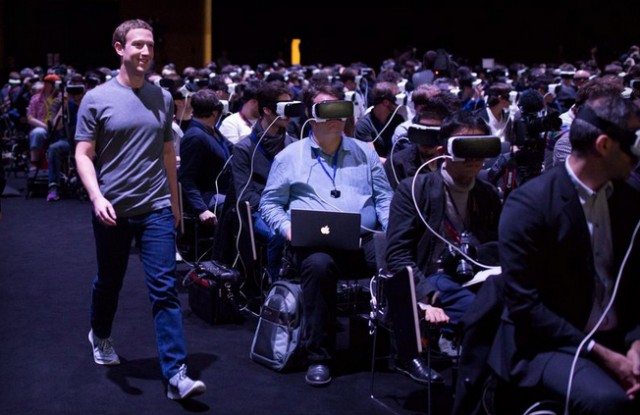
The next step up from smartphones has to be Virtual Reality, and from there the next step will be internal brain chips once the technology has reached its final phase.

Speaking at this month’s California Tech Symposium, John Aldred CEO of Virtuaxel Solutions Inc, told the audience that VR is an ‘immersive experience that people will not be able to live without’.

“What we have here is an introduction to the technical version of nirvana, of emulating any emotion from fear to lust. You may live in mundane surroundings now but put on the glasses and you will be immersed within a palace of the senses.

“Once we get people hooked with VR, there will be no stopping us evolving to neural brain chips, where the user will not only be connected permanently to the internet hive mind but will be able to enjoy dream-like experiences that are as good as real directly to their brains. The nano-chips will fuse with the neurons, dendrites and synapses replicating actual experiences for the users. You can live in a film, you can go on a holiday, you can be somebody else, you can create whole worlds and explore infinite possibilities.

zuckerberg plankton

“It is crucial that VR opens the door to the next step in internal chip processing. Just as any app can be downloaded onto a tablet computer or smartphone, so too will implanted chip users be able to download into their own brains apps, either for educational or pleasure purposes and the chips will adapt to each individual human.

“Imagine experiencing an app in your mind, then an advert comes in at certain intervals. Advertisers will be able to beam straight into the users mind, and the user will either be forced to experience the advert or they could in rare circumstances bypass the transmission. Creating brain chip apps will not be an easy or cheap task therefore brain chip developers will have to fund their work with advertising. It is an accepted form of operations today in the 2d world, therefore the immersive world will fully accept it as well, as they will have no choice if they want to use the Cloud linked apps.

“As for correction of human behaviour, there will be psychiatric apps that alter the users mental state, there will also be less crime because criminals will be easily controlled through internal chipping. Behaviour will be moderated and controlled through neuromorphic adaptable processors, and within a decade all crime could be eradicated.

“Eventually brain chipping will occur at birth. This will ensure the foetus is compliant with the state and will develop once born to be fully adherent to all protocols of civilised society.

“Education wise, children will have no need for schools or teachers, as they will be taught all they need to know in nanoseconds.

“With the advent of AI, most of the human population will not need to work. The artificial intelligence enabled forms will conduct most work tasks, and make most jobs redundant to humans. Corporations will increase their productivity without a flawed human labour force.

“These are the solutions to all of humanities problems and are a natural evolution to the human species.”

Vote Leave Responds to latest BSE False Claims of Brexit ‘Economic Armageddon’


Responding to claims by the Britain Stronger in Europe (BSE) campaign that UK trade would fall by £250 billion if we Vote Leave, Vote Leave Chief Executive Matthew Elliott said:

“BSE can’t even be consistent or honest in their campaign to do down the British economy. Their underlying belief appears to be that Britain –  the world’s fifth largest economy and a nation with a great history of trading across the globe – would be an economic backwater if it wasn’t for Brussels taking control of our trade deals. That’s absurd. After we Vote Leave we will take back control of the powers we’ve surrendered to EU bureaucrats and stop sending Brussels £350 million a week. That would boost our economy and allow us to spend our money on our priorities.”


Lord Darling and BSE can’t make up their minds about how many billions they say will be lost if we Vote Leave. They have already used different figures to make the same claim, while leading figures in their campaign have admitted trade would not be affected.

BSE claims today that ‘for the first time’, it is showing the volume of trade ‘at risk if we leave’ the EU. This is wrong.

On 3 January 2016, BSE claimed that ‘new research shows over £235bn of trade at risk if Britain leaves the EU’.

Prominent BSE campaigner Anna Soubry has said that exports to the EU will ‘go down to almost absolutely zero if we come out of the EU’. In 2015, the UK exported £223.3 billion of goods and services to the EU.


Lord Darling previously claimed that the amount of trade that would be lost would be £92 billion.

The Prime Minister, David Cameron, who is leading the IN campaign, has admitted trade would not be affected: ‘If we were outside the EU altogether, we’d still be trading with all these European countries, of course we would … Of course the trading would go on … There’s a lot of scaremongering on all sides of this debate. Of course the trading would go on’.

The Head of the IN campaign, Lord Rose, has also admitted that ‘nothing is going to happen if we come out of Europe… It’s not going to be a step change or somebody’s going to turn the lights out and we’re all suddenly going to find that we can’t go to France, it’s going to be a gentle process’.


BSE’s figures do not add up.

BSE states that in 2014, trade with EU was £520 billion. They claim that ‘UK trade with the EU is 76% higher than it would have been in the absence of EU membership and we had traded without an agreement’. Nonetheless, BSE’s figures do not show a 76% fall in trade. Their methodology and sources are unclear.

A 76% fall in trade with the EU would result in trade falling to £124.8 billion, a reduction of £395.2 billion. Yet BSE claims that trade with the EU would fall by £224 billion.

BSE have not quantified a 76% fall in exports either. In 2014, the UK exported £228.9 billion to the EU. A £224 billion reduction would amount to a 97.8% fall in exports, not a 76% fall.

It is entirely unclear how BSE calculated the £224 billion figure. BSE also claims that their research shows that the EU has been negotiating trade deals since 1974. However, the earliest trade deal cited in their table is one in which negotiations started in 1985.


Countries outside the EU trade with it to a greater extent than the UK does. It is ridiculous to suggest that trade with the EU might fall by 43%.

In 2015, 53.7% of Switzerland’s exports were sold to the EU. In 2015, 43.7% of UK exports were sold to the EU.

The OECD has noted that: ‘the EU absorbs around 45% of Swiss exports of financial services, despite the absence of passporting rights for its banks’. In 2014, exports to the EU of financial services, insurance and pensions represent 33% of the UK’s exports in those sectors. Nonetheless, BSE suggests that 43% of the UK’s trade with the EU could disappear if we Vote Leave. This is ridiculous.


BSE has already admitted third country free trade agreements could continue if we Vote Leave.

The Executive Director of the IN campaign, Will Straw has accepted that free trade agreements with third countries could continue after we Vote Leave, stating: ‘either eventuality could come to pass’.

After we Vote Leave, we would be free to immediately start negotiations with third countries to strike free trade deals. There are 1,720 civil servants in Whitehall who specialise in trade policy who could be deployed during this period to ensure a smooth transition. These deals could come into force after the treaties cease to apply to the UK.

If the UK makes clear it wants existing agreements to be maintained on current terms, there is little reason to think any third country with which the EU currently has a free trade agreement would disagree. The UK is, after all, the fifth largest economy in the world. There is no reason why third countries would want to cut off access to the UK market.

As the Prime Minister of New Zealand, John Key, has said: ‘we would want to preserve both our existing position with Great Britain and continue to grow that relationship. We would need to find a way through that. The reality is there are a number of mechanisms where that would be possible’.


Lord Darling claims that leaving the EU ‘would mean introducing tariffs and barriers to our trade’, but IN campaigners have already admitted this is inaccurate.

The Prime Minister, David Cameron, has admitted: ‘If we were outside the EU altogether, we’d still be trading with all these European countries, of course we would … Of course the trading would go on … There’s a lot of scaremongering on all sides of this debate. Of course the trading would go on’.

The UK’s former Ambassador to the EU and leading supporter of the BSE campaign, Lord Kerr, has admitted: ‘there is no doubt that the UK could secure a free trade agreement with the EU. That is not an issue‘.

Even the pro-EU CBI has said: ‘the UK is highly likely to secure a Free Trade Agreement with the EU, and such an agreement would be likely to be negotiated at an extremely high level of ambition relative to other FTAs [free trade agreements]’.

The pro-EU Centre for European Reform has accepted that, ‘given the importance of the UK market to the eurozone, the UK would probably have little difficulty in negotiating an FTA’.

The Foreign Secretary, Philip Hammond, has admitted that a free trade agreement in goods ‘would be relatively simple to negotiate’.


BSE seem to accept that it could take less than two years to strike a free trade deal with the EU. This is a reasonable assumption.


BSE admits that the EU has struck free trade deals in less than two years. In the table in their press release, BSE claims that the EU and Mexico struck a free trade deal in 1.83 years (though it is unclear how it came to this figure).

Trade deals take on average two years to complete. Oxford Economics states that ‘an analysis of regional trade deals conducted over the past 20 years found an average duration of 28 months’.

The US-Australia free trade agreement was concluded in less than two years. Formal negotiations for a free trade agreement began in Canberra on 18 March 2003. The agreement came into effect on 1 January 2005. The US Government states that: ‘as a result of the U.S.-Australia Free Trade Agreement, tariffs that averaged 4.3 percent were eliminated on more than 99% of the tariff lines for U.S. manufactured goods exports to Australia’.

The US-Canada free trade agreement was negotiated in less than two years. According to the Government of Canada, ‘In 1987, both countries agreed to the Canada-United States Free Trade Agreement (CUSFTA). Negotiations toward a free trade agreement with the U.S. began in 1986. The two nations agreed to a historic agreement that placed Canada and the United States at the forefront of trade liberalization. Key elements of the agreement included the elimination of tariffs, the reduction of many non-tariff barriers, and it was among the first trade agreements to address trade in services. It also included a dispute settlement mechanism for the fair and expeditious resolution of trade disputes’.

There is No Certainty in Remaining in the EU

0

Without control there is no certainty. There can only be certainty to an action if one has control.

If Britain stays in the EU, full control will eventually be ceded to Brussels and the UK would merely become a sector, or principality of the Greater German Empire.

Control is intrinsic in power, in defence and in governance of a nation, but it is also a meter for certainty, to predict through stable variables what lies ahead in any future scenario.

When one hears the Remain campaign talking about the safety of staying in the EU, they are lying, because there is no safety in uncertainty. There is no way these people can know for sure what lies ahead if Britain is lost in the maelstrom of EU control.

They do not know if Britain will be forced to adopt the euro currency a few years down the line, they do not know if Britain will be forced to take on millions more economic migrants, they do not know what laws the unelected eurocrats will suddenly foist on the former UK without prior announcement, because if there is no control, there is no certainty, and Britain would be at the mercy of others, who do not have our best interests at heart.

On the other hand, one can have certainty in ones destiny if there is ultimate control. Power is nothing without control, and if Britain chooses the correct path of Leaving the EU, there will be certainty.

We will know our defence policy, we will know our economic policy, we will know our welfare system, we will know how many people to let in, we will know who to trade with and how, and we will be secure in our abilities to ensure certainty and safety in the future through control.

Under the EU there is no control, there is no certainty and ultimately there is no future for any entity that wishes to exercise individual power.

Yes, of course consider all arguments when it comes to the EU referendum, however, the primary focus of your decision on the day should be one of thinking about a secure, safe, certain future where control is vested in our own hands and not in the hands of others.

Vote Leave on June 23 and Take Back Control, Certainty, Power and Britain’s Future.


‘Hardcore Henry’ vs ‘Video Games: The Movie’


Take for example online gambling, the odds greatly favour the house. When you know this you are in a position to adjust your gameplay to put yourself in a better position to take the house. Now that we have justified our comparison let’s get into it.

Hardcore Henry is a video game based action movie that was shot mostly in first person mode. Video Games: The Movie is a full-length documentary on the history of video games. Both movies are almost 100 minutes long. The length is the only thing that they have in common.

Video Games: The Movie is a low budget movie that cost less than US$110,000 to complete. Hardcore Henry cost significantly more to produce. It had a moderate budget of US$2 million. This is because Video Games: The Movie involves a lot of interviews of the who’s who of the video game industry. The entire movie is narrated by Sean Austin. Meanwhile Hardcore Henry has several actors and stunt people. Most of the scenes in the video game based movie involve special effects and special equipment including helicopters.

Video Games: The Movie is a special interest documentary which may be the reason why it only took in US$23,000 at the box office. Hardcore Henry raked in well over US$11 million at the box office.

Both movies have something to offer movie fans. Hardcore Henry gives a unique take on action movies while Video Games: The Movie is one of the most insightful movies on video games in recent memory. Besides these great attributes, it is highly unlikely that online video slot fans will be seeing online casino games based on these movies anytime soon. For online slots, visit casinoaus pokies, one of the number source of information for players of all levels.


Best Forex Trading Platforms of 2016


One of the most important factors in online trading is the Forex trading platforms used to actually execute your trades. You can’t do anything without a good Forex trading platform. The question of which platform to use is therefore very significant and prevalent across trading forums.

In 2016, there are more options than ever, but are they an improvement on what came before. The MetaTrader 4 (MT4) platform has long been considered the top performer, and most brokers provide it for free.

Let’s take a look at what sets MT4 apart, and what options are available.

MetaTrader 4 (original)

The original MetaTrader 4 platform became the industry standard, by providing a user-friendly, powerful platform with everything most traders needed. It’s lightweight, easily accessible, complete with tools and features, including Expert Advisors (EAs) and scripts. And it’s 100% free.

There is nothing “wrong” with MetaTrader 4, and its deficiencies have nothing to do with its features or functioning. The biggest problem with MT4 has been that it is incompatible with Mac or Linux computers. In fact, for a long time there were no particularly good Forex trading platforms for Mac.

Recently, however, Admiral Markets have created an emulated app for Macs which works almost exactly the same as the Windows software. The only lacking is accuracy with Expert Advisors (EAs), so if you want to use automated trading, it is best you find another workaround.

MetaTrader 4 Supreme Edition

MetaTrader 4 Supreme Edition (SE) is a plugin offered by Admiral Markets. It provides extra functionalities for MT4 that, while not required, give experienced traders many more options.

The features include:
• The Mini Trader which simplifies and enhances order creation in a neat and compact window
• Trading Terminal which uses the Mini Trader terminal across multiple currencies all conveniently placed in one window
• Alarm Manager to alert you to important events as per your preferences
• Correlation Trader which will aid you in taking advantage of correlated pairs and / or avoiding the risk
• Correlation Matrix, which shows the correlation between all currency pairs

These features are very powerful and can give traders a real advantage when used smartly.

MetaTrader 4 WebTrader

As mentioned, MT4 has been difficult to access for users of non-Windows computers. It is also difficult to access when away from your laptop or PC.

Admiral Markets have provided an alternative with MT4 WebTrader. This online software does not require any installation, and can be used on any computer. It is convenient and highly functional. It is a great solution for those reluctant to use emulated MT4 software, as well as those who are on the move and not always at their own computers.

MetaTrader 5

We’ve been talking about MT4, so it may seem strange to you that for years there has been an “upgrade” in MetaTrader 5. While MetaTrader 5 provides certain functionalities not present in MT4, and is the newer software, it has not gained the popularity of its predecessor. This may be due to MT4’s popularity and usability. MT4 users do not feel the need to upgrade, as MT4 provides everything they need.

Especially with MT4 SE, traders find no advantage in upgrading to the less user-friendly option of MT5.

Choosing the best Forex trading platforms

The best Forex trading platform for 2016 is once again MetaTrader 4. With Admiral Markets’ Supreme Edition and WebTrader, there is really nothing missing from the most popular platform available.

There is no need to search for alternatives, as this free software is widely agreed to be the best.

Miles Chapman has worked in Forex for 30 years and is an expert in trading systems, programming and technical analysis.

Ken Livingstone Could Be Forcibly Moved to Madagascar Says Labour

1

.

“We racked our brains all week and finally we found the final solution. Someone shouted out ‘Madagascar’. Just as the Jews were once purported to have been told post-war to go to Madagascar, Ken Livingstone should be forcibly moved there too,” a Labour member present at the meeting told the Guardian.

The anti-Semitic Corbyn-run Labour party are scrambling to save face, some even proposing that Livingstone has a 100 foot high wall erected around his new domain manned exclusively by Jews with machine guns wishing to contain the former London mayor from further outrage.

In a fit of genius, one big Labour brain asked: “Are there any trains in Madagascar? If so, we could pack Livingstone on one, give him no food or water for hours, before being delivered to a camp where he is greeted by barking Alsatians and brutal camp guards. His lot in life then will be one of back breaking work, hitting rocks with a hammer and working in the local salt mine or alternatively, if directed to the right, fast tracked towards a shower.”

Jeremy Corbyn, who is fully backing Britain remaining in the EU, was not available for comment.

Roaming Charges Won’t Go Up if We Vote Leave

0


Responding to Ed Vaizey MP’s comments on roaming charges, Matthew Elliott, Chief Executive of Vote Leave, said:

“David Cameron sacrificed a key pledge on child safety to rush through his supposed deal on roaming charges. Now ministers are doing down consumer rights to try and win the referendum. These charges are being abolished across Europe and abroad, there is no evidence to suggest that they will go up if we Vote Leave. We should trust the power of consumers, not EU bureaucrats who waste the £350 million we hand them every week.”

Contradicting his stance that roaming charges will rise in the event of a Brexit, Ed Vaisey previously said they would not: “If… we were to withdraw from the European Union, I still think that British consumers would benefit… It is dangerous for any government Minister to comment on what may or may not impact on people’s views when they vote in this referendum. As we experienced with the Scottish referendum, it may be that everything, including the kitchen sink, is thrown into the argument and that roaming charges become part of that debate, but my instinct is that, should the British public decide to leave the European Union, that will not impact on their roaming ability in Europe.

Roaming charges are being abolished for those travelling to countries outside the EU. As the Government has argued, this is in the commercial interests of mobile phone companies.

The mobile network Three has abolished roaming charges for customers visiting the United States of America, under its ‘feel at home’ scheme: ‘This means you can use your device there at no extra cost’. The scheme extends to Australia, New Zealand, Israel, Sri Lanka, Macau, Hong Kong and Indonesia.

Lycamobile has scrapped roaming charges for customers visiting Australia, Hong Kong, and the USA.

As the Minister of State for Culture and the Digital Economy, Ed Vaizey MP, has said: ‘we have individual companies in effect abolishing them for their customers and using them to give them a competitive advantage in attracting customers… If consumers feel that they can use their phone as they would domestically, they will keep their phone on, avoid their family and spend the entire time watching videos on YouTube and Twitter. There are plenty of estimates that show that over the next 10 years the abolition of roaming charges could see a net increase in revenues for telecoms companies’.

Many tourists from the EU come to the UK each year. Increases in roaming charges would be to the detriment of consumers in other EU countries who visit Britain.

In 2014, there were 23.0 million visits by EU citizens to the UK. These consumers will not want to pay roaming charges in the UK in the event we Vote Leave.

The price for abolishing roaming charges was the outlawing of the UK’s voluntary porn filters championed by David Cameron.

The Prime Minister has championed voluntary porn filters. In July 2013, the Prime Minister, David Cameron, stated that ‘[t]he cultural challenge is the fact that many children are watching online pornography’. He announced that the Government had reached an agreement with all major internet service providers (ISPs) that network filters on public wifi and home networks would be introduced by the end of 2014. This means that an adult account holder must opt out of the filter to access internet pornography. The Prime Minister described this as ‘a really big step forward’ for child protection. This was a voluntary agreement between ISPs and the Government, which did not require legislation to implement.

The UK opposed attempts to abolish voluntary filters but was outvoted. The Prime Minister’s voluntary agreement is about to be made illegal under new EU legislation. In September 2013, the European Commission proposed a legislative package, which was designed to ‘safeguard access to the open internet’. It soon became apparent that this posed a major threat to the porn filters introduced by ISPs. Before the general election, the Minister for Culture and the Digital Economy, Ed Vaizey said this was ‘a clear breach of a UK Red Line’ and that the UK had voted against the proposal as a result.

The regulation which scraps roaming charges will outlaw voluntary porn filters. The regulation makes clear that users have a right to access, and ISPs have a duty to provide, access to all content without discrimination. The Regulation does allow for the denial of access to content where the content itself is illegal. This does not apply to pornography, which in general is not unlawful in the UK. Any restrictions on content must, in any event, involve ‘compliance with the requirements of the Charter of Fundamental Rights‘. The regulation also allows for blocking where it is authorised by EU or national law or by a court order . This does not apply to the UK’s current filters which depend on a voluntary agreement between ISPs and the Government.

If ISPs maintain filters, they will be fined under EU law. The Regulation provides that the UK must ‘lay down the rules on the penalties applicable to infringements’ of the new rights. Such penalties must be ‘effective, proportionate, and dissuasive’. The UK must notify the Commission that it has put in place such penalties by 30 April 2016. Recital (No 7) to the Regulation states that ‘national regulatory authorities should be empowered to intervene against agreements or commercial practices which by reason of their scale, lead to situations where end-users’ choice is materially reduced in practice.’

This regulation is ‘binding in its entirety and directly applicable‘ to the UK. It will apply from 30 April 2016 onwards. However, member states, like the UK, which have ‘self-regulatory schemes’ will be able to maintain them in force until 31 December 2016, provided they notify the Commission by 30 April 2016. This means that the UK’s voluntary filters will become illegal on 1 January 2017.

The Government has been forced to legislate to maintain filters. The Minister, Ed Vaizey, acknowledged in a letter of 9 July to the European Scrutiny Committee that the current filters could only continue ‘by implementing the necessary legislation in the UK’. This was despite his admission that: ‘HMG was pursuing a specific exemption within the Regulation to avoid the UK having to place its current child online protection regime (both the voluntary parental control filters and the work of the Internet Watch Foundation to combat illegal child sex abuse imagery) on a legislative footing’.

The new legislative filters could be challenged for inconsistency with the EU’s Charter of Fundamental Rights. In a July 2015 briefing, the law firm Allen & Overy confirm that the UK has been forced to respond ‘by proposing national legislation’. They also suggest, however, that the legality of doing this may even be in doubt, stating: ‘[I]f national legislation is more prohibitive than the Regulation, those rules will be subject to challenge by the ISP industry as inconsistent with the Regulation. There is also no room for national regulators to apply a stricter “national” interpretation of this exception’. Even a legislative solution may therefore be subject to challenge for contravening EU law and the EU’s Charter of Fundamental Rights.


KAjwhriuw024hvjbed2SORH