
17.7 C
London
Saturday, November 7, 2026
secret satire society
Home Blog Page 493

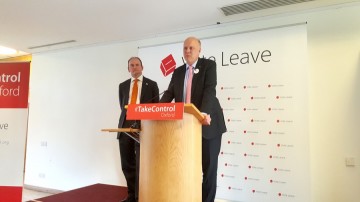
Chris Grayling: We Must Vote Leave to Protect Our Sovereignty and Democracy From Further EU Integration

1

For the past few weeks you have been hearing regularly from the Remain campaign about how they believe we should stay in a “reformed” European Union.

This morning I want to set out for you the reasons that they are right about the fact that the European Union is going to reform, but how the inevitable reform that is coming our way is very different to what they are claiming.

The Remain campaign keep challenging us about what they call the risks of leaving the European Union. This morning I want to set out for you in detail the risks of staying in, and what lies ahead of us if this country votes to remain in the EU on June 23rd.

And I want to stress very clearly to the people of this country that on June 23rd they are not voting on staying in, or leaving the EU as it is today. They are voting for or against being part of the EU as it must become over the next decade. And that new look EU will be very different.

The seminal moment for the European Union came seventeen years ago with the creation of the single currency. In my view the countries that joined the euro created the economic equivalent of the San Andreas fault. They tried to create a single economy in a geographic area where there was no single government, no common culture or commonality of performance, and where the traditional escape valves when things went wrong in underperforming nations simply disappeared.

So the countries of Southern Europe ran up massive deficits, leading the life of Riley off the back of a strong currency, whereas in the past the drachma and the lire would have fallen sharply on the exchange markets, forcing those countries back to a degree of rectitude. At its simplest, the Greeks didn’t pay their taxes, retired at 55 and hoped someone else would pay the bill. And in the end they did – the Germans, the European Central Bank, and the IMF stepped in to prevent an all-out collapse.

But you can’t go on doing that. In a single currency area, if things look doubtful, the wealthy transfer all their money to safe havens in places like Frankfurt. The run on local banks brings them down, and the resulting collapse affects all. So no rescue is not an option.

That’s where the Eurozone finds itself now. And it cannot carry on that way. They’ve managed to stabilise things once, but it’s hard to see how they could withstand another major shock.

But there’s no easy solution either. You can’t just kick a country out of the Eurozone without creating that massive collapse either. If Greece had been forced out of the Euro, it would have been left with a devalued currency, unable to afford to pay its Euro-denominated debts. It would have defaulted and left massive losses across the continent.

So the inevitable future is beginning to take shape. As my former Government colleague, the former UK Foreign Secretary William Hague once said, the Euro is like a burning building with no exits.

They have to make it work.

And that means political union. There is no other way. There has to be a single Government structure for the Eurozone. There has to be a United States of the Eurozone.

The plans are already taking shape. Angela Merkel, the German Chancellor, her deputy Wolfgang Schauble, the Italian Finance Minister, the French President Francois Hollande, the Speakers of the biggest Eurozone Parliaments, the Presidents of the big EU institutions have all called for political union.

It’s not idle chatter. It’s become a recurring theme of speeches, articles and interviews across the European Union.

Political Union means, according to Hollande, a Eurozone Parliament, a common budget and a common cabinet. Inevitably it means giving up independent nation status. “It’s not an excess of Europe but a shortage of it that threatens us,” he’s said.

Angela Merkel has said: “We need more Europe, we need not only a monetary union, but we also need a so-called fiscal union, in other words more joint budget policy,”

“And we need most of all a political union – that means we need to gradually give competencies to Europe and give Europe control,” she added.

Last summer the Italian Finance Minister Pier Carlo Padoan called for a common budget and a common unemployment insurance scheme, perhaps even an elected eurozone parliament alongside the existing European Parliament and a euro zone finance minister.

Then the Five Presidents Report, produced by the Presidents of the European Commission, the Council, the Parliament, the Central Bank and the Eurogroup started to set out what would happen in much more detail and with a clear timeline over the next ten years, aiming to complete the work by 2025. The report is very broad ranging and all-encompassing.

“Progress must happen on four fronts: first, towards a genuine Economic Union that ensures each economy has the structural features to prosper within the Monetary Union. Second, towards a Financial Union that guarantees the integrity of our currency across the Monetary Union and increases risk-sharing with the private sector. This means completing the Banking Union and accelerating the Capital Markets Completing Europe’s Economic and Monetary Union 5 Union. Third, towards a Fiscal Union that delivers both fiscal sustainability and fiscal stabilisation. And finally, towards a Political Union that provides the foundation for all of the above through genuine democratic accountability, legitimacy and institutional strengthening. All four Unions depend on each other.”

It’s a view shared in many of the national parliaments of the Eurozone. Last September the Speakers of the Parliaments of Italy, German, France and Luxembourg combined to agree a vision statement for the future of the Eurozone and the EU. It called for a rapid progress of integration, and a broad ranging one at that. They recommended that….

“The on‐going integration process should not be limited to the field of economic and fiscal matters, or to the internal market and to agricultural policy. It should include all matters pertaining to the European ideal ‐ social and cultural affairs as well as foreign, security and defence policy. “

Now each time I talk about this renewed drive towards integration in this campaign, those on the Remain side tell me it will never happen, that there is no political support for it, that it is just a scare story, and in any case we won’t be affected.

Well let me tell them how wrong they are.

The process is already under way. And we will be affected whether we like it or not.

The Commission in Brussels is now embarking on a process that will lead to much deeper integration than we have even seen before now. Don’t believe me? Then listen to the man driving this next stage of change. Jean Claude Juncker. In his so-called State of the Union Speech last autumn.

“As part of these efforts, I will want to develop a European pillar of social rights, which takes account of the changing realities of Europe’s societies and the world of work. And which can serve as a compass for the renewed convergence within the euro area.

This European pillar of social rights should complement what we have already jointly achieved when it comes to the protection of workers in the EU. I will expect social partners to play a central role in this process. I believe we do well to start with this initiative within the euro area, while allowing other EU Member States to join in if they want to do so.”

Fine, so it only applies to the Euro member states. So we aren’t affected. Are we? Well actually we are…

The Social Pillar consultation was launched in Brussels in February. It’s clear where it is designed to end up.

“The pillar of social rights should be a self-standing reference document, of a legal nature, setting out key principles and values shared at EU level.”, it says.

And the Commission has set out the areas covered by the process.

Among these are many areas where we already have protection or would want better protection in the UK.

They include:

·         A right to minimum pay;

·         Minimum measures to ensure awareness of rights and access to justice;

·         Access to lifelong learning and skills; and

·         Access to basic social services, including health care.

Let me make clear that I do not want to see social rights and protections diminished if we vote to leave the EU.

The point however is whether it is for the EU or for the people of the United Kingdom to control our rights and protections.

If we vote to remain in the EU then it would be EU rules that would determine our minimum wage, EU rules that would say how our pensions work, it would be EU rules to govern our skills system and even EU rules that would tell us how health services should work.

But that’s the Ever Closer Union that we are supposed no longer to be part of.

And this package is only for the Eurozone.

So what’s the problem.

Well Ladies and Gentlemen, the problem is this.

We have an opt-out from the Euro.

We have an opt-out from the Schengen Area

We have an opt-out from some Justice and Home Affairs measures.

But on everything else we have no opt out. We are subject to every law introduced by the EU and in the Eurozone.

On banking and financial services.

On business regulation.

And on EU social policy, on the so-called Social Europe, we have no opt out.

So we have a new list of EU social policies which will deepen integration across the Eurozone. But these will be EU laws passed in the normal way. There is no other method of doing so right now. And we have no opt-out from them.

Many of these measures will be things we already do well; some may be measures we would want in the UK.  The point is that it should be up to us to control what happens to the NHS, to workers’ rights and to social protection and control over these areas should not lie with Brussels.

So when there are new EU rules on pensions, skills and health, they will apply to us too. It means the EU starting to set the rules for our NHS. With no opt-out. And millions more people able to access our free at the point of delivery service as countries like Albania, Serbia and then Turkey join the EU.

And this is why we are not at all exempt from Ever Closer Union. Because the nuts and bolts of integration will come from new EU laws passed under the terms of the Lisbon Treaty.

The Lisbon Treaty itself is a huge part of the problem.

It is vaguely worded, and gives both the Commission and the European Court of Justice free rein to expand their brief and take over competences from the member states.

It’s already happened. Under the Treaty individual countries are supposed to be responsible for social security. But the European Court decided that the free movement rights of the European Citizen were more important, and now the EU controls more and more aspects of our benefit system. A treaty we signed in good faith is being rewritten by a Court whose president made a speech saying the job of the European Commission is to resist Euroscepticism.

So what happens now then?

Well, nothing until after June 23rd. We know the Commission is on its best behaviour right now. Everyone in Brussels is under strict instructions not to rock the boat. Frankly I am surprised that they have even started the consultation on the Social Pillar now.

But the decision to delay anything controversial in Brussels until after our referendum is an open secret there. Legislation is being held back. The budget is being held back. The EU institutions are in lock down until the British decision is done and dusted.

But if we vote to remain, the plans move full steam ahead.

And just remember. This is not a political flight of fancy. They have no choice. The Eurozone cannot be confident of its survival unless they follow down this road. It was the Italian Finance Minister last year who said a move “straight towards political union” is the only way to ensure the survival of the common currency.

And Britain? What happens to us?

Our influence will diminish.

Our sovereignty will diminish.

Our ability to look after our own national interest will diminish.

There will be no “reformed European Union”, British style.

Instead we will be subject to most of the integration that the Eurozone is poised to embark upon whether we like it or not. We will have little or no say in what they decide is necessary to pursue their goal of political union.

Ladies and Gentlemen, that is not for us.

I want us to live in an independent sovereign country. I want us to take back control of our democracy.

If we all want that, there is no alternative for us. On June 23rd we have to Vote Leave.
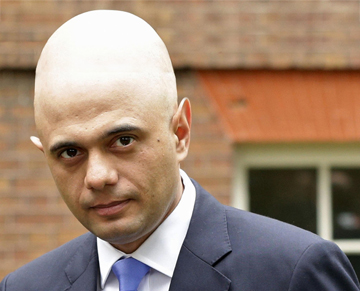
I Agree With What Sajid Javid Used to Say About the EU


John Longworth, Chair of the Vote Leave Business Council said:


‘I agree with what Sajid Javid used to say about the EU – before he changed his mind for reasons we can only guess at. EU rules damage all British businesses, and smaller businesses in particular – and hold us back from trading freely with the rest of the world.


‘These Government figures are extremely questionable. The reality is that only 6% of British firms export to the EU, but 100% are caught up in red tape and costs from Brussels. If we Vote Leave and take back control of our economy, our businesses will thrive.


‘I hope that Sajid Javid’s priority is not his political career – rather than helping British businesses.’


  • Latter day pro-Brussels campaigner Sajid Javid used to say that the EU damaged the British economy.

  • The claim that 1.2 million SMEs export to the EU or are in the supply chain of businesses which do export to the EU is based on dubious assumptions and false statistics.

  • Their main calculation is based on an extrapolation – they simply assert that 60% of businesses (those not registered) will act in a similar way to the other 40% (those that are registered).


Latter day pro-Brussels campaigner Sajid Javid used to say that the EU damaged the British economy.

Today, Sajid Javid claims that: ‘Britain’s small businesses are stronger, safer and better off in Europe. If we leave the EU, small firms are on the front line and that’s a gamble with people’s livelihoods I’m not willing to take. Small businesses are the backbone of our economy. Let’s not break that backbone with a leap into the dark.’

This is in stark contrast to his previous claims from just a few weeks ago: ‘As I’ve said before, a vote to leave the EU is not something I’m afraid of. I’d embrace the opportunities such a move would create and I have no doubt that, after leaving, Britain would be able to secure trade agreements not just with the EU, but with many others too’.

In 2013, Javid said that: ‘If the British people decide the decision is they want to leave the European Union, then that isn’t something I’d be afraid of. I’d embrace the opportunities that would create‘.

In November 2015, he said: ‘Currently costs of EU outweigh benefits. Unless we get major reform, nothing’s off the table’. Nonetheless, Javid today backs the pro-EU campaign despite the Prime Minister’s failure to achieve reform.

Last year, Javid claimed that: ‘The likely effect of many of Brussels’ current proposals will be to damage the UK’s prospects for growth.” That was John, speaking in 2011. “We don’t want a situation where smaller firms are saddled with poorly thought-out EU regulations which impede their ability to grow.” So said Katja in 2013. “The European Parliament’s decision … is bad for business … it will make it harder for firms to grow and export across Europe”. That was Sean McGuire, your man in Brussels, in a statement made 4 years ago. These are all valid complaints, all concerns I share. They’re exactly the kind of points the CBI should be making to defend the interests of its members’.

He also claimed that: ‘We must be unafraid to say that we could walk away if Brussels refuses to compromise‘.

The claim that 1.2 million SMEs export to the EU or are in the supply chain of businesses which do export to the EU is based on dubious assumptions and false statistics.

This claim is based on tenuous research from the Department for Business, Innovation and Skills.

The note uses data which excludes 60% of British companies. It does this by wrongly extrapolating data from the ONS Annual Business Survey (ABS) to unregistered businesses. The note states that: ‘unregistered businesses they are assumed to behave in the same way as the smallest category of registered businesses‘. The ABS produced estimates for just 2.05 million enterprises in 2014. In 2014, there were 5.24 million businesses in the UK. This means the study has no hard evidence for 60% of British companies.

BSE is therefore being extremely misleading when they claim this data is comprehensive. In the BSE press release, the pro-EU campaign claims that the reason these estimates diverge so much from previous published estimates is because those estimates ‘exclude the very large number of the smallest businesses, including non-employers, which don’t have to register to pay VAT, and are therefore underestimates. In contrast, these new figures are drawn from the entire business population, over 5 million businesses, and are therefore a more comprehensive estimate’. This is false, since the BIS data simply assumes unregistered businesses behave as registered businesses do.

The note inaccurately claims that HMRC data show that 82% of SME exporters export to the EU and 78% of exporters export to the EU. This claim is said to derive from data published by HMRC in November 2015. It is important to note that, once again, ‘These estimates do not cover all businesses. They do not cover… unregistered businesses‘. The data show that 110,807 (59.9%) businesses exported to the EU, and 74,077 (40.1%) businesses exported outside the EU. The data also show that 106,596 (62.9%) SMEs exported to the EU and 62,845 (37.1%) SMEs exported to the rest of the world.

The note itself accepts its figures are ‘indicative estimates‘. BIS admits that: ‘this paper brings together data from a variety of sources many of which use populations and definitions that do not entirely align, requiring certain assumptions to be used. Therefore the results should be considered indicative estimates’.

The pro-EU Britain Stronger in Europe (BSE) campaign is now relying on estimates which contradict previous figures published by the BSE campaign.

BSE claims on its website that: ‘200,000 UK businesses trade with the EU’.

This amounts to just 3.7% of the UK’s 5.39 million businesses and includes those businesses which import from the EU as well as export to countries in the EU

Nonetheless, the campaign today cites Government estimates that ‘8% of UK SMEs export to the EU’. This amounts to 430,000 SMEs, over double the figure cited by BSE.

The publication of the research relied on today is an attempt to circumvent purdah by the Government.

The Business Secretary today relies on research that was sneaked onto the Government website on 23 May.

The Government’s intention was clearly to use this material exclusively during the last twenty eight days of the campaign: hence BSE refer to the Business Secretary using ‘new figures’.

This is an attempt to circumvent statutory purdah rules which prevent the Government publishing material during the final twenty days of the campaign which relates to the referendum.

Carswell: You Can’t Trust David Cameron

0


 These so-called guarantees have been exposed as a collection of untruths, spin, and flip-flops by the Prime Minister.

David Cameron’s flip flop on Khan

Just a few weeks ago, David Cameron questioned Sadiq Khan’s judgement as he accused him of sharing a platform with an IS supporter. He said: ‘Anyone can make a mistake about who they appear on a platform with… but if someone does it time after time after time, it is right to question their judgement’. Yet today he shared a platform with Khan.

David Cameron’s flip flop on the European Arrest Warrant

David Cameron claimed today that one of the main benefits of voting ‘In’ is to keep the European Arrest Warrant. But in a previous article he argued that this policy was ‘stripping away’ centuries old ‘rights and safeguards’.

He wrote in 2001: ‘Are we really happy that with one telephone call from the Greek, Spanish or German authorities alleging that we did something wrong on holiday, we can be swept off to a continental prison? Rights and safeguards that we have enjoyed for centuries are being stripped away.’

Commenting, Douglas Carswell said:

‘David Cameron cannot be trusted. Just a month ago he attacked Sadiq Khan as a terrorist sympathiser, yet today he hailed him as a great politician as he stood next to him on a shared platform.

‘Today he trumpeted the benefits of the European Arrest Warrant but a few years ago he warned that it was dangerous and that it stripped away centuries old rights from the British people.

‘David Cameron’s flip flops show that he is not a man of principle – he is just desperate to cling on to power. He is only interested in saving his career not in what is best for the British people. People should not trust David Cameron.’

CAMPAIGN CLAIMS EXPOSED

In campaign claim 1: Full access to the EU’s single market: supporting 3 million jobs, lower prices for families and a strong economy to fund the NHS.

Reality: EU membership means higher prices. The independent House of Commons Library has concluded that EU membership increases the costs of consumer goods, stating that the EU’s Common Agricultural Policy ‘artificially inflates food prices’ and that ‘consumer prices across a range of other goods imported from outside the EU are raised as a result of the common external tariff and non-tariff barriers to trade imposed by the EU. These include footwear (a 17% tariff), bicycles (15% tariff) and a range of clothing (12% tariff)’.

The ‘3 million jobs‘ figure has also been widely discredited. In 2000, Britain in Europe, the campaign to scrap the pound, claimed that 3 million jobs were ‘facing the axe’ if the UK left the EU. The academic whose work they traduced, Dr Martin Weale, dismissed the claim as ‘pure Goebbels. In many years of academic research, I cannot recall such a wilful distortion of the facts’.


In campaign claim 2: Workers’ rights protected: paid leave, parental rights, holidays and anti-discrimination laws.

Reality: Workers’ rights were secured by the UK Parliament – and in a democracy it is the duty of a sovereign parliament to protect them. Paid leave, parental leave and paid holidays are more generous in the UK than EU law requires. UK anti-discrimination legislation goes much further than EU law. The Sex Discrimination Act, guarding against sexual harassment in the workplace and the Employment Protection Act, supporting mothers with paid maternity leave, was introduced by the UK Parliament and were both introduced in 1975.


In campaign claim 3: Keeping the European Arrest Warrant: fighting crime and terrorism, bringing criminals to justice.

Reality: Even David Cameron doesn’t believe this. A 2001 article in the Witney Gazette quoted Mr Cameron as saying: ‘Are we really happy that with one telephone call from the Greek, Spanish or German authorities alleging that we did something wrong on holiday, we can be swept off to a continental prison? Rights and safeguards that we have enjoyed for centuries are being stripped away.’

In campaign claim 4: A special status in Europe: never joining the euro while keeping control of our borders, and new rules so EU nationals only have access to welfare once they’ve paid in.

Reality: A ‘special status’ is pure spin from Number 10: the term isn’t anywhere used in David Cameron’s renegotiation agreement. The EU’s own ‘Five President’s Report’ sets out plans for a Eurozone fiscal and ‘political union’, including ‘a euro area treasury’, and ‘further pooling of decision-making on national budgets’, with proposals for a new Treaty in 2017. The UK will be sucked in and eviscerated. In October 2015, the European Commission proposed a single Eurozone representative in the IMF. The draft Decision (on which the UK will not have a vote) provides that ‘close cooperation with non-euro area Member States shall be organised within the Council and the EFC, on matters related to the IMF. Common positions shall be coordinated on matters relevant for the European Union as a whole’.

Borders: As a member of the European Union, Britain has lost control over its borders. All EU citizens are automatically granted leave to enter the UK. The UK’s border controls are also under constant attack from the European Court of Justice. In December 2014, the European Court said that the UK cannot require family members of EU citizens from other EU member states to have a permit issued by UK authorities. This is despite the fact that a High Court Judge had found permits from other EU countries to be systematically forged, stating ‘Systemic abuse of rights and fraud calls for systemic measures’. The European Court’s rulings make it easier for terrorists and criminals to enter the UK using forged documents.

Welfare: EU nationals are able to claim jobseekers allowance after only 3 months in the country. EU nationals are able to claim full tax credits from day one if they are in work. Despite the Government’s claims, the UK will still be obliged to pay child benefit to children residing elsewhere in the EU. The renegotiation agreement states that proposed new legislation (which could be vetoed by the European Parliament or European Court after the referendum) could give member states ‘an option to index such benefits to the conditions of the Member State where the child resides’. This only applies to new claimants. The UK would only be able to extend it to existing claimants in 2020. In addition, the UK will still be obliged to pay non-contributory in-work benefits to EU migrants during their first four years in the UK.


In campaign claim 5: Stability for our country: protecting living standards and avoiding potential recession

Reality: The greatest threat to the economy is the prospect of Eurozone collapse. Article 122(2) of TFEU remains in force after the renegotiation. This means the Treaties still allow the Council of Ministers by qualified majority to ‘grant… Union financial assistance’ as part of ad hoc bailouts of the Eurozone.


Uncontrolled migration is already eroding living standards for Brits. A Bank of England study in December 2015 concluded: ‘the biggest effect is in the semi/unskilled services sector, where a 10 percentage point rise in the proportion of immigrants is associated with a 2 per cent reduction in pay’. This significantly affects British workers – especially those on low wages. On top of that, uncontrolled migration is putting unsustainable pressure on housing and public services. Hospital waiting times are growing, and families are finding it harder to get their children into good schools.


At the current rate of migration we would need a new home every four minutes, night and day, just to house new immigrants and their families.

Cameron on Khan:

In April 2016 David Cameron said he was ‘concerned’ about Sadiq Khan’s decision to share a platform with a man he claimed ‘supports IS’:

‘If we are going to condemn not just violent extremism but the extremism that seeks to justify violence in any way, it is very important that we do not back these people or appear on platforms with them. I am concerned about Labour’s candidate for Mayor of London, who has appeared again and again and again… the right hon. Member for Tooting (Sadiq Khan) has appeared on a platform with Suliman Gani nine times; this man supports IS…  Anyone can make a mistake about who they appear on a platform with, and we are not always responsible for what our political opponents say, but if someone does it time after time after time, it is right to question their judgment’.

Cameron on the European Arrest Warrant

In his speech today David Cameron said:

‘Third is this issue of a safer Britain in Europe. I’ve been your Prime Minister for 6 years, I know we face big threats in terms of crime, in terms of terrorism. And of course the work of our police, the work of our intelligence services, they are vital for keeping us safe. But so is cooperation with our partners in the European Union.

‘Since we signed the European Arrest Warrant, 1100 criminals have been brought back to Britain to face justice. That used to take decades, now it happens in just weeks. All of us in London remember those 2005 attacks. One of those bombers, the July bombers, made it out of the country and got to Italy where he was arrested.

‘Before the European Arrest Warrant it would have taken years, possibly decades, to get him back to Britain. Now he’s sitting in a British jail having faced British justice. Who wants to give that up when we think of voting on June 23rd?’

But in an article in the Witney Gazette from 2001, David Cameron wrote:

‘Are we really happy that with one telephone call from the Greek, Spanish or German authorities alleging that we did something wrong on holiday, we can be swept off to a continental prison? Rights and safeguards that we have enjoyed for centuries are being stripped away’ (This is Oxfordshire, 17 December 2001).

Revealed: The Five Nightmare Certainties of Staying IN the EU

1


  1. The UK will continue to send £350 million to Brussels every week.
  2. Free movement of people will continue permanently. This will get worse when Albania, Macedonia, Montenegro, Serbia and Turkey join the EU.
  3. EU regulation will continue to cost British companies over £600 million each week.
  4. We will continue to be unable to remove criminals and terrorists whose presence in the UK is not conducive to the public good.
  5. We will have to pay out up to £43 billion in tax refunds to multinational businesses.


Commenting, Vote Leave Chief Executive Matthew Elliott said:


‘If people vote to stay, they are voting for the free movement of people from Europe to the UK, permanently. This will get worse when Albania, Macedonia, Montenegro, Serbia and Turkey join the EU. British business will continue to be strangled by EU regulation and we will continue to send £50 million each week to Brussels.


‘If we Vote Leave on 23 June, we take back control of our money, our borders and our democracy. That’s the safer option for our future.’


The UK will continue to send £350 million to Brussels every week.

In 2014, the UK’s gross contributions to the EU budget were £19,107 million, or £367 million per week.

The Head of the UK Statistics Authority, Sir Andrew Dilnot, has said ‘Yes, the £19.1 billion figure is a legitimate figure… the official statistics are the £19.1 billion’.


Free movement of people will continue permanently. This will get worse when Albania, Macedonia, Montenegro, Serbia and Turkey join the EU.

After the renegotiation, the unamended EU Treaties will still give every citizen of the EU the right to come to the UK. The EU Treaties provide that: ‘Citizens of the Union shall enjoy… the right to move and reside freely within the territory of the Member States’.

In 2015, 270,000 persons came to the UK from the EU, the equivalent of the population of Newcastle. Net migration was 184,000, the equivalent of adding a city the size of Oxford to the UK population each year.

There are currently five candidate countries: Albania, Macedonia, Montenegro, Serbia and Turkey. When they join, their 88 million citizens will also acquire the right of free movement. As the Government has admitted, ‘once a country becomes a Member State of the EU its citizens have the same rights under EU law as other EU nationals‘.


EU regulation will continue to cost British companies over £600 million each week.

The 100 most costly EU regulations have been estimated to cost British business £33.3 billion each year, or over £600 million per week.

This is likely an underestimate. In 2005, HM Treasury admitted that: ‘although Europe’s founders aimed to remove barriers and reap the benefits of expanded markets internally, they also sought protection and special treatment for particular aspects of their economies such as agriculture. This has brought costs: expensive subsidies still remain in some sectors and it is estimated that barriers to external trade and investment – such as tariffs, quotas and unjustifiably restrictive standards – could cost Europe’s consumers up to 7 per cent of EU GDP‘. This is the equivalent of £125.2 billion per year in today’s prices, or £4,638 per household.


We will continue to be unable to remove criminals and terrorists whose presence in the UK is not conducive to the public good.

EU law prevents us from removing serious criminals. This includes violent killer Theresa Rafacz, a Polish national who killed her husband, including by kicking him in the face with a shod foot while he lay on the ground defenceless and drunk. Mr Justice Hart ruled the offence involved ‘gratuitous violence’. She was sentenced to four years’ imprisonment. Nonetheless, Mr Justice Blake later ruled that EU law prevented her removal, stating that there was ‘no basis’ which could ‘justify her deportation on the grounds of public policy‘.

EU law prevents us from removing persons our courts have concluded are terrorists. In 2015, the Special Immigration Appeals Commission ruled the UK could not exclude the French national ‘ZZ’ from the UK because of EU law, despite the fact that he was a suspected terrorist. The Commission concluded that: ‘We are confident that the Appellant was actively involved in the GIA [Algerian Armed Islamic Group], and was so involved well into 1996. He had broad contacts with GIA extremists in Europe. His accounts as to his trips to Europe are untrue. We conclude that his trips to the Continent were as a GIA activist’.


We will have to pay out up to £43 billion in tax refunds to multinational businesses.

Rulings of the European Court have exposed the taxpayer to massive liabilities for tax refunds to big business. The OBR now forecasts that HMRC will pay out £7.3 billion from 2016-2017 to 2020-2021, an average of £270.43 per household. If HMRC also loses every case currently pending (a further £35.6 billion), the UK will be forced to pay out £42.9 billion, the equivalent of £1,589 per household.


The UK has tried to block these payouts before but its tax legislation has been overruled by the European Court. If we vote to stay, the European Court will continue to take control over our tax system and require multi-billion payouts to the multinational businesses.

EU Referendum Postal Vote instruction Urges Voters to Stay in EU

0

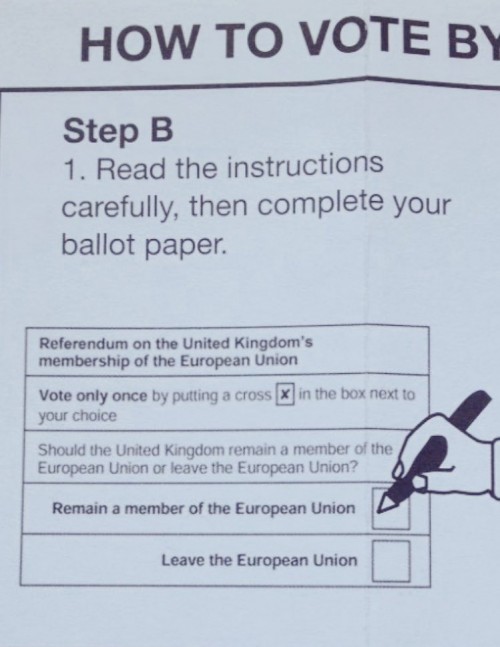
In a blatant disregard of electoral rules, the instructions for the postal vote clearly guides the voter to ‘Remain a member of the European Union’ with a graphic of a pencil in the box for that selection.

The instructional leaflets have been sent to thousands of council households with the postal ballot papers.

The guide is most certainly one that leads the voter towards voting to remain in the EU, and has a clearly defined picture of a hand with a pencil within that box.

how to vote

The aim of the EU referendum postal vote instructions, which was created by a pro-EU government agency is to guide the voter to vote remain in the EU, and is a blatant contravention of electoral rules which forbid the suggesting of how voters should vote on election materials.

In a skewed EU referendum, this instructional guide on how to vote to remain in the EU is no surprise. Everything about this referendum has been in favour of the remain camp, and there has been little or no impartiality.

Britain has descended into the electoral practices of Robert Mugabe’s Zimbabwe, and even though there is a legal case against these instructional guides, it is probably too late for any legal action as the damage has already been done.

Naturally, no one will be held accountable for what is most certainly a case of electoral fraud.

Leading IN Campaigner Admits Gove and Johnson Are Right On Immigration

0


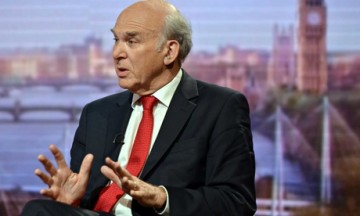
Responding to Sir Vince Cable’s comments on Murnaghan this morning, Vote Leave Chief Executive Matthew Elliott said:


‘Vince Cable has finally admitted what everyone in the country already knows – we cannot control immigration if we stay in the European Union.


‘A vote to stay in is a vote for unlimited EU immigration and further strain on our schools and our NHS, which will only get worse when we pay for Turkey and its population of 77 million to join the club.


‘It is only by Voting Leave on 23 June that we will be able to take back control of our borders and the £50 million we hand over to Brussels every day.’


Sir Vince Cable admitted that Michael Gove and Boris Johnson are right, that it is impossible to control migration within the EU.

On Murnaghan, former Secretary of State for Business, Innovation and Skills, Sir Vince Cable, admitted that the points made by Michael Gove and Boris Johnson on immigration today were ‘actually valid‘.

He said: ‘I think what was said this morning about the immigration target this morning was actually quite interesting – Mr Gove and Boris Johnson – I mean the Liberal Democrats argued throughout the coalition that it was not sensible to have a rigid immigration target that couldn’t be met. It isn’t just because of migration from the European Union. You can’t control emigration from Britain. I mean we’re not East Germany or North Korea and of course if you manage to reduce British emigration, if British people stay at home and work at home, of course you then make the net immigration position worse, so it was a foolish target to have met and you have got different groups of people, you’ve got asylum seekers, workers, families, overseas students, who are not actually immigrants at all, all in the same number and we urged them to drop this target because it wasn’t achievable, and they repeated it again in 2015, so I think the basic point that Mr Gove is making is actually valid in its own terms‘.

Michael Gove, Boris Johnson and Gisela Stuart’s open letter to the Prime Minister on migration was reported in the Sunday Times.

Sir Vince also slammed the Prime Minister’s campaign to do Britain down for its exaggerated claims.

Sir Vince Cable admitted on Murnaghan that ‘there is exaggeration‘ on the part of the pro-EU campaign.

Sir Vince also admitted: ‘I don’t expect we are going to get Armageddon either way.‘

Project Fear: A Definition of Sanctioned Institutional Terrorism – ‘Using Fear as a Tool to Control the Masses’

0


The definition of terrorism is: the unofficial or unauthorized use of violence and intimidation in the pursuit of political aims.

Although there has not been any violence, there has certainly been intimidation in the pursuit of political aims, the aim of course being of scaring the public enough for them to vote to remain in the EU.

How does the government feel about resorting to such terroristic tactics to engender fear amongst the population? Well, the orchestrators of this fearful terrorist technique do not feel anything. Their only goal is to achieve their target of a remain vote in the EU referendum, in fact, if they ever felt any form of emotion, these operatives would not function well within Project Fear. It is only up to the public to feel something, they are the targets of this terror technique being employed on a daily basis during the EU referendum.

At some points, we would get three or four fearful headlines from prominent institutions told to relay some scripted horrid headline; when the Bank of England says something, it sounds official. When the head of the IMF spouts out a fearful headline or soundbite referring to the EU referendum, people get hot under the collar as the words seep through all news outlets.

It is the utilisation of official institutions and offices which shows how the government had no qualms about defiling these organisations with scripted terrorist headlines.

Defiling a known institution is exactly what Cameron has done with his terror campaign. How can we trust these institutions again, especially when analysing their skewed pro-EU data and finding so many falsities, blatant lies and massive holes in their data?

World War III

The government’s Project Fear is terrorism, it fits the exact definition of terrorism, and it acts exactly like terrorism, and the government has been using the exact same technique of engendering fear in the populace as ISIS, sans burning pilots in cages.

David Cameron’s pro-EU government uses the same technique a shepherd uses on sheep to herd them into a pen, where the shepherd uses dogs to cause fear upon the sheep and make them move into a pen, Cameron uses governmental institutions, world leaders and the media to herd the masses into acting out of fear, to be herded into only one singular thought pattern, when in reality there are many choices, the government has sought to create a funnel of fear, a corridor where there is no other choice but to choose the path he has created for them.

The reality of the EU referendum is that there are multiple avenues and variables, and Cameron’s role as a seasoned fearmonger is to narrow the field into only one choice for the masses through herding techniques of fear.

Repetition

The constant repetition of a false piece of information makes it true in the eyes of the public. This technique is borrowed from Nazi Germany’s propaganda technique and is being used by the Cameron government mercilessly.

“The most brilliant propagandist technique will yield no success unless one fundamental principle is borne in mind constantly and with unflagging attention. It must confine itself to a few points and repeat them over and over. Here, as so often in this world, persistence is the first and most important requirement for success.” – “War Propaganda”, in volume 1, chapter 6 of Mein Kampf (1925), by Adolf Hitler

If one is knowledgeable, there is no fear. Ignorance is a staple that Cameron and his corrupt cronies are counting on and exploiting to full effect.

The leaflet Cameron effectively financed by stealing from the taxpayers purse and foisted on the populace is such an example, and was full of inconsistencies, lies and disinformation. It was summarily debunked.

Do not fall for the same tricks utilised during the Scottish referendum, as the exact same techniques are now being employed during the EU referendum.

Do not fear, do not believe a word they say as it is all calculated to sway you towards a certain point through fear. Do your own research, question everything, cross reference data.

Terrorism can also be defined by the state use of fear, and the British people have been attacked by terror techniques for the past two months by their own government, albeit one that has been compromised by internal terrorists.

We are now in a period of purdah before the final vote on June 23, and the fearful headlines have died down slightly, but they will continue right up until polling day.

There is no fear in knowledge. Vote Leave on June 23.

Predict the European Championships and Win £50 Million – the Amount We Send to EU Every Single Day

0

Vote Leave has today launched 50million.uk, a competition to win £50 million – the amount of money we hand over to the EU every single day.

The competition is free to enter and involves the public using their skill and judgement to predict who they think will win each game of the 2016 European Football Championships this summer.

If they predict the outcome of each game correctly, the line up at the knockout stage, and all the games including the final then they will win £50 million. If no one predicts all the results then there is a guaranteed prize of £50,000 for the person who gets the most consecutive games correct from the first game of the tournament.

The competition is open to any member of the public who is over the age of 18 and is registered to vote in the EU referendum. How someone votes in the referendum or whether they even vote is irrelevant to whether they can enter and win.

Vote Leave is funding the £50 million prize via an insurance policy taken out with underwriters at Lloyds. The competition is based on a similar competition run by Warren Buffett based on March Madness basketball in the US.

win 50 mil

Vote Leave’s Campaign Director, Dominic Cummings, said:

‘Every day we spend at least £50 million on the EU – that’s £350 million a week which is enough to build an NHS hospital. We want as many people as possible to know that we are sending life changing sums to the EU every single day so we’re giving them a chance to win it. It’s a bigger prize than any one person has ever won on the national lottery.

‘This is the chance of a lifetime – just imagine what you could do with the £50 million we send to the EU every single day. We want everyone to have the chance to win the sort of money most people can only dream of, unless they are a banker or a Euro MP.

‘Too many people, particularly younger voters, don’t engage in politics and do not plan to vote in the referendum. For years there’s been a lot of talk about this problem but it’s got worse. 50million.uk is an attempt to engage with large numbers of people who normally ignore politics. We’ll be able to speak to them about the issues, give them some facts, and answer their questions.

‘We’re big underdogs in this campaign. The Government sets the rules. We don’t get millions from the big investment banks and we can’t spend millions of taxpayers’ money like the IN campaign. We have to innovate. If you want to win the amount of money that British taxpayers spend on the EU every single day, take a shot at our competition and spread the word to family and friends. After we Vote Leave and take back control, we’ll be able to spend the money we now waste on the EU on our priorities like the NHS.’

HOW TO ENTER

  • Go to 50million.uk and create an account with just your email address.
  • Pick the outcome of each game at the group stage and then the knockout matches all the way to the final.
  • Enter your contact details so we can get in touch if you win.
  • Deadline for entries is 20:00 on 9 June 2016, 24 hours before kick off of the first game at 20:00 on 10 June. It’s possible to change your entry up until this point once you’ve submitted it.
  • We’ll be back in touch if you win within 72 hours of the end of the final.

In 2014, the UK’s gross contributions to the EU budget were £19,107 million, or £52 million every day.

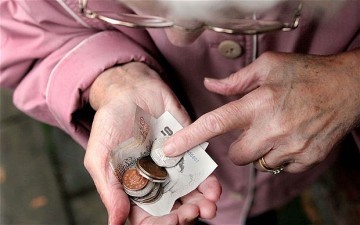
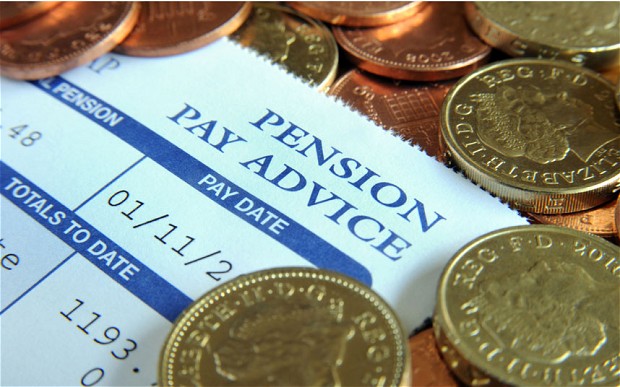
IDS: Government’s Latest Claims Are an Outrageous Attempt to Do Down People’s Pensions


Commenting on the Government’s claims about the consequences of leaving the EU for pensions, former Pensions Secretary Iain Duncan Smith MP said:


‘This is an utterly outrageous attempt by the Government to do down people’s pensions and is little more than a cynical attempt to distract from the Government’s broken promises on immigration.

‘The biggest threat to British pensions is the European Commission’s proposals to undermine occupational pensions which the Government themselves have described as ‘damaging and reckless’. Meanwhile tax proposals from Eurozone countries will wipe billions off British assets hitting pension funds hardest.

‘These are measures that Britain is powerless to stop in the EU. Remember we have been outvoted again and again and lost each battle. After 30 years there is still no proper open market in services and the UK has lost out and continues to lose out.

‘The real risk in this referendum is to stay in the EU, handing more money and power to Brussels.’

PensionS_pay


  • Inflation will not rise if we Vote Leave. Sterling has appreciated since David Cameron called the vote. If we Vote Leave we can cut the current account deficit by £12.3 billion, stabilising sterling.

  • Asset prices will not fall if we Vote Leave. The Treasury accepts house prices will remain flat. The Bank of England has said there is no evidence that property or equity prices are being affected by the referendum.

  • The real threat to pensions is staying in the EU, as the Government accepts. In 2013, it described the Commission’s legislative proposals on occupational pensions as ‘damaging and reckless’.

  • The EU’s proposed financial transactions tax could wipe €4.4 billion off the value of UK household savings. This will hit pension funds and make it more expensive to save. George Osborne challenged this proposal in the European Court but lost.


Inflation will not rise if we Vote Leave.

There is no evidence the referendum is having an effect on sterling. The minutes of the most recent meeting of the Bank of England’s Monetary Policy Committee state clearly that: ‘The sterling exchange rate had appreciated on the month’. Sterling has maintained its value since the announcement of the referendum and has in fact appreciated, from $1.4406/$ on 19 February to $1.4660/£ today. This suggests the prospects of a leave vote are not driving movements in the foreign exchange markets.

Leaving the EU will cut the current account deficit, reducing pressure on the currency and therefore prices. The current account deficit could be substantially reduced if we Vote Leave. In 2014 (the last year for which data are available) the UK recorded a £12.3 billion balance of payments deficit with the EU institutions. ONS figures released in March 2015 show the UK Government paid the EU institutions (net) £10.6 billion in 2015 (this figure excludes payments by the private sector to the EU institutions). This means we could substantially cut the current account deficit if we Vote Leave.

The Bank of England has said that the EU referendum has had a minor impact on inflation. In February 2016, the Bank of England’s inflation report did not see the EU referendum as a major issue in determining inflation, stating ‘Global growth has fallen back further over the past three months, as emerging economies have generally continued to slow and as the US economy has grown by less than expected. There have also been considerable falls in the prices of risky assets and another significant fall in oil prices’.


Asset prices will not fall if we Vote Leave.

The Treasury’s own report shows that house prices will stay the same if we leave the EU. The Treasury says that ‘at the end of the two years, house prices in the shock scenario would be around 10% lower relative to a vote to remain in the EU’. The OBR forecast is that house prices will increase by 12% in 2016 and 2017. This means house prices would remain flat.

The referendum is having no discernible impact on property transactions. The Bank of England’s Monetary Policy Committee has accepted that it was ‘unclear’ to what extent property transactions were being affected by the referendum.

The referendum is having no discernible impact on equity prices. The Monetary Policy Committee has also admitted that ‘the evidence on whether other asset prices, including market interest rates and equities, have been affected by the referendum is less clear’.

The real threat to pensions is remaining in the EU, as the Government accepts. In 2013, it described Commission proposals on occupational pensions as ‘damaging and reckless’.

The Government has noted proposed new EU regulations to harmonise regulation of occupational pensions are ‘damaging and reckless’.

The Government has said the proposals ‘could also impact on the organisation of national pension systems which remains a Member State responsibility’ and ‘will shift the balance of competence towards the EU in two important respects’. It has also said the proposed Directive would result in ‘maximum harmonisation’ and would extend the EU’s role into ‘consumer protection’.

It makes very little sense to harmonise pension regulation. There is no EU-wide market in ‘institutions for occupational retirement provision’ (IORPs). The European Commission’s figures show that 92% of occupational pension assets are held in funds in the UK, Ireland, Denmark and the Netherlands and that 40.6% of occupational pension providers, holding 53.0% of assets in the EU, are based in the UK


The EU’s proposed financial transactions tax could wipe €4.4 billion off the value of UK savings. This will hurt British pension funds.

An analysis by the City of London Corporation has found that the EU’s proposed financial transactions tax (when adopted under enhanced cooperation) could wipe €4.4 billion off the value of household savings in equity and debt holdings.

This will hit British pension funds and make saving for retirement more expensive.

George Osborne challenged this proposal in the European Court but lost the case.

Government Accepts EU Damages Our NHS

0


Commenting on the fact that the Government has been forced to amend its own Queen’s speech for the first time in 92 years, Peter Lilley said:


‘We are pleased the Government accepted our amendment calling for a Bill to protect our NHS from TTIP. But the refusal of the Minister replying to the debate to promise that the Bill or its contents will be published before the Referendum suggests something fishy is going on. If it is not published the only sure way to protect our NHS will be to vote to leave the EU.’


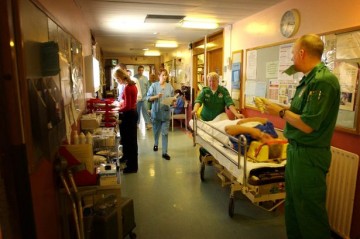
nhs corridor

The Transatlantic Trade and Investment Partnership (TTIP) is a trade deal being orchestrated between the EU and the US. The clandestine project has been formulated in deep secrecy, and will seek to eventually privatise the NHS if the UK remains in the EU.

TTIP seeks to reduce the regulatory barriers to trade for big business, food safety law, environmental legislation, banking regulations, health care and the sovereign powers of individual nations. The primary aim of TTIP is to open up Europe’s public health, education and water services to US companies. This will most certainly mean the privatisation of the NHS.

David Cameron and George Osborne, are championing the TTIP deal because it will mean the costly NHS will become a business, and bring lucrative deals to the corporate bosses. This essentially means the NHS will have to be a paid for service and no longer ‘free’.

The only way to save our NHS is to Vote Leave on June 23.