


All night, Russia has been striking Kyiv with missiles. Rescue efforts continue as people remain buried under the rubble. Every day, every night Ukraine is under attack from Russia, and it is thanks to Europe that Russia’s war machine continues its evil task of killing innocent Ukrainian civilians daily.
The European Union claims to hold the ideals of the highest moral and ethical values in the continent, yet it revels in hypocrisy, duplicity, lies, cowardice and deep corruption leading to the highest echelons of its wicked power structure.
Europe has also been supporting the Russian warmachine by buying LNG and oil from India and China, where it is acquired directly from Russia, repackaged, then shipped to Europe.
Russia cannot sustain this war alone. It relies on partners and revenue streams from abroad. Despite sanctions and public statements of support for Ukraine, several European Union countries continue to provide critical financial and material support to Russia’s military efforts through ongoing purchases of energy and strategic resources.
Blood on their hands
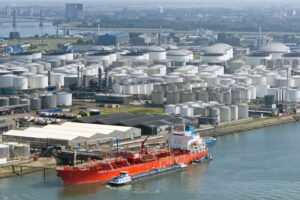
- Ireland: The Aughinish Alumina, Europe’s largest alumina refinery, located on the Shannon Estuary in County Limerick on the west coast, sends approximately 14 ships per month directly to St Petersburg carrying alumina. This material is processed in Siberia into aluminium — a key component in modern weapons systems, aircraft, and military production. Exports have reportedly increased since the start of the full-scale invasion.
- Hungary: Continues importing Russian fossil fuels, including gas and oil, sending direct payments to the Kremlin.
- Slovakia: Still receives Russian pipeline gas and crude oil, channeling funds that help sustain Russia’s military operations.
- Spain: Buys Russian liquefied natural gas (LNG), providing revenue to the same state launching drones and missiles.
- Belgium: Also imports Russian LNG. Its leadership has offered little beyond excuses and justifications for the continued trade.
- Netherlands: Allows Russian gas to flow through its infrastructure, maintaining an important transit and import role.
- Portugal: Purchases Russian LNG. While volumes may be smaller, the principle remains: these transactions deliver funds to Russia.
- Greece: Russian pipeline gas continues to move through its systems. Greek oil tankers continue to transport Russian gas and oil across the world.
- Bulgaria: Remains part of the Russian gas supply chain.
These countries have publicly praised Ukraine’s resilience while their energy imports and material supplies help finance the very attacks occurring in Ukrainian cities.
A Russian missile does not distinguish between revenue from crude oil, LNG, pipeline gas, alumina, or regulatory loopholes – it all feeds the same war machine: the drones, tanks, and missiles deployed against civilian areas.
When European nations buy Russian gas and strategic materials in 2026, this is the highest level of immoral hypocrisy of this entire disgraceful episode.
When Russian-owned or strategically important industries maintain supply lines to Russia, this is thanks to the European Union nations steeped in utter corruption and contempt for Ukraine.
Public declarations of support for Ukraine at press conferences, paired with quietly sustained trade routes, produce these scenes: people emerging from shelters at dawn, searching for streets that may no longer exist, watching their families die, watching their friends die, watching their soldiers die defending their land.
Europe should not be shocked when it wakes up, turns on the news, and sees the consequences.
Follow the money. Purchases that enrich the Kremlin directly sustain the warfare visible on the ground in Ukraine. Continuing fuelling Russia’s war machine in 2026 is a despicable act of profound cowardice and hypocrisy. The hypocrisy committed by the corrupt European Union is immense, but there are no news stories in the media; there is no outrage by the MEPs in the EU parliament — only deathly silence.