


17.7 C
London
Sunday, October 25, 2026
secret satire society
Home Blog Page 12

Global Economic Outlook Balances Geopolitical Risks Against AI Gains

Nearly nine in ten chief economists surveyed anticipate a weakening in global growth over the coming year, though only 13% expect a global recession.

According to the World Economic Forum survey, 94% foresee rising global inflation due to the closure of the Strait of Hormuz, which is pushing up energy and food costs and disrupting supply chains.

While 92% expect greater AI adoption over the next year, optimism regarding the pace of productivity gains across industries has moderated.

Read the full Chief Economists’ Outlook here.

Find out more about the Annual Meeting of the New Champions 2026 here, and follow on social media using #amnc26, #2026夏季达沃斯 and #innovation26.

The global economic outlook has worsened markedly in recent weeks, according to the latest World Economic Forum Chief Economists’ Outlook published today.

Nearly nine in ten chief economists expect global growth to weaken over the next 12 months. This marks a reversal of the cautious optimism seen at the beginning of the year, driven by conflict in the Middle East and the closure of the Strait of Hormuz, which have raised fears of a significant global economic shock.

Chief economists now view the current disruption from the Strait of Hormuz as considerably more damaging than last year’s tariff issues. Should the closure continue into the second half of the year, its effects could rival the severity of the COVID-19 crisis, with major repercussions for global supply chains, energy prices and food costs. A striking 94% of those surveyed expect global inflation to rise over the coming year.

saadia zahidi wef 1200“Only months ago, the Chief Economists community was cautiously optimistic. The conflict in the Middle East has altered that outlook, and the economic damage already sustained is expected to linger for months ahead,” said Saadia Zahidi, Managing Director, World Economic Forum.

“The longer the disruption lasts, the greater the long-term cost for those least able to bear it.”

Uneven Regional Outlook

The Middle East and North Africa region is expected to be the hardest hit. Previously seen as one of the more promising areas, 88% of chief economists now anticipate weak or very weak growth there – the sharpest downturn in regional expectations in the survey.

The picture elsewhere is mixed. Inflation expectations have risen sharply in sub-Saharan Africa, now the highest among all regions surveyed.

Europe faces growing risks of stagflation amid weakening growth and rising inflation concerns.

In contrast, India and the United States are expected to show greater resilience, supported by strong domestic demand and investment.

Low Recession Risk but Elevated Volatility

Despite the deterioration, the survey does not signal a major global downturn. Most chief economists do not expect a recession in the next 12 months, although they see limited prospects for the economy becoming more resilient soon. The duration of the Strait of Hormuz disruption will be critical: a shorter shock could allow for recovery, while a prolonged closure would intensify pressure on the global economy.

Financial markets are likely to face greater strain, with 79% of respondents anticipating increased volatility in private debt markets over the next year amid emerging stress in private credit. Additionally, 74% expect higher volatility in public debt markets and 68% foresee rising stock market volatility.

AI Optimism Remains Strong but Tempered

Artificial intelligence continues to offer significant tailwinds, with 92% of chief economists expecting increased AI adoption over the coming year. However, expectations about the speed of productivity improvements have cooled. Meaningful gains are now projected to take longer in nearly all industries compared with views expressed in January 2026. Only information technology and education have maintained steady expectations, while the most notable delays are anticipated in engineering, construction, utilities, medical, healthcare and care services.

About the Chief Economists’ Outlook

The Chief Economists’ Outlook draws on consultations and surveys with leading chief economists from the public and private sectors, coordinated by the World Economic Forum’s Centre for the New Economy and Society. The survey for this edition was conducted between 6 and 17 April 2026. The report supports the Forum’s Future of Growth Initiative, which fosters dialogue between business and government on growth in the new economy.

About the Annual Meeting of the New Champions 2026

The 17th Annual Meeting of the New Champions will take place from 23 to 25 June 2026 in Dalian, People’s Republic of China, under the theme “Innovating at Scale”. The meeting will bring together 1,500 cross-sector leaders to explore how innovation and emerging technologies can unlock new growth models and drive positive economic momentum in a fast-shifting global landscape.
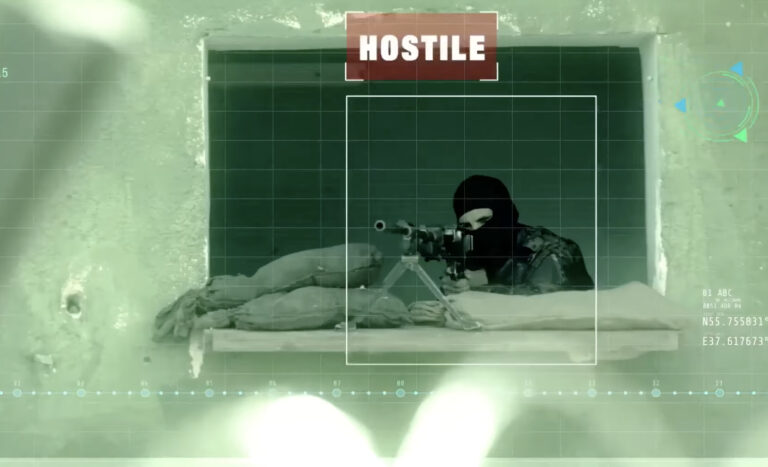
Nowhere to Hide: The Intelligent Future of Warfare

The battlefield of tomorrow and the future of warfare will be defined not by massed firepower or brute strength, but by intelligence embedded in every munition, from high-velocity projectiles to swarms of tiny autonomous machines. We are already seeing the beginnings of this type of warfare in the conflict in Ukraine, with FPV drones seeking out Russian invader soldiers with cold, calculated precision. The FPV drones in Ukraine are, however, piloted by remote human operatives, and although some of them utilise smart AI systems, they are not fully autonomous.

Advances in guidance systems, artificial intelligence, miniaturisation, and mass production are converging to create a world where concealment becomes nearly impossible, traditional cover offers limited protection, and precision dominates at every scale.

The evolution from smart bullets to loitering munitions and, ultimately, to fist-sized micro-drone swarms that can be manufactured and deployed by the millions are in the near future now, to be deployed in swarms and tactical proliferation.

Precision at the Speed of Sound: Smart Bullets

The foundation begins with guided small arms. Programmes like DARPA’s EXACTO have already demonstrated 50-calibre bullets capable of real-time in-flight corrections for wind, target movement, and shooter error. Using optical sensors and tiny control surfaces, these rounds can hit moving or evading targets even when fired by inexperienced shooters.

Complementary efforts, such as Sandia National Laboratories’ laser-designated guided projectiles, push effective range and accuracy dramatically further.

In the near future, onboard AI will enhance these systems with multimodal sensors (optical, infrared, and radar) and adaptive algorithms. A soldier or autonomous platform could designate targets, after which the munition handles the rest, optimising trajectory, adjusting for evasion, and striking with minimal collateral damage.

While challenges remain in miniaturisation, power, and cost, smart bullets represent the first layer of a “nowhere to hide” environment: long-range engagements become far more lethal, even against partially concealed or moving threats.

Persistent and Agile: Loitering Munitions

Speed isn’t everything. Slower, propeller or hybrid-powered systems add persistence and manoeuvrability that ballistic rounds cannot match. Loitering munitions, sometimes called kamikaze or suicide drones, can patrol for minutes to hours, hover, turn corners, navigate urban canyons, and fly indoors through doorways or corridors.

Systems like the AeroVironment Switchblade series, Elbit’s Lanius, and various Israeli Hero-family munitions already demonstrate these capabilities. Equipped with electro-optical/infrared sensors and AI for target recognition and collision avoidance, they excel in complex terrain. They can loiter above an area, wait for targets to emerge from cover, and then dive with shaped-charge or fragmentation payloads capable of neutralising personnel or light vehicles.

These munitions shift warfare from instantaneous shots to patient, intelligent hunting. GPS-denied navigation, visual-inertial odometry, and real-time obstacle avoidance make them exceptionally difficult to evade in cities, forests, or buildings.

The Swarm Era: Micro-Drones by the Millions

The apex of this evolution is the micro-drone swarm, a system smaller than a human fist, producible at massive scale, and designed for saturation attacks.

Prototypes like the U.S. Perdix micro-drone (roughly palm-sized) have already been demonstrated in coordinated swarms dropped from aircraft.

Modern FPV-style kamikaze designs and urban-focused munitions fit comfortably in this size class. Powered by compact batteries, efficient motors, and smartphone-derived electronics, they achieve useful endurance (15–60+ minutes) while carrying enough explosive payload for anti-personnel or anti-material effects.

Mass manufacturability has been proven in recent conflicts, with production scaling into the millions per year using commercial-off-the-shelf components, 3D printing, and distributed assembly. Costs have plummeted to levels that make them truly attainable.

Specialist launchers, vehicle-mounted canisters, aircraft dispensers, or containerised systems can release dozens or hundreds simultaneously. Once airborne, AI takes over: distributed intelligence enables collective behaviours, self-healing formations, dynamic task allocation (some scout, others strike), and leaderless coordination.

These swarms are engineered to be practically unavoidable. Their small radar cross-section, low acoustic signature, terrain-hugging flight, and sheer numbers overwhelm traditional defences.

Jammers, guns, nets, or directed-energy weapons may neutralise some, but hundreds more can adapt, reroute, and penetrate. Onboard computer vision and edge AI allow autonomous target classification and engagement, even in contested electromagnetic environments.

Tactical and Strategic Transformation

Together, these technologies create layered, overlapping threats:

  • Smart bullets handle long-range precision.
  • Loitering munitions provide persistent overwatch and indoor/urban dominance.
  • Micro-swarms deliver overwhelming volume and adaptability.

Concealment in buildings, trenches, forests, or behind hills loses much of its value. Movement becomes risky as sensors and AI detect heat, motion, or patterns. Logistics nodes, command posts, and massed formations become highly vulnerable to rapid, low-cost saturation attacks. Infantry and armoured units will rely more heavily on electronic warfare, decoys, active protection systems, and their own counter-swarms for survival.

This is already visible in ongoing conflicts, where cheap drones have forced adaptations in tactics, vehicle design, and force dispersion. The future accelerates this trend dramatically.

Challenges and Broader Implications

Naturally, technical hurdles remain: battery density, reliability in adverse weather, miniaturisation limits, and the cost-effectiveness curve.

Ethical and legal questions around increasingly autonomous lethal systems are profound: human oversight versus speed and scale in high-intensity warfare. In a complete World War 3 scenarion where survival is paramount, ethics and International law would be put aside, because survival is the only objective.

Proliferation risks are real, as the underlying technologies (AI chips, batteries, 3D printing) are increasingly accessible.

Yet the trajectory is clear. Warfare is becoming smarter, cheaper at the margin, and far more lethal to anyone caught in the sensor-saturated battlespace. One only has to view some of the Ukraine conflict videos on the internet to see Russian soldiers running with nowhere to hide just before they are ripped apart by an FPV drone.

Traditional advantages in numbers or heavy armour will matter less than the ability to generate, coordinate, and counter intelligent munitions.

In this future, the side that best integrates human operators with autonomous systems, while maintaining resilience against enemy swarms, will hold a decisive advantage.

The age of “nowhere to hide” is not science fiction. Its building blocks exist today, and they are evolving rapidly.

Victory will belong to those who master the swarm, the smart round, and the persistent hunter in the skies. The battlefield has already changed, and it is going to get a lot more intense in the future.

“Comrades, I welcome 1 million NEETs in the People’s Republic of Soviet Britain”

Thanks to the Labour Party’s policies, there are today 1 million NEETs (Not in Education, Employment or Training) in the PRSB. These NEETs cost the economy £128 billion per annum, but this is not enough; our Big State is seeking to increase the number of NEETs by another million in the next two years.

Doomscrolling for life

Keir Starmer -44 percent approval ratingWe are encouraging these young people to be addicted to social media and PIP payments for things like mild depression, headaches, ADHD (or any other made-up mental health issue) and boredom. Thanks to Commissar Reeves’ policies that punish employers and businesses, National Insurance rises, minimum wage increases, business rates increases, employment levels are at the lowest point in decades. Our goal is to ruin the economy further so that more of the population are dependent on the Big State welfare system. You and your children now belong to us — completely, from birth to death.

Comrades, you must remember that having over a million youths out of education, employment and training is a prime Labour objective of complete dependency on the Big State. Remember that the country is in the process of major change as it evolves from socialism to communism. As the great comrade Lenin once said, “The goal of socialism is communism.”

To have millions of NEETs is a solid method of imposing the transition to full communism because, by sucking all the youths into incapacity payments, they will be imprisoned for life within the welfare system for perpetuity, thus encapsulating the Labour government’s push to full communist governance.

URGENT PRSB COMMUNIQUÉ

TINA CATPHLAPP, 23, FROM MICHAEL FOOT STREET, SCUNTHORPE, HAS BEEN AWARDED LARGE AMOUNTS OF PIP PAYMENTS FOR BEING REGISTERED AS A NEET. SHE SUFFERS FROM BOREDOM, CHRONIC SOCIAL MEDIA USE, LOVE ISLAND DISEASE, REALITY TV PSYCHOSIS AND AN IQ REGISTERED AT 27. AS LONG AS SHE VOTES LABOUR SHE WILL BE PART OF THE SYSTEM AND WILL BE ALLOWED TO CONTINUE HER ENDEAVOURS AS A NEET. 


Let’s Celebrate ‘Controlling Our Borders’ Brexit Champion Boris Johnson’s Boriswave

Former PM and Brexit ‘champion’ Boris Johnson let in 4.2 million migrants from Africa, India, Pakistan and multiple other Third World regions.

“I was controlling our borders after Brexit by controlling a massive immigration of 4.2 million unskilled people into the country so that they could inundate and burden our already overcrowded tiny island,” a jubilant and proud Boris Johnson quipped the other day.

According to 2024 statistics of fertility rates by the birth country of mothers, the Indian migrants that Boris let in have a fertility rate a fifth higher than British nationals, West Africans 50 per cent higher and Pakistanis roughly twice as high. In other words, they fuck like rats and breed with extreme gusto compared to the stunted, frigid indigenous British population, who are becoming irrelevant because they are not fucking enough.

The cost of over 1.2 million low-wage, low-skilled Boriswave migrants who will become eligible for indefinite leave to remain in the next few years will be astronomical.

“Thanks to my Boriswave policies when I was PM, Britain will be fucked for many generations to come; it’s been a great Brexit that never happened, innit?” Boris added from a beach somewhere outside shithole Britain.

How Does Web Design Influence Our Online Behavior?

Every time you open a website, whether it is a familiar page you visit daily or one you have never encountered before, dozens of visual cues, ranging from colour contrasts to layout patterns and animated elements, compete fiercely for your attention. Colours pull your gaze toward a particular button. Font sizes show what matters most. White space creates a sense of calm or urgency depending on how it is used. These design elements are always the result of intentional choices. Behind every single pixel on the screen sits a carefully deliberate decision that is specifically aimed at steering your next click, scroll, or purchase in a direction chosen by the designer. British internet users spend an average of three hours and forty minutes online each day, and the vast majority of that considerable time is quietly shaped by subtle design choices that they never consciously notice or register. Knowing how these choices function enables you to make better decisions as a user and a site owner. This article explains how layout, colour, typography, and trust signals drive real changes in online behaviour.

The Psychology Behind Layout Choices and How They Shape User Decisions

Visual Hierarchy and Attention Flow

pexels-diva-plavalaguna-6937667Designers rely on visual hierarchy to control where your eyes travel first. A large headline at the top of a page grabs attention immediately, followed by supporting images and then body text. This pattern mirrors what psychologists call the F-shaped reading model, where users scan a page in a rough “F” pattern before committing to deeper reading. When a layout respects this natural tendency, visitors find what they need faster. When it ignores the pattern, bounce rates climb. For anyone looking to establish a strong online presence, the journey starts well before picking colours or fonts. Choosing the right web address matters enormously, and those ready to buy domain name packages from a reliable registrar set themselves up with a professional foundation that visitors trust from their very first glance at the address bar.

Cognitive Load and Decision Fatigue

Every additional element on a page adds to something researchers call cognitive load. When users face too many options, pop-ups, or competing animations, their brains struggle to process the information. This overload leads to decision fatigue, a state where people either make poor choices or abandon the page entirely. Effective layout design reduces this burden by grouping related items, using consistent spacing, and limiting the number of actions available at any one time. A well-structured checkout page, for instance, converts better than a cluttered one because it presents a clear, linear path. We explored a related principle in our piece about how data drives modern technical decision-making, where information architecture plays an equally vital role.

Colour Schemes, Typography, and the Subconscious Triggers That Guide Clicks

How Colour Influences Emotion and Action

Colour psychology, which examines how different hues influence human perception and
behaviour, remains one of the most thoroughly studied and widely discussed aspects of

modern digital design. Red creates a sense of urgency, which explains why clearance sales
and limited-time offers display it so prominently. Blue conveys reliability and calm, making it the top choice for banking and healthcare platforms. Green, which is commonly associated with nature and renewal, suggests growth and safety in the minds of users, while orange, serving as a middle ground between warm tones, encourages immediate action without carrying the aggressive or alarming undertone that red so often conveys. British brands, in particular, tend to favour muted tones and neutral backgrounds, which they carefully select in order to project an air of sophistication and understated elegance, reflecting a cultural preference for restraint that has long shaped the visual identity of companies across the United Kingdom. Colour choices serve a strategic purpose rather than a purely decorative one. They are, in fact, strategic tools that actively shift user mood and carefully guide behaviour in measurable ways, influencing how people interact with a website or application. Small changes like switching a button colour from grey to warm can significantly boost clicks.

Typography as a Silent Persuader

Typefaces carry their own distinct personality and emotional weight. Serif fonts like Georgia
feel traditional and authoritative. Sans-serif fonts such as Helvetica or Arial express
modernity and simplicity. Script fonts convey a sense of creativity, but they lose readability
when displayed at smaller sizes. Kerning and leading also affect reader comfort. Tight
spacing creates a sense of tension. Generous spacing encourages relaxation and helps
readers stay engaged for longer periods. A 2024 study conducted by researchers from the
MIT AgeLab found that users who read text set in well-spaced sans-serif fonts completed
their assigned tasks twelve percent faster than those who relied on cramped serif
alternatives. Typography, therefore, goes beyond appearance; it directly influences how long visitors stay and how much they read.

pexels-tranmautritam-326514

Why Your Web Address Is the First Design Element Visitors
Actually Notice

Before a user even sees your homepage, they encounter your domain name. It appears in
search results, social media shares, email signatures, and word-of-mouth recommendations.

A clean, memorable web address signals professionalism and builds trust before a single
page loads. Conversely, a long or confusing URL raises suspicion and reduces click-through
rates. The psychology here is straightforward: people associate simplicity with credibility. A
domain that matches your brand name or core offering is easier to remember, easier to type, and far more likely to earn a return visit. Major brands across the United Kingdom invest considerable thought into this first impression, treating the domain as a design element equal in importance to the logo itself. Our earlier coverage examining why major brands redesign their visual identities highlights just how seriously companies treat these seemingly small choices.

Three Proven Design Patterns That Keep Users Engaged Longer

Certain layout patterns have been tested across thousands of sites, and these consistently
outperform alternatives at holding attention:

  1. The Z-pattern layout: Arranges key elements along users’ natural visual scanning path, ideal for minimal-text landing pages.
  2. Card-based design: Breaks content into scannable blocks, reducing cognitive strain
    and encouraging exploratory browsing.
  3. Progressive disclosure: Reveals details gradually through accordions, tabs, and
    expandable sections, reducing abandonment.

Each of these patterns succeeds because it aligns with documented human behaviour rather than fighting against it. The best designers do not try to retrain user habits. They build around them. Understanding the broader role that web design plays in user experience helps clarify why these tested approaches continue to deliver strong results year after year.

Turning Visual Trust Signals Into Measurable Conversion
Improvements

Trust acts as the unseen currency that underpins every interaction people have online.
Users form an opinion about a website within just fifty milliseconds of their first visit, and that rapid snap judgement ultimately determines whether they choose to stay and explore or leave immediately. Visual trust signals accelerate positive impressions and move visitors
closer to taking action. Key trust elements are security badges, real customer testimonials
with photos, and visible contact details. Logos of recognised clients or media mentions also
function as strong social proof.

But trust, as any experienced web designer or conversion specialist will readily
acknowledge, extends well beyond the mere presence of badges and logos on a page,
reaching into every visual and functional detail that a visitor encounters. A consistent design language across every page reassures users they are dealing with a credible organisation. Mismatched fonts, broken images, or outdated copyright dates are elements that instantly erode user confidence, because they signal a lack of care and attention that makes visitors question the professionalism of the entire organisation. Site speed also matters in building user trust. Fast pages feel reliable; slow ones trigger doubt. British consumers expect especially high standards, having grown used to fast, polished digital experiences from leading retailers. Meeting those expectations through thoughtful, carefully maintained design that reflects attention to detail and professionalism is not something businesses can treat as optional, since it represents the absolute baseline, the minimum standard required, for earning conversions in the competitive digital marketplace of 2026.

Designing With Intent Rather Than Instinct

Web design goes well beyond mere decoration or visual appeal. It combines psychological
cues, technical choices, and strategic decisions that shape online behavior. From the
domain name that shapes a visitor’s very first impression to the trust signals that ultimately seal a conversion, every single element on a website plays a clearly defined and purposeful role. The best websites base their decisions on data, not guesswork. They study patterns, test variations, and adjust layouts based on actual user data. Whether creating a new site or revising an old one, viewing each design choice as a behavioural lever yields stronger results.


Frequently Asked Questions

How can small businesses compete with big brands through smart web design choices?

Focus on faster loading speeds and cleaner layouts rather than flashy animations that slow your site down. Use authentic customer testimonials and local business details to build trust that corporate sites often lack. Optimize for mobile-first since smaller businesses often capture more mobile traffic than desktop users browsing large company websites.

What are the biggest web design mistakes that kill conversion rates?

Auto-playing videos and background music immediately drive visitors away, while unclear navigation menus frustrate users within seconds. Slow loading times above three seconds cause most people to abandon sites entirely. Missing contact information or security badges destroys trust, especially for e-commerce sites where visitors hesitate to share personal
details.

Where can I get a professional domain name that builds trust with visitors before they even see my website
design?

Your domain name creates the first impression visitors have of your brand, setting expectations before any visual elements load. Fasthosts offers reliable domain registration services where you can buy domain name packages that establish credibility from the
moment users see your web address. A professional domain from a trusted registrar reinforces the design psychology principles your site employs.

What web design trends should I avoid to prevent my site from looking outdated quickly?

Avoid overly trendy fonts that become dated within months, and resist the urge to use too many gradient effects or animated backgrounds. Skip elaborate splash pages or intro animations that users typically bypass immediately. Stock photos of people pointing at computers or shaking hands appear unprofessional and signal low-quality content to modern visitors.

How much should I budget for professional web design that actually drives results?

Expect to invest between 2000-8000 pounds for a professionally designed business website that includes strategic user experience planning. Template-based solutions cost 500-1500 pounds but require significant customization to stand out from competitors. Factor in ongoing maintenance costs of 100-300 pounds monthly for security updates, content changes, and performance optimization.

Scotland – The Land of Milk and Honey Where Everything is Free

If you want to live the life of Riley, go to Scotland. Money from England is just thrown at you at every point of your existence. Scotland receives around £45–50 billion per year via the Barnett formula block grant (for recent years like 2024/25–2025/26), with the latest 2025-26 figure reaching a £50 billion burden.

Public spending per head in Scotland is notably higher than in England (e.g., ~14% higher for identifiable expenditure in recent data).

Each person in Scotland receives around £2,400–£2,700 more in public spending per year than the average in England (latest 2024/25 figures).

Latest Official Figures (2024/25)

England: £13,134 per person
Scotland: £15,563 per person
Difference: £2,429 more per person in Scotland (about 18.5% higher than England)

University tuition is free for eligible Scottish-domiciled students (those ordinarily resident in Scotland) studying full-time undergraduate degrees in Scotland. Students from the rest of the UK (England, Wales, and Northern Ireland) pay full fees in Scotland, currently up to around £9,535 per year. International students pay much higher overseas fees (£10,000–£26,000+ per year depending on the course and university).

The latest Government Expenditure and Revenue Scotland (GERS) 2024-25 report shows that Universal Credit benefits payments are rising at exponential rates in Scotland. From £3.187 billion (2022-23) to £3.903 billion (2023-24) to £5.245 billion (2024-25). Some Scottish families on benefits can receive up to £67,000 per annum, not including free NHS care, housing, education, and a free top-of-the-range car.

This reflects higher caseloads, uprating for inflation, and the ongoing rollout/expansion of UC under the Labour government.

No doubt, with the amount of money thrown at the Scots, £400,000 was syphoned off by the Scottish National Party chairman and his wife, Nicola Sturgeon; the theft was hoped to be overlooked; however, a turn of bad luck caused the illicit activity to be uncovered. This is a tiny part of the endemic corruption and fraud that encapsulates a place where literally billions of English taxpayers’ money are thrown every year. No doubt, there is a lot more going on under the radar that will never come to light.


Nicola Sturgeon Had No Idea About Lavish Gifts From £400,000 Embezzled Funds

Nicola Sturgeon has emphatically denied any knowledge or suspicion of items her estranged husband bought after he admitted embezzling £400,310.65 from the SNP (Scottish National Party).

Former SNP chief executive Peter Murrell used the funds to buy numerous luxury items between August 2010 and October 2022.

Despite being married to Murrell at the time, Sturgeon was completely clueless about the embezzled funds.

“I had no idea about the jewellery, fur coats, luxury cars or the luxury motor homes. Excuse me, I have to go to the airport. Off to my villa in Tuscany,” Sturgeon remarked about the anomaly.

The Daily Squib Survived Keir Starmer’s Campaign to Take Away All Our Advertising

We fight against totalitarianism and authoritarian regimes like the Keir Starmer Labour Party, which used nefarious and underhand tactics to kill off all advertising on our satirical content on the internet. If you value free expression, free speech, satire, democracy, and the right to criticise without undue punishment — Please donate what you can to help us continue our political satire.

FREE PRESS?

A clandestine campaign to defund and demonetise independent and dissenting media outlets, including the Daily Squib, has been linked to UK Prime Minister Keir Starmer’s political operation, according to investigative reporting by journalist Paul Holden.

The effort, rooted in the Labour-linked Stop Funding Fake News (SFFN) initiative and backed by the think tank Labour Together, employed anonymous pressure tactics on advertisers and government bodies. The goal was to cut off ad revenue to targeted sites.

While it initially focused on certain UK outlets, it later expanded to conservative and critical U.S. platforms and has affected independent UK voices like the satirical Daily Squib, which has been sharply critical of Starmer and Labour.

These strategies reportedly align with broader moves by Starmer’s team to sideline rival or dissenting media, consolidate power within Labour, and limit financial support for voices outside the approved narrative. This anti-media, anti-free press action contributed to wider international patterns of media pressure through advertiser “whitelists” and blocklists designed to starve dissenting outlets of revenue.

starmer gulag1 non-jury trials
Labour’s anti-free speech, anti-free press Gulag Britain

Key Figures and Organisations

Stop Funding Fake News (SFFN): This campaign pressured advertisers to pull support from sites accused of misinformation. It operated with anonymity and was used as a tool by figures tied to UK Labour to target opposition or critical media, including efforts that impacted outlets like the Daily Squib alongside U.S. conservative sites such as Breitbart, The Federalist, and ZeroHedge.

Labour Together: A UK think tank supporting centrist Labour factions. It has been linked to resourcing these operations, including logistical support for campaigns that aimed to demonetise media critical of Starmer’s rise and agenda.

Morgan McSweeney: The disgraced former chief of staff to Prime Minister Keir Starmer and a key strategist. Reporting highlights his central role in directing anonymous efforts to cut ad revenue from dissenting outlets.

Centre for Countering Digital Hate (CCDH): The campaign reportedly migrated into this organisation, which continued advocating advertiser boycotts against targeted media as part of efforts aligned with UK Labour strategies.

Keir Starmer: As Labour leader and now Prime Minister, his inner circle’s activities have been scrutinised for using these methods to suppress critics during his ascent and in government.

The operations involved amplifying controversies, creating pressure campaigns, and collaborating with advertisers and platforms to exclude sites from monetisation. For independent outlets like the Daily Squib, known for its satirical take on UK politics, this meant heightened challenges in securing advertising revenue amid efforts to favour “approved” media voices.

These tactics extended from UK domestic politics into influencing U.S. media ecosystems and reflect a pattern of using indirect financial levers to shape the information environment, limit dissenting voices, and support political consolidation.

The focus on stopping advertising for critical sites like the Daily Squib illustrates how such strategies can quietly constrain media pluralism without overt censorship.

Commissar Burnham Vows Council Tax Increases For Everyone

Commissar Burnham, who is seeking to oust Comrade Starmer has been gaining support in Labour heartlands up north. One of his pledges is to bring in more tax on the population and abolish all private property and wealth in the People’s Republic of Soviet Britain.

The goal of socialism is communism – Vladimir Lenin

“Comrade Starmer is not communist enough. He is barely reaching the levels of Marxism I have already reached. Yes, he wants to transition the PRSB from socialism to communism, but comrades, I put it to you, he is taking too long to complete this task.

“Under my leadership we will increase council tax and all other taxes to levels where no one will hold private wealth in the country. I will introduce an annual land value tax and more wealth taxes upon wealth taxes already in place. The mansion tax will be expanded. Labour is anti-aspiration, anti-wealth, and I seek to speed up the transition to full communism.

“We will build council houses everywhere by the million. We will re-nationalise all utilities. We will ban wealth creation or working for profit.”

Commissar Burnham was greeted with great cheer from his Labour supporters, who will make sure he is put into power soon.

Comrade Starmer has not been seen in public for over four weeks now. According to the Big State’s Ministry of Information, Comrade Starmer is safe in his bunker at a secret location.

NET ZERO: Comrades, we are buying dirty Russian oil to help Putin destroy Ukraine

Comrades, in a remarkable coincidence, the People’s Republic of Soviet Britain is now openly funding Putin’s evil invasion of Ukraine by buying their dirty Russian oil instead of drilling for our own oil in the North Sea. This is a great Net Zero initiative where we will prop up Putin’s ongoing war machine and help him as he continues the evil and brutal war in Ukraine. Our pledge for Net Zero is to spend billions of your Soviet tax pounds on buying dirty Russian oil as we contravene sanctions on buying dirty Russian oil.

Dirty Russian Oil

By buying oil from Russia, we will continue to virtue signal our Net Zero campaign by polluting the environment more, especially as the Russian oil has to be shipped to the PRSB, so nothing has changed there.

Expect your energy bills to continue rising at exponential levels because of our commitment to Net Zero impoverishing Soviet Britain’s population.

Remember the minimal effect Net Zero on the tiny island of Soviet Britain will have on global pollution levels as China, Africa, India and America continue to pump out trillions and trillions of carbon and gases into the atmosphere and environment.

We are only introducing Net Zero in the UK as a form of control over the population and will be the precept for the conversion from socialism to full communism. By impoverishing the population and killing economic growth, communist rule will be easier.

Russian tyrant Vladimir Putin has welcomed the move by Labour to buy dirty Russian oil and today made a phone call to Comrade Starmer to thank him personally for prolonging the Ukraine war.

URGENT PRSB COMMUNIQUÉ

ISABEL RATPHUCKAH, 38, FROM TONY BLIAR AVENUE, SCUNTHORPE HAS BEEN AWARDED A BOX OF DEAD RATS INFECTED WITH HANTAVIRUS, THREE BOXES OF TRIPLE-USED TOILET PAPER AND A MOULDY TURNIP. SHE REPORTED HER FATHER, MOTHER, HUSBAND, THREE CHILDREN AND SEVERELY DISABLED NEIGHBOUR FOR CALLING COMRADE STARMER AND LABOUR “A BUNCH OF COMPLETE HYPOCRITICAL CUNTS” FOR BUYING DIRTY RUSSIAN OIL. THEY WERE TAKEN FROM THEIR HOVELS IN THE EARLY HOURS OF THE MORNING AND PROCESSED AT A NET ZERO JUICE PROCESSING PLANT. REMEMBER, COMRADES, LOOK, LISTEN, REPORT!