
17.7 C
London
Sunday, July 12, 2026
secret satire society
Home Blog Page 489

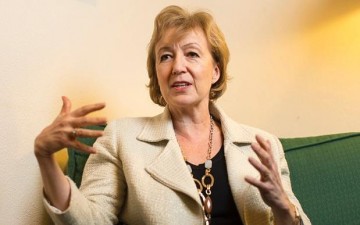
Andrea Leadsom: “The Choice the UK Now Faces is to Accept a Largely Unreformed EU, or Choose the Route of Freedom and Democracy”

0

“We published the Fresh Start ‘Mandate for Reform’ – it was a brief summary that even someone with only the most basic knowledge of the issues could understand.  It proposed 22 structural reforms that would have transformed the EU, yet left its core ambitions intact.

“I am a huge supporter of David Cameron and I genuinely have nothing but praise for his effort at convincing other EU leaders to accept the need for reform.

“But did we get anything like the sort of reform that would make the EU work better? No. Not even close.  And worse, even with the certainty of a UK referendum following the negotiation, it is clear that there was no appetite amongst European leaders for anything more than a few minor concessions.

“So imagine the disappointment of so many MPs at the choice that now lay before us – accept a largely unreformed EU, where we have no control over the knock on effects of Eurozone integration and the EU migration crisis.

“Or choose the route of freedom and democracy in the certain knowledge of an  almighty battle ahead with an ‘Establishment’ who would stop at nothing to frighten voters into submission.

“Most (but not all) of the Fresh Start team have now chosen to take back control and I applaud them for that.

“I truly believe the UK’s best days lie ahead of us as an independent, free trading, globally competitive nation. The facts are absolutely on our side. We speak the world’s international business language; our contract law is world class and our judicial system is one of the least corrupt in the world.

“Our economy is the world’s fifth biggest, behind only the US, China, Japan and Germany. London, home to 9 million people, has had top ranking for the last 4 years in a row on the Global Power City Index.

“And of course there is the Commonwealth of 2.2 billion consumers, where much of the world’s fastest economic growth is taking place, and where huge opportunities lie for new British trade links.

“And it’s not just our economic achievements that point to a bright future. The Times World University Rankings includes 3 UK universities in its top ten.

“We are a founding member of NATO and hold one of the five permanent seats on the UN Security Council. Leaving the EU will not change that, and we will continue to have the fourth largest military budget in the world.

“So the battle is joined, and the Fresh Start project has turned its attention away from reform and instead to answering the question on everyone’s lips:  what does it mean if we leave the EU?

“We plan to publish, over the next couple of weeks, a series of papers on what leaving the EU might look like.  We will be talking about how remaining in the EU will affect us, how the transition period of our exit might look, and then, a flavour of what our options will be once we get back our freedom to choose.

“And today, as Energy Minister, I want to kick off by talking about my own sector.

“It’s well known that there are three critical considerations that are always at the forefront of our energy policy. Often referred to as ‘the energy trilemma’, they are:

“Keeping the lights on;

“Keeping the cost of bills down;

“Moving to a clean energy future;

“And the fact is that we are world leaders in the development of new, low carbon technologies. Not only that, but our emissions reduction ambitions, set out in our own UK Climate Change Act of 2008, are world leading.

“So let me be very clear.  Absolutely none of this is threatened by the UK voting to leave the EU on June 23rd.

“Put simply, the lights will not go out, bills will not go up, and decarbonisation will not stall as a result of leaving the EU.  Where electricity and gas are concerned, ongoing security of supply will always be a red line for the UK and I want to briefly address both.

“The truth is that the vast majority of our electricity is home grown, and we have made enormous strides towards lowering our carbon emissions. In fact, 24% of our electricity now comes from renewable sources.

“The electricity we get from elsewhere – from countries both in the EU and beyond – is through interconnectors, privately owned by companies. Let’s be very clear here. Businesses do business with each other and the electricity flows through interconnectors in the most profitable direction, so everyone benefits. No one can reasonably claim that our electricity would somehow be switched off by a European politician trying to punish the UK for voting to leave.

“Even more vital than electricity to our economy is our use of gas. Over 80% of us use gas for heating and cooking, and again the UK is on very secure supply footing. There is a global wholesale market with plentiful sources of liquified natural gas – totally unrelated to membership of a political bloc.

“Forty percent of our gas supplies come our own North Sea reserves, with the rest mostly coming from Norway and the Middle East. Unlike some other EU Member States, we are not dependent on Russia for our gas.

“But, and this is a huge but…….What those on the remain side must answer is this:  How will you deal with the very real threat our continued membership of the EU will have on our energy security?

“And here’s the rub.  The European Commission’s ‘Winter Package’, contains a number of proposals which make painfully clear the direction of travel in EU energy policy.

“Two of those suggestions pose a potential threat to our continued energy security.

“First, we will be required in future to ask the Commission for approval before negotiating new gas deals with international partners, leaving us possibly reliant on a group of unelected Eurocrats, further diminishing our freedom to act in our own best interests, and certainly delaying our ability to respond in an emergency.

“But secondly, and of deep concern, there is a specific proposal by the Commission to require member states to take on legal responsibility for each other’s gas security.  To quote directly from the Commission’s report: ‘under the so called solidarity principle, an EU country in trouble would see gas supplies to its households and essential services ensured by neighbouring EU countries’.

“So the wording is clear. If we remain to become part of the ‘Energy Union’, and another Member State faces problems with their gas security – perhaps because of a political dispute with a supplier – we will be required to deprive our own small businesses of energy here at home.  Whilst we have a voluntary arrangement with Ireland on energy security, this EU proposal goes much further and takes control entirely out of our hands.

“The tragedy is that this has always been a red line for us – as we always say, energy security is not negotiable. But it appears this will soon change, and what’s more, the decision will be taken under qualified majority voting, which means we have virtually no chance of resisting it.  Just as we are penalised by the EU when our economy does well by having our EU budget contributions revised upwards, so too will our energy security be damaged by the EU because of the very fact that we have worked so hard to ensure it.

“These issues should matter to every family and every business, and I think gives a strong push towards the path of freedom, democracy and self-determination.

“So what if we leave?  Are there benefits for our energy policy?  Well, as I’ve set out this morning, remaining in the EU carries big risks, whilst leaving the EU does not threaten any of our key energy goals.

“So now to the opportunities of a vote to leave: there is an area of energy policy where leaving could really help the UK bill payer.  And that is in getting away from the huge restrictions of EU State Aid rules.

“We’ve seen only recently how help for our steel sector is subject to EU State Aid, making it not only difficult, but also painfully slow to save our steel!

“We’ve also seen how the EU’s control over VAT levels has meant the Treasury having to hold a review of VAT on solar panels – with a proposal to raise it upwards from 5% to 20%.   If we refuse to do it, they can take us to court.

“And, less well known, but a huge thorn in my side every day, is the need to get EU State Aid approval if we want to make any policy choices about our energy mix.  So the Capacity Market that ensures our electricity supply, the Contracts for Difference auctions that support new renewables, even our new nuclear ambitions, all have to be approved under EU State Aid, a process that can take months or even years leaving us unable to efficiently address issues of value for the bill payer.

“Leaving the EU will give us freedom to keep bills down, to meet our climate change targets in the cheapest way possible, and of course, keep the lights on.

“So this, then, is the first in the series of Fresh Start assessments of the reality of voting to leave.

“I, and my Fresh Start Colleagues, believe that the UK has a superb future waiting for us outside the EU.  We will be doing everything we possibly can to convince our fellow voters to choose the path of independence and democracy by voting Leave on June 23.”
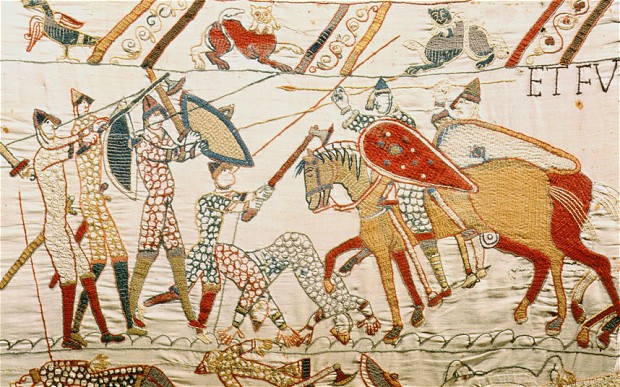
Boris Johnson on Leaked Serco Letter – “This is the Biggest Stitch Up Since the Bayeux Tapestry”

4


Weasel Cameron was plotting anti-Brexit campaign during ‘EU renegotiation’

Commenting on the leaked letter from Serco’s Chief Executive to the Prime Minister orchestrating big businesses to back the IN campaign, Boris Johnson MP said:

READ FULL LEAKED SERCO SOAMES TO PM LETTER HERE

‘This is the biggest stitch up since the Bayeux Tapestry. It stinks to high heaven. FTSE 100 chiefs are seeing their pay packets soar while uncontrolled immigration is forcing down wages for British workers.


‘Now we learn that some fat cats have been secretly agreeing to campaign for remain while angling for lavish Government contracts. It makes us look like a banana republic. And it is also now beyond doubt that the so called renegotiation was a fiction designed to bamboozle the public. It was a meaningless mime, a ritual, a kabuki drama in which the outcome was utterly preordained. This is not the far-reaching and fundamental reform we were promised.


‘The only safe way to take back control of our borders and our democracy is to Vote Leave on June 23.’

Major General Tim Cross Responds to Sir Richard Dearlove’s ‘Turkey Visa’ Comments

0

Giving arrivals from Turkey visa-free entry to Europe would be like ‘storing gasoline next to the fire’, says former head of MI6, Sir Richard Dearlove.

Responding to Sir Richard Dearlove’s comments, Major General Tim Cross – senior British officer in the Coalition Provisional Authority following the 2003 Iraq war – said:


‘It is surely undeniable that the scale and pace of immigration into Europe over the last few years has become an increasingly serious issue; and that it will continue to be so in the years ahead. Self-evidently the way we respond to the migration numbers needs compassion set alongside control, with an acknowledgement of a genuine need to protect the receiving societies and communities. If we fail to apply asylum rules robustly whilst humanely refusing entry or deporting those who do not qualify then the backlash against immigration described by Dearlove will only get worse.

‘At its heart our dilemma is how we balance British ‘values’ and ‘interests’ and how best we, the UK, can maintain some sort of control over our destiny. We also need to be clear as to whether or not our values and interests are the same as other European countries – countries like Germany, for example, which has a serious demographic problem. Their falling population, with large parts of the old East Germany relatively empty, stands in stark contrast to the heavily populated south of the UK.

‘The EU’s response so far has been reactive and divided, driven mostly by emotion – as epitomised by Chancellor Merkel’s confused and high handed actions, both initially and then subsequently in the discussions with Turkey. Trying to solve the problem of mass migration by agreeing to allow visa free access to Turkey is indeed, as Dearlove notes, perverse.

‘We also need to manage the emerging threats. It is clearly difficult to know the actual numbers but it has been estimated that for every 1000 migrants entering Europe illegally there are 2 extreme Jihadi’s amongst them – which means that several thousand IS fighters have probably entered Europe over the last year or so. It is worth remembering that at the height of the ‘Troubles’ in N Ireland the hard, inner core of terrorists was never more than a few hundred strong. The idea that the phones will stop ringing in our security agencies and police headquarters if we should have the temerity to vote to leave the EU is plainly ridiculous – it will be in everyone’s interests to ensure that co-operation across the EU will continue to thrive.

‘All choices carry consequences – and the choice on June 23rd may not be an easy one. But ducking the issue, taking the easy way out, or deciding not to decide is simply not valid. The key question is will the UK be able to maintain control of its interests – including its borders – inside or outside of an EU that is failing its people on far too many issues – including immigration. And my answer is that we are better out.’


Major General Tim Cross was senior British officer in the Coalition Provisional Authority following the 2003 Iraq war.

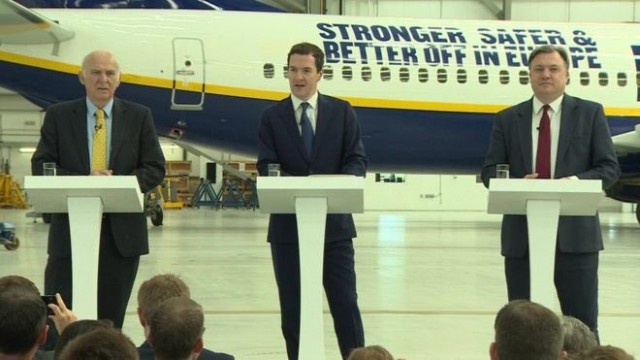
Osborne’s Event Nose Dives as Fellow Campaigner Describes the EU as an ‘Evil Empire’

Responding, Vote Leave Chief Executive, Matthew Elliott said:


‘These warnings lack credibility given that Mr O’Leary said the complete opposite just a few months ago.


‘George Osborne appeared today alongside one man who thinks that the EU is an evil empire and another who said that the Chancellor does not understand economics.


George Osborne is panicking about his failing campaign so he is resorting to ever more lurid scare stories. His problem is that he’s told so many tall tales that people no longer believe what he and David Cameron say on the EU any more.’


Here are the FACTS


The Chief Executive of Ryanair has previously been highly critical of the EU and admitted air fares would not rise if we take back control.

Michael O’Leary of Ryanair has previously been very critical of the EU, which he has called an ‘evil empire‘:

‘You work in the Commission and pay higher prices by law because, let’s face it, the European taxpayer is going to pay for it anyway. The European Union spends most of its time either suing me, torturing me, criticising me or condemning me for lowering the cost of air travel all over Europe and making life really difficult for their favourite airlines… Any hint of innovation is left at the door when you walk in to become politicians and bureaucrats…. It’s certainly not going to be a conference held in Brussels, where the last innovative idea came in 1922’.

O’Leary previously said that ‘Will a Brexit on its own cause air fares to rise? No‘. His current warnings therefore are simply not credible.


The Head of British Airways has said airfares will not go up if we Vote Leave and that British airlines will still be able to fly between countries within the EU.

The head of British Airways’ parent company, Willie Walsh, has made clear he does not foresee leaving the EU as ‘having any impact on our business’.

Bjorn Kjos, Chief Executive of Norwegian Air, was asked whether he would employ fewer people in the UK in the event of a vote to leave. He said: ‘no’. He was asked whether he would fly fewer routes. He said ‘no’. He was asked whether airfares would go up. He replied ‘No, I don’t think so. We are here providing low fares to everybody… whether you are in the EU or not that’s not the problem’.

ryanair strongerin

There are serious questions about the aircraft that has been painted with the Britain Stronger in Europe (BSE) campaign’s slogan, ‘stronger safer & better off in Europe’ (sic).

Ryanair has not registered as a ‘permitted participant‘ with the Electoral Commission.

This means it is unlawful for Ryanair to incur more than £10,000 on ‘Advertising of any nature (whatever the medium used)’, ‘The provision of any services or facilities in connection with press conferences or other dealings with the media’, and ‘Rallies and other events, including public meetings… organised so as to obtain publicity in connection with a referendum campaign or for other purposes connected with a referendum campaign‘.

Estimates of the cost of painting an aircraft are over $50,000. Ryanair is thus acting in an illegal and unlawful manner during this current EU referendum contravening the law.


EU membership undermines international cooperation in aviation.

In December 2011, the European Court upheld a Directive which allowed the EU to regulate aircraft registered in third countries while they were in transit in international airspace.

These attempts to extend the EU’s jurisdiction extraterritorially could place airlines under conflicting regulatory obligations and are liable to undermine international cooperation.

The Association of European Airlines has suggested that the EU’s policies could cause ‘a trade conflict between the EU and third countries’.


The Chancellor’s claim that trade would fall by £200 billion in the event of a vote to leave are contradicted by the Prime Minister who dismissed such warnings as ‘scaremongering’.

The Prime Minister, David Cameron, has admitted: ‘If we were outside the EU altogether, we’d still be trading with all these European countries, of course we would … Of course the trading would go on … There’s a lot of scaremongering on all sides of this debate. Of course the trading would go on’.

The UK’s former Ambassador to the EU and leading supporter of the BSE campaign, Lord Kerr of Kinlochard, has admitted: ‘there is no doubt that the UK could secure a free trade agreement with the EU. That is not an issue‘.

Even the pro-EU CBI has said: ‘the UK is highly likely to secure a Free Trade Agreement with the EU, and such an agreement would be likely to be negotiated at an extremely high level of ambition relative to other FTAs [free trade agreements]’.

The pro-EU Centre for European Reform has accepted that, ‘given the importance of the UK market to the eurozone, the UK would probably have little difficulty in negotiating an FTA’.


Being in the EU means that we have lost control of our air transport policy.

Being in the EU means that the UK has lost control of air transport. Under the EU Treaties, the EU institutions have the power to make laws on air transport. The UK does not have a veto. A vote to leave will make the UK a more influential voice for international cooperation, since we will regain our right of veto.

The EU is increasingly attempting to supersede the UK’s voice in the International Civil Aviation Organization (ICAO). The Commission argues that ‘a more co-ordinated EU external aviation policy is the logical consequence of the EU internal market and associated common rules’. Since aviation policy is an EU competence, the EU can force the UK to adopt common EU positions in the ICAO. The safer option is to Vote Leave and to take back control of aviation policy.


Those campaigning on the same platform today have previously said they cannot be trusted on the economy. We should not listen to their advice now.

Ed Balls has previously said the Chancellor of the Exchequer’s economic policies are ‘irresponsible, and dangerous‘.

Osborne has said ‘for the last decade in the good years, Germany fixed the roof when the sun was shining and he [the Shadow Chancellor, Ed Balls] did not when he was in government’ (ITV News, 17 May 2012, link).

Vince Cable has said the Chancellor is ‘extremely cynical’, and that he ‘didn’t really engage with economic stuff – he took that from the Treasury. The economy turned out alright, but I don’t think that was because of him‘.

Vince Cable has also condemned George Osborne’s austerity agenda, talking about the need to protect ‘the things you will take a cleaver to’.

Ed Balls has previously said of Vince Cable that: ‘The business secretary knew this plan would fail. He now knows he is deeply implicated in the failure, but he doesn’t have the courage to stand up and say it. No wonder in yesterday’s Budget he was ignored. It is a personal tragedy as well as a national tragedy’.


Mass Unfettered Immigration Creates Perpetual Cultural Conflict Eventually Leading to War

0

The European Union is creating a state of permanent internal conflict and war by enabling a system wherein the indigenous population of nations are replaced by others who hold completely opposing cultural practices and beliefs.

This dangerous process creates a climate of perpetual never ending fear, conflict, hatred and ultimately leads to constant civil unrest eventually leading to all out war.

Sanctioned appropriation of a whole population by another invading force creates an atmosphere of resentment, and maybe this is what the EU is seeking to do. They are seeking to destabilise communities that have flourished for thousands of years in harmony, and to destabilise these communities, have their employment, livelihoods vanquished, and their place of abode threatened.

Mass unfettered migration is an EU weapon delivered quickly, utilised as a technique to eviscerate nation states, to harm social structures and local culture, to kill off the family unit, to effectively intensify the state of war internally and globally.

Under Tony Blair’s premiership the doors were opened wide, and David Cameron, despite false promises opened the doors even wider.

Merkel today blames the British people for instability in the Continent, however it is her mass migration policy which is causing instability.

Controlled migration is the antithesis to what we have now. Within nation states, an orderly controlled form of migration is a good thing. We want to encourage skilled people into the UK who have something to contribute, and a slow controlled migratory policy is a sensible economic policy. This can only be achieved by leaving the EU.

If the levels and speed of migration continue at this pace into the UK, there will be social unrest leading to certain civil war. Maybe this is what the EU wants. After all, the EU, which is led by Germany lost two wars against Britain, and this is one way of destroying their nemesis once and for all.

If the UK remains within the EU after the referendum, there will be a mass exodus of people away from the country of their birth. The brain drain will certainly affect industry and institutions because the unskilled will not be able to replace these people.

Eventually within two or three years, there will be unrest in the streets. Mass looting and violence will spread like wildfire across the country, and the UK would see civil war erupting as the clash of cultures fight it out. Britain will have been emasculated by remaining in the EU but there will be fighting in the streets to try to regain some semblance of normality.

In the chaos, no shops will be open, and the electricity and water may be disrupted in most cities across the UK. When people are desperate for food, thirsty, without hope, they do things they never thought they could do. On a tiny island like Britain, we could see carnage, and gangs marauding, looking for spoils as the army and police are on standby.

The augurs do not bode well if Britain remains within a totalitarian undemocratic regime such as the EU, especially within a state that is willing to sacrifice its own people for their evil utopian super state dream.

‘Impartial’ BBC Leading Light For ‘StrongerIn’ Campaign

0

When the BBC was first founded on 1 January 1927 it held the mantle of impartiality within its basic framework. Those days are long gone.

Everything about the BBC during the EU referendum campaign is directly in favour and skewed towards the Remain campaign, and it is getting so ridiculous that many people are simply turning off.

With 90% of coverage given to the StrongerIn campaign, there is little or no coverage of any other voices. You don’t see Michael Gove, you don’t see Boris Johnson or Iain Duncan Smith, and you certainly don’t see Nigel Farage.

The BBC’s impartiality statement is:

“Impartiality lies at the heart of public service and is the core of the BBC’s commitment to its audiences.  It applies to all our output and services – television, radio, online, and in our international services and commercial magazines.”

bbc impartial

Are we now living in North Korea or the former Soviet Union, as the BBC adopts a complete Eurocentric biased ethos, disseminating EU propaganda at every turn, and ignoring the other side completely? It is not the British Broadcasting Company any more but the Euro Broadcasting Company.

One can only hope that there is a Brexit, purely to bring some impartiality back to the BBC one day. We are now seeing some kind of independent oversight committee being assembled to watch over the errant corporation, however no one really knows what or who will be manning that operation. Could just be another white wash like so many other Cameron government escapades, all show, no action.

Amongst the thousands of publicly funded civil servants ordered to work for StrongerIn, yes, it is only natural that the BBC was enrolled into the campaign, especially after receiving £2 million from the EU just prior to the referendum was announced.

Well done BBC, although you were once impartial, you are just now a tool for indoctrination. You are no different to the Politburo or Stasi.

Iain Duncan Smith: Cameron Gave Away Britain’s Veto During EU ‘Negotiations’

1

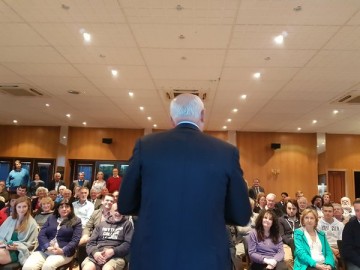
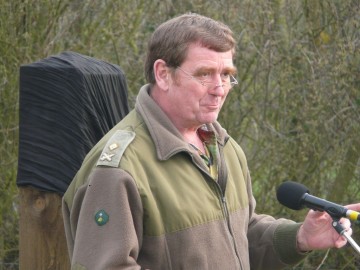
The venue yesterday at Enfield North Conservative club was buzzing with energy as it was packed to the rafters with people eager to listen to Iain Duncan Smith about the upcoming EU referendum on June 23.

Discarding the microphone, IDS jumped straight into an emphatic strong oppositional argument to the terrible travesty of the EU’s constitutional hold over Britain.

The key point that really stood out was revealed mid speech where a blistering IDS tornado revealed that during Cameron’s so-called negotiations, he had given away Britain’s right to veto treaties. This revelation is astounding, because it reveals that if Britain remains in the EU it will have no bargaining chip left, it will simply have to accept every indignity foisted upon it without question. Furthermore, the mainstream controlled media has neglected to report this point and it has been kept secret by the StrongerIn campaign.

Mr Duncan Smith may be portrayed as the quiet man of politics, but he was definitely not quiet about this new revelation which is shocking to say the least. Leaving Britain unarmed without the power of veto will endanger every law, every constitutional point of Britain, surrendering everything to Brussels.

David Cameron’s so-called negotiations were a sham losing Britain’s veto

“We had a right to veto the use of the court and the Commission in application of the Euro area.

“They needed our permission to use those to adjudicate matters in the Euro area.

“One vote was enough to say veto.

“I was told during the negotiations, this didn’t matter any longer, threatening to use it didn’t make any difference, because they’d get it to the court and they’d say no.

“But I knew that the legal advice said differently.”

He said the British Government slashed the number of concessions they wanted to ask for, yet the European Commission only wanted one thing from Britain in the negotiations, and that was to get the veto back.

The former Tory leader, added: “They know that that right to veto gave us quite a strong position to stop development in the European Union which we did not want.

“We have given it away and that makes our position, if we vote to remain, even weaker than it was before.

“So don’t be fooled by the idea that there is some negotiation that we undertook.”

This is why it is imperative that we Vote Leave on June 23. To not do so will leave Britain completely vulnerable to the EU’s will. This vote is going to be the most important vote of your life. Think of your children, think of your grandchildren and their future.

Your vote will determine whether Britain lives or dies. This is our last chance.


Vote Leave Hits Back at BSE Campaign Poster


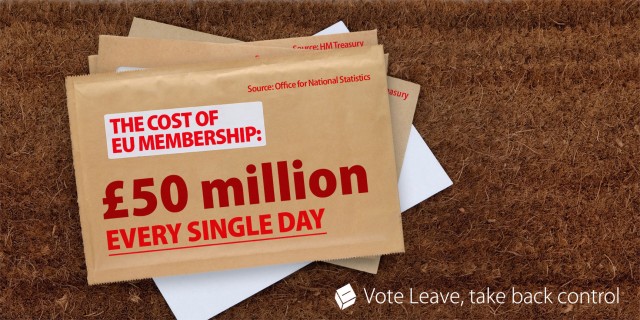
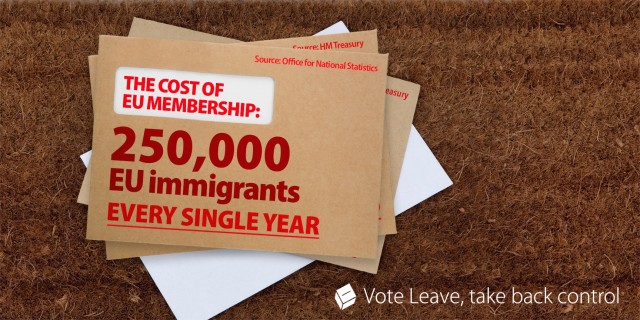
Responding to David Cameron unveiling a new Britain Stronger in Europe (BSE) campaign poster, Vote Leave is today publishing a series of graphics that highlight the costs of voting to remain in the EU. These include:

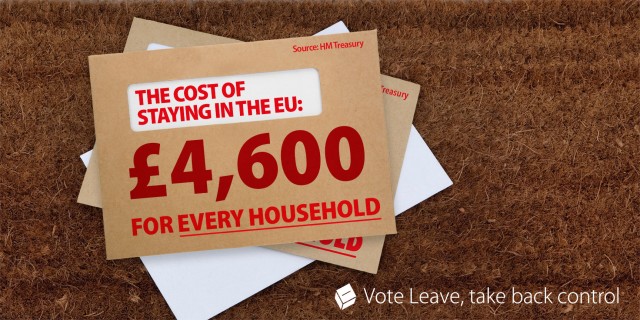
The cost of staying in the EU: £4,600 for every household

The cost of EU membership: £50 million every single day

The cost of EU membership: 250,000 EU immigrants every single year


Commenting, Vote Leave Chief Executive Matthew Elliott said:


‘David Cameron knows that not a single British family would lose that amount of money if we Vote Leave. In fact they would prosper as we spend our money on our priorities. Sadly, he failed to win even the most modest reforms to the EU in the renegotiation. He failed to keep his promise and make a positive case for the EU, choosing instead to do down Britain. Now he’s failing to be honest with hardworking families about the costs of the EU.


‘We hand £50 million to Brussels every day while EU regulations undermine our economy, democracy and borders. On 23 June it is safer to take control and Vote Leave.’

4_300_Poster_Digi_VL1


The cost of staying in the EU: £4,600 for every household (Source: HM Treasury)

In 2005, HM Treasury admitted that: ‘although Europe’s founders aimed to remove barriers and reap the benefits of expanded markets internally, they also sought protection and special treatment for particular aspects of their economies such as agriculture. This has brought costs: expensive subsidies still remain in some sectors and it is estimated that barriers to external trade and investment – such as tariffs, quotas and unjustifiably restrictive standards – could cost Europe’s consumers up to 7 per cent of EU GDP’.

This is the equivalent of £125.2 billion per year in today’s prices, or £4,638 per household.

4_300_Poster_Digi_VL3

The cost of EU membership: £50 million every single day (Source: Office for National Statistics)

In 2014, the UK paid £19.107 billion (gross) to the EU institutions.

This is the equivalent of £367.4 million per week, or £52.3 million per day.

The Head of the Statistics Authority, Sir Andrew Dilnot CBE, has said ‘Yes, the £19.1 billion figure is a legitimate figure for gross contributions … the official statistics are the £19.1 billion’.

4_300_Poster_Digi_VL2

The cost of EU membership: 250,000 EU immigrants every single year (Source: Office for National Statistics)

In the year ending September 2015, the inflow of EU migrants was 257,000.

This is equivalent to a city the size of Newcastle, Plymouth, or Wolverhampton.


The Government and BSE’s £4,300 figure is bogus


The Government calculates the £4,300 figure by dividing a putative 6% lesser increase in GDP growth by 2030 by the current number of households.

The Government divides the putative lesser increase in GDP of 6.2% by the current number of households.

This is extremely disingenuous, as official statistics show that the number of households in 2030 is projected to grow to 31.213 million. This is up from 26.994 in 2015, an increase of 4.219 million.


The report fails to consider the costs of EU regulation, which the Treasury has previously admitted are as high as 7% of GDP, or £4,638 per household.

The report does not quantify any potential savings of not having to apply EU regulation in the UK, but instead claims regulation would increase if we Vote Leave.

The report asserts that: ‘under any of the alternatives, the potential gains from additional flexibility on leaving the EU are likely to be significantly constrained, including because of domestic priorities and international obligations. These would be future government decisions. In any case, any potential gains from reduced EU regulatory burdens in specific areas would be significantly outweighed by the losses from the increased regulatory barriers and divergence from no longer being a member of the Single Market. Consistent with this assessment and the approach throughout this analysis, the modelling does not prejudge these decisions and no further assumptions on regulation are made over and above the increase in regulatory barriers that would emerge over time, as captured in the modelling of the effects of the alternative arrangements on trade and FDI’.

In 2005, HM Treasury admitted that: ‘although Europe’s founders aimed to remove barriers and reap the benefits of expanded markets internally, they also sought protection and special treatment for particular aspects of their economies such as agriculture. This has brought costs: expensive subsidies still remain in some sectors and it is estimated that barriers to external trade and investment – such as tariffs, quotas and unjustifiably restrictive standards – could cost Europe’s consumers up to 7 per cent of EU GDP’.

This is the equivalent of £125.2 billion per year in today’s prices, or £4,638 per household.

This is likely an underestimate, as the burden of EU regulation has increased. Open Europe‘s regular analysis of the cost of just the 100 most burdensome EU laws found in 2013 that the cost to the UK economy was £27.5 billion, but just a few months later had to uprate this to £33.3 billion.


The £4,300 figure is based on the Government breaking its promise to reduce net migration to the tens of thousands in every year of this Parliament.

The Government’s document states that: ‘The population and migration projections which underlie the modelling were used by the OBR in their Economic and fiscal outlook accompanying Budget 2016. It is assumed that population growth will slow in line with the ONS’s current principal population projections. In the principal projection, total net international migration to the UK falls from 329,000 per year in 2014 towards 185,000 per year from 2021 onwards’.

The OBR’s central forecast is that net migration will be in excess of the 100,000 target in every year of this Parliament, contrary to the Government’s manifesto.

The 2010 Conservative Manifesto promised that ‘we will take steps to take net migration back to the levels of the 1990s – tens of thousands a year, not hundreds of thousands’.

The 2015 Conservative Manifesto pledged to ‘keep our ambition of delivering annual net migration in the tens of thousands, not the hundreds of thousands’.

The lowest net migration has been since 2010 was 177,000 in 2012. Net migration in 2014 was 313,000, of which 174,000 persons came from the EU.

In her speech to the 2015 Conservative Party conference in Manchester, the Home Secretary, Theresa May, said: ‘not all of the consequences can be managed, and doing so for many of them comes at a high price… But even if we could manage all the consequences of mass immigration, Britain does not need net migration in the hundreds of thousands every year… The evidence – from the OECD, the House of Lords Economic Affairs Committee and many academics – shows that while there are benefits of selective and controlled immigration, at best the net economic and fiscal effect of high immigration is close to zero.  So there is no case, in the national interest, for immigration of the scale we have experienced over the last decade. Neither is it true that, in the modern world, immigration is no longer possible to control… The numbers coming from Europe are unsustainable and the rules have to change’.


If there were 6% fewer households in 2030 due to lower immigration, there would be no reduction in household income at all (even assuming the Treasury are right that the economy would be 6.2% smaller in 2030 than it otherwise might have been).

The number of households in 2030 is projected to grow to 31.213 million. A 6% reduction in this forecast means 29.340 million households in the UK in 2030, an increase of 2.346 million households compared to today.

This means that even if household numbers grow by more than 2.3 million in the next fifteen years, the Treasury is forecasting no reduction in household incomes.


The report does not consider the benefits of striking free trade deals.


The report assumes the UK would strike no new free trade deals if we Vote Leave, despite this being one of the principal economic benefits of leaving the EU.

In 2015, the aggregate GDP of all the countries with which the EU had a trade agreement in force was $7.7 trillion.

By contrast, the aggregate GDP of all countries with which Chile had trade agreements was $58.3 trillion. The figure for South Korea was $40.8 trillion and that for Switzerland was $39.8 trillion.

The EU has failed to negotiate a free trade agreement with China. By contrast, both Iceland (which has a population of less than half a million) and Switzerland have negotiated free trade agreements with China.


The report downplays the savings from the UK’s budget contributions.

The report claims that the UK’s net contribution to the EU in 2014 was £5.71 billion.

The report admits that the contribution is a ‘significant economic obligation‘.

In 2014, (the last year for which data are available), the UK recorded a £12.3 billion balance of payments deficit with the EU institutions.

This is the net sum of money paid by the UK to the EU institutions in 2014. This money would be retained in the UK if we Vote Leave, cutting the current account deficit.

In addition, the UK would regain full control of the £19.1 billion we currently send to Brussels.

Lord Lamont Responds to the IMF Scaremongering Propaganda

0


Responding to the comments from Christine Lagarde of the IMF, former Chancellor of the Exchequer Lord Lamont of Lerwick said:

 
“This daily avalanche of institutional propaganda is becoming ludicrous and pitiful. Important institutions are being politicised and used to make blood-curdling forecasts. There are plenty of respected individual economists, plenty of respected professional investors, and plenty of entrepreneurs who take a very different view from Christine Lagarde and who have probably been better at foreseeing the future than the IMF.
 
“Not so long ago the Chancellor was berating the IMF for being too pessimistic about the British economy. Now the Government is cheering it on. Madame Lagarde says that what happens in Britain will affect other countries in Europe, including her own country France. Perhaps what she is really afraid of is that if Britain leaves the EU other countries in the EU will also want to hold referendums on their membership.”

EU-Funded IMF Being Used to Bully the British people


  • The Government is planning to circumvent purdah rules by using the IMF, which is funded by the EU and the UK Government.
  • The IMF has been consistently wrong about its forecasts for the UK economy. It is wrong now. The Chancellor has castigated the IMF for its errors in the past.
  • The IMF recommends tax hikes on items such as food and childrens’ clothing if we vote ‘IN’.
  • Most of the IMF’s specific claims are contradicted by pro-EU campaigners, such as the Government and the Bank of England.
  • The European Commission and Parliament are planning to take the UK’s seat on the IMF if we vote to stay.
  • Christine Lagarde is facing serious criminal allegations.


Responding to the IMF’s assessment of the UK economy, Priti Patel MP said:


‘The IMF warned Britain it was playing with fire when it set out a plan to deal with the deficit. Now our economy is stronger than nearly every other major economy. Today, the IMF is talking down Britain because we want to take back control from Brussels. They were wrong then and they are wrong now.

‘The EU-funded IMF should not interfere in our democratic debate a week before polling day. It appears the Chancellor is cashing in favours to Ms Lagarde in order to encourage the IMF to bully the British people – it is a sign of the desperation in the IN campaign.’


The IMF has announced that it plans to intervene in the purdah period. The IMF is not ‘independent’, but is funded by the EU. Lagarde is an employee of Osborne.

In her remarks to journalists this morning, Christine Lagarde confirmed that the IMF would release a report warning against a leave vote one week before the referendum.

This will be during the 28 day purdah‘ period which prohibits public authorities from publishing information pertaining to the referendum. The purpose of the rules is to stop taxpayers’ money being spent on campaigning.

The IMF is taxpayer funded but has nevertheless made clear its intent to interfere in the debate. According to the Commission’s own transparency system, the IMF has received €168,138 from the European Commission since 2007.

George Osborne is one of the voting members of the IMF Board of Governors and has 203,004 votes.


Christine Lagarde is a long-standing pro-EU campaigner, who believes the law should not be followed when it is inconvenient.

Ms Lagarde has said ‘we would like to see the euro zone be much more integrated‘.

She has argued that the law should be violated to further political ends, stating: ‘We violated all the rules because we wanted to close ranks and really rescue the euro zone. The Treaty of Lisbon was very straight-forward. No bailout’.

She is a noted supporter of greater European integration with her proposals dubbed as steps ‘towards a United States of Europe‘.

She has said that uncontrolled immigration in the Schengen area has ‘upside potential’.


Christine Lagarde is facing serious criminal allegations.

Christine Lagarde has been charged with negligence by a French court over her alleged role in the payment of £293 million to a French businessman, Bernard Tapie. The French Republic has since ordered Mr Tapie to repay the money.

If convicted, Ms Lagarde could face up to a year’s imprisonment. The case continues.


The IMF recommends tax hikes if we vote ‘IN’.

The IMF recommends ‘measures such as scaling back distortionary tax expenditures (e.g., nonstandard VAT rates), which would also increase economic efficiency and tax neutrality.’

This could mean the imposition of VAT on food, books and childrens’ clothing, a massive tax hike for working families. In January this year, the Economics Commissioner, Pierre Moscovici, called for further harmonisation of taxation, including scrapping the UK’s zero rates, stating a ‘zero rate is not the best idea’.


The IMF has been consistently wrong about its forecasts for the UK economy. It is wrong now.

The IMF has tried to talk Britain’s economy down before – but its negative forecasts for the UK economy have been consistently wrong. In 2013 the IMF’s chief economist, Olivier Blanchard, warned that Britain’s growth prospects were very low. When challenged, the Chief Economist responded: ‘I am right and they are wrong’. His estimates turned out to be inaccurate and UK growth was much stronger than he predicted.

The IMF later had to accept that it was wrong about its warnings for the UK. Christine Lagarde later admitted that she had ‘underestimated‘ the strength of growth when the IMF assessed the UK economy in 2013.

The IMF has made other major errors of forecasting. In June 2013, the IMF was forced to admit it had issued ‘economic projections that were too optimistic’ about its joint austerity programme with the EU in Greece.


Even the Head of the IN campaign has dismissed siren voices like the IMF’s. The Chairman of the IN campaign, Lord Rose of Monewden, has admitted that there are no short-term risks in voting to leave, stating: ‘Nothing is going to happen if we come out of Europe in the first five years … There will be absolutely no change … It’s not going to be a step change or somebody’s going to turn the lights out and we’re all suddenly going to find that we can’t go to France, it’s going to be a gentle process’.


The Chancellor of the Exchequer has previously been very critical of the IMF.

In April 2014, the Chancellor made a speech to the American Enterprise Institute which was widely perceived to be a direct attack on the IMF for its previous negative forecasts about the British economy. Mr Osborne said: ‘pessimistic predictions that fiscal consolidation was incompatible with economic recovery have been proved comprehensively wrong by events… many of those same pessimists have now found new grounds to be gloomy about our future… I want to explain why I believe both of these predictions will be proved wrong too… I have a different prescription. My message today at the IMF is this. The pessimists said our plan would not deliver economic growth. Now they say economic growth will not deliver higher living standards. They were wrong about the past and they are now wrong about the future’.


The IMF is wrong about the effect of leaving the EU on the current account. This undermines all its subsequent predictions about the impact of a vote to leave the EU.

The IMF argues that it would be more difficult to finance the current account deficit in the event of a vote to leave the EU. The UK recorded a current account deficit of £96.3 billion in 2015.

The current account deficit could be substantially reduced if we Vote Leave. In 2014 (the last year for which data are available) the UK recorded a £12.3 billion balance of payments deficit with the EU institutions. ONS figures released in March 2015 show the UK Government paid the EU institutions (net) £10.6 billion in 2015 (this figure excludes payments by the private sector to the EU institutions).

This means we could substantially cut the current account deficit if we Vote Leave.

The EU-funded Oxford Economics group has concluded that if the UK voted to leave the EU, ‘in most cases (five out of nine), the UK’s trade balance improves’.


The IMF is wrong that the prospect of leaving the EU ‘already appears to be having an impact on investment and hiring decisions’.

The Bank of England stated yesterday that ‘interest rates appear to have moved little in response to referendum-related news’ and that there is an ‘absence of a clear effect on interest rates… The impact of the referendum on equity prices is also difficult to quantify’ and that there is nothing to ‘suggest any clear referendum impact’.

The IMF even attributes recent trends in the commercial real estate market to the EU referendum. This is despite the Monetary Policy Committee of the Bank of England’s admission yesterday that it was ‘unclear’ to what extent property transactions were being affected by the referendum.

The Bank of England has said there is: ‘little evidence across the range of indicators that… uncertainty surrounding the outcome of the referendum on the UK’s membership of the EU had much affected job creation’.


The IMF’s claim that the largest risk to the economy is the EU referendum is contradicted by the Bank of England.

The Governor of the Bank of England has said that ‘the global risks, including from China are bigger than the domestic risk [of the referendum]’.


The IMF is wrong about house prices.

The IMF is wrong to claim that leaving the EU ‘could entail sharp drops in equity and house prices’.

Philip Shaw, Chief Economist at Investec Bank, has said: ‘I don’t necessarily see a massive impact on house prices. In the UK domestic property market, the biggest driver is demographics and regulation‘. He has also claimed interest rates could be cut, stating that ‘is a risk’.

The Council of Mortgage Lenders has said: ‘As a relatively small, open economy and a major financial centre, the UK has, and will continue to have, close links with global economies, including those within the EU. There is no simple answer to the question of how Brexit might affect housing and mortgage markets’.


The Government has said the IMF is wrong that ‘ratification of a new deal would require unanimous consent of all EU member governments’.

A withdrawal agreement under article 50 of the Treaty on European Union (TEU) is subject to qualified majority voting, not unanimity in the EU Council.

As the Government has acknowledged, ‘The final agreement would need to be agreed by both parties: the EU side and the departing Member State. On the EU side, this would require an enhanced qualified majority among the remaining Member States. This means that no single Member State could veto the deal‘.

Even if a separate deal to the withdrawal agreement were required (a point on which there is some legal uncertainty), the Government has admitted that: ‘an agreement focused solely on trade would need to be approved by the European Parliament and a qualified majority of the Council’.


The IMF is wrong about the future nature of the UK’s relationship with the EU – as the IN campaign has acknowledged.

The IMF claims that a ‘vote to leave the EU would create uncertainty about the nature of the UK’s long-term economic relationship with the EU and the rest of the world’. This is wrong.

The Prime Minister, David Cameron, has admitted: ‘If we were outside the EU altogether, we’d still be trading with all these European countries, of course we would … Of course the trading would go on … There’s a lot of scaremongering on all sides of this debate. Of course the trading would go on’.

The UK’s former Ambassador to the EU and leading supporter of the BSE campaign, Lord Kerr of Kinlochard, has admitted: ‘there is no doubt that the UK could secure a free trade agreement with the EU. That is not an issue‘.

Even the pro-EU CBI has said: ‘the UK is highly likely to secure a Free Trade Agreement with the EU, and such an agreement would be likely to be negotiated at an extremely high level of ambition relative to other FTAs [free trade agreements]’.

The pro-EU Centre for European Reform has accepted that, ‘given the importance of the UK market to the eurozone, the UK would probably have little difficulty in negotiating an FTA’.

The Foreign Secretary, Philip Hammond, has admitted that a free trade agreement in goods ‘would be relatively simple to negotiate’.


The IMF is wrong that London’s status as a global financial centre could be ‘eroded’ due to a loss of passporting rights.


Switzerland exports a higher proportion of financial services to the EU, despite an absence of passporting rights for its banks. The OECD has noted that: ‘the EU absorbs around 45% of Swiss exports of financial services, despite the absence of passporting rights for its banks’. In 2014, exports to the EU of financial services, insurance and pensions represented 33% of the UK’s exports in those sectors.

Mutual recognition agreements could be agreed if we Vote Leave. The Government has admitted: ‘the EU has “equivalence regimes” to allow financial services firms outside the EU to trade with the Single Market in a way that is similar to the EU financial services passport. It does this through assessing whether a country’s regulatory regime is equivalent to EU rules in the area’. The EU-Canada free trade agreement contains a chapter on financial services.

It is in the EU’s interests to continue to secure access to the world’s largest capital market. As the Governor of the Bank of England, Dr Mark Carney, has said: ‘The comment I would make is that mutual recognition arrangements are possible to achieve‘. There is no prospect of EU Governments wanting to restrict the access of their banks to the City of London.

As the Chairman of the IN/BSE campaign, Lord Rose of Monewden has said: ‘We are very good at what we do in terms of financial services. They cannot do without us‘. It will be in the interests of EU negotiators for the UK to retain ‘passporting’ rights, as key European firms ‘passport’ their services into London.

According to the Bank of England, in September 2015, 75 banks located in the European Economic Area ‘passported’ their services into the UK, including ABN AMRO, BNP Paribas, Deutsche Bank and Société Générale. In addition, almost 800 insurance firms in the EEA could passport their services into the UK as of July 2015.


The European Commission has already announced it intends to silence the UK’s voice in the IMF.

The EU’s blueprint for further integration and future Treaty change, the Five Presidents’ Report, calls for common EU representation ‘in the international financial institutions’ rather than letting individual member states speak for themselves. It suggests that the EU’s ‘fragmented voice means the EU is punching below its political and economic weight’ and specifically singles out the IMF as one such example.

In October 2015, the European Commission proposed a Council Decision to establish unified representation of the euro area in the IMF. The draft Decision, on which the UK will not have a vote, states that: ‘Close cooperation with non-euro area Member States shall be organised within the Council and the [Economic and Financial Committee], on matters related to the IMF. Common positions shall be coordinated on matters relevant for the European Union as a whole’.


The European Parliament has voted for the UK to be silenced in the IMF last month.

In April, the European Parliament called for the EU to ‘seek full membership of international economic and financial institutions where this has not yet been granted and is appropriate (e.g. in the cases of the OECD and the IMF)’.

The Parliament demanded that there should be ‘a single European Union constituency in the long term’, with voting in the EU Council ‘moving away from consensus to a weighted majority voting system‘.


The European Court will force this through.

In an October 2014 decision, the European Court ruled, rejecting the UK’s arguments, that the EU may require the UK to adopt a common EU position in an international organisation of which the EU is not a member, provided that the subject matter of the decision relates to an EU legislative competence. As a result, the UK was forced to adopt an EU common position in International Organisation of Vine and Wine.

Since the EU has legislative competence over financial services, the UK could be forced to adopt a common EU line in the IMF whenever the EU wants.

KAjwhriuw024hvjbed2SORH