17.7 C
London
Sunday, July 12, 2026
secret satire society
Home Blog Page 490

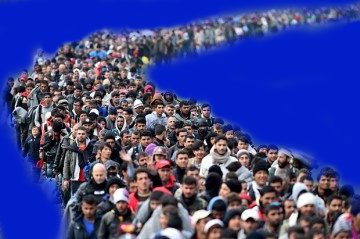
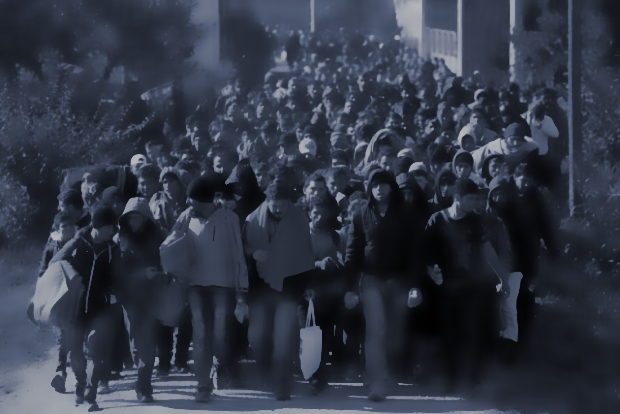
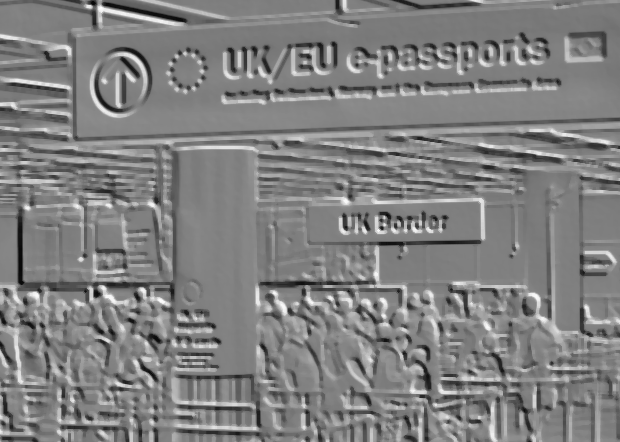
Publication of NI Number Registration Statistics by the Office for National Statistics Reveal Scale and Impact of Immigration

0

.


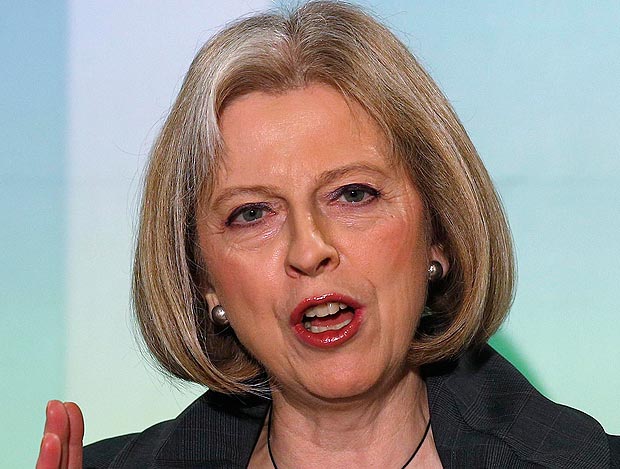
Responding to the publication of national insurance number registration statistics by the Office for National Statistics (ONS), Employment Minister Priti Patel said:


‘These figures – which had to be dragged out of the government – show the scale and impact of immigration from the EU is even higher than previously admitted. It is out of control – and cannot be controlled as long as we stay in the EU. This puts huge strains on the NHS, housing, schools and other public services.


‘Short term migration is highly significant, and arguably most damaging in terms of wages and work conditions. The only way we can take back control, and deliver on our manifesto commitment to reduce migration is to Vote Leave on 23 June.’


The Office for National Statistics (ONS) has released a note on the difference between National Insurance number registrations and the estimate of long-term international migration.


These statistics do show that the International Passenger Survey is underestimating the scale of migration into the UK.

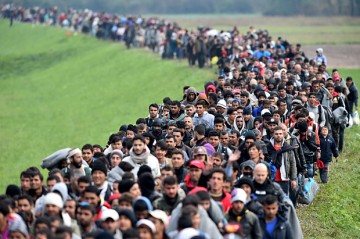
In the four years ending June 2014, there were 739,000 gross EU migrants according to the International Passenger Survey (IPS). There were 1.537 million NI no. registrations.

The ONS states that: ‘HMRC also shared with us analysis of those who had arrived, or registered for a NINo in the 4 years, to 2013-14 and were subject to income tax NICs and, or received HMRC benefits at some point in 2013/14 – the latest year available. They found 1.0 million such individuals were from the EEA’.

Even accounting for short-term migration, this suggests that there is a 261,000 disparity between the IPS and the true level of long-term migration, the equivalent of a city the size of Newcastle.

The figures reveal the high-level of short term migration, which has a corrosive impact on people’s wages and rental prices.

The report states that: ‘Short-term migration to the UK largely accounts for the recent differences between the number of long-term migrants (as estimated by the International Passenger Survey (IPS)) and the number of National Insurance number (NINo) registrations for EU citizens’. This confirms that EU migrants who are coming to the UK for short periods are registering for work, putting a downward pressure on wages.

It is well established that having more people in the workforce drives down wages. The Bank of England has found that ‘the immigrant to native ratio has a small negative impact on average British wage’. The study found that ‘immigrants in recent years are most predominant in low-skill occupations’. The study concluded that: ‘the biggest effect is in the semi/unskilled services sector, where a 10 percentage point rise in the proportion of immigrants is associated with a 2 percent reduction in pay’.

The head of the BSE campaign, Lord Rose acknowledged this and admitted wages will go up’ if we Vote Leave, stating: ‘If you are short of labour, the price of labour will go up’.

BlackRock Investment also admitted the same thing.

The report concludes that the Government does not understand the nature of migrants who enter and leave the UK several times a year.

The report concludes that ‘more analysis will take place to better understand what administrative sources tell us about migration patterns, particularly migrants who may enter and leave the UK several times within a year’.

The Government has failed to reduce net migration to the tens of thousands, despite the Prime Minister and the Home Secretary’s repeated promises.

The 2010 Conservative Manifesto promised that ‘we will take steps to take net migration back to the levels of the 1990s – tens of thousands a year, not hundreds of thousands’.

In his 2014 conference speech, Cameron said: ‘numbers that have increased faster than we in this country wanted at a level that was too much for our communities, for our labour markets. All of this has to change – and it will be at the very heart of my renegotiation strategy for Europe. Britain, I know you want this sorted so I will go to Brussels, I will not take no for an answer and when it comes to free movement – I will get what Britain needs’.

The 2015 Conservative Manifesto promised to ‘keep our ambition of delivering annual net migration in the tens of thousands, not the hundreds of thousands’.

In her 2015 conference speech, the Home Secretary, Theresa May, said: ‘Britain does not need net migration in the hundreds of thousands every year… at best the net economic and fiscal effect of high immigration is close to zero.  So there is no case, in the national interest, for immigration of the scale we have experienced over the last decade.Neither is it true that, in the modern world, immigration is no longer possible to control’.

The lowest net migration has been since 2010 was 177,000 in 2012. Net migration in 2014 was 313,000, of which 174,000 persons came from the EU.

The Government has dropped a key promise that EU migrants must have a job offer to come to the UK.

In November 2014, the Prime Minister promised that ‘we want EU jobseekers to have a job offer before they come here’.

The Home Secretary, Theresa May, has argued: ‘when it was first enshrined, free movement meant the freedom to move to a job, not the freedom to cross borders to look for work… we must take some big decisions, face down powerful interests and reinstate the original principle underlying free movement within the EU’.

The Chancellor of the Exchequer, George Osborne, has said: ‘What we’re going to address is this question of how freedom of movement operates in the 21st century. It was never envisaged that you would have such large numbers of people coming, people coming who don’t have job offers‘.

The renegotiation agreement notes that EU citizens are ‘entitled to reside… [in the UK] solely because of their job-search’.

ONS statistics (which are likely to be an underestimate) show that in the year ending September 2015, 69,000 EU citizens entered the UK ‘looking for work’. If the number of EU jobseekers entering the UK over the next decade remains at current levels, 690,000 persons would be added to the UK population as a direct result. This would be the equivalent of a city the size of Glasgow.

The Government has dropped a key promise that all EU jobseekers must leave the UK after six months.

In November 2014, the Prime Minister promised that ‘if an EU jobseeker has not found work within six months, they will be required to leave‘.

This is illegal under EU law. In 1991, the European Court ruled that the Treaties forbid the removal of jobseekers from another EU member state, regardless of the duration of their stay if ‘the person concerned provides evidence that he is continuing to seek employment and that he has genuine chances of being engaged’.

The Government admitted in December that many EU migrants can ‘keep the status of jobseeker for longer than six months’.

The ’emergency brake’ will have no impact on migration.

In December, one of the top three members of the independent Office for Budget Responsibility, Sir Stephen Nickell CBE, has said changes to migration would have ‘not much’ impact on migration.

Oxford University’s Migration Observatory concluded that the proposed welfare reforms are ‘unlikely’ to ‘lead to a large reduction in EU migration to the UK’.


Brexit the Movie: Into the Belly of the EU Beast – A Must Watch

10

Brexit the movie, is a clearly defined analysis of the EU project and delves deeply into the dark world of the monolithic faceless EU technocratic structure.

The EU is a machine, it processes nations, strips them of their sovereignty, cleans out the innards of financial institutions of those former nations, and amalgamates the spoils into one singular EU black hole where the pampered MEPs and faceless eurocrats eat their caviar,  guzzle on champagne, and chuckle to themselves as they peruse the overblown pay cheque which just landed on their laps courtesy of the taxpayer.

“We decide on something, leave it lying around, and wait and see what happens. If no one kicks up a fuss, because most people don’t understand what has been decided, we continue step by step until there is no turning back.”  EU President, Jean Claude Juncker

In relative terms, Britain has its last chance before it is unceremoniously eviscerated once and for all. Betrayed by part of the population who were fooled by the scaremongering, or just too lazy to find out the real facts; the EUs technique of control relies on the populace of a nation betraying their own countrymen to take over. This we call mind control, and the EU is very effective at mass indoctrination, provokatsiya, zakazukha within the education system and propaganda filled controlled media.

The EU does not stand for democracy and its MEPs revel in this unaccountability, it gives them free reign to do as they please, whilst enjoying the spoils of the taxpayer cash cows.

“If it’s a Yes, we will say ‘on we go’, and if it’s a No we will say ‘we continue’,” EU President, Jean Claude Juncker

To punish Britain is to vote to stay in such a totalitarian entity, where freedom of speech will dissolve completely, where there will be no choice, there will be no mercy to the proletariat, just a cold boot in the face.

George Orwell would have understood the EU very well, as would Karl Marx, and Josef Stalin. Merkel, the current head of the Germanic empirical EU was trained in East Germany under the communist regime, and she is now head of a communist soviet entity called the EU.

“There can be no democratic choice against the European treaties.” EU President, Jean Claude Juncker

When the EU army grows further in strength, your children, and your grandchildren will pledge allegiance to the EU flag as they are conscripted to fight on the Russian front. The Bundeswehr, will eagerly accept your sons and daughters to be used as cannon fodder, to have their blood spilled across the Siberian snow, or to freeze to death, their bodies left to rot amongst the other EU conscripts.

We dare you to vote to remain in the EU, a monstrous evil entity that abhors any form of democracy, and resembles the Borg with its assimilation of all into the behemoth of Baal. Brexit is the only answer.


Skewed EU Referendum: Vote Leave Statement on ITV’s Decision to Allow the Prime Minister to Decide his Debate Opponent

0

Everything about this EU referendum from the start has been skewed in favour of the Remain campaign.

The biased pro-EU BBC received £2 million from the EU just before the announcement of the referendum. Goldman Sachs, Citi bank, Lloyds and JP Morgan are putting vast sums of money into the campaign. The Project Fear daily announcements spouting ‘fearful’ false propaganda headlines. The PM’s announcement that there were no Brexit plans by the government early in the campaign reveal that the EU referendum was from the start a completely skewed unfair playing field.

The final icing on the cake is David Cameron choosing his live TV debate partner, and shying away from the official Leave Campaign representative who could cause real damage to his flawed fearmongering campaign.


No Level Playing Field


Commenting on ITV’s decision to allow the Prime Minister to decide his opponent in the referendum TV debates, a Vote Leave official spokesman said:


‘The Government has set all the rules for the referendum to give itself every possible advantage. It has also demanded of the broadcasters that the Prime Minister should not have to debate representatives from the official Leave campaign.


‘ITV has accepted the Prime Minister’s demands without even discussing it with the official campaign and has allowed the Prime Minister to dictate his own opponent. Since the campaign began, ITV has also given twice as much airtime to the IN campaign than to the Leave campaign.


‘We think that the Prime Minister ought to debate the representative of the official Leave campaign. In a serious democracy, the Government should not be allowed by a free media to pick its own opponents in the official debates on the most important political decision in decades.


‘We are discussing legal possibilities to increase the chances that the public will hear the issues properly discussed before they make such an important vote on the future of their democratic rights.


‘The reason for the timing of the announcement is the Government’s desire to distract attention from the immigration figures being released today. We hope that ITV covers that story properly.’

Lord Owen: ‘We are in a David vs Goliath fight, but it is one we are determined to win – for the good of the British people’


  • Today, the Electoral Commission published details of donations and loans to the EU referendum campaigns.

  • Just four donors to the Britain Stronger in Europe (BSE) campaign, Goldman Sachs, JPMorgan, Morgan Stanley and Citi, have had to pay a total of $27.7 billion to the US Government for their role in causing the global financial crisis in 2008.

  • The US Government had stated that all of these banks contributed to the financial crisis by misselling toxic mortgages. Goldman Sachs also cooked the books to allow Greece to join the single currency.

  • In 2015, the four banks spent collectively as much as €5.25 million lobbying the European Commission. Each bank spent at least €1 million.

  • Goldman Sachs and JPMorgan were supportive of the UK’s entry into the single currency, as was Citi’s current Chief Economist who predicted Greece would leave the euro by 1 January 2013.

  • Lloyds Bank Plc (which had to be bailed out by the taxpayer and was involved in the LIBOR) has lent the BSE campaign £20,000 at just 1% interest.

  • The BSE campaign has also accepted donations from companies which are majority owned by foreign governments, companies based offshore, a company owned by a Russian oligarch linked to ‘a campaign of state-sponsored harassment’ and supporters of and donors to the pro-euro campaign fifteen years ago.

Commenting, former Labour Foreign Secretary Lord Owen said:


‘The EU works in the interests of the elite – the one per cent – so it is entirely unsurprising to find that the campaign to keep us in the Union is financed by big banks like Goldman Sachs and JP Morgan.


‘With their unlimited cash, they are lobbying the British people to act in a way that benefits their profit margin. Remember, these banks are the very people who crashed the economy in 2008 – misselling toxic mortgages, and cooking the books to allow Greece to join the single currency. Millions of ordinary people paid for their mistakes – and many are still suffering.


‘The truth is that Wall Street’s predatory habits have played an important, although little recognised, role in the Eurozone crisis. Yet, today, Goldman Sachs have the brass cheek to lecture us in the UK on why we should stay in an EU damaged and rendered virtually dysfunctional by the Eurozone crisis.


‘These figures show again that we are in a David vs Goliath fight, but it is one we are determined to win – for the good of the British people. They are the ones who pay the costs of uncontrolled migration – through lower wages, and unsustainable pressure on public services such as schools and hospitals. Now is the opportunity for them to strike back – and reclaim control of the £350 million we send to the EU every week, to spend it on their priorities instead.’

 

bribe-5

EU lobbying by BSE’s donors and the fines they paid for causing the financial crisis


The table summarises the amount spent by these giant banks on lobbying the EU, and the fines and settlements they made in reparation to the US Government for causing the financial crisis.


Lobbying (2015)

Fines and settlements for causing the financial crisis

Low (€m)

High (€m)

$bn

Goldman Sachs

€ 1.00

€ 1.25

$5.1

JPMorgan

€ 1.25

€ 1.50

$13

Morgan Stanley

€ 1.00

€ 1.25

$2.6

Citi

€ 1.00

€ 1.25

$7

Total

€ 4.25

€ 5.25

$27.7

Source: European Commission, US Department of Justice.


Goldman Sachs campaigned for the single currency.

Peter Sutherland, Chief Executive of Goldman Sachs International sat on the Council of Britain in Europe, the failed campaign to scrap the pound and to ratify the European Constitution.

Mr Sutherland was a vocal supporter of the single currency: ‘[F]ormer European commissioner Peter Sutherland, who is now chairman of the investment bank Goldman Sachs International. Mr Sutherland said it had been a tragedy that Britain had stood apart during the early formative years of European integration and had often appeared to be a semi-detached participant in the process. “An opt-out from the single currency will exacerbate the impression and the reality of this detachment and inevitably will reduce the influence of Britain at a time of fundamental change both within Europe and globally,” he added. “It is surely essential that the United Kingdom should seek to advance its influence and the irony is that British influence over its own destiny in all economic areas, including currency, is enhanced rather than eroded by pooling sovereignty”‘ (Press Association, 12 November 1996).

Corruption

Goldman Sachs cooked the books to allow Greece to join the euro.

Goldman Sachs helped the Greek government to mask the true extent of its deficit with the help of a derivatives deal that legally circumvented the EU Maastricht deficit rules. At some point the so-called cross currency swaps will mature, and swell the country’s already bloated deficit’.


Goldman Sachs was a major cause of the financial crisis.

In 2016, Goldman Sachs reached a settlement with the US Government under which it paid $5.06 billion ‘related to Goldman’s conduct in the packaging, securitization, marketing, sale and issuance of residential mortgage-backed securities (RMBS) between 2005 and 2007.

Principal Deputy Assistant Attorney General Benjamin C. Mizer said the bank was one ‘whose illegal conduct resulted in the financial crisis of 2008′.

Associate United States Attorney General Stuart F. Delery stated that the bank had committed ‘serious misconduct in falsely assuring investors that securities it sold were backed by sound mortgages, when it knew that they were full of mortgages that were likely to fail’.

blackmoney

Goldman Sachs spends millions lobbying the EU.

In 2015, Goldman Sachs spent between €1,000,000 and €1,249,999 lobbying the European Commission.

‘Goldman Sachs’ figures rose from €50,000 to between €700,000 and €799,999 in the same period [between 2013 and 2014]- a 14-fold hike’.

bribe

Goldman Sachs funds the lobbyist Nick Clegg to make pro-EU speeches.

Goldman Sachs paid pro-EU lobbyist Nick Clegg £22,500 to make a pro-EU speech in 2015 .


JPMorgan supported the single currency and claimed the risky option was to stay out.

The Vice Chairman, Investment Banking at JPMorgan, Lord Renwick of Clifton was a member of the Council of Britain in Europe, the failed campaign to scrap the pound and to ratify the European Constitution.

JPMorgan warned the UK could be left ‘isolated‘ outside the ‘single currency‘: ‘This time round, as the investment bank JP Morgan noted yesterday: “A ‘yes’ vote could leave the UK isolated as the only one of the 15 European Union members without a clear timetable for entry’… As the JP Morgan analysis notes, if that happened: “Investors are unlikely to react positively to the rejection of the single currency by a country that has been a member of the EU for 27 years, with a fixed exchange rate for 18 years’.

JPMorgan claimed that staying out of the ‘single currency’ would lead to banks relocating to the rest of the EU: ‘Despite all this, JP Morgan does not see “Project 1992” as the real threat to London. Potentially more dangerous is the distant prospect of a single currency and central bank. JP Morgan argues that financial business would be likely to gravitate to the place where such a central bank operated, although policy-making could be split from the operations – as the US Federal Reserve is divided between Washington and New York. At least JP Morgan reckons London has a fair claim to be the operating centre’ (Independent, 20 September 1988).


JPMorgan spends millions lobbying the Commission.

In 2015, JPMorgan spent between €1,250,000 and €1,499,999 lobbying the European Commission.

JP Morgan Chase says its lobbying costs in Brussels went up from €50,000 in 2013 to between €1,250,000 and €1,499,999 in 2014 – a 30-fold increase’.


JPMorgan was a major cause of the global financial crisis.

In November 2013, JPMorgan reached a $13 billion settlement with the Department of Justice ‘for Misleading Investors About Securities Containing Toxic Mortgages‘. ‘As part of the settlement, JPMorgan acknowledged it made serious misrepresentations to the public’.

The United States Attorney General Eric Holder said: ‘the conduct uncovered in this investigation helped sow the seeds of the mortgage meltdown’, and said JPMorgan had ‘knowingly bundle[d] toxic loans and [sold] them to unsuspecting investors‘.

Associate Attorney General Tony West said the bank ‘helped create a financial storm’ and that ‘the conduct JPMorgan has acknowledged – packaging risky home loans into securities, then selling them without disclosing their low quality to investors – contributed to the wreckage of the financial crisis‘.


JPMorgan pays for advice from pro-EU lobbyist Tony Blair.

Blair has been paid around £2 million per year as a part time adviser to JP Morgan.


Citi was a major cause of the global financial crisis.

In July 2014, Citigroup entered into a $7 billion settlement with the US Department of Justice ‘for Misleading Investors About Securities Containing Toxic Mortgages‘.

The US Attorney General, Eric Holder, said: ‘The bank’s activities contributed mightily to the financial crisis that devastated our economy in 2008‘.

Associate Attorney General Tony West said the bank had ‘a contributing role in creating the financial crisis‘.


Citi spends millions lobbying the EU.

In 2015, Citi spent between €1,000,000 and €1,249,999 lobbying the European Commission.


Citi’s chief economist was a fanatical advocate of the UK scrapping the pound and has made many false predictions in the past.

Citigroup’s Global Chief Economist is Willem H. Buiter.

In August 2002, Buiter co-wrote a paper entitled ‘Why Britain should join the euro‘. It argued that ‘Joining the euro would increase our incomes and thus our standard of living’.

Buiter also claimed remaining outside the single currency would ‘damage to London’s position as an international financial centre’ and lead to ‘second fiddle status in the political concert of Europe’ (The Independent, 3 July 1998, p. 19).

In May 2012, Citi predicted Greece would leave the eurozone by 1 January 2013.


Morgan Stanley played a major part in causing the global financial crisis.

In February 2016, Morgan Stanley paid a penalty of $2.6 billion to the US Government

Acting Associate Attorney General Stuart F. Delery said the bank had engaged in ‘misleading investors about the subprime mortgage loans underlying the securities it sold’

Principal Deputy Assistant Attorney General Benjamin C. Mizer said the bank was among ‘those who contributed to the financial crisis of 2008’ (US Department of Justice, 11 February 2016, link).


Morgan Stanley spent millions lobbying the EU.

In 2015, Morgan Stanley spent between €1,000,000 and €1,249,999 lobbying the European Commission.


Lloyds supported the Exchange Rate Mechanism and scrapping the pound.

Lloyds was a member of the Association for the Monetary Union of Europe, which was established ‘as a voice for Europe’s business community expressing the need for monetary stability and a single European currency’ (Investors Chronicle, 6 December 1991, p.14).

Lloyds called for the UK to rejoin the Exchange Rate Mechanism in 1993, as a prelude to scrapping the pound. Lloyds’ Chief Economist, Patrick Foley, claimed that: ‘It would make it easier and more attractive for countries such as Italy and the UK to rejoin the system… The advantage of rebuilding the ERM is that it would allow the EC to move towards a single currency which would make the operation of the European single market more effective’ (Press Association, 21 June 1993).

Mr Foley later claimed that: ‘Prices of goods would come down’ if the pound were scrapped and that ‘sovereignty over monetary policy would be a good thing for the British government to lose’ (Sunday Times, 4 February 1996).

More recently, Lloyds has warned against a referendum stating that it could lead to ‘uncertainty’.


Lloyds was heavily involved in the 2008 financial crisis and had to be bailed out to the tune of billions by the taxpayer.

In 2008, Lloyds/HBOS had to receive a Government bailout of £17 billion. The Government acquired a 40% stake in the bank.

As part of its efforts to recapitalise Lloyds Banking Group, the Government ended up acquiring 41% of Lloyds shares.


Lloyds was implicated in the LIBOR scandal in 2014 and was fined hundreds of millions for ‘manipulation’.

In July 2014, Lloyds was fined £218m for ‘serious misconduct‘ over the setting of interest rates in London.

The US Commodity Futures Trading Commission said that Lloyds manipulated the London interbank offered rate (Libor) for yen and sterling and tried to rig the rate for yen, sterling and the US dollar.

Corruption And Bribery

Other BSE donors


BSE have also accepted donations from the following questionable sources :

Lord Sainsbury of Turville (£2,581,954.00 declared today): Lord Sainsbury gave over £1 million to the Britain in Europe campaign in 2002.

Lord Bhattacharyya (£50,000.00 declared today): He donated an undisclosed sum in excess of £10,000 to Britain in Europe, the failed campaign to join the euro and ratify the single currency.

Eurostar (£7,508.50 declared today): the French Republic has a 55% stake in the rail company while the Belgian Government has a 5% stake.

Airbus Group Ltd (£7,508.50 declared today): Airbus supported joining the euro, arguing this was crucial for jobs.

Access Industries (not reported today) is the US-based vehicle of Len Blavatnik, who has been accused by a number of academics of having links to a group called Access-Alfa-Renova which ‘has long been accused of being behind a campaign of state-sponsored harassment‘.

Bet365 (not reported today): This company is located offshore, being based in Gibraltar. It has been reported that ‘new UK regulations which imply higher tax burdens are… likely to lie behind the move’.

Sir Mike Rake (not reported today): He was senior partner at KPMG when it donated an undisclosed sum to Britain in Europe, the failed campaign to join the euro and ratify the single currency. Rake publicly called on the Government to adopt the single currency (Daily Telegraph, 8 June 2001, p. 2).

Sir Roger Carr, Chairman of BAE Systems (not reported today): BAE Systems donated an undisclosed sum to Britain in Europe, the failed campaign to join the euro and ratify the single currency.

PwC (£7,508.50 declared today): PwC donated an undisclosed sum to Britain in Europe, the failed campaign to join the euro and ratify the single currency.

Roland Rudd (£32,508.50 declared today): He has claimed that there are ‘powerful arguments in favour of the return of the euro to the agenda’. Finsbury Group, of which Rudd is Chief Executive, also declared £7,508.50 today.

Jan du Plessis (not reported today), who has admitted that: ‘It has become painfully obvious that the countries in the eurozone are locked together in a straitjacket and that the founders of the single currency have thrown away the key. Of course, some would say they never intended to make keys available…. These economic imbalances, and the respective sets of cultural values that gave birth to them are, in my view, so intractable that it is very hard to see any solution that is truly sustainable over the long term’.

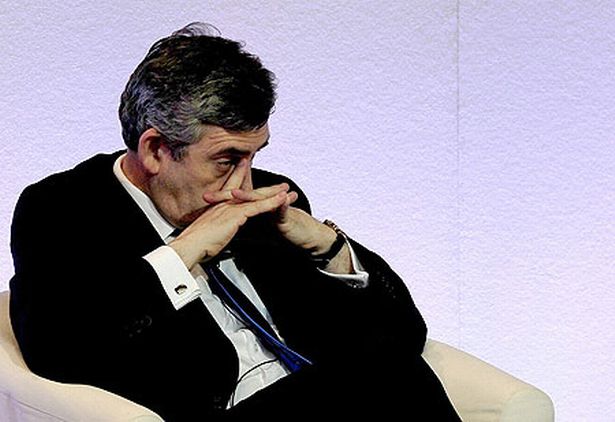
Gordon Brown: Wrong Then, Wrong Now

0


Responding to Gordon Brown’s speech at the London School of Economics today, Leader of the House of Commons Chris Grayling said:


“Gordon Brown’s EU policies when he was in office were a disaster. He gave away huge amounts of money to the EU when they cut our rebate, he broke his promise to hold a referendum on the Lisbon Treaty and he gave away many new powers to Brussels.


“The EU is undermining our ability to stop multinational companies milking our tax system. We face tens of billions of pounds of liabilities in the next few years because EU judges have ruled in favour of big corporates instead of UK taxpayers. That is on top of the £350 million we hand over to the EU every week, money which would be better spent on our priorities here like the NHS.”


gordon-brown


Gordon Brown broke promises on the EU when he was Prime Minister and was a disaster to the UK’s economy. He cannot be trusted.

Brown signed the Lisbon Treaty (which was almost identical to the European Constitution) on 13 December 2007. This was despite a promise in the 2005 Labour Manifesto that ‘We will put it [the Constitution] to the British people in a referendum’.

The Treaty surrendered 70 vetoes over EU law. Despite this, Brown claimed that the Treaty had not led to ‘major constitutional changes’.

The Lisbon Treaty included the dangerous Charter of Fundamental Rights, although the Government falsely claimed at the time it had an ‘opt out’. This has been used to strike down the UK’s surveillance regime. In July 2015, the Divisional Court in London annulled the Data Retention and Investigatory Powers Act 2014, for being inconsistent with the Charter of Fundamental Rights. The Home Secretary, Theresa May, had said the legislation was ‘crucial to fighting crime, protecting children, and combating terrorism’. The European Court will now decide whether the legislation is allowed after the referendum.

Gordon Brown was Chancellor when Tony Blair surrendered half of the UK rebate, despite the Government promising that ‘the rebate will remain and we will not negotiate it away. Period’. Tony Blair’s changes have now cost the UK at least £10.4 billion.

Gordon Brown is wrong to claim the EU is needed to crack down on tax avoidance. The European Court has forced us to make multi-billion tax refunds to multinationals.

Judgements of the European Court in favour of big businesses have led to massive liabilities for the taxpayer.

The OBR now forecasts that HMRC will pay out £7.3 billion from 2016-2017 to 2020-2021, an average of £270.43 per household.

If HMRC also loses every case currently pending (a further £35.6 billion), the UK will be forced to pay out £42.9 billion, the equivalent of £1,589 per household.

The UK has tried to block these payouts before but its tax legislation has been overruled by the European Court.

The Justice Secretary, Michael Gove, has proposed emergency legislation immediately after the referendum to end these payouts, stating: ‘The European Court has consistently come down in favour of big businesses not the British people – costing us billions. Very soon after a leave vote we will be able to legislate to ensure that EU judges are not able to meddle in our tax affairs again which will save British taxpayers from tens of billions of pounds worth of liabilities. I think we would all prefer it if that money is spent on schools and hospitals rather than filling the coffers of multinational corporations’.


Gordon Brown has repeatedly talked Britain down. We should not listen to him.

Last year, Gordon Brown claimed that those advocating a leave vote were supporting ‘the North Korea option, out in the cold with few friends, no influence, little new trade and even less new investment’.

During the 2010 general election campaign, Gordon Brown called lifelong Labour voter Gillian Duffy ‘bigoted’ for raising concerns about the level of immigration from Eastern Europe.


Gordon Brown did support the UK joining the single currency.

In 1997, when he was Chancellor of the Exchequer, Gordon Brown, said ‘British membership of a successful single currency would be beneficial to Britain and Europe’.

An official Treasury assessment published on the same day stated that the single currency would benefit the British economy: ‘Britain could make further gains in terms of stability from joining the single currency… The single currency could deepen competition in some parts of the Single Market. It will reduce transaction costs and exchange rate uncertainty on trade within the euro-zone. It will also make prices more transparent and easier to compare across the Single Market. It should also intensify competition. In this way it could open up new trading opportunities and encourage firms to invest in new markets…. British firms would be better placed to make the most of the opportunities if we were members of the single currency.’

GoldSaleBrown

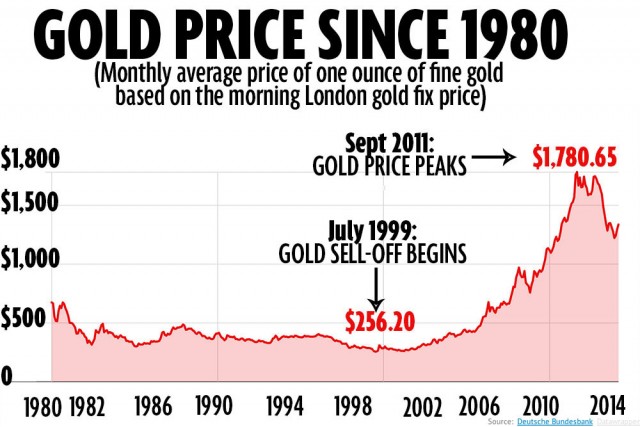
Gordon Brown sold off Britain’s gold reserves at the bottom of the market

Between 1999 and 2002, Mr Brown ordered the sale of almost 400 tons of the gold reserves when the price was at a 20-year low. The decision to sell the gold – taken by Mr Brown when he was Chancellor – is regarded as one of the Treasury’s worst financial mistakes and has cost taxpayers almost £16 billion.

UK Will Be Safer Outside the EU, Says Foreign Office Minister

0


Responding to claims from Charles Clarke, Lord Carlile of Berriew, and Peter Neyroud that the EU makes us safe, Foreign Office Minister James Duddridge said:


“It is completely disingenuous to suggest that we are safer inside the EU.


“EU law is undermining our bilateral relationships with key allies in the Five Eyes Alliance, whilst the European Court is seeking greater controls over our intelligence and security services.


“The inability to control our own borders means that we cannot stop criminals entering the UK. And plans to give Turkey visa-free access to the EU will create a free travel zone from the English Channel to the borders of Syria and Iraq.


“In order to strengthen our national security, we must take back control on 23 June.”


CharlesClarke

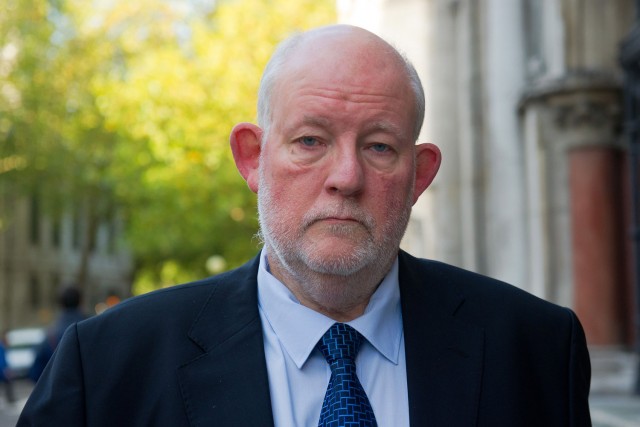
The British public will take no lectures from Charles Clarke on security, who was forced from office due to his inability to protect the public from foreign national offenders.

In 2006, Charles Clarke was sacked as Home Secretary. This followed the Home Office’s decision to release 1,023 foreign national offenders from prison without being considered for deportation. Those released into the community included killers, rapists and child abusers.

Charles Clarke knows how dangerous it is for the European Court to be in control of our borders. As Home Secretary, he tried to exclude suspected terrorists the courts have concluded must remain in the UK because of EU law.

In 2005, the Home Secretary, Charles Clarke, refused the French-Algerian national ‘ZZ’ readmission on return from a trip to Algeria and expelled him on the grounds of public security.

The European Court of Justice ruled that where the Home Secretary believes a suspected terrorist should be excluded from the UK, but also considers disclosing the case to the suspect would damage national security: ‘the person concerned must be informed, in any event, of the essence of the grounds on which a decision’ against him is taken.

The Court of Appeal observed that these rights under EU law ‘cannot yield to the demands of national security’. This means the Home Secretary either has to disclose information that might prejudice national security or allow suspected terrorists into the UK.

In 2015, the Special Immigration Appeals Tribunal ruled the UK could not exclude ZZ from the UK because of EU law, despite the fact that he was a suspected terrorist. The Tribunal concluding that: ‘We are confident that the Appellant was actively involved in the GIA [Algerian Armed Islamic Group], and was so involved well into 1996. He had broad contacts with GIA extremists in Europe. His accounts as to his trips to Europe are untrue. We conclude that his trips to the Continent were as a GIA activist’.

lord carlile

Lord Carlile of Berriew knows how dangerous it is for the European Court to be in control of our intelligence agencies. He has supported surveillance legislation which has since been struck down because of the EU’s Charter of Fundamental Rights.

Lord Carlile supported the Data Retention and Investigatory Powers Bill in 2014, stating: ‘I support the Second Reading of the Bill on the understanding that its purpose is to preserve evidence of a kind that is currently available to the courts … There is a necessity to ensure that such crucial evidence remains available’.

The Home Secretary, Theresa May, described the legislation as ‘crucial to fighting crime, protecting children, and combating terrorism’.

In July 2015, the Divisional Court in London annulled the Data Retention and Investigatory Powers Act 2014 for being inconsistent with the EU’s Charter of Fundamental Rights.

In November 2015, the Court of Appeal referred the legislation  to the European Court to see whether or not it is allowed. Lord Justice Lloyd Jones made clear that the European Court’s decisions ‘will remain central to the validity of all future legislation enacted by the Member States in this field’.

The European Court heard the case on 12 April, but it will not issue a decision until after the referendum on 23 June. The Justice Secretary, Michael Gove, has proposed emergency legislation in the event of a leave vote to prevent the European Court interfering with our security services.

We have given up control of our borders to the European Court. This means we can’t ensure migrants have proper documents to come to the UK. The only way to take back control of our borders is to Vote Leave.

The UK’s border controls are under constant attack from the European Court of Justice. In December 2014, the European Court said that the UK cannot require family members of EU citizens from other EU member states to have a permit issued by UK authorities. This is despite the fact that a High Court Judge had found permits from other EU countries to be systematically forged, stating ‘Systemic abuse of rights and fraud calls for systemic measures’. The European Court’s rulings make it easier for terrorists and criminals to enter the UK using forged documents.

The 2014 judgement of the European Court also means that the UK cannot require persons purporting to be EU citizens to have a document issued by the British Government which attests to that status ‘in pursuit of an objective of general prevention’ of terrorism and serious crime.

This constitutes a threat to the UK’s security, in light of the fact that ‘eight Schengen countries were on the list of the top 10 nations reporting stolen or lost passports in Interpol’s databases’, according to the former Secretary General of Interpol, Ronald K Noble. This is a risk to security. The Italian ID card, for example, is made of laminated card. In April 2016, Frontex noted that: ‘The number of persons aiming to get to the UK with fraudulent document significantly increased (+70%) compared to 2014. This trend is mostly attributable to the increasing number of Albanian nationals often misusing Italian and Greek ID cards followed by Ukrainian nationals abusing authentic Polish ID cards’.

The UK is obliged to admit EU citizens with ID cards as well as passports.

The European Court has also held that the UK cannot automatically refuse persons entry because of an alert on the Schengen Information System, ‘without having first verified whether their presence constituted a genuine, present and sufficiently serious threat affecting one of the fundamental interests of society’.

euchr

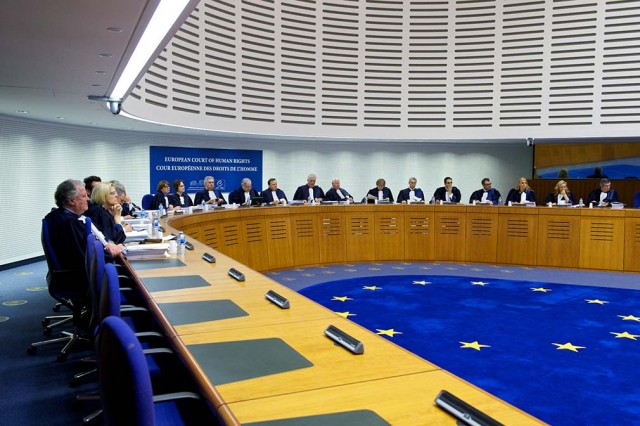
The European Court has made it much harder to remove terrorist sympathisers and convicted killers.

On 4 February 2016, Advocate General Professor Maciej Szpunar issued an opinion stating that it was ‘in principle’ contrary to the Treaties to remove ‘CS’ from the UK, notwithstanding the fact that she had been convicted and sentenced to a year’s imprisonment. It was subsequently revealed under parliamentary privilege that ‘CS’ was the daughter-in-law of Abu Hamza, who was convicted of attempting to smuggle a SIM card to him in high security prison (Guardian, 6 February 2016, link).

EU law prevents us from removing serious criminals, such as violent killer Theresa Rafacz, a Polish national who killed her husband, including by kicking him in the face with a shod foot while he lay on the ground defenceless and drunk. Mr Justice Hart ruled the offence involved ‘gratuitous violence’. She was sentenced to four years’ imprisonment. Nonetheless, Mr Justice Blake later ruled that EU law prevented her removal, stating that there was ‘no basis’ which could ‘justify her deportation on the grounds of public policy’.

May

In 2014, the Home Secretary said that ending the European Court’s control of our criminal justice system, which the Government accepts is the risky option, would form part of the renegotiation. It didn’t and the European Court remains in charge of many areas such as extradition and child protection.

In November 2014, the Home Secretary, Theresa May, called for the jurisdiction of the European Court over justice and home affairs to be renegotiated, saying: ‘I am certainly no enthusiast for the European Court of Justice… I understand the concerns raised about the European Court of Justice in the many debates we have had on protocol 36. I believe we must look again at this matter in our renegotiations with the European Union before the referendum that a Conservative Government will deliver by the end of 2017’.

In November 2015, the Home Office admitted that: ‘The current Government would not have ceded CJEU jurisdiction over the field of policing and criminal justice during negotiation of the Lisbon Treaty. It is clear that accepting CJEU jurisdiction over measures in the field of policing and criminal justice is not risk free. This is because the CJEU can rule in unexpected and unhelpful ways… The Government considers, however, the risk of CJEU jurisdiction to be at its greatest as concerns matters relating to substantive criminal law. This is a matter that should be determined by our sovereign Parliament, particularly given that the relevant measures are often open to wide interpretation. This also reduces the risk of the EU obtaining exclusive external competence in relation to such matters’.

The European Court’s jurisdiction over justice and home affairs was unaltered by the renegotiation. As a result, it has jurisdiction over many sensitive areas, including extradition, child protection and victims’ rights.

In January 2015, the Government called for greater action on the sharing of criminal records. Nothing has been done since. The EU institutions are too sclerotic to protect our security.

In January 2015, the Home Secretary, Theresa May, said: ‘We must work to share more data about criminal convictions, and must accelerate work to consider how we share conviction data proactively. We are making some progress through the SOMEC project on mobile criminals, but there is more to do. We need to ensure that all member states retain and share information about “spent” convictions for serious offences for appropriate lengths of time’.

Nothing has been done to adopt these proposals since.

The failure to share criminal records facilitates the movement of dangerous criminals across the EU. Those who have come to the UK include Victor Akulic, a Lithuanian with many convictions including for child rape, who within a year of entering the UK committed rape, with Lady Justice Hallett asking, ‘do we have to take in anybody, even if they have a conviction for raping a child?’, and Ireneusz Bartnowski, a Polish national with previous convictions who killed Guiseppe and Caterina Massaro within weeks of arriving in the UK in an attack the judge described as ‘evil beyond belief’.


It is not necessary to be in the EU to have working extradition arrangements.

This deliberately conflates EU membership with the ability to have working extradition agreements. We have extradition agreements with many countries around the world, including the United States, without accepting the supremacy of EU law.

Recently, we extradited a murder suspect from Ghana in just over a month. The suspect subsequently pleaded guilty to murder at the Central Criminal Court.

The UK could continue to be part of the European Arrest Warrant if we Vote Leave.  As the Independent Reviewer of Terrorism Legislation, David Anderson QC, has confirmed, police and security cooperation would continue if we Vote Leave.  Asked: ‘But we could still have tools like the European Arrest Warrant and sharing of databases even if the UK left the EU?’, David Anderson replied: ‘I think that’s very likely’ (BBC Daily Politics, 1 March 2016).

If we end the supremacy of EU law, we could also stop the European Arrest Warrant being abused by foreign prosecutors which is currently illegal under the EU’s Charter of Fundamental Rights.

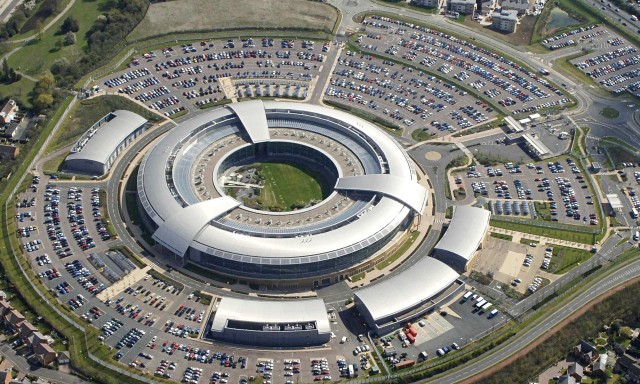
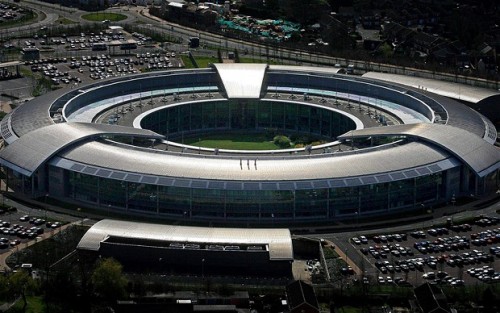
GCHQ

Leaving the EU will not affect intelligence sharing.

Most intelligence sharing is bilateral. It will not be affected if we Vote Leave. The crucial intelligence sharing agreement the UK has is the Five Eyes Agreement with Australia, Canada, New Zealand and America, but this is under threat from the European Court (see above). The respected former Chief of the Secret Intelligence Service, Sir Richard Dearlove, has said: ‘The crucial practical business of counter-terrorism and counter-espionage is conducted, even in Europe, through bilateral and very occasionally trilateral relationships. Brussels has little or nothing to do with them… if Brexit happened, the UK would almost certainly show the magnanimity not to make its European partners pay the cost’.

Leading counter-terrorism experts have made clear that Europol is irrelevant to counter-terrorism. Richard Walton,  head of Counter Terrorism Command at New Scotland Yard from 2011-15: ‘Europol, while a useful discussion forum, is largely irrelevant to day-to-day operations within the counter-terrorism sphere’.

The former Chief of the Secret Intelligence Service, Sir Richard Dearlove, has said: ‘though the UK participates in various European and Brussels-based security bodies, they are of little consequence: the Club de Berne, made up of European Security Services; the Club de Madrid, made up of European Intelligence Services; Europol; and the Situation Centre in the European Commission are generally speaking little more than forums for the exchange of analysis and views‘.

EU Referendum: “You’re Doing What to My Country Mr Cameron?”

0

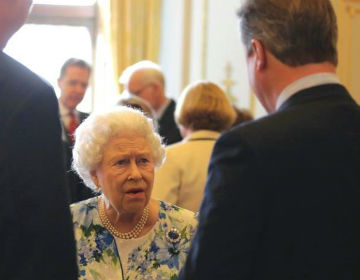
The unsavoury incident took place at a Buckingham Palace function today where the Queen was told in no uncertain terms that if she didn’t vote to remain in the EU her beloved corgis might become mincemeat.

Mr Cameron was overheard telling the Queen the bad news, and it seemed to have hit home rather hard.

“Ma’am, may I have a word? Would you like the bad news or the bad news first? I’ve just had word through from my handlers in Brussels, and they say if you don’t agree to selling off the country for a pittance to the collectivist un-democratic EU, where you will lose the monarchy and forfeit the Crown and Britain’s sovereignty, Jean Claude Juncker will personally eat your corgis with some Hollandaise sauce, an accompaniment of celeriac remoulade, a plate of sole meunière washed down with a digestif of four pints of cognac. Then he will unceremoniously vomit onto the carpet in the White Drawing room.”

These nasty vindictive Europeans really should not upset Her Majesty in such an uncouth manner, someone needs to tell Cameron and his friends to fuck orf..

Alan Johnson is Out of Touch if He Thinks a Hospital a Week is a ‘Drop in the Ocean’

0


Responding Vote Leave Chair Gisela Stuart said:

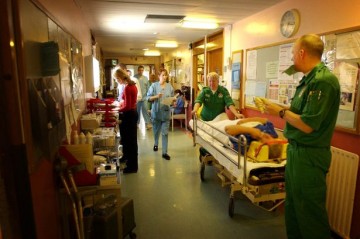
“The NHS is in crisis and it desperately needs more money. If we Vote Leave and take back control of the £350 million we give to the EU each week we will be able to give the NHS the shot in the arm it desperately needs. We should spend our money on our priorities.

“The remain campaign wants the elites to have more power and money, and not to give back control to the British people.

“Patients struggling to get care on the NHS will rightly think that they are completely out of touch when they claim that £350 million – enough to build a new hospital every week – is just a drop in the ocean.”

nhs corridor
‘The only way to save the NHS is to Vote Leave.’

Iain Duncan Smith said:

“I don’t know in what world it is extreme to want your democracy back. It’s not extreme to want democratic government in your country.

“These people in Remain really need to stop throwing threats and ridiculous terms around like this because it demeans them and it demeans the debate.”

Latest Trade Stats Show UK More Likely Than Ever to Strike a Free Trade Deal with EU


Commenting on today’s release of the UK trade statistics for March 2016 by the Office for National Statistics (ONS), Vote Leave Chief Executive Matthew Elliott said:


“The EU is not working. The eurozone is collapsing, millions of people are unemployed and Europe’s economies are massively under performing. That means that European countries are buying less from us than ever before as we trade more with the rest of the world.


“If we Vote Leave we will be able to take back control of our trade and do deals with growing economies rather than being shackled to the failing economies of Europe.


“We will also be able to take back control of the £350 million we send to Brussels every week. After we Vote Leave we will be able to spend that money on our priorities like the NHS rather than bailing out failing economies in the eurozone.”


The statistics show the UK is more likely than ever to get a free trade deal.

The UK experienced a record trade deficit in goods with the EU, meaning it is more likely than ever that the UK will strike a free trade agreement. The ONS states that: ‘Between Quarter 4 (October to December) 2015 and Quarter 1 (January to March) 2016, the UK’s trade in goods deficit with the EU widened by £0.7 billion to £23.9 billionthe widest on record‘.

In March 2016, the UK recorded an £8.1 billion trade deficit in goods with the EU.


The statistics show that the EU is becoming a progressively less important market for the UK. Barely two-fifths of British exports are sold to the ‘single market’. It is safer to take back control of the power to strike our own trade agreements.

The figure show that the proportion of the UK’s exports of goods and services sold to the EU has decreased from 54.3% in 2000 to 43.7% in 2015. As the ONS notes, ‘The share of exports has fallen by more than 10 percentage points over the last 15 years‘.

The 43.7% figure is likely too high due to the Rotterdam effect, where exports from the UK to ports in Belgium and Holland are immediately re-exported to the rest of the world, which the ONS says ‘is estimated at around 2 percentage points’. This means that barely two-fifths of British exports are now sold to the EU.


Leading pro-EU campaigners have admitted the UK will get a free trade deal if we take back control.

David Cameron, Prime Minister and leader of the pro-EU campaign has admitted: ‘If we were outside the EU altogether, we’d still be trading with all these European countries, of course we would … Of course the trading would go on … There’s a lot of scaremongering on all sides of this debate. Of course the trading would go on’.

The UK’s former Ambassador to the EU and leading supporter of the pro-EU campaign, Lord Kerr of Kinlochard, has admitted: ‘there is no doubt that the UK could secure a free trade agreement with the EU. That is not an issue’.

The Chairman of the BSE campaign, Lord Rose of Monewden, has said: ‘My argument, simplistically as a businessman, would be: would you alienate your biggest customer… No, you would not; you would put your arm round the customer who is your biggest customer and say, “Thank you very much indeed. We love your trade and want to continue with it

Even the pro-EU CBI has said: ‘the UK is highly likely to secure a Free Trade Agreement with the EU, and such an agreement would be likely to be negotiated at an extremely high level of ambition relative to other FTAs [free trade agreements]’.

The pro-EU Centre for European Reform has accepted that, ‘given the importance of the UK market to the eurozone, the UK would probably have little difficulty in negotiating an FTA’.

The Foreign Secretary, Philip Hammond, has admitted that a free trade agreement in goods ‘would be relatively simple to negotiate’.

After We Vote Leave We Will Act Quickly to Protect National Security and Save Money

1


When we Vote Leave on 23 June, negotiations on the UK’s withdrawal from the European Union will begin. There will be informal negotiations, formal negotiations, and legal changes. This will result in at least 1) the repeal of the European Communities Act 1972, and 2) a new UK-EU treaty. This process will take time. The details and the timing will only be clear when the new Government negotiating team engages. The full repeal of the ECA will ideally happen after a friendly negotiation and as part of the overall agreement and will therefore not be done immediately.

There are things, however, that can and should be done very quickly after 23 June to protect national security and save money. We can amend the ECA:

  • To exempt the intelligence agencies from EU law, immediately improving national security. For example, the European Court’s upcoming ruling on the UK’s surveillance regime, held back until after the referendum, will have no impact on the security services’ powers to protect us.

  • To end the application of the Charter of Fundamental Rights to the UK. We were originally promised it would have no legal effect in Britain then the ECJ made clear it does have effect. David Cameron promised a ‘complete opt out’ from the Charter. This never happened and the problem of the Charter is un-addressed in the Government’s recent deal.

  • To allow the deportation of EU citizens whose presence is not conducive to the public good, enabling us to remove violent criminals, rapists and terrorist sympathisers, such as convicted murderers or Abu Hamza’s daughter-in-law, regardless of what the European Court says.

  • To exempt the Armed Forces from the scope of EU law, preventing the risk of the European Court using the Charter to take control of the military.

  • To end multi-billion tax refunds to big business under EU law, protecting our public services by saving between £7.2 billion and £42.9 billion (£270 and £1,589 per household respectively) by 2020-21.

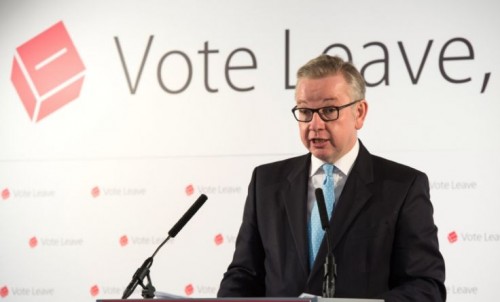
Michael Gove MP has given a comprehensive judicial and security related plan on Brexit:

michael-gove-vote-leave

“The European Court has consistently come down in favour of big businesses not the British people – costing us billions. Very soon after a leave vote we will be able to legislate to ensure that EU judges are not able to meddle in our tax affairs again which will save British taxpayers from tens of billions of pounds worth of liabilities.

“I think we would all prefer it if that money is spent on schools and hospitals rather than filling the coffers of multinational corporations.

“It is dangerous for the European Courts to have a say over our intelligence services and to rule on what data we can share with our allies like the US and Australia. Our intelligence network with the Five Eyes is the cornerstone of our fight against the global terror threat.

“The EU is jealous of this arrangement and many would like EU structures to replace our international networks. The Home Secretary is currently trying to stop EU judges from meddling in these networks but the court case will not be decided until after the referendum. That is something that people need to be aware of before they vote.

“If you vote remain, the EU courts will interfere more with our intelligence agencies, preventing them from fighting effectively against ISIS – this makes us less safe.

“If we Vote Leave, we take back control and stop EU judges from meddling in our affairs. I agreed with the Prime Minister when he set out his vision for getting a permanent opt out from the Charter of Fundamental Rights. Sadly, the deal did not touch this area and the Charter is being used more and more by EU judges to interfere with how we keep people in the UK safe.

“EU judges are stopping us from deporting dangerous criminals and terrorist suspects. This makes us less safe – that’s why we should take back control.”

britain

A vote to remain in the EU is a vote for the permanent supremacy of EU law and of the European Court. If we Vote Leave on 23 June, by contrast, we take back control.

The referendum will be followed by negotiations with the other 27 EU member states, following which the UK will strike a new deal with the EU based on free trade and friendly cooperation. The European Communities Act 1972 will be repealed. The supremacy of EU law and the jurisdiction of the European Court over the UK will come to an end. At all stages, the UK will be in control of the timetable.

A vote to leave the EU on 23 June will give the UK additional options on 24 June. EU law only has effect in the UK by virtue of the European Communities Act 1972. This means we can amend that Act immediately after the poll to end some of the most damaging aspects of EU membership.

Although there is the theoretical possibility of infraction proceedings from the European Commission, this prospect is wholly unreal if the British people vote to reject the supremacy of the European Court, and the areas touched on are ones that will not form part of a future UK-EU Treaty.

Taking these five measures (above) will not affect the ability of the UK to negotiate a free trade deal with the EU, which will contain none of these damaging features of the UK’s present relationship. Nor can it be objected that such a course would be inconsistent with the UK’s international obligations.

The UK has failed to end its prohibition on all prisoners voting in all elections over a decade after the Strasbourg Court ruled this was inconsistent with the UK’s obligations under the European Convention on Human Rights. Nothing of any consequence has happened since. The European Court itself often ignores the EU Treaties and/or international law. It can hardly complain if the UK takes a robust attitude to restoring democratic control in preparation for leaving the EU.

gchq

We can exempt the intelligence agencies from EU law

The powers of the UK’s intelligence agencies are currently being challenged before the European Court. The UK’s surveillance regime has already been struck down because of EU law. In July 2015, the Divisional Court in London annulled the Data Retention and Investigatory Powers Act 2014 on the ground it was inconsistent with the Charter of Fundamental Rights.

In November 2015, the Court of Appeal referred the UK’s surveillance regime to the European Court for a decision as to whether it will be allowed. Lord Justice Lloyd Jones made clear that the European Court’s decisions ‘will remain central to the validity of all future legislation enacted by the Member States in this field’ (R (Davis) v Secretary of State for the Home Department.

The Home Secretary, Theresa May, has described the UK’s legislation as ‘crucial to fighting crime, protecting children, and combating terrorism‘. She argued that without the legislation, ‘we run the risk that murderers will not be caught, terrorist plots will go undetected, drug traffickers will go unchallenged, child abusers will not be stopped, and slave drivers will continue their appalling trade in human beings’.

The European Court heard the case on 12 April, but will not issue a decision until after the referendum. If we vote remain, there will be nothing to deter the European Court from taking total control of security. This could mean the end of the Five Eyes Agreement, on which British security has depended since the war, due to the European Court’s hostility to trans-Atlantic information sharing.

If we Vote Leave, we take back control. We can amend the European Communities Act 1972 immediately to protect from the European Court the UK’s intelligence agencies and other powers needed to maintain national security.

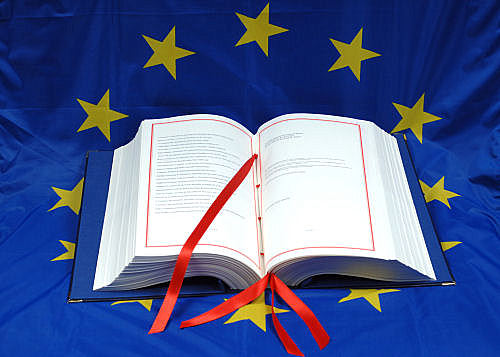
lisbon-treaty

We can disapply the Charter of Fundamental Rights

The UK was initially promised an opt-out from the Charter of Fundamental Rights. Government Ministers once claimed it would have the same legal status as ‘the Beano or the Sun’. When the Charter was given legal effect by the Lisbon Treaty, the then Prime Minister, Tony Blair, told the House of Commons’ Liaison Committee that ‘we will not accept a treaty that allows the Charter of Fundamental Rights to change UK law in any way‘. He also told the House of Commons that: ‘it is absolutely clear that we have an opt-out from … the charter’.

The European Court has ruled the UK’s opt out is worthless, stating the relevant Protocol ‘does not intend to exempt … the United Kingdom from the obligation to comply with the provisions of the Charter or to prevent a [UK] court … from ensuring compliance with those provisions’. The UK Supreme Court has confirmed ‘the Charter thus has direct effect in national law’.

If we vote remain, the European Court will continue to take more and more power using the Charter. It has already used the Charter to increase the price of insurance for women, to extend prisoner voting rights, to create the ‘right to be forgotten‘, and to stop the UK from halting abuse of the European Arrest Warrant by foreign prosecutors. The European Court will progressively take more control every year using the Charter.

If we Vote Leave, we take back control. We can amend the European Communities Act 1972 to provide that the Charter has no effect in the law of any part of the United Kingdom and that no court has jurisdiction to review Acts of Parliament for compatibility with the Charter. This will give effect to what the Prime Minister previously demanded. In 2009, he called for a ‘complete opt-out from the Charter of Fundamental Rights‘ and in February, he said the Charter should not be ‘in force in Britain’.

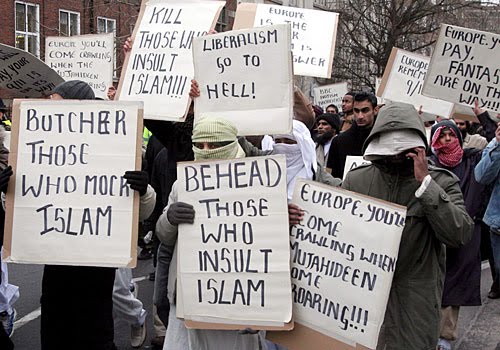
islam_hate_signs

We can exclude persons whose presence is not conducive to the public good

At present, the Home Secretary has the power to deport foreign nationals from the UK if she considers that it would ‘be conducive to the public good‘. In addition, UK law provides that a person who is (a) convicted of a serious crime and sentenced to imprisonment or (b) is sentenced to more than twelve months’ imprisonment, is subject to automatic deportation . This has no application where deportation ‘would breach rights of the foreign criminal under the EU treaties‘.

At present, the circumstances in which we can exclude or remove foreign criminals and those whose presence is not conducive to the public good are significantly constrained by EU law. We cannot remove EU citizens on the basis of their criminal convictions or on grounds of punishment, public revulsion or deterrence. This means we cannot remove violent killers, such as Theresa Rafacz, who killed her husband, including by kicking him in the face with a shod foot while he lay on the ground defenceless and drunk, in an act the trial judge described as involving ‘gratuitous violence‘.

We are also constrained from removing terrorist sympathisers, as demonstrated by the Government’s flagging attempts to deport Chaymae Smak. Smak, a Moroccan national, was convicted of conveying a SIM card into prison for her father-in-law, convicted terrorist Abu Hamza al-Masri, and sentenced to twelve months’ imprisonment. The Secretary of State decided to deport her. On 4 February 2016, Advocate General Professor Maciej Szpunar delivered an opinion stating that it was, in principle, contrary to the EU Treaties to deport Smak because she had a child who was a British citizen.

If we Vote Leave, we take back control. We can amend the European Communities Act 1972 to provide that the Home Secretary can remove all foreign nationals on the ground their presence would not be conducive to the public good and that all foreign nationals sentenced to more than a year’s imprisonment are subject to automatic deportation. We will not be bound by whatever the European Court decides about Abu Hamza’s daughter-in-law.

We can exempt the armed forces from EU law

It is the policy of the UK Government that the European Convention on Human Rights (ECHR) should not apply to British soldiers on the battlefield. In October 2014, the Defence Secretary, Michael Fallon, said: ‘We do not need new European law hamstringing our Armed Forces in very dangerous situations. Otherwise we will end up with every platoon taking a legal adviser out on patrol. The next Conservative government will limit the reach of human rights cases to the UK, so that British Armed Forces overseas are not subject to persistent human rights claims that undermine their ability to do their job’.

The European Court of Human Rights in Strasbourg has extended the ECHR to the battlefield. In July 2011, it ruled that the ECHR applied when the UK was in military control of a territory overseas. The UK was found to have breached the ECHR by failing to conduct a proper investigation into the deaths of Iraqi civilians killed by British soldiers during operations in Iraq.

The decision to extend the ECHR to the battlefield was in conflict with two decisions of the UK’s highest courts in 2007 and 2010. In 2015, the Lord Chief Justice, Lord Thomas of Cwmgiedd, said he had ‘significant reservations in respect of the correctness of the decision extending the ECHR to the battlefield‘. Nonetheless, in June 2013, the UK Supreme Court ruled it had to follow the decision of the Strasbourg Court that the ECHR applied to the armed forces on active service overseas, reversing its previous rulings. These decisions could mean the UK has to pay out hundreds of millions in damages to enemy combatants.

Perverse consequences for the armed forces have followed. This has been demonstrated in recent litigation where the Government claimed that it had been placed in a ‘catch-22’ position. On the one hand, if it failed to release detained enemy combatants after five days, the detention became ‘unlawful’ under the ECHR. On the other hand, if it released the combatants to the Afghan authorities, it faced claims that it had breached the ECHR by exposing them to a real risk of ‘inhuman or degrading treatment’. The case is currently before the Supreme Court.

If we vote remain, there is nothing to stop the European Court of Justice using the EU’s Charter of Fundamental Rights to extend its control to the British military. The former Attorney General, Dominic Grieve QC, has admitted this is a real possibility, stating that if the UK decided not to implement any judgements of the Strasbourg Court, ‘the ECJ will expand its jurisprudence… the judgements against the United Kingdom will then have direct effect here’. As Mr Justice Mostyn has said, ‘that much wider Charter of Rights would remain part of our domestic law even if the Human Rights Act were repealed’.

The ECJ has already used the Charter to exert its control of our intelligence services and who we can deport, often using the ECHR as part of its justification and reasoning. There is no reason to think it will not do the same with the armed forces. There is no appeal from the ECJ. The only way we can ensure the ECJ does not interfere with our Armed Forces is to Vote Leave and take back control.

We can amend the European Communities Act 1972 to ensure that the European Court exercises no jurisdiction over armed forces.

We can stop big businesses claiming multi-billion tax refunds using EU law

Rulings of the European Court have exposed the taxpayer to massive liabilities for tax refunds to big businesses. The OBR now forecasts that HMRC will pay out £7.3 billion from 2016-2017 to 2020-2021, an average of £270.43 per household. If HMRC also loses every case currently pending (a further £35.6 billion), the UK will be forced to pay out £42.9 billion, the equivalent of £1,589 per household.

The UK has tried to block these payouts before but its tax legislation has been overruled by the European Court. If we vote remain, the European Court will continue to take control over our tax system and require multi-billion payouts to the multinational businesses.

Britain on Brexit will be secure, we will have control over our own laws, we will be able to conduct our business and save money needlessly being sent to Brussels. Every year Britain sends £19.1 billion to Brussels without any recompense.

Voting Leave on June 23 is the only valid, secure option for Britain.

KAjwhriuw024hvjbed2SORH