17.7 C
London
Sunday, April 12, 2026
secret satire society
Home Blog Page 482

UK Will Be Safer Outside the EU, Says Foreign Office Minister

0


Responding to claims from Charles Clarke, Lord Carlile of Berriew, and Peter Neyroud that the EU makes us safe, Foreign Office Minister James Duddridge said:


“It is completely disingenuous to suggest that we are safer inside the EU.


“EU law is undermining our bilateral relationships with key allies in the Five Eyes Alliance, whilst the European Court is seeking greater controls over our intelligence and security services.


“The inability to control our own borders means that we cannot stop criminals entering the UK. And plans to give Turkey visa-free access to the EU will create a free travel zone from the English Channel to the borders of Syria and Iraq.


“In order to strengthen our national security, we must take back control on 23 June.”


CharlesClarke

The British public will take no lectures from Charles Clarke on security, who was forced from office due to his inability to protect the public from foreign national offenders.

In 2006, Charles Clarke was sacked as Home Secretary. This followed the Home Office’s decision to release 1,023 foreign national offenders from prison without being considered for deportation. Those released into the community included killers, rapists and child abusers.

Charles Clarke knows how dangerous it is for the European Court to be in control of our borders. As Home Secretary, he tried to exclude suspected terrorists the courts have concluded must remain in the UK because of EU law.

In 2005, the Home Secretary, Charles Clarke, refused the French-Algerian national ‘ZZ’ readmission on return from a trip to Algeria and expelled him on the grounds of public security.

The European Court of Justice ruled that where the Home Secretary believes a suspected terrorist should be excluded from the UK, but also considers disclosing the case to the suspect would damage national security: ‘the person concerned must be informed, in any event, of the essence of the grounds on which a decision’ against him is taken.

The Court of Appeal observed that these rights under EU law ‘cannot yield to the demands of national security’. This means the Home Secretary either has to disclose information that might prejudice national security or allow suspected terrorists into the UK.

In 2015, the Special Immigration Appeals Tribunal ruled the UK could not exclude ZZ from the UK because of EU law, despite the fact that he was a suspected terrorist. The Tribunal concluding that: ‘We are confident that the Appellant was actively involved in the GIA [Algerian Armed Islamic Group], and was so involved well into 1996. He had broad contacts with GIA extremists in Europe. His accounts as to his trips to Europe are untrue. We conclude that his trips to the Continent were as a GIA activist’.

lord carlile

Lord Carlile of Berriew knows how dangerous it is for the European Court to be in control of our intelligence agencies. He has supported surveillance legislation which has since been struck down because of the EU’s Charter of Fundamental Rights.

Lord Carlile supported the Data Retention and Investigatory Powers Bill in 2014, stating: ‘I support the Second Reading of the Bill on the understanding that its purpose is to preserve evidence of a kind that is currently available to the courts … There is a necessity to ensure that such crucial evidence remains available’.

The Home Secretary, Theresa May, described the legislation as ‘crucial to fighting crime, protecting children, and combating terrorism’.

In July 2015, the Divisional Court in London annulled the Data Retention and Investigatory Powers Act 2014 for being inconsistent with the EU’s Charter of Fundamental Rights.

In November 2015, the Court of Appeal referred the legislation  to the European Court to see whether or not it is allowed. Lord Justice Lloyd Jones made clear that the European Court’s decisions ‘will remain central to the validity of all future legislation enacted by the Member States in this field’.

The European Court heard the case on 12 April, but it will not issue a decision until after the referendum on 23 June. The Justice Secretary, Michael Gove, has proposed emergency legislation in the event of a leave vote to prevent the European Court interfering with our security services.

We have given up control of our borders to the European Court. This means we can’t ensure migrants have proper documents to come to the UK. The only way to take back control of our borders is to Vote Leave.

The UK’s border controls are under constant attack from the European Court of Justice. In December 2014, the European Court said that the UK cannot require family members of EU citizens from other EU member states to have a permit issued by UK authorities. This is despite the fact that a High Court Judge had found permits from other EU countries to be systematically forged, stating ‘Systemic abuse of rights and fraud calls for systemic measures’. The European Court’s rulings make it easier for terrorists and criminals to enter the UK using forged documents.

The 2014 judgement of the European Court also means that the UK cannot require persons purporting to be EU citizens to have a document issued by the British Government which attests to that status ‘in pursuit of an objective of general prevention’ of terrorism and serious crime.

This constitutes a threat to the UK’s security, in light of the fact that ‘eight Schengen countries were on the list of the top 10 nations reporting stolen or lost passports in Interpol’s databases’, according to the former Secretary General of Interpol, Ronald K Noble. This is a risk to security. The Italian ID card, for example, is made of laminated card. In April 2016, Frontex noted that: ‘The number of persons aiming to get to the UK with fraudulent document significantly increased (+70%) compared to 2014. This trend is mostly attributable to the increasing number of Albanian nationals often misusing Italian and Greek ID cards followed by Ukrainian nationals abusing authentic Polish ID cards’.

The UK is obliged to admit EU citizens with ID cards as well as passports.

The European Court has also held that the UK cannot automatically refuse persons entry because of an alert on the Schengen Information System, ‘without having first verified whether their presence constituted a genuine, present and sufficiently serious threat affecting one of the fundamental interests of society’.

euchr

The European Court has made it much harder to remove terrorist sympathisers and convicted killers.

On 4 February 2016, Advocate General Professor Maciej Szpunar issued an opinion stating that it was ‘in principle’ contrary to the Treaties to remove ‘CS’ from the UK, notwithstanding the fact that she had been convicted and sentenced to a year’s imprisonment. It was subsequently revealed under parliamentary privilege that ‘CS’ was the daughter-in-law of Abu Hamza, who was convicted of attempting to smuggle a SIM card to him in high security prison (Guardian, 6 February 2016, link).

EU law prevents us from removing serious criminals, such as violent killer Theresa Rafacz, a Polish national who killed her husband, including by kicking him in the face with a shod foot while he lay on the ground defenceless and drunk. Mr Justice Hart ruled the offence involved ‘gratuitous violence’. She was sentenced to four years’ imprisonment. Nonetheless, Mr Justice Blake later ruled that EU law prevented her removal, stating that there was ‘no basis’ which could ‘justify her deportation on the grounds of public policy’.

May

In 2014, the Home Secretary said that ending the European Court’s control of our criminal justice system, which the Government accepts is the risky option, would form part of the renegotiation. It didn’t and the European Court remains in charge of many areas such as extradition and child protection.

In November 2014, the Home Secretary, Theresa May, called for the jurisdiction of the European Court over justice and home affairs to be renegotiated, saying: ‘I am certainly no enthusiast for the European Court of Justice… I understand the concerns raised about the European Court of Justice in the many debates we have had on protocol 36. I believe we must look again at this matter in our renegotiations with the European Union before the referendum that a Conservative Government will deliver by the end of 2017’.

In November 2015, the Home Office admitted that: ‘The current Government would not have ceded CJEU jurisdiction over the field of policing and criminal justice during negotiation of the Lisbon Treaty. It is clear that accepting CJEU jurisdiction over measures in the field of policing and criminal justice is not risk free. This is because the CJEU can rule in unexpected and unhelpful ways… The Government considers, however, the risk of CJEU jurisdiction to be at its greatest as concerns matters relating to substantive criminal law. This is a matter that should be determined by our sovereign Parliament, particularly given that the relevant measures are often open to wide interpretation. This also reduces the risk of the EU obtaining exclusive external competence in relation to such matters’.

The European Court’s jurisdiction over justice and home affairs was unaltered by the renegotiation. As a result, it has jurisdiction over many sensitive areas, including extradition, child protection and victims’ rights.

In January 2015, the Government called for greater action on the sharing of criminal records. Nothing has been done since. The EU institutions are too sclerotic to protect our security.

In January 2015, the Home Secretary, Theresa May, said: ‘We must work to share more data about criminal convictions, and must accelerate work to consider how we share conviction data proactively. We are making some progress through the SOMEC project on mobile criminals, but there is more to do. We need to ensure that all member states retain and share information about “spent” convictions for serious offences for appropriate lengths of time’.

Nothing has been done to adopt these proposals since.

The failure to share criminal records facilitates the movement of dangerous criminals across the EU. Those who have come to the UK include Victor Akulic, a Lithuanian with many convictions including for child rape, who within a year of entering the UK committed rape, with Lady Justice Hallett asking, ‘do we have to take in anybody, even if they have a conviction for raping a child?’, and Ireneusz Bartnowski, a Polish national with previous convictions who killed Guiseppe and Caterina Massaro within weeks of arriving in the UK in an attack the judge described as ‘evil beyond belief’.


It is not necessary to be in the EU to have working extradition arrangements.

This deliberately conflates EU membership with the ability to have working extradition agreements. We have extradition agreements with many countries around the world, including the United States, without accepting the supremacy of EU law.

Recently, we extradited a murder suspect from Ghana in just over a month. The suspect subsequently pleaded guilty to murder at the Central Criminal Court.

The UK could continue to be part of the European Arrest Warrant if we Vote Leave.  As the Independent Reviewer of Terrorism Legislation, David Anderson QC, has confirmed, police and security cooperation would continue if we Vote Leave.  Asked: ‘But we could still have tools like the European Arrest Warrant and sharing of databases even if the UK left the EU?’, David Anderson replied: ‘I think that’s very likely’ (BBC Daily Politics, 1 March 2016).

If we end the supremacy of EU law, we could also stop the European Arrest Warrant being abused by foreign prosecutors which is currently illegal under the EU’s Charter of Fundamental Rights.

GCHQ

Leaving the EU will not affect intelligence sharing.

Most intelligence sharing is bilateral. It will not be affected if we Vote Leave. The crucial intelligence sharing agreement the UK has is the Five Eyes Agreement with Australia, Canada, New Zealand and America, but this is under threat from the European Court (see above). The respected former Chief of the Secret Intelligence Service, Sir Richard Dearlove, has said: ‘The crucial practical business of counter-terrorism and counter-espionage is conducted, even in Europe, through bilateral and very occasionally trilateral relationships. Brussels has little or nothing to do with them… if Brexit happened, the UK would almost certainly show the magnanimity not to make its European partners pay the cost’.

Leading counter-terrorism experts have made clear that Europol is irrelevant to counter-terrorism. Richard Walton,  head of Counter Terrorism Command at New Scotland Yard from 2011-15: ‘Europol, while a useful discussion forum, is largely irrelevant to day-to-day operations within the counter-terrorism sphere’.

The former Chief of the Secret Intelligence Service, Sir Richard Dearlove, has said: ‘though the UK participates in various European and Brussels-based security bodies, they are of little consequence: the Club de Berne, made up of European Security Services; the Club de Madrid, made up of European Intelligence Services; Europol; and the Situation Centre in the European Commission are generally speaking little more than forums for the exchange of analysis and views‘.

EU Referendum: “You’re Doing What to My Country Mr Cameron?”

0

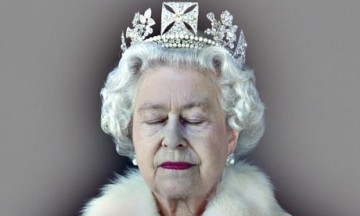
The unsavoury incident took place at a Buckingham Palace function today where the Queen was told in no uncertain terms that if she didn’t vote to remain in the EU her beloved corgis might become mincemeat.

Mr Cameron was overheard telling the Queen the bad news, and it seemed to have hit home rather hard.

“Ma’am, may I have a word? Would you like the bad news or the bad news first? I’ve just had word through from my handlers in Brussels, and they say if you don’t agree to selling off the country for a pittance to the collectivist un-democratic EU, where you will lose the monarchy and forfeit the Crown and Britain’s sovereignty, Jean Claude Juncker will personally eat your corgis with some Hollandaise sauce, an accompaniment of celeriac remoulade, a plate of sole meunière washed down with a digestif of four pints of cognac. Then he will unceremoniously vomit onto the carpet in the White Drawing room.”

These nasty vindictive Europeans really should not upset Her Majesty in such an uncouth manner, someone needs to tell Cameron and his friends to fuck orf..

Alan Johnson is Out of Touch if He Thinks a Hospital a Week is a ‘Drop in the Ocean’

0


Responding Vote Leave Chair Gisela Stuart said:

“The NHS is in crisis and it desperately needs more money. If we Vote Leave and take back control of the £350 million we give to the EU each week we will be able to give the NHS the shot in the arm it desperately needs. We should spend our money on our priorities.

“The remain campaign wants the elites to have more power and money, and not to give back control to the British people.

“Patients struggling to get care on the NHS will rightly think that they are completely out of touch when they claim that £350 million – enough to build a new hospital every week – is just a drop in the ocean.”

nhs corridor
‘The only way to save the NHS is to Vote Leave.’

Iain Duncan Smith said:

“I don’t know in what world it is extreme to want your democracy back. It’s not extreme to want democratic government in your country.

“These people in Remain really need to stop throwing threats and ridiculous terms around like this because it demeans them and it demeans the debate.”

Latest Trade Stats Show UK More Likely Than Ever to Strike a Free Trade Deal with EU


Commenting on today’s release of the UK trade statistics for March 2016 by the Office for National Statistics (ONS), Vote Leave Chief Executive Matthew Elliott said:


“The EU is not working. The eurozone is collapsing, millions of people are unemployed and Europe’s economies are massively under performing. That means that European countries are buying less from us than ever before as we trade more with the rest of the world.


“If we Vote Leave we will be able to take back control of our trade and do deals with growing economies rather than being shackled to the failing economies of Europe.


“We will also be able to take back control of the £350 million we send to Brussels every week. After we Vote Leave we will be able to spend that money on our priorities like the NHS rather than bailing out failing economies in the eurozone.”


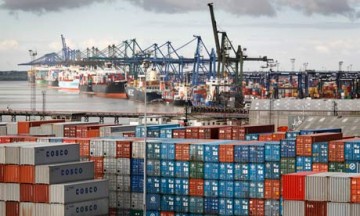
The statistics show the UK is more likely than ever to get a free trade deal.

The UK experienced a record trade deficit in goods with the EU, meaning it is more likely than ever that the UK will strike a free trade agreement. The ONS states that: ‘Between Quarter 4 (October to December) 2015 and Quarter 1 (January to March) 2016, the UK’s trade in goods deficit with the EU widened by £0.7 billion to £23.9 billionthe widest on record‘.

In March 2016, the UK recorded an £8.1 billion trade deficit in goods with the EU.


The statistics show that the EU is becoming a progressively less important market for the UK. Barely two-fifths of British exports are sold to the ‘single market’. It is safer to take back control of the power to strike our own trade agreements.

The figure show that the proportion of the UK’s exports of goods and services sold to the EU has decreased from 54.3% in 2000 to 43.7% in 2015. As the ONS notes, ‘The share of exports has fallen by more than 10 percentage points over the last 15 years‘.

The 43.7% figure is likely too high due to the Rotterdam effect, where exports from the UK to ports in Belgium and Holland are immediately re-exported to the rest of the world, which the ONS says ‘is estimated at around 2 percentage points’. This means that barely two-fifths of British exports are now sold to the EU.


Leading pro-EU campaigners have admitted the UK will get a free trade deal if we take back control.

David Cameron, Prime Minister and leader of the pro-EU campaign has admitted: ‘If we were outside the EU altogether, we’d still be trading with all these European countries, of course we would … Of course the trading would go on … There’s a lot of scaremongering on all sides of this debate. Of course the trading would go on’.

The UK’s former Ambassador to the EU and leading supporter of the pro-EU campaign, Lord Kerr of Kinlochard, has admitted: ‘there is no doubt that the UK could secure a free trade agreement with the EU. That is not an issue’.

The Chairman of the BSE campaign, Lord Rose of Monewden, has said: ‘My argument, simplistically as a businessman, would be: would you alienate your biggest customer… No, you would not; you would put your arm round the customer who is your biggest customer and say, “Thank you very much indeed. We love your trade and want to continue with it

Even the pro-EU CBI has said: ‘the UK is highly likely to secure a Free Trade Agreement with the EU, and such an agreement would be likely to be negotiated at an extremely high level of ambition relative to other FTAs [free trade agreements]’.

The pro-EU Centre for European Reform has accepted that, ‘given the importance of the UK market to the eurozone, the UK would probably have little difficulty in negotiating an FTA‘.

The Foreign Secretary, Philip Hammond, has admitted that a free trade agreement in goods ‘would be relatively simple to negotiate’.

After We Vote Leave We Will Act Quickly to Protect National Security and Save Money

1


When we Vote Leave on 23 June, negotiations on the UK’s withdrawal from the European Union will begin. There will be informal negotiations, formal negotiations, and legal changes. This will result in at least 1) the repeal of the European Communities Act 1972, and 2) a new UK-EU treaty. This process will take time. The details and the timing will only be clear when the new Government negotiating team engages. The full repeal of the ECA will ideally happen after a friendly negotiation and as part of the overall agreement and will therefore not be done immediately.

There are things, however, that can and should be done very quickly after 23 June to protect national security and save money. We can amend the ECA:

  • To exempt the intelligence agencies from EU law, immediately improving national security. For example, the European Court’s upcoming ruling on the UK’s surveillance regime, held back until after the referendum, will have no impact on the security services’ powers to protect us.

  • To end the application of the Charter of Fundamental Rights to the UK. We were originally promised it would have no legal effect in Britain then the ECJ made clear it does have effect. David Cameron promised a ‘complete opt out’ from the Charter. This never happened and the problem of the Charter is un-addressed in the Government’s recent deal.

  • To allow the deportation of EU citizens whose presence is not conducive to the public good, enabling us to remove violent criminals, rapists and terrorist sympathisers, such as convicted murderers or Abu Hamza’s daughter-in-law, regardless of what the European Court says.

  • To exempt the Armed Forces from the scope of EU law, preventing the risk of the European Court using the Charter to take control of the military.

  • To end multi-billion tax refunds to big business under EU law, protecting our public services by saving between £7.2 billion and £42.9 billion (£270 and £1,589 per household respectively) by 2020-21.

Michael Gove MP has given a comprehensive judicial and security related plan on Brexit:

michael-gove-vote-leave

“The European Court has consistently come down in favour of big businesses not the British people – costing us billions. Very soon after a leave vote we will be able to legislate to ensure that EU judges are not able to meddle in our tax affairs again which will save British taxpayers from tens of billions of pounds worth of liabilities.

“I think we would all prefer it if that money is spent on schools and hospitals rather than filling the coffers of multinational corporations.

“It is dangerous for the European Courts to have a say over our intelligence services and to rule on what data we can share with our allies like the US and Australia. Our intelligence network with the Five Eyes is the cornerstone of our fight against the global terror threat.

“The EU is jealous of this arrangement and many would like EU structures to replace our international networks. The Home Secretary is currently trying to stop EU judges from meddling in these networks but the court case will not be decided until after the referendum. That is something that people need to be aware of before they vote.

“If you vote remain, the EU courts will interfere more with our intelligence agencies, preventing them from fighting effectively against ISIS – this makes us less safe.

“If we Vote Leave, we take back control and stop EU judges from meddling in our affairs. I agreed with the Prime Minister when he set out his vision for getting a permanent opt out from the Charter of Fundamental Rights. Sadly, the deal did not touch this area and the Charter is being used more and more by EU judges to interfere with how we keep people in the UK safe.

“EU judges are stopping us from deporting dangerous criminals and terrorist suspects. This makes us less safe – that’s why we should take back control.”

britain

A vote to remain in the EU is a vote for the permanent supremacy of EU law and of the European Court. If we Vote Leave on 23 June, by contrast, we take back control.

The referendum will be followed by negotiations with the other 27 EU member states, following which the UK will strike a new deal with the EU based on free trade and friendly cooperation. The European Communities Act 1972 will be repealed. The supremacy of EU law and the jurisdiction of the European Court over the UK will come to an end. At all stages, the UK will be in control of the timetable.

A vote to leave the EU on 23 June will give the UK additional options on 24 June. EU law only has effect in the UK by virtue of the European Communities Act 1972. This means we can amend that Act immediately after the poll to end some of the most damaging aspects of EU membership.

Although there is the theoretical possibility of infraction proceedings from the European Commission, this prospect is wholly unreal if the British people vote to reject the supremacy of the European Court, and the areas touched on are ones that will not form part of a future UK-EU Treaty.

Taking these five measures (above) will not affect the ability of the UK to negotiate a free trade deal with the EU, which will contain none of these damaging features of the UK’s present relationship. Nor can it be objected that such a course would be inconsistent with the UK’s international obligations.

The UK has failed to end its prohibition on all prisoners voting in all elections over a decade after the Strasbourg Court ruled this was inconsistent with the UK’s obligations under the European Convention on Human Rights. Nothing of any consequence has happened since. The European Court itself often ignores the EU Treaties and/or international law. It can hardly complain if the UK takes a robust attitude to restoring democratic control in preparation for leaving the EU.

gchq

We can exempt the intelligence agencies from EU law

The powers of the UK’s intelligence agencies are currently being challenged before the European Court. The UK’s surveillance regime has already been struck down because of EU law. In July 2015, the Divisional Court in London annulled the Data Retention and Investigatory Powers Act 2014 on the ground it was inconsistent with the Charter of Fundamental Rights.

In November 2015, the Court of Appeal referred the UK’s surveillance regime to the European Court for a decision as to whether it will be allowed. Lord Justice Lloyd Jones made clear that the European Court’s decisions ‘will remain central to the validity of all future legislation enacted by the Member States in this field’ (R (Davis) v Secretary of State for the Home Department.

The Home Secretary, Theresa May, has described the UK’s legislation as ‘crucial to fighting crime, protecting children, and combating terrorism‘. She argued that without the legislation, ‘we run the risk that murderers will not be caught, terrorist plots will go undetected, drug traffickers will go unchallenged, child abusers will not be stopped, and slave drivers will continue their appalling trade in human beings’.

The European Court heard the case on 12 April, but will not issue a decision until after the referendum. If we vote remain, there will be nothing to deter the European Court from taking total control of security. This could mean the end of the Five Eyes Agreement, on which British security has depended since the war, due to the European Court’s hostility to trans-Atlantic information sharing.

If we Vote Leave, we take back control. We can amend the European Communities Act 1972 immediately to protect from the European Court the UK’s intelligence agencies and other powers needed to maintain national security.

lisbon-treaty

We can disapply the Charter of Fundamental Rights

The UK was initially promised an opt-out from the Charter of Fundamental Rights. Government Ministers once claimed it would have the same legal status as ‘the Beano or the Sun’. When the Charter was given legal effect by the Lisbon Treaty, the then Prime Minister, Tony Blair, told the House of Commons’ Liaison Committee that ‘we will not accept a treaty that allows the Charter of Fundamental Rights to change UK law in any way‘. He also told the House of Commons that: ‘it is absolutely clear that we have an opt-out from … the charter’.

The European Court has ruled the UK’s opt out is worthless, stating the relevant Protocol ‘does not intend to exempt … the United Kingdom from the obligation to comply with the provisions of the Charter or to prevent a [UK] court … from ensuring compliance with those provisions’. The UK Supreme Court has confirmed ‘the Charter thus has direct effect in national law’.

If we vote remain, the European Court will continue to take more and more power using the Charter. It has already used the Charter to increase the price of insurance for women, to extend prisoner voting rights, to create the ‘right to be forgotten‘, and to stop the UK from halting abuse of the European Arrest Warrant by foreign prosecutors. The European Court will progressively take more control every year using the Charter.

If we Vote Leave, we take back control. We can amend the European Communities Act 1972 to provide that the Charter has no effect in the law of any part of the United Kingdom and that no court has jurisdiction to review Acts of Parliament for compatibility with the Charter. This will give effect to what the Prime Minister previously demanded. In 2009, he called for a ‘complete opt-out from the Charter of Fundamental Rights‘ and in February, he said the Charter should not be ‘in force in Britain’.

islam_hate_signs

We can exclude persons whose presence is not conducive to the public good

At present, the Home Secretary has the power to deport foreign nationals from the UK if she considers that it would ‘be conducive to the public good‘. In addition, UK law provides that a person who is (a) convicted of a serious crime and sentenced to imprisonment or (b) is sentenced to more than twelve months’ imprisonment, is subject to automatic deportation . This has no application where deportation ‘would breach rights of the foreign criminal under the EU treaties‘.

At present, the circumstances in which we can exclude or remove foreign criminals and those whose presence is not conducive to the public good are significantly constrained by EU law. We cannot remove EU citizens on the basis of their criminal convictions or on grounds of punishment, public revulsion or deterrence. This means we cannot remove violent killers, such as Theresa Rafacz, who killed her husband, including by kicking him in the face with a shod foot while he lay on the ground defenceless and drunk, in an act the trial judge described as involving ‘gratuitous violence‘.

We are also constrained from removing terrorist sympathisers, as demonstrated by the Government’s flagging attempts to deport Chaymae Smak. Smak, a Moroccan national, was convicted of conveying a SIM card into prison for her father-in-law, convicted terrorist Abu Hamza al-Masri, and sentenced to twelve months’ imprisonment. The Secretary of State decided to deport her. On 4 February 2016, Advocate General Professor Maciej Szpunar delivered an opinion stating that it was, in principle, contrary to the EU Treaties to deport Smak because she had a child who was a British citizen.

If we Vote Leave, we take back control. We can amend the European Communities Act 1972 to provide that the Home Secretary can remove all foreign nationals on the ground their presence would not be conducive to the public good and that all foreign nationals sentenced to more than a year’s imprisonment are subject to automatic deportation. We will not be bound by whatever the European Court decides about Abu Hamza’s daughter-in-law.

We can exempt the armed forces from EU law

It is the policy of the UK Government that the European Convention on Human Rights (ECHR) should not apply to British soldiers on the battlefield. In October 2014, the Defence Secretary, Michael Fallon, said: ‘We do not need new European law hamstringing our Armed Forces in very dangerous situations. Otherwise we will end up with every platoon taking a legal adviser out on patrol. The next Conservative government will limit the reach of human rights cases to the UK, so that British Armed Forces overseas are not subject to persistent human rights claims that undermine their ability to do their job’.

The European Court of Human Rights in Strasbourg has extended the ECHR to the battlefield. In July 2011, it ruled that the ECHR applied when the UK was in military control of a territory overseas. The UK was found to have breached the ECHR by failing to conduct a proper investigation into the deaths of Iraqi civilians killed by British soldiers during operations in Iraq.

The decision to extend the ECHR to the battlefield was in conflict with two decisions of the UK’s highest courts in 2007 and 2010. In 2015, the Lord Chief Justice, Lord Thomas of Cwmgiedd, said he had ‘significant reservations in respect of the correctness of the decision extending the ECHR to the battlefield‘. Nonetheless, in June 2013, the UK Supreme Court ruled it had to follow the decision of the Strasbourg Court that the ECHR applied to the armed forces on active service overseas, reversing its previous rulings. These decisions could mean the UK has to pay out hundreds of millions in damages to enemy combatants.

Perverse consequences for the armed forces have followed. This has been demonstrated in recent litigation where the Government claimed that it had been placed in a ‘catch-22’ position. On the one hand, if it failed to release detained enemy combatants after five days, the detention became ‘unlawful’ under the ECHR. On the other hand, if it released the combatants to the Afghan authorities, it faced claims that it had breached the ECHR by exposing them to a real risk of ‘inhuman or degrading treatment’. The case is currently before the Supreme Court.

If we vote remain, there is nothing to stop the European Court of Justice using the EU’s Charter of Fundamental Rights to extend its control to the British military. The former Attorney General, Dominic Grieve QC, has admitted this is a real possibility, stating that if the UK decided not to implement any judgements of the Strasbourg Court, ‘the ECJ will expand its jurisprudence… the judgements against the United Kingdom will then have direct effect here’. As Mr Justice Mostyn has said, ‘that much wider Charter of Rights would remain part of our domestic law even if the Human Rights Act were repealed’.

The ECJ has already used the Charter to exert its control of our intelligence services and who we can deport, often using the ECHR as part of its justification and reasoning. There is no reason to think it will not do the same with the armed forces. There is no appeal from the ECJ. The only way we can ensure the ECJ does not interfere with our Armed Forces is to Vote Leave and take back control.

We can amend the European Communities Act 1972 to ensure that the European Court exercises no jurisdiction over armed forces.

We can stop big businesses claiming multi-billion tax refunds using EU law

Rulings of the European Court have exposed the taxpayer to massive liabilities for tax refunds to big businesses. The OBR now forecasts that HMRC will pay out £7.3 billion from 2016-2017 to 2020-2021, an average of £270.43 per household. If HMRC also loses every case currently pending (a further £35.6 billion), the UK will be forced to pay out £42.9 billion, the equivalent of £1,589 per household.

The UK has tried to block these payouts before but its tax legislation has been overruled by the European Court. If we vote remain, the European Court will continue to take control over our tax system and require multi-billion payouts to the multinational businesses.

Britain on Brexit will be secure, we will have control over our own laws, we will be able to conduct our business and save money needlessly being sent to Brussels. Every year Britain sends £19.1 billion to Brussels without any recompense.

Voting Leave on June 23 is the only valid, secure option for Britain.

Emma Watson Named in Panama Papers

When she’s not demanding Suffragette statues in Trafalgar Square or attending White House correspondent dinners, Ms Watson likes to peruse her lucrative holdings in her offshore accounts.

According to newly released Panama Wikileaks information ‘Emma Charlotte Duerre Watson’ is a beneficiary in an offshore company based in the British Virgin Islands.

The politically active actress may be asked to answer questions regarding these dubious accounts.

Maybe now is the time to execute an expelliarmus..

Business Opinion Moving Against the EU


‘Business opinion is split over the EU, yet this survey shows that businesses are rejecting the remain campaign’s main tactic of talking down Britain and its dynamic economy. Despite the claims of the pro-EU camp to the contrary, business is not fearful of the referendum or the result. This is because they know it is safer to take back control and spend our money on our priorities.


‘If we want British business to prosper in the long-term then the only option is to Vote Leave on 23 June. The survey shows that a majority of those businesses which represent the vast bulk of our economy– those who do business in the UK and those that export outside of the EU- want to leave the European Union.’


BCC members who do not export or export outside the EU support leaving the EU.

By 46.4% to 42.8%, BCC members who do not export would vote to leave the EU.

90% of businesses do not export. In 2014, just 10.8% businesses exported at all, of which a smaller proportion still exported to the EU only.

50.1% to 46.7%, BCC members which export to the rest of the world only would vote to leave the EU.

52.2% to 35.9%, BCC members consider that leaving the EU would have a positive impact (15.9%) or no impact (36.3%) on their overall growth strategy as opposed to a negative impact.


The BCC survey contradicts the Chancellor’s campaign to do down the British economy.

The BCC states that the referendum is having no effect on the real economy or giving rise to uncertainty: ‘The majority of business leaders report that the referendum has had no impact to date on various aspects of their business, from orders and sales (71.3%), recruitment (87.1%), and investment (79.6%), to total costs (80.3%)’. This positive data contradicts what the Chancellor of the Exchequer, George Osborne, has claimed that ‘the threat of leaving the EU is weighing on our economy. Investments ‎and building are being delayed’.


A majority of IoD members think the UK could succeed outside the EU.

A majority of IoD members (50%) agree that the UK could make an economic success of leaving the EU. Just 34% disagreed with this proposition.

47% of IoD members consider that leaving the EU would neither have a very significant impact on their business (29%) or no significant impact at all (18%).

46% to 26%, IoD members agree that leaving the EU would have a positive rather than a negative impact on social and employment legislation.

51% to 38%, IoD members consider that leaving the EU would either have a positive impact (19%) or no impact (32%) on research and innovation rather than a negative impact.


IoD members consider the unreformed EU is on a path of economic decline and is too focused on internal debates.

74% to 13%, IoD members consider that the unreformed EU is on a path of economic decline.

75% to 13%, IoD members consider that the EU is too focused on internal debates and trying to impose top-down solutions.


These surveys’ headline voting intention figures cannot be relied upon as evidence of the views of British companies. Weighted business polling shows companies are hostile to the ‘single market’.

42% of respondents to the IoD survey exported services to the EU and 21% exported goods to the EU.

67.5% of respondents to the BCC survey (1,506 out of 2,231) were exporters.

In 2014, just 10.8% businesses exported at all, of which a smaller proportion still exported to the EU only .

The IoD survey was also not weighted to reflect the characteristics of the UK’s business population, such as the respondents’ turnover and number of employees. In 2015, 99.9% of British companies were SMEs, who were responsible for 60% of employment.

Weighted business polling shows that by 74% to 22%, SMEs believe the UK Government, not the EU, should be in charge of trade negotiations and that by 69% to 25%, SMEs think that the UK can trade and cooperate with the EU without giving away permanent control, rejecting the suggestion that the ‘single market’ is good for jobs and living standards.

David Cameron Utilising Same Propaganda Techniques Hitler Used Against Britain in WW2

1

Analysing the specific techniques that David Cameron is utilising in Britain today during the EU referendum campaign, it is almost an identical fit to the propaganda used against the British people and soldiers during World War II.

The Nazis would often use captured British servicemen to disseminate anti-British propaganda and it is the same with David Cameron, utilising two veterans to spout out anti-British propaganda today in various media publications.

One of the major technique’s of David Cameron’s anti-British propaganda campaign is that of mass leafleting with false information, the Nazis were very adept at this practice and would often drop disinformation and moral sapping  leaflets over British troop lines in WW2. The leaflet by the remain campaign in 2016 is a classic piece of propaganda that may fool the uninformed but the sheer amount of false information within it is truly outstanding. The funny thing is, it was on Cameron’s insistence that the British people were forced to pay £9 million for their own poison. No one had a choice in the matter, which may have tickled Cameron’s evil demeanour even further.

Both Soviet and Fascist systems employ the method of repetition, and the Remain camp is utilising this technique of constant repetition of false data to solidify its ultimate message. It does not matter to the controlling propagandist that they are spreading disinformation, because they know if you repeat it enough times to the public, it will be seen as true.

During World War II, Lord Haw Haw was an example of immense traitorous fervour, and so it is the same in 2016. This time, Lord Haw Haw, is David Cameron himself. He bristles with horror stories of impending doom upon Britain’s populace unless they follow the regime of the European Union, much like Lord Haw Haw used to on the old wireless in the 1940s urging Britons to join the German Reich. Cameron’s treachery is all the more vile, as he believes he is doing right in lying to the British people, he has no conscience about betraying Britain, in fact he detests Britain and its people with a vengeance he will do as he pleases to hurt this once proud nation and send it to oblivion within the German-led EU Reich.

Cameron’s chief propagandists are from the old school, we have Peter Mandelson, who is the Goebbels of the group, and we have Alistair Campbell as Himmler. Also on the remain team for propaganda is Tony Blair, and David Miliband, two seasoned propagandists and liars from the previous Labour government.

Herr Cameron’s Hitlerite propaganda techniques answer to the EU’s Volksgemeinschaft, a collectivist ideal that abhors Britain’s capitalist swagger.

What the propaganda preys on most is the uninformed voter, and this is why those who are fighting this almighty Goldman Sachs funded nightmare must try and inform the people who follow StrongerIn without question and are blinded by the disinfo being spewed by highly trained experts in propaganda.

You must question. Look up other sources. Do not take a single word coming from the remain camp as serious or factual. Above all, do your own research backed up by multiple sources.

Vote Leave on June 23 to take back control from the EU and save Britain.

Boris Johnson: The Liberal Cosmopolitan Case to Vote Leave

0


I am pleased that this campaign has so far been relatively free of personal abuse – and long may it so remain – but the other day someone insulted me in terms that were redolent of 1920s Soviet Russia. He said that I had no right to vote Leave, because I was in fact a “liberal cosmopolitan”.

That rocked me, at first, and then I decided that as insults go, I didn’t mind it at all – because it was probably true. And so I want this morning to explain why the campaign to Leave the EU is attracting other liberal spirits and people I admire such as David Owen, and Gisela Stuart, Nigel Lawson, John Longworth – people who love Europe and who feel at home on the continent, but whose attitudes towards the project of European Union have been hardening over time.

For many of us who are now deeply skeptical, the evolution has been roughly the same: we began decades ago to query the anti-democratic absurdities of the EU. Then we began to campaign for reform, and were excited in 2013 by the Prime Minister’s Bloomberg speech; and then quietly despaired as no reform was forthcoming. And then thanks to the referendum given to this country by David Cameron we find that a door has magically opened in our lives.

  We can see the sunlit meadows beyond. I believe we would be mad not to take this once in a lifetime chance to walk through that door because the truth is it is not we who have changed. It is the EU that has changed out of all recognition; and to keep insisting that the EU is about economics is like saying the Italian Mafia is interested in olive oil and real estate.

 It is true, but profoundly uninformative about the real aims of that organization. What was once the EEC has undergone a spectacular metamorphosis in the last 30 years, and the crucial point is that it is still becoming ever more centralizing, interfering and anti-democratic.

You only have to read the Lisbon Treaty – whose constitutional provisions were rejected by three EU populations, the French, the Dutch and the Irish – to see how far this thing has moved on from what we signed up for in 1972. Brussels now has exclusive or explicit competence for trade, customs, competition, agriculture, fisheries, environment, consumer protection, transport, trans-European networks, energy, the areas of freedom, security and justice, and new powers over culture, tourism, education and youth. The EU already has considerable powers to set rates of indirect taxation across the whole 28-nation territory, and of course it has total control of monetary policy for all 19 in the eurozone.

In recent years Brussels has acquired its own foreign minister, its own series of EU embassies around the world, and is continuing to develop its own defence policy. We have got to stop trying to kid the British people; we have got to stop saying one thing in Brussels, and another thing to the domestic audience; we have got to stop the systematic campaign of subterfuge – to conceal from the public the scale of the constitutional changes involved. We need to look at the legal reality, which is that this is a continuing and accelerating effort to build a country called Europe.

  Look at that list of Lisbon competences – with 45 new fields of policy where Britain can be outvoted by a qualified majority – and you can see why the House of Commons Library has repeatedly confirmed that when you add primary and secondary legislation together the EU is now generating 60 per cent of the laws passing through parliament.

  The independence of this country is being seriously compromised. It is this fundamental democratic problem – this erosion of democracy – that brings me into this fight.

People are surprised and alarmed to discover that our gross contributions to the EU budget are now running at about £20bn a year, and that the net contribution is £10 bn; and it is not just that we have no control over how that money is spent.

  No one has any proper control – which is why EU spending is persistently associated with fraud. Of course the Remain campaign dismisses this UK contribution as a mere bagatelle – even though you could otherwise use it to pay for a new British hospital every week. But that expense is, in a sense, the least of the costs inflicted by the EU on this country.

  It is deeply corrosive of popular trust in democracy that every year UK politicians tell the public that they can cut immigration to the tens of thousands – and then find that they miss their targets by hundreds of thousands, so that we add a population the size of Newcastle every year, with all the extra and unfunded pressure that puts on the NHS and other public services.

  In our desperation to meet our hopeless so-called targets, we push away brilliant students from Commonwealth countries, who want to pay to come to our universities; we find ourselves hard pressed to recruit people who might work in our NHS, as opposed to make use of its services – because we have absolutely no power to control the numbers who are coming with no job offers and no qualifications from the 28 EU countries. I am in favour of immigration; but I am also in favour of control, and of politicians taking responsibility for what is happening; and I think it bewilders people to be told that this most basic power of a state – to decide who has the right to live and work in your country – has been taken away and now resides in Brussels.

  And, as I say, that is only one aspect of a steady attrition of the rights of the people to decide their priorities, and to remove, at elections, those who take the decisions. It is sad that our powers of economic self-government have become so straitened that the Chancellor of the Exchequer has to go around personally asking other finance ministers to allow him to cut VAT on tampons, and as far as I can see we still have not secured consent.

 It is very worrying that the European Court of Justice – Luxembourg, not Strasbourg – should now be freely adjudicating on human rights questions, and whether or not this country has the right to deport people the Home Office believes are a threat to our security; and it is peculiar that the government is now straining at the gnat of the Convention and the Strasbourg court, whose rulings are not actually binding on UK courts, while swallowing the camel of the 55-article charter of Fundamental rights, which is fully justiciable by the European Court in Luxembourg, when you consider that it is the rulings of this court that are binding and that must be applied by every court in this country, including parliament.

It is absurd that Britain – historically a great free-trading nation – has been unable for 42 years to do a free trade deal with Australia, New Zealand, China, India and America.

  It is above all bizarre for the Remain campaign to say that after the UK agreement of February we are now living in a “reformed” EU, when there has been not a single change to EU competences, not a single change to the Treaty, nothing on agriculture, nothing on the role of the court, nothing of any substance on borders – nothing remotely resembling the agenda for change that was promised in the 2013 Bloomberg speech.

  In that excellent speech the Prime Minister savaged the EU’s lack of competitiveness, its remoteness from the voters, its relentless movement in the wrong direction.

As he said –

‘The biggest danger to the European Union comes not from those who advocate change, but from those who denounce new thinking as heresy. In its long history Europe has experience of heretics who turned out to have a point.

‘More of the same will not see the European Union keeping pace with the new powerhouse economies. More of the same will not bring the European Union any closer to its citizens. More of the same will just produce more of the same – less competitiveness, less growth, fewer jobs.

‘And that will make our countries weaker not stronger.

That is why we need fundamental, far-reaching change.’

He was right then.

We were told that there had to be “fundamental reform” and “full-on” Treaty change that would happen “before the referendum” – or else the government was willing to campaign to Leave.

 And that is frankly what the government should now be doing. If you look at what we were promised, and what we got, the Government should logically be campaigning on our side today.

  We were told many times – by the PM, Home Sec and Chancellor – that we were going to get real changes to the law on free movement, so that you needed to have a job lined up before you could come here. We got no such change.

  We were told that we would get a working opt-out from the Charter of Fundamental Human Rights – which by the way gives the European Court the power to determine the application of the 1951 Convention on Refugees and Asylum, as well as extradition, child protection and victims’ rights. We got nothing.

 We were told that we would be able to stop the Eurozone countries from using the EU institutions to create a fiscal and political union. Instead we gave up our veto.

  The Five Presidents’ report makes it clear that as soon as the UK referendum is out of the way, they will proceed with new structures of political and fiscal integration that this country should have no part in, but which will inevitably involve us, just as we were forced – in spite of promises to the contrary – to take part in the bail-out of Greece.  They want to go ahead with new EU rules on company law, and property rights and every aspect of employment law and even taxation – and we will be dragged in.

  To call this a reformed EU is an offence against the Trades Descriptions Act, or rather the EU Unfair Commercial Practices Directive that of course replaced the Trades Descriptions Act in 2008. The EU system is a ratchet hauling us ever further into a federal structure.

  We have proved to ourselves time and again that we cannot change the direction. We cannot change the pace. We cannot interrupt the steady erosion of democracy, and given that we do not accept the destination it is time to tell our friends and partners, in a spirit of the utmost cordiality, that we wish to forge a new relationship based on free trade and intergovernmental cooperation.

  We need to Vote Leave on June 23, and in the meantime we must deal with the three big myths that are peddled by the Remain campaign.

  The first is the so-called economic argument. The Remainers accept that there is a loss of political independence, but they claim that this trade-off is economically beneficial.


  The second argument we might broadly call the peace-in-Europe argument – that the EU is associated with 70 years of stability, and we need to stay in to prevent German tanks crossing the French border.

The third argument is more abstract, but potent with some people. It is that you can’t really want to leave the EU without being in some way anti-European, and that the Remain camp therefore have a monopoly on liberal cosmopolitanism.

  All three arguments are wholly bogus.

  The most important mistake is to think that there is some effective and sensible trade-off between the loss of democratic control and greater economic prosperity. The whole thrust of the Remain argument is that there is a democratic cost, but an economic benefit – that if we accept that 60 per cent of our laws are made in Brussels, we will see some great boost in our trade and our exports and in the overall economic performance of the EU. This is turning out to be simply false.

 The loss of democratic control is spiritually damaging, and socially risky – and the economic benefits of remaining subject to the Single Market law-making machine, as opposed to having access to the Single Market, are in fact very hard to detect.

  What the government wants is for us to remain locked into the Single Market law-making regime, and to be exposed to 2500 new EU regulations a year. What we want is for Britain to be like many other countries in having free-trade access to the territory covered by the Single Market – but not to be subject to the vast, growing and politically-driven empire of EU law.

  There is a good deal of evidence that this is the more sensible position to be in. Take the two relevant 20 year periods, before and after the creation of the Single Market, in other words from 1973 to 1992, and from 1992 to 2012.

  Now when the single market dawned, we were told that it was going to be a great dynamo of job and wealth creation – 800 billion euros, the Cecchini report said, of extra European GDP. We were told that it was going to send exports whizzing ever faster across borders. So what happened?

  Did Britain export more to the rest of the EEC 11, as a result of the Single Market? On the contrary, the rate of growth slowed, as Michael Burrage has shown this year. British exports of goods were actually 22 per cent lower, at the end of the second 20 year period, than if they had continued to grow at the rate of the 20 years pre-1992. And before you say that this might be just a result of Britain’s sluggish performance in the export of manufactured goods, the same failure was seen in the case of the 12 EEC countries themselves.

  We were told that goods would start pinging around the EEC as if in some supercharged cyclotron; and on the contrary, the rate of growth flattened again – 14.6 per cent lower than the previous 20 years when there was no single market.

  So what was the decisive advantage to Britain, or any other country, of being inside this system, and accepting these thousands of one-size-fits-all regulations? In fact you could argue that many countries were better off being outside, and not subject to the bureaucracy. In the period of existence of this vaunted single market, from 1992 to 2011, there were 27 non-EU countries whose exports of goods to the rest of the EU grew faster than the UK’s; and most embarrassingly of all – there were 21 countries who did better than the UK in exporting services to the other EEC 11.

 So where was this great European relaunch that was supposed to be driven by the 1992 Single Market? In the 20 years since the start of the Single Market, the rate of growth in the EU countries has actually been outstripped by the non-EU countries of the OECD. It is the independent countries that have done better; and the EU has been a microclimate of scandalously high unemployment. This year the US is projected to grow by 2.4 per cent, China by 6.5 pc, NZ by 2 pc, Australia by 2.5 pc and India by 7.5 pc. The Eurozone – 1.5 per cent.

  All that extra growth we were promised; all those extra jobs. The claims made for the Single Market are looking increasingly fraudulent. It has not boosted the rate of British exports to the EU; it has not even boosted growth in exports between the EU 12; and it has not stopped a generation of young people – in a huge belt of Mediterranean countries – from being thrown on to the scrapheap.

  What has that corpus of EU regulation done to drive innovation? There are more patents from outside the EU now being registered at the EU patent office than from within the EU itself. The Eurozone has no universities within the top 20, and has been woefully left behind by America in the tech revolution – in spite of all those directives I remember from the 1990s about les reseaux telematiques; or possibly, of course, the EU has been left behind on tech precisely because of those directives.

 There are plenty of other parts of the world where the free market and competition has been driving down the cost of mobile roaming charges and cut-price airline tickets – without the need for a vast supranational bureaucracy enforced by a supranational court.

 I hear again the arguments from the City of London, and the anxieties that have been expressed. We heard them 15 years ago, when many of the very same Remainers prophesied disaster for the City of London if we failed to join the euro. They said all the banks would flee to Frankfurt. Well, Canary Wharf alone is now far bigger than the Frankfurt financial centre – and has kept growing relentlessly since the crash of 2008.

  As for the argument that we need the muscle of EU membership, if we are to do trade deals – well, look, as I say, at the results after 42 years of membership. The EU has done trade deals with the Palestinian authority and San Marino. Bravo. But it has failed to conclude agreements with India, China or even America.

  Why? Because negotiating on behalf of the EU is like trying to ride a vast pantomime horse, with 28 people blindly pulling in different directions. For decades deals with America have been blocked by the French film industry, and the current TTIP negotiations are stalled at least partly because Greek feta cheese manufacturers object to the concept of American feta. They may be right, aesthetically, but it should not be delaying us in this country.

Global trade is not carried on by kind permission of people like Peter Mandelson. People and businesses trade with each other, and always will, as long as they have something to buy and sell.

 But it is notable that even when the EU has done a trade deal, it does not always seem to work in Britain’s favour. In ten out of the last 15 deals, British trade with our partners has actually slowed down, rather than speeded up, after the deal was done.

  Is that because of some defect in us, or in the deal? Could it be that the EU officials did not take account of the real interests of the UK economy, which is so different in structure from France and Germany? And might that be because the sole and entire responsibility for UK trade policy is in the hands of the EU commission – a body where only 3.6 per cent of the officials actually come from this country?

  In trying to compute the costs and benefits of belonging to the Single Market, we should surely add the vast opportunity cost of not being able to do free trade deals with the most lucrative and fastest-growing markets in the world – because we are in the EU.

  When you consider that only 6 per cent of UK business export to the EU 28; and when you consider that 100 per cent of our businesses – large and small – must comply with every jot and tittle of regulation; and when you consider that the costs of this regulation are estimated at £600m per week, I am afraid you are driven to the same conclusion as Wolfgang Munchau, the economics commentator of the FT, who said, “whatever the reasons may be for remaining in the EU, they are not economic.”

And so I return to my point; that we must stop the pretence. This is about politics, and a political project that is now getting out of control. To understand our predicament, and the trap we are in, we need to go back to the immediate post-war period, and the agony and shame of a broken continent.

  There were two brilliant Frenchmen – a wheeler-dealing civil servant with big American connexions called Jean Monnet, and a French foreign minister called Robert Schuman. They wanted to use instruments of economic integration to make war between France and Germany not just a practical but a psychological impossibility.

It was an exercise in what I believe used to be called behavioural therapy; inducing a change in the underlying attitudes by forcing a change in behaviour. Their inspired idea was to weave a cat’s cradle of supranational legislation that would not only bind the former combatants together, but create a new sensation of European-ness.

  As Schuman put it, “Europe will be built through concrete achievements which create a de facto solidarity.” Jean Monnet believed that people would become “in mind European”, and that this primarily functional and regulatory approach would produce a European identity and a European consciousness.

Almost 60 years after the Treaty of Rome, I do not see many signs that this programme is working. The European elites have indeed created an ever-denser federal system of government, but at a pace that far exceeds the emotional and psychological readiness of the peoples of Europe. The reasons are obvious.

  There is simply no common political culture in Europe; no common media, no common sense of humour or satire; and – this is important – no awareness of each other’s politics, so that the European Union as a whole has no common sense of the two things you need for a democracy to work efficiently. You need trust, and you need shame. There is no trust, partly for the obvious reason that people often fail to understand each other’s languages. There is no shame, because it is not clear who you are letting down if you abuse the EU system.

  That is why there is such cavalier waste and theft of EU funds: because it is everybody’s money, it is nobody’s money.

  If you walk around London today, you will notice that the 12 star flag of the EU is flying all over the place. That is because this is Schuman day. It is the birthday of the founder of this project, and the elites have decreed that it should be properly marked.

Do we feel loyalty to that flag? Do our hearts pitter-patter as we watch it flutter over public buildings? On the contrary. The British share with other EU populations a growing sense of alienation, which is one of the reasons turn-out at European elections continues to decline.

 As Jean-Claude Juncker has himself remarked with disapproval, “too many Europeans are returning to a national or regional mindset”. In the face of that disillusionment, the European elites are doing exactly the wrong thing. Instead of devolving power, they are centralizing.

Instead of going with the grain of human nature and public opinion, they are reaching for the same corrective behavioural therapy as Monnet and Schuman: more legislation, more federal control; and whenever there is a crisis of any kind the cry is always the same. “More Europe, more Europe!”

  What did they do when the Berlin wall came down, and the French panicked about the inevitability of German unification? “More Europe!” And what are they saying now, when the ensuing single currency has become a disaster? “More Europe!”

  They persist in the delusion that political cohesion can be created by a forcible economic integration, and they are achieving exactly the opposite. What is the distinctive experience of the people of Greece, over the last eight years? It is a complete humiliation, a sense of powerlessness. The suicide rate has risen by 35 per cent; life expectancy has actually fallen. Youth unemployment is around 50 per cent. It is an utter disgrace to our continent.

 That is what happens when you destroy democracy. Do the Greeks feel warmer towards the Germans? Do they feel a community of interest? Of course not.

 In Austria the far-right have just won an election for the first time since the 1930s. The French National Front are on the march in France, and Marine le Pen may do well in the Presidential elections. You could not say that EU integration is promoting either mutual understanding or moderation, and the economic consequence range from nugatory to disastrous.

  The answer to the problems of Europe today is not “more Europe”, if that means more forcible economic and political integration. The answer is reform, and devolution of powers back to nations and people, and a return to intergovernmentalism, at least for this country – and that means Vote Leave on June 23.

 And of course there will be some in this country who are rightly troubled by a sense of neighbourly duty. There are Remainers who may agree with much of the above; that the economic advantages for Britain are either overstated or non-existent. But they feel uneasy about pulling out of the EU in its hour of need, when our neighbours are in distress; and at this point they deploy the so-called “Peace in Europe” argument: that if Britain leaves the EU, there will be a return to slaughter on Flanders Fields.

  I think this grossly underestimates the way Europe has changed, and the Nato guarantee that has really underpinned peace in Europe. I saw the disaster when the EU was charged with sorting out former Yugoslavia, and I saw how Nato sorted it out.

 And it understates the sense in which it is the EU itself, and its anti-democratic tendencies that are now a force for instability and alienation.

  Europe faces twin crises of mass migration, and a euro that has proved a disaster for some member states; and the grim truth is that the risks of staying in this unreformed EU are intensifying and not diminishing.

  In the next six weeks we must politely but relentlessly put the following questions to the Prime Minister and to the Remain campaign…

  1 How can you possibly control EU immigration into this country?

 2  The Living Wage is an excellent policy, but how will you stop it being a big pull factor for uncontrolled EU migration, given that it is far higher than minimum wages in other EU countries?

3 How will you prevent the European Court from interfering further in immigration, asylum, human rights, and all kinds of matters which have nothing to do with the so-called Single Market?

 4 Why did you give up the UK veto on further moves towards a fiscal and political union?

 5 How can you stop us from being dragged in, and from being made to pay?

The answer is that the Remain campaign have no answers to any of these questions, because they are asking us to remain in an EU that is wholly unreformed, and going in the wrong direction.

  If we leave on June 23, we can still provide leadership in so many areas. We can help lead the discussions on security, on counter-terrorism, on foreign and defence policy, as we always have. But all those conversation can be conducted within an intergovernmental framework, and without the need for legal instruments enforced by the European Court of Justice. We will still be able to cooperate on the environment, on migration, on science and technology; we will still have exchanges of students.

  We will trade as much as ever before, if not more. We will be able to love our fellow Europeans, marry them, live with them, share the joy of discovering our different cultures and languages – but we will not be subject to the jurisdiction of a single court and legal system that is proving increasingly erratic and that is imitated by no other trading group.

 We will not lose influence in Europe or around the world – on the contrary, you could argue we will gain in clout. We are already drowned out around the table in Brussels; we are outvoted far more than any other country – 72 times in the last 20 years, and ever more regularly since 2010; and the Eurozone now has a built-in majority on all questions.

 We will recapture or secure our voice – for the 5th biggest economy in the world – in international bodies such as the WTO or the IMF or the CITES, where the EU is increasingly replacing us and laying a claim to speak on our behalf. If you want final and conclusive proof of our inability to “get our way” in Brussels – and the contempt with which we will be treated if we vote to Remain – look again at the UK deal and the total failure to secure any change of any significance.

 Above all – to get to the third key point of the Remainers – if we leave the EU we will not, repeat not, be leaving Europe. Of all the arguments they make, this is the one that infuriates me the most. I am a child of Europe. I am a liberal cosmopolitan and my family is a genetic UN peacekeeping force.

  I can read novels in French and I can sing the Ode to joy in German, and if they keep accusing me of being a Little Englander, I will. Both as editor of the Spectator and Mayor of London I have promoted the teaching of modern European languages in our schools. I have dedicated much of my life to the study of the origins of our common – our common -European culture and civilization in ancient Greece and Rome.

 So I find if offensive, insulting, irrelevant and positively cretinous to be told – sometimes by people who can barely speak a foreign language – that I belong to a group of small-minded xenophobes; because the truth is it is Brexit that is now the great project of European liberalism, and I am afraid that it is the European Union – for all the high ideals with which it began, that now represents the ancient regime.

 It is we who are speaking up for the people, and it is they who are defending an obscurantist and universalist system of government that is now well past its sell by date and which is ever more remote from ordinary voters.

  It is we in the Leave Camp – not they – who stand in the tradition of the liberal cosmopolitan European enlightenment – not just of Locke and Wilkes, but of Rousseau and Voltaire; and though they are many, and though they are well-funded, and though we know that they can call on unlimited taxpayer funds for their leaflets, it is we few, we happy few who have the inestimable advantage of believing strongly in our cause, and that we will be vindicated by history; and we will win for exactly the same reason that the Greeks beat the Persians at Marathon – because they are fighting for an outdated absolutist ideology, and we are fighting for freedom.

  That is the choice on June 23

 It is between taking back control of our money – or giving a further £100bn to Brussels before the next election

 Between deciding who we want to come here to live and work – or letting the EU decide

between a dynamic liberal cosmopolitan open global free-trading prosperous Britain, or a Britain where we remain subject to a undemocratic system devised in the 1950s that is now actively responsible for low growth and in some cases economic despair

 between believing in the possibility of hope and change in Europe – or accepting that we have no choice but to knuckle under

 It is a choice between getting dragged ever further into a federal superstate, or taking a stand now

  Vote Leave on June 23, and take back control of our democracy.   

Leading Historians Declare that EU is NOT Responsible For Peace in Europe


Historians for Britain (HfB) published a series of essays by some of Britain’s leading historical thinkers tackling the pervasive and dangerous claim that the EU is responsible for peace in Europe. The historians instead attribute the pivotal role of NATO and the US in keeping the peace in Europe.

Click here to read the full essays

Professor Nigel Saul of Royal Holloway, University of London said ‘We’re often told that the EU has been responsible for ending Europe’s wars. These essays subject this claim to scrutiny, finding it groundless.’

Dr Robert Crowcroft of the University of Edinburgh said ‘The notion that the peace of Europe was guaranteed by the institutions of the European Union was always utter nonsense. This collection of essays … is an important corrective to one of the most infuriating of all Europhile pieties: that the institutions of the European Union are responsible for peace in Europe.’

Authors of the essays include Professor David Abulafia (Professor of Mediterranean History, Cambridge University), Count Adam Zamoyski (Noted author and historian), Dr Andrew Roberts (Noted author and historian) and Professor Tom Gallagher.

Key themes of the essays include:

There is no historical basis to the claim that, without the EU, war might break out. The concluding essay states that these statements are ‘historically illiterate‘ and amount to ‘scaremongering.’

The decision to award the Nobel Peace Prize to the EU was a very poor one. The EU has done little to promote peace in Europe.

NATO has been, by far, the most important organisation in preserving peace in Europe.

The EU has failed to intervene in conflicts in non-EU countries, especially in the Balkans. Far from being a force for peace, the EU has often been little more than a ‘talking shop’.

By attempting to duplicate NATO’s role, EU initiatives to create a common European Defence Force or Army have the potential to undermine European security and have created resentment.

EU austerity policies, particularly in the Mediterranean, has flamed resentment. Far from creating peace, these policies have created new tensions between the member states.

Key quotes from the essays:

‘Peace and political stability in western Europe have been assured by an entirely separate organization’Professor David Abulafia

‘The pacifism which accompanied the formation of the European Union was the fruit of a general retreat from bellicosity, not its cause.’Count Adam Zamoyski

‘Warfare between western European states and, in particular, war between France and Germany, was never likely after the Second World War.’ – AW Purdue

The EU did not bring peace to Europe and, far less than a Europe of sovereign states, is it capable of maintaining it’ – AW Purdue

‘It is not economics, commerce, finance or trade that promotes peace. The largest single trading partner that Great Britain had in 1914 was Imperial Germany’Dr Andrew Roberts

‘By contrast with NATO’s long, stalwart history of militarily standing up to totalitarianism, the EU has been a purely trading organisation, albeit one with a vastly inflated opinion of itself, one that the Nobel Committee sadly saw fit to inflate even further in 2012’ Dr Andrew Roberts

‘A new source of tension and ill will has developed within the European Union… anger about how to handle the massive migrant crisis, is poisoning relations between a number of member states of the EU.’ – Dr Irina Somerton

‘The EU has fallen far short of the hopes of its architects’Professor Tom Gallagher


Find out more at http://historiansforbritain.org/

Historians for Britain was inspired by a group of historians who signed a letter to The Times in 2013 calling for a renegotiation of Britain’s membership of the EU. In 2016, David Cameron, returned from Brussels with little or no negotiation, and called a referendum. Cameron’s so-called deal with the EU is non-legally bound, and can be vetoed by other member states.

Below are the historians who signed that letter and historians who have subsequently said that they support the campaign for a better deal between Britain and the EU

Professor David Abulafia*, University of Cambridge
Doctor Anna Abulafia, University of Oxford
Professor John Charmley, University of East Anglia
Professor Jonathan Clark*, University of Kansas
Doctor Bruce Coleman*, University of Exeter
Doctor Robert Crowcroft, University of Edinburgh
John Davie*, University of Oxford
Doctor Andrew Fear*, University of Manchester
Doctor Amanda Foreman
Professor Tom Gallagher*, University of Bradford
Professor William Gibson*, Oxford Brookes University
Richard Goldsbrough*
Doctor Abigail Green*, University of Oxford
Professor Shaun Gregory, University of Durham
Doctor Owen Hartley, University of Leeds
Doctor Rebecca Haynes*, University College London
James Holland
Doctor Robert Hutchinson
Doctor Han Rog Kang, University of Oxford
Doctor Sheila Lawlor, Director, Politeia
John Lee*
Celia Lee*
Tim Newark*
Professor Gwythian Prins*, London School of Economics
Professor A.W. Purdue*
Professor Martyn Rady*, University College London
Doctor Richard Rex, University of Cambridge
Doctor Andrew Roberts*
Doctor Lee Rotherham*
Professor Guy Rowlands*, University of St Andrews
Professor Nigel Saul*, Royal Holloway, University of London
Professor Richard Shannon, University of Wales
Digby Smith*
Doctor Irina Somerton*, University of London
Doctor Andrew M Spencer*, University of Cambridge
Doctor David Starkey*, University of Cambridge
Doctor Graham Stewart
Professor Robert Tombs*, University of Cambridge
Miranda Vickers
Doctor Brian Young, University of Oxford
Count Adam Zamoyski*

KAjwhriuw024hvjbed2SORH