17.7 C
London
Friday, January 9, 2026
secret satire society
Home Blog Page 479

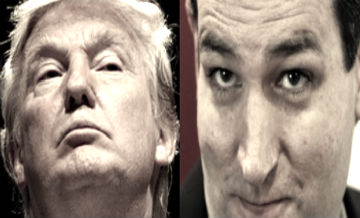
U.S. Election: Dirty Evangelical Players Trump and Cruz Stoop Lower Every Day

1


“Not only does this man have a money hungry Eastern European escort for a wife, but he has now embroiled stalwart Christian evangelist Ted Cruz in a five woman clandestine affair thanks to Trump’s tabloid dealings with the National Enquirer. It is hard to say at the moment who is coming off worse within this mud slinging match, but Trump is the current leader,” a shocked Capitol Hill commentator revealed on Friday.

For election observers, the low blows, the dirty play, and pig pen politics of Donald Trump reveal much about the man’s uncouth character; a man who will stab wildly in the dark until he hits anything, a man who has no qualms about dragging parties through his own faeces ridden mud.

Both Cruz and Trump are obnoxious liars, men who would gladly throw their wives or newborn babies into the firing line to save their own skin, and it is this profound hypocrisy that is so amusing to watch, they are supposedly appealing to the right wing extremist Christian Americans who as a group are the lowest level of humanity, rife with duplicitous intent, corrupt beyond belief and evangelical brainwashed monstrosities conducting immoralities and depraved acts behind the scenes whilst pleading penance in public to their imaginary god.

Both men are brow-beaten greedy lowlife scum, both are guilty of crimes that are beyond the pale and both are representatives of the people that support them.

Experts: Globalism Will Not Suffer With Brexit

0

A team of experts at the Globalist Bilderberger Research Facility in Rotterdam, Netherlands has revealed in a new paper that Brexit would not hamper plans for globalism and should be allowed to continue without fear.

“Our lower orders are worried about Brexit, however analysis and projections of financial data reveal that Britain leaving the EU would not hinder plans for globalism or business efficacy at all.

“The numerous benefits of Brexit are too long to list in this brief report, however the main benefit is that the United Kingdom would increase its global outlook by leaving the restrictive EU. We want entities to look outward and not inward. The EU is halting British business in seeking further trade deals elsewhere and only limiting it to European interests. This is not good for globalism.

“Globalism should not mean unfettered migration but controlled migration should be adopted by the advanced industrialised nations. We seek to increase the quality of selected areas population and to do this, it is better that the UK leaves the EU. This way, Britain can conduct a more efficient drive towards global trade with quality as opposed to one of hampered quantity.

“Our operatives in all geographic areas and zones must work towards a homogeneous global entity yet retaining individual sectors for the highly technological industrialised nations. Britain is such an area, and we want it to increase its reach further globally, and to lead from the top.

“To this end, it is in the interests of globalism that we support fully a Brexit and a demotion of the European Union to a lower status. Unfortunately, the EU is hampering globalism with its insular, backward technique and unless changes are made soon, it will be ordered to disassemble its operations.”

Are You Ready For Holiday Season Schengen Death Lottery?

0


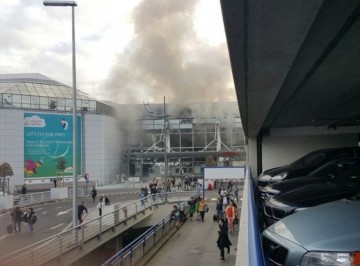
The attack at the check-in lounge at Brussels airport is an indication, not only of lax security, but of the determination of terrorists to maim and kill as many people as they possibly can.

You and your family may be at a check-in desk when another nail bomb goes off. There are no security checks before check-in, and anyone can pretend to be a traveller.

The Schengen zone is a direct route from war zones like Syria to any destination in Europe. There are little or no checks on papers or passports once within the EU’s Schengen zone therefore Jihadists, bombs and military grade weapons are easily transported to attack zones.

Is the UK safe because it is out of the Schengen? No, because any citizen of the EU (742 million people) is allowed access to the UK without question.

According to intelligence agencies, there are approximately 4,000 highly trained ISIS operatives waiting to attack within the EU, and this means if you are a frequent traveller, you will eventually come into contact with one of these terrorists at some time.

European travel is now a dangerous lottery, where a sudden flash is all it takes before your life is either snuffed out within a millisecond or you see your limbs fly across the room as the nails shoot across space at high speed.

You are excited to be on holiday, you do not notice anything as the man next to you pushes his trolley full of explosives and shards of metal. The last thing you hear are the words ‘Allahu Akbar’ (God is Great)…and then nothingness…eternal nothingness.

Brexit: Why Leaving EU Means Increased Security

0


Sir Richard Dearlove, a respected ex-MI6 chief has also refuted the Remain Campaign’s assertions of EU safety.

“Britain’s borders could be strengthened in the event of a Brexit and extremists could be more easily deported.”

One may argue that home grown terror is a large part of the problem, but without leaving the EU, the UK is almost powerless to deal with Jihadis in the UK hiding behind EU human rights legislation.

Dearlove’s intervention, which contradicts claims from the Prime Minister and the Home Secretary that EU membership makes Britain safer, has come at an opportune moment bolstering the justification for Brexit.

The EU needs GCHQ more, with its incredible intelligence capabilities. In the event of a Brexit, it is hard to think the EU could do without its expertise.

There is therefore no doubt that Britain with properly secured borders, the ability to deport dangerous criminals and terrorists would be safer.

Vote Leave FACTS: Energy Risks Increase by Staying In EU

0

The Secretary of State for Energy and Climate Change, Amber Rudd MP’s false claims that Brexit Britain ‘faces an “electric shock” costing consumers at least £500m a year if it leaves the EU’ is a blatant scaremongering falsity that should be dismissed as a lie.

The fact is that it is the EU itself that pushes up energy prices.

Here are the FACTS about how voting to Leave the EU would be beneficial for British energy:

Energy prices would not rise if we Vote Leave. EU regulation forces up energy prices.


  • The European Commission has admitted: ‘Energy costs [are] to rise in all scenarios’. There is no evidence that the ‘single market’ will reduce prices.

  • End-user gas prices are now nearly twice as high in the UK than in the US.

  • Between 2005 and 2011, ‘EU manufacturing saw the highest increase in energy costs‘ relative to the US, China and Japan.

  • According to the former European Commission President Jose Barroso, between 2005 and 2012 the gas price for European industry increased by 35 per cent and the electricity price increased by 38 per cent. In the US, by contrast, gas prices fell by 66 per cent and electricity prices fell by 4 per cent.

  • EU energy regulation will cost the UK economy between £86.6bn and £93.2bn.


The UK is not at risk from Putin’s Russia if we Vote Leave. The UK is one of the most energy self-sufficient countries in Europe.


  • The UK does not depend on the EU (or Russia) for energy imports: ‘The main direct source of UK gas imports is direct from Norway. In 2012 55% of the UK’s gas imports came via the pipelines to Norway or connections with the Norwegian gas fields’.

  • The UK is one of the EU countries that is least dependent on Russian gas imports.

  • The UK is 49.5% sufficient in natural gas. Germany is 13.3% self-sufficient. France is 0.7% self-sufficient.

  • Other countries such as Germany, are dangerously dependent on Russian Gas. The Commission acknowledges, ‘Europe’s dependence is set to increase’.


National Grid admits that the impact of leaving would be ‘minimal’ in the short-term. The UK could adapt.


  • The National Grid presentation states: ‘The risks for gas as a result of Brexit are minimal in the nearer term’ and acknowledges that the ‘UK government could minimise risks of Brexit’. It notes that key aspects would be ‘cheap to mitigate’.

  • The National Grid clearly states that: ‘We are not advocating to leave or remain in the EU’.

  • The Government has admitted that ‘we don’t back legally-binding rules in this area’. Nonetheless, they will not be able to stop the proposals in the event of a vote to remain.


The National Grid report inaccurately claims that the UK has ‘influence on EU rules & policies to ensure they are advantageous to the UK.’


  • The UK has been outvoted every time it has voted against an EU measure – 72 times in total. 40 of these defeats have taken place since David Cameron became Prime Minister. We have no influence at present.

  • The UK’s ability to control whether or not to build a new nuclear power station at Hinkley Point has been restrained by the need to await approval from the Commission. The Commission’s decision in favour of the scheme is currently the subject of legal challenge in the European Court by Austria.


The report claims that interconnectors are less likely if we Vote Leave. There is no evidence for this assertion.


  • Germany has just agreed to establish a new interconnector with Norway – which is not in the EU.


National Grid spends hundreds of thousands lobbying the Commission.


  • In 2014-2015, National Grid spent between €300,000 and €399,999 lobbying the Commission.

  • Between 2007 and 2014 National Grid and group companies received over €3.2m in grants from the European Commission.


The real risk to UK energy security comes from EU membership. The Commission has just announced plans to force the UK to share gas with other member states. This could lead to gas rationing for business in the UK.


  • In February 2016, the European Commission announced legislative proposals for mandatory sharing of gas between member states.

  • The Commission envisages rationing of gas in the UK in the event of a shortage in other member states: ‘Application of the solidarity principle on the basis of technical and administrative arrangements agreed between Member States will be mandatory. Customers others than households, essential social services and district heating cannot continue to be supplied with gas in a given Member State – even if it is not in an emergency situation – as long as households, essential social services and district heating are not being supplied in another Member State in emergency to which the first country’s transmission network is connected’.


The Conservative Party predicted the Commission would take control over energy when it opposed the Lisbon Treaty eight years ago. It is now campaigning for the EU to retain powers over energy.


  • During the passage of the Lisbon Treaty, the Conservatives tabled amendments, signed by William Hague and David Lidington, trying to stop the EU gaining control of energy policy.

  • The then Shadow Secretary of State for Business, Enterprise and Regulatory Reform, Alan Duncan, warned that the Treaty’ jeopardises our ability to act independently on energy matters… Our Government have essentially written a blank cheque to Brussels, which could in certain circumstances oblige the United Kingdom, for example, to assist in the building of other member states’ energy infrastructure.’ He also warned that the Treaty ‘mandates the Council to redistribute energy across the bloc during times of crisis. A gas dispute in Bavaria could ultimately lead to gas rationing in Birmingham. If there is an interruption in the supplies from the Gulf, the Commission can override our contracts. It can cut off our supplies from Milford Haven and send them to Ingolstadt, or divert our liquefied natural gas from the Isle of Grain to Novo Mesto’.


Leaving the EU would not lead to a reduction in investment.


  • Notwithstanding the referendum, China recently announced £30 billion of investment into the UK, including between £5.4bn to £8.2bn in nuclear power. This will continue if we Vote Leave.


National Grid admits that the impact of leaving would be ‘minimal’ in the short-term. The UK could adapt.


  • The National Grid presentation states: ‘The risks for gas as a result of Brexit are minimal in the nearer term’ and acknowledges that the ‘UK government could minimise risks of Brexit’. It notes that key aspects would be ‘cheap to mitigate’.

  • The National Grid clearly states that: ‘We are not advocating to leave or remain in the EU’.


Your Cartoons, Je Suis’ and Fancy Rallies Do Not Achieve Anything

0

Closing the Schengen area does not mean closing borders, all it means is that there are border checks so that the free movement of terrorists and weapons from Syria may be halted. It makes common sense.

There need not be some kind of ridiculous Americanized Trump reaction like banning whole swathes of people or closing borders, but border checks is a reasonable request.

The hard truth is that the deaths of the innocent people are on the heads of the weak lilly-livered socialist policy makers of the EU and their communistic ideals of fast mass migration. The blood of innocent commuters spilled on Tuesday drips on the EU leaders who stood by after Paris and did nothing, a shameful disgrace to the people of Europe.

In the UK, the ugly bleating face of Tony Blair rears its hypocritical head every time an atrocity graces the continent. Here is a man who had no qualms about destroying and destabilising vast areas of the Middle East thus creating a power vacuum for ISIS’s creation.

We must address the failure of leadership for your disgraceful policies of apathy and laziness are a direct cause of the events that now occur on a regular basis.

Until the next pathetic Je Suis gathering at whichever city it may be…

Vote Leave: UK Drinks Industry Will Prosper Outside of the EU

0


Everyone loves a drink, including the DS staff, and it is to this end that we and many Britons are bemused by the Remain campaigners who are constantly putting Britain down.

The EU has made booze for Britons more expensive and not only that, restricted how our beverages companies can trade globally.

We should be selling our whisky to the world, instead the EU restricts British drinks companies from striking free trade deals with vitally important, lucrative markets.

If we Vote Leave and take back control then our drinks trade will prosper – something both drinkers and exporters can raise a glass to, and buying a round won’t mean you need to take out a second mortgage or sell the car.


600,000 jobs in the UK alcohol industry are NOT at risk if we Vote Leave.


  • These jobs depend on trade with countries in the EU, not on membership of the EU.

  • The Prime Minister has accepted that trade would go on if we Vote Leave: ‘If we were outside the EU altogether, we’d still be trading with all these European countries, of course we would… Of course the trading would go on. Sometimes … There’s a lot of scaremongering on all sides of this debate. Of course the trading would go on’ (The Andrew Marr Show, 6 January 2013, link).


We import more beverages from the EU than we sell to them. They will want to strike a free trade agreement.

  • In 2014, the UK exported £3.29 billion of beverages to the EU. The UK imported £5.26 billion of beverages from the EU (OECD, 2015, link;  HMRC, 2015, link). The EU sold the UK £1.98 billion more in beverages than the UK sold the EU.

  • This means they are sure to want to negotiate a new deal to preserve access to the world’s fifth largest market. French winemakers and German brewers will still want to sell the UK alcohol if we Vote Leave.


The European Court has previously required the UK to increase the price of beer, putting jobs at risk.

  • On 12 July 1981, the European Court ruled that the UK’s low duty on beer ‘afford[ed] protection to domestic beer production’ and was therefore illegal under EU law (Commission v United Kingdom [1983] ECR 2265, link). In his 1984 budget statement, the Chancellor of the Exchequer, Nigel Lawson, said ‘we lost; and I am now implementing the judgment handed down by the court last year. Accordingly, I propose to increase the duty on beer by the minimum amount needed to comply with the judgment and maintain revenue: 2p on a typical pint of beer’ (HC Deb 13 March 1984, col. 302, link).


Being in the EU means we cannot strike a trade deals with India, harming exports of alcohol.

  • India charges an average tariff of 69.1% on beverages and tobacco, with the highest tariff of 150% on Scotch Whisky (IMF, 2016, link).

  • The EU has failed to strike a free trade deal with India.

  • The Chief Executive of the Scotch Whisky Association, David Frost, has said: ‘India is the biggest spirits market in the world and we have got 1 to 2 per cent of it. It is a difficult business environment. Everyone who does business there knows that (Scotsman, 7 December 2014, link).


The EU has been very bad at negotiating free trade deals compared to small countries.


  • The EU has concluded 37 trade agreements with 54 countries since 1970. In 2015, the aggregate GDP of all the countries with which the EU had a trade agreement in force was $7.7 trillion.

  • By contrast, the aggregate GDP of all countries with which Chile had trade agreements was $58.3 trillion. The figure for South Korea was $40.8 trillion and that for Switzerland was $39.8 trillion (albeit these all include the EU with a GDP of $16.7 trillion) (Civitas, January 2016, link).


The Head of the IN campaign has admitted trade deals with third countries could continue. There is no reason why any country would choose to deny itself access to the world’s fifth largest market.

  • The Executive Director of the IN campaign, Will Straw accepted that free trade agreements with third countries could continue after we Vote Leave, stating: ‘Either eventuality could come to pass, depending on what happened in that situation’ (Evidence to Treasury Committee, 2 March 2016, link).

  • The UK is the world’s fifth largest economy (World Bank, 2015, link). There is no reason why any of the countries with which the EU has a free trade deal would choose to cut off their exporters’ access to the world’s fifth largest market.


It is possible to negotiate a trade agreement (FTA) very quickly outside the EU, certainly in less than two years.


  • The US-Australia FTA was concluded in less than two years. Formal negotiations for a free trade agreement began in Canberra on 18 March 2003 (Library of Congress, 3 August 2003, link). The agreement came into effect on 1 January 2005 (Australian Government, 2016, link). The US Government states that ‘as a result of the U.S.-Australia Free Trade Agreement, tariffs that averaged 4.3 percent were eliminated on more than 99% of the tariff lines for U.S. manufactured goods exports to Australia’ (US Government, 2011, link).

  • Switzerland-China FTA was negotiated in just over two years. There were 9 rounds of negotiations between April 2011 and May 2013 which ‘produced a deal praised by both sides for its quality and its breadth, covering goods, services, investment, and competition (Centre for Security Studies, February 2014, link). The agreement entered into force on 1 July 2014 (Swiss State Secretariat for Economic Affairs, 2016, link).

Brussels Attack: Schengen Directly Responsible

0


The Schengen zone only works in a time of peace, but time and time again the EU has been warned of the repercussions of keeping the zone open when there is conflict close to its borders yet they have ignored the warnings.

The tragic bombings in Brussels today where countless people lost their lives and hundreds were injured, is a travesty of EU planning and engineering, as well as a condemnation of their lacklustre governance.

Until the EU shuts down the Schengen zone completely there will never be a respite to the terror meted out on the people, and all of this because of some utopian ideal that can only be accomplished in total peace time.

Wake Up Europe

We wrote an analysis of the situation in February 2015 warning of the Schengen zone, and how it must be shut down, but there was of course no action.

Jean Claude Juncker and Angela Merkel with their cohorts of faceless unelected eurocrats should hang their heads in shame today, for their policies and their turgid negligent governance has resulted in the death and injury of many.

Where does Britain lie in this shameful idiocy? We must Leave the EU immediately, as the European Union is not a safe place to be, either physically or economically.

Will the EU listen to these countless warnings? No! This is why Britain has to Get Out of the EU!

Moody’s : “Brexit UK Economy Safe – Do Not Listen to In Campaign Scaremongering”

1


The incessant scaremongering of the British public by the Britain Stronger In campaign and its Project Fear has been found to be completely baseless and false by Moody’s, the credit agency.

Moody’s acknowledge that there would be no trade barriers or legal change the day after Britain votes to leave the EU. There would not be profound uncertainty, as even the head of the IN campaign has admitted.

Moody’s acknowledges in its report that ‘No tariffs or treaties would change on 24 June, in the event of a vote to leave’.

Moody’s points out that ‘We expect that, over time, the UK and EU would come to an arrangement to preserve most … of the current trading relationships, thereby limiting the impact on UK exporters and supply chains of UK importers.’

The Chairman of the BSE campaign, Lord Rose of Monewden, has admitted: ‘Nothing is going to happen if we come out of Europe … There will be absolutely no change … It’s not going to be a step change or somebody’s going to turn the lights out and we’re all suddenly going to find that we can’t go to France, it’s going to be a gentle process’.

Moody’s make clear that the UK’s credit rating is not at threat.

‘We would expect few, if any, near-term rating changes in light of the timeline for a Brexit to take effect.’

Moody’s acknowledge that it is highly likely that the UK would strike a free trade agreement with the EU.

‘Given the substantial trade links that exist, there would be strong incentives for both the UK and EU to minimise the effect’.

‘Given the interlinkage of their economies, both the EU and the UK government would have a strong incentive to minimise the economic impact of a Brexit. We think that over time the UK would reach some new bilateral trade agreements with the EU’.

‘Companies based in France or Germany that export to the UK could suffer if trade restrictions were put in place either by the UK or the EU; this is a key reason why we expect that negotiations would eventually lead to new agreement(s) to significantly mitigate the potential impact of Brexit’.


Moody’s acknowledge that talk of London ceasing to be a global financial centre is scaremongering.

‘We note that remaining outside the euro area did not significantly damage London’s status as a financial centre, and that factors other than a Brexit would also be key determinants for investment.’

Moody’s also note that ‘HSBC’s decision to maintain its headquarters in London, even without knowing the outcome of the referendum, indicates that large banks appreciate the country’s regulatory framework and legal system and the large pool of highly skilled, international employees.’


Moody’s acknowledge the impact on key sectors would be limited.

Car manufacturers: ‘ we would expect alternative trade agreements to be put in place… However, both the EU and the UK would have an incentive to retain the free flow of trade in the auto sector due to the overall volume of trade… The share of UK motor vehicle exports to EU countries by value has fallen over the past decade to 40% in 2014 from over 70% in 2000.’

Aerospace: ‘the importance that the UK plays in the EU’s aerospace strategy and competitiveness would likely shield the sector from any major repercussions of a Brexit over time’.

Ports: ‘we believe that any negative impact would be mitigated as the UK either adopts alternative trade agreements with the EU or manages to diversify its trade to other regions’.

Oil & gas: ‘the effect of a Brexit on the overall credit profiles of rated UK-based oil and gas companies… would be negligible as they are both global integrated oil and gas companies with substantial crude, natural gas and oil product trade flows outside the EU.’

Energy companies: ‘final impact could be fairly mild… Rated UK electricity and gas networks generate virtually all their sales within the UK and the regulatory framework is almost entirely domestic.’

Telecommunications: ‘In our view, the regulatory framework would be broadly similar, with the same objectives of stimulating investment and ensuring healthy competition.’

Air travel: ‘given the significance of Heathrow airport, and the UK generally, for air travel within and outside the EU, it is highly likely that new agreements would, over time, be put in place, or that the UK would remain party to existing agreements, so as to sustain existing air traffic… we expect the overall impact of a Brexit would be low as the majority of travel would persist, in particular intercontinental travel.’

Patents: ‘However, the EPO [European Patent Organisation] currently includes non-EU countries as members, such that the UK could also become a non-EU member.’


Not all of Moody’s claims are right: the notion that there will be weaker economic growth if we Vote Leave is not even borne out by the IN campaign’s economic analysis.

Moody’s claims that there would be ‘modestly weaker economic growth in the UK over the medium term’. This assumption is not borne out by the evidence.

CBI analysis, conducted by PwC in March, found that economic growth will continue in the short term and that, in the medium term economic growth will be stronger outside the EU compared to remaining inside.

The same study also found that there would be an additional 3 million jobs if we Vote Leave.

Moody’s also state that a vote to leave the EU could lead to ‘a substantial disruption in… capital flows’.

Article 63 of the Treaty on the Functioning of the European Union (which was introduced by the Maastricht Treaty and has been in force since 1994) provides that ‘all restrictions on payments between Member States and third countries shall be prohibited’.

Conservatives for Britain Sets Out Plans to End Austerity if We Vote Leave

0


The UK currently hands over £19 billion to the EU every year. We get £9 billion back in services and the rebate which means when we Vote Leave we will be able to guarantee all the funding to farmers, universities and regional grants that currently come from the EU and still have £10 billion more to spend on our priorities like the NHS.


The Conservatives for Britain spending suggestions for the first post-Brexit budget include:


  • £1.1 billion for disability benefits to avoid controversial cuts
  • £800 million to train an extra 60,000 nurses a year to deal with shortages and excess agency staff
  • £250 million a year to provide an additional 10,000 doctors a year to deal with doctor shortages and to staff the seven day NHS well
  • £750 million a year on social care to offering better support for people in their own homes, and for more care home and respite care places.
  • £200 million to cancel hospital car parking charges
  • £400 million for dearer medical treatments not currently licensed by NICE, for example cancer treatments such as Proton Beam therapy and Meningitis vaccines
  • £1.9 billion to abolish VAT on domestic energy, energy saving materials, on converting existing dwellings and on carry cots, children’s car seats and safety seats
  • £1.5 billion to keep Council Tax down by offering councils the money to pay for a discount on bills they issue
  • £900 million to remove Stamp Duty on the £125,000 to £250,000 band of home purchase
  • £500 million should be allocated to a local road fund to support local schemes to improve junction safety and flows, and to provide additional capacity and bypasses on busy roads in congested areas.


Commenting, John Redwood said:


‘The UK currently hands over £19 billion to the EU every year. That’s £350 million a week. If we Vote Leave we will be able to spend our money on our priorities like the NHS. We would have an extra £10 billion to spend allowing us to recruit thousands of new nurses and doctors.


‘We would be able to provide the latest cancer treatments that the NHS currently can not afford and provide extra money for people who are frail and need long term care. We would no longer need to make controversial cuts to disability benefits and we could scrap the tampon tax and the EU’s VAT increases on green goods like solar panels.


‘Instead of sending billions abroad each year we should spend that money on improving our NHS and helping families by cutting unfair EU taxes. That’s why the safer choice in this referendum is to Vote Leave.’