17.7 C
London
Friday, January 9, 2026
secret satire society
Home Blog Page 478

Wikileaks Greek Bombshell Increases Brexit

2


Released by Wikileaks, the discussion took place in Athens just before the IMF walked out of talks aimed at giving Greece the green light for the next stage of its bailout.

There will be a Greek default by July, one month after the EU referendum.

The situation is: the IMF does not believe the numbers being used by both Greece and Europe to do the next stage of the deal. It does not want to take part in the bailout. Meanwhile the EU cannot do the deal without the IMF because the German parliament won’t allow it. LINK


THOMSEN: Well, I don’t know. But this is… I think about it differently. What is going to bring it all to a decision point? In the past there has been only one time when the decision has been made and then that was when they were about to run out of money seriously and to default. Right?


VELKOULESKOU: Right!


THOMSEN: And possibly this is what is going to happen again. In that case, it drags on until July, and clearly the Europeans are not going to have any discussions for a month before the Brexits and so, at some stage they will want to take a break and then they want to  start again after the European referendum.


VELKOULESKOU: That’s right.


THOMSEN: That is one possibility. Another possibility is one that I thought would have happened already and I am surprised that it has not happened, is that, because of the refugee situation, they take a decision… that they want to come to a conclusion. Ok? And the Germans raise the issue of the management… and basically we at that time say “Look, you Mrs. Merkel you face a question, you have to think about what is more costly: to go ahead without the IMF, would the Bundestag say ‘The IMF is not on board’? or to pick the debt relief that we think that Greece needs in order to keep us on board?” Right? That is really the issue.


VELKOULESKOU: I agree that we need an event, but I don’t know what that will be. But I think Dijsselbloem is trying not to generate an event, but to jump start this discussion somehow on debt, that essentially is about us being on board or not at the end of the day.


THOMSEN: Yeah, but you know, that discussion of the measures and the discussion of the debt can go on forever, until some high up.. until they hit the July payment or until the leaders decide that we need to come to an agreement. But there is nothing in there that otherwise is going to force a compromise. Right? It is going to go on forever.


The EU is currently holding 300 Billion euros of Greek debt in shoring up the ailing country, and this bombshell leak is proof that the EU is an economically dangerous place to be.

It is therefore in Britain’s interests to leave the EU before the whole shithouse goes up in flames taking the UK down with it.

Vote Leave or go down with the sinking ship.

Experts: Prepare For Twenty Years of Riots Unless Brexit

3

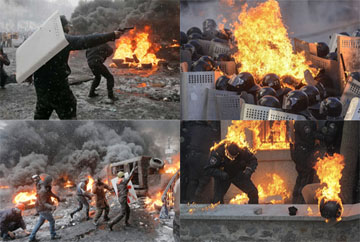
The reason for the chaos and riots is quite simple. If Britons don’t vote for a Brexit, there will be another massive deluge of migrants never before seen on these shores.

Forget about calling an ambulance for your sick child, or calling for a fire engine when your house is on fire, as for the police, they will be too busy with the riots or will have been disbanded because of governmental cuts.

There is no remedy for the oversubscribed NHS or the school system which is barely functioning at the moment apart from Brexit.

The riots will be all encompassing, across the length and breadth of Britain and there will be no escape either, wherever you go you will find discontent, chaos and the blood will run thick in the streets.

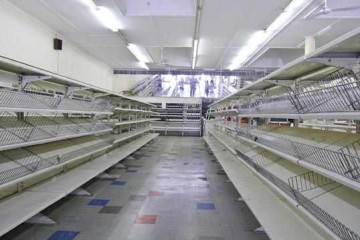
Supermarket shelves will be empty as millions take to the streets in search of food and to loot as much as they can.

Death and Mayhem

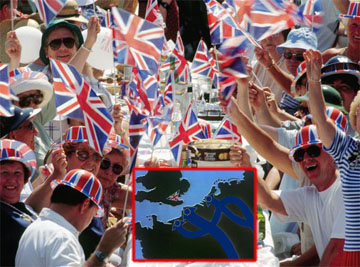
Anarchist groups are hoping for a Remain vote for a very good reason, they want the chaos to topple the government and monarchy. Why do you think they’re in the Calais jungle inciting and advising illegal migrants to cross the Channel.

With no school places left for your children, no hospital beds, and no police, law and order will break down very quickly as Britain absorbs the deluge from the EU and Third World.

The Benefits system will eventually collapse due to lack of taxpayer funds as the migrants eat the welfare system dry, and they themselves will take to the streets in frustration.

The tiny island of Britain has already become a dumping ground for millions of migrants, but the deluge will reach astronomic levels if Britain stays in the EU.

Anarchy

The anarchist groups are waiting for the EU referendum with bated breath, for they know what is coming. Soon they will be flying their flag from Buckingham palace, and dragging a soaked Kate Middleton down the street in her £5,000 dress, only pausing for a second or two to jeer and spit at her.

Jeremy Corbyn, is an Anarcho-Marxist, his role will increase in the event of a Remain vote. He will rally the troops, to round up the Jews, the rich and the remaining monarchy, lined up against blood stained walls and brutally dispatched with no mercy.

This is the future of Britain under the EU. It had no qualms about crushing Greece, inciting mass riots and destroying their economy, why should it have any qualms about destroying Britain.

The EU does not want a strong Britain, it does not in any circumstances want an economy that is doing well globally, and this is why it is crushing the British steel industry under the auspices of China.

Children of Men

The riots will halt everything, once one riot starts, it will spread, and so on. The sheer anger amongst the population is so high, the closeted ignorant Cameron Cabinet will not know what to do. There has never been such a weak lily livered prime minister to date, and as in many things, this out of touch wet rag will wilt further as he is caught in the headlights. He will soon hang from a post as many of them will such will be the fury of the people, the disenfranchised masses who see his fat lying face everywhere.

He will be dragged from Number 10 whimpering like a wounded animal and strung up on a post in Whitehall. As his useless life fritters itself away, he will spy one face smiling — Corbyn.


Vote Leave FACTS: UK Football Will Be Stronger Outside EU

0

Football transfers are currently stifled by the EU and leaving would actually help the global transfer market.

We could then have amazing footballers from all over the world and from Europe as well playing in the Premiership and other leagues.

The £350 million sent into the EU black hole every week where it is swallowed up and never seen again, could also be used for building up our own youth teams to International standard.

The BSE assertions are based on the flawed assumption that the UK would require foreign national footballers to have a visa.


  • When the UK votes to leave the EU, we will take back control of our migration policy from the EU. We will be able to decide the conditions under which footballers will be able to work in the UK.
  • The UK will be able to select the best and the brightest without discriminating on the grounds of nationality against non-EU citizens as at present.
  • The UK could also exclude criminals, which it cannot at present do so because of EU law.


The European Court has prevented the UK from introducing rules to support young British players. Both the FA and UEFA consider this to be damaging.


  • In December 1995, the European Court ruled that the EU Treaties forbid ‘rules laid down by sporting associations under which, in matches in competitions which they organize, football clubs may field only a limited number of professional players who are nationals of other Member States’. This restricts the FA’s ability to introduce rules to support young British players.
  • In December 1997, the English team was ranked fourth in the world. Today, it is ranked ninth.
  • UEFA has said: ‘One of the biggest challenges facing European football is that, since the European Court of Justice’s Bosman ruling of 1995 and the rapid growth of television revenue, the richest clubs have been able to stockpile the best players, making it easier for them to dominate both national and European competitions. At the same time, clubs have fewer incentives to train their own players or give a genuine chance to young players from their region. This trend is exacerbated by the increasingly unreliable financial compensation for training young players who leave early, and the ability of many European clubs to ‘poach’ young players from the age of 16 from across the European Union’.
  • The Chairman of the Football Association, Greg Dyke, has said there are not enough English players, especially in the Champions League.

Vote Leave FACTS: Latest ONS Stats Show Why Britain Will Prosper Out of EU

0


The latest ONS statistics blow a hole in the Remain camp’s fearmongering scare campaign to put Britain down. Outside of the EU the economy would prosper and the EU would continue to do business with the UK.

Instead of handing £350 million per week to Brussels the safe bet is to spend it on Britain. It only makes common sense, and will catapult Britain back into the super league of nations. The free trade zone from Iceland to Turkey is begging for British deals, and as the 5th largest economy in the world, we must capitalise on this.

Vote Leave on June 23 and we will.


The UK’s current account balance could be improved considerably if we Vote Leave. There is nothing to suggest this is weakening the currency.


  • The UK recorded a current account deficit of £96.3 billion in 2015.
  • This could be substantially reduced if we Vote Leave. In 2014 (the last year for which data are available) the UK recorded a £12.3 billion balance of payments deficit with the EU institutions. The figures released today showed the UK Government paid the EU institutions (net) £10.6 billion in 2015 (this figure excludes payments by the private sector to the EU institutions).
  • This means we could substantially cut the balance of payments deficit if we voted to leave the EU.
  • The EU-funded Oxford Economics group has concluded that if the UK voted to leave the EU, ‘In most cases (five out of nine), the UK’s trade balance improves’.
  • There is no evidence that this is having a substantial effect on the currency or is driving movements in the foreign exchange markets. The pound has been strengthening against the US dollar over the last month from $1.3871 (26 February) to $1.4338 (today).


It is in the EU’s interests to get a free trade deal with the UK.


  • In 2015, the UK recorded a £67.7 billion deficit in the trade of goods and services with the EU, up from £58.8 billion in 2014.
  • This means that it is in the EU’s interests more than ever to get a free trade deal with the UK, as many pro-EU campaigners have acknowledged:
    • The Prime Minister, David Cameron, has said: ‘If we were outside the EU altogether, we’d still be trading with all these European countries, of course we would… Of course the trading would go on. Sometimes … There’s a lot of scaremongering on all sides of this debate. Of course the trading would go on’.
    • The UK’s former Ambassador to the EU and leading supporter of BSE (Britain Stronger in Europe), Lord Kerr of Kinlochard, has admitted ‘there is no doubt that the UK could secure a free trade agreement with the EU. That is not an issue’.
    • The pro-EU CBI has said ‘the UK is highly likely to secure a Free Trade Agreement with the EU, and such an agreement would be likely to be negotiated at an extremely high level of ambition relative to other FTAs’ .
    • The pro-EU Centre for European Reform has accepted that ‘given the importance of the UK market to the eurozone, the UK would probably have little difficulty in negotiating an FTA‘.
    • HSBC has said ‘we think it is fair to assume that the UK and the EU would continue to enjoy thriving and tariff-free trade in goods’ (‘A very British dilemma’, February 2015, p. 2).
    • The Foreign Secretary, Philip Hammond has admitted that a free trade agreement in goods ‘would be relatively simple to negotiate’.

Trump Presents List of Ways Women Will Be Punished

0

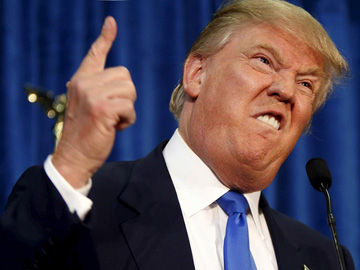
It seems Donald Trump keeps digging himself into holes, and this time he may have gone too far.

His war against women and their rightful choices is now threatening his candidacy, but hey, it’s the Don, he can do and say anything and get away with it. Now he wants to punish women for their choices.

After being pressed by reporters on what sort of punishment women should receive, the Donald took out a piece of paper from his jacket pocket with a list.

“I compiled this list of punishments for women. I was on the plane and thought to myself, what will really piss women off in America? I came up with a list, right there.”


  • What do liberal abortion loving American women hate most? Me. So I want to punish them by arresting them, tying them to a chair and forced at gun point to watch videos of me talking about my mother and what a great woman she was. Then I’ll show them a pic of the foetus they aborted and lecture them about how that could have been me if my mother was pro-abortion.


  • The second segment of torture will involve these women forced to watch their favourite handbag being shredded in front of them with those credit cards inside.


  • We will get your husbands or boyfriends to talk about their exes in front of you for hours.


  • You ever watch the Donald adjusting his junk in his trousers? Women hate it when men do that. You will be forced to watch me adjusting my tiny privates in my trousers for a further four hours.


  •  How about some mansplaining and selective hearing? If you try and initiate a conversation with the men present at your punishment session they will either continue eating their chips or drinking their beer whilst watching sport or a movie. This event will go on for two days on a shift basis.


  • Further punishment will involve the woman being put into a room full of men who have been eating beans all day. They will fart and joke for two hours. They will be wearing oxygen masks but you won’t.


  • The next phase is the Mexican ogling session. Women will be strapped into a chair in a room full of sex starved Mexican men who just came over the border. They will not be allowed to touch you but they will damn well ogle you for six hours. If you’re too ugly to be ogled, don’t worry they’re Mexicans.


  • On a variation of the ogling theme, your husband or boyfriend will be present whilst a line of beautiful young women in bikinis are paraded in front of him. You will be forced to watch as he blatantly ogles their hot bodies. Some women will be allowed to show their appreciation by kissing your husband/boyfriend in front of you.


  • The manspreading room will be your worst nightmare. There will be rows of men manspreading and shoving you around a fake subway carriage.


  • We will take pictures of you without makeup during the various punishment sessions and force you to upload these to your Facebook and Instagram page.


Vote Leave FACTS: How the EU Has Increased Consumer Prices

0


If we leave the EU consumer prices will drop drastically as Britain will be free to create its own trade deals that favour the British consumer.

The EU has been very bad at negotiating free trade deals hurting jobs and the economy. That’s why it’s safer for Britain to take back control of negotiating its trade deals so it can prosper outside of the EU.


1. The EU-funded Centre for Economic Performance study


The report only implies that prices could increase if third country trade deals fall through after we Vote Leave but – as the Executive Director of the IN campaign has admitted – these trade agreements could well continue.


  • The Executive Director of the IN campaign, Will Straw, has accepted  that free trade agreements with third countries could continue, stating: ‘either eventuality could come to pass’.

  • The UK is the fifth largest economy in the world. There is no reason why third countries would want to cut off access to the UK market.

  • As the Prime Minister of New Zealand, John Key, has said: ‘we would want to preserve both our existing position with Great Britain and continue to grow that relationship. We would need to find a way through that. The reality is there are a number of mechanisms where that would be possible’.

  • The European Commission has accepted it would be in the EU’s interests for third country trade agreement to continue. Ahead of Greenland’s withdrawal from the then European Economic Community, the European Commission stated that if third country trade agreements ceased to apply to Greenland on its withdrawal, it was an open ‘question whether the Community would have to negotiate with its partners compensation for the rights and benefits which those countries would lose as a result of the “shrinking” of the Community’.

  • This means consumer benefits of third country trade agreements could continue if we Vote Leave.


Independent studies have shown that remaining in the EU has increased prices for consumers.


  • The independent House of Commons Library has concluded that EU membership actually increases the costs of consumer goods, stating that the EU’s Common Agricultural Policy ‘artificially inflates food prices’ and that ‘consumer prices across a range of other goods imported from outside the EU are raised as a result of the common external tariff and non-tariff barriers to trade imposed by the EU. These include footwear (a 17% tariff), bicycles (15% tariff) and a range of clothing (12% tariff)’.


This report does not look at the effect of the European Union’s deal on exports, only on imports. EU trade deals have failed British exporters.


  • Analysis of the growth of UK exports of goods before and after EC agreements have come into force, for at least five years, shows that in most cases (10 out of 15) the post-agreement growth of UK exports has fallen’.

  • ‘By contrast most of Switzerland’s agreements (11 out of 15), most of Singapore’s (eight out of 12) and most of Korea’s (four out of five) have been followed by an increase in the rate of growth of their exports to the partner countries’.


The EU has been very bad at negotiating free trade deals with third countries. There is nothing to suggest the EU will actually conclude any of the agreements currently being negotiated.


  • The EU has concluded 37 trade agreements with 54 countries since 1970. In 2015, the aggregate GDP of all the countries with which the EU had a trade agreement in force was $7.7 trillion.

  • By contrast, the aggregate GDP of all countries with which Chile had trade agreements was $58.3 trillion. The figure for South Korea was $40.8 trillion and that for Switzerland was $39.8 trillion (albeit these all include the EU with a GDP of $16.7 trillion).

  • The EU has failed to negotiate a free trade agreement with China. By contrast, both Iceland (which has a population of less than half a million) and Switzerland have negotiated free trade agreements with China.


The safer option, supported by the majority of British businesses, is to take back control of the power to make trade agreements from the European Commission.


  • At present, the UK is precluded from making its own free trade agreements as a result of the EU’s common commercial policy. Instead, it has to rely on the European Commission.

  • Polling by Perspective Research Services in August 2015 found that by 74% to 22%, SMEs want the UK Government, not the European Commission, in charge of negotiating free trade agreements.

  • This has been clear for over a decade. In 2004, ICM found that an overwhelming majority of British businesses wanted the UK Government to take back control of trade.


The Centre for Economic Performance is funded by the European Commission and in 2000 published research calling for ‘immediate UK membership’ of the euro. They were wrong then and they are wrong now.


  • The Centre admits receiving funding from the European Commission.

  • The London School for Economics received €1,993,154 from the European Commission in 2014 alone.

  • In 2000, the Centre for Economic Performance argued that: ‘The economic arguments for immediate UK membership in EMU… are overwhelming… The UK is too small and too open to be an optimal currency area’.


2. BSE’s application for designation


The Prime Minister today endorses a campaign which said his renegotiation didn’t matter.


  • The Chairman of the IN campaign, Lord Rose of Monewden, has said the UK should remain in the EU even if the renegotiation failed.

  • The Head of the Labour IN campaign, Alan Johnson, who is endorsing the BSE campaign for designation, has said the renegotiation is a ‘sham‘.


The Prime Minister makes a number of claims he knows to be false or have been said to be false by the BSE campaign.


  • Today, the Prime Minister says leaving the EU would be a ‘leap into the dark’. The Chairman of the BSE campaign, Lord Rose of Monewden, has admitted that there are no short-term risks: ‘Nothing is going to happen if we come out of Europe in the first five years … There will be absolutely no change … It’s not going to be a step change or somebody’s going to turn the lights out and we’re all suddenly going to find that we can’t go to France, it’s going to be a gentle process’.

  • The Prime Minister says that those campaigning for leave cannot ‘answer reasonable questions about what would happen to jobs, prices or our country’s security’. The Prime Minister has previously said: ‘If we were outside the EU altogether… Of course the trading would go on … There’s a lot of scaremongering on all sides of this debate. Of course the trading would go on’. He has also admitted that: ‘Of course Britain could make her own way in the world, outside the EU, if we chose to do so’.

  • Today, the Prime Minister claims that: ‘We are stronger, safer and better off in Europe’. In his Bloomberg speech of 2013 which began the renegotiation, the Prime Minister said: ‘If we leave the EU, we cannot of course leave Europe‘.


BSE has received support from groups that previously supported the euro and/or receive funding from the EU. It is worrying that BSE is supported by groups that were so wrong in the past – we cannot trust their judgement now.


  • The European Movement is legally committed to promoting European Commission propaganda. The European Movement’s memorandum of incorporation states (in clause 3, section 4) that one of the objectives of the company is ‘to undertake educational and social and propaganda and other activities.’ This has never been altered – the same phrase was included in the European Movement’s new memorandum of association which was passed on 23 April 2015.

  • Between 2007 and 2014 the European Movement received €4.5m from the European Commission. In 2013 the UK branch of the European Movement received two grants of €18,750 and €14,447 from the European Commission.

  • The European Movement was at the forefront of the campaign for Britain to join the euro – its then Chairman Ian Taylor claimed in 2001 that ‘Britain’s current stand-off position is increasingly untenable’.

  • London First claims that it is a ‘business membership organisation’. However many of its members are not in fact businesses. 20 are universities, colleges or NHS trusts.

  • In 2014:

    • Birkbeck received €768,000.

    • Imperial College received €30.3 million.

    • King’s College London received €9.3 million.

    • Kingston University received €718,000.

    • London Metropolitan University received €257,000.

    • The London School of Economics received €4.1 million.

    • Middlesex University received €3.0 million.

    • SOAS received €2.2 million.

    • UCL received €37.1 million.

    • The University of East London received €49,442.

    • Royal Brompton Health Service Trust received €526,044.

  • In 2000, London First stated ‘membership of the euro is an opportunity, while not joining is not perceived as a threat” (Evening Standard, 13 July 2000).

  • Between 2007 and 2014 Friends of the Earth received €12,137,169 from the European Commission.

  • In 2014 the National Union of Students received €767,196 from the European Commission.


The BSE campaign are the same people who campaigned for the euro.


  • Roland Rudd, Co-Treasurer of the BSE campaign, sat on the Board of the Britain in Europe campaign: ‘Would we be worse off now, had we joined in 1999? I don’t believe we would have been… The euro has provided its members with a measure of stability and insulation from the volatility of the financial markets. It has reduced the cost of doing business and increased capital flows across member states’ borders. On the other hand, the pound and its flexibility has been found lacking… So how would the UK have fared had it been a member of the euro since 1999? First, it would have kept us honest… Secondly, by removing exchange rate uncertainty and transaction costs, joining the euro would have boosted trade… Thirdly, there would have been indirect benefits. As a major player within the eurozone, we would have been central in shaping forthcoming EU financial regulation, which is going to have a significant impact on the City’.

  • Alan Johnson, Head of the Labour IN campaign: ‘we recognise the potential benefits of euro membership for our manufacturing exporters, which is why we support the single currency in principle’.

  • Lord Mandelson, Board Member of the BSE campaign: ‘If business takes seriously the belief of no single currency for Britain before 2010 at the earliest, then the loss of confidence will be severe. And it will be investment, jobs, growth and productivity in Britain that will suffer’.

  • Trevor Phillips, Board Member of the BSE campaign, sat on the Council of the Britain in Europe campaign.

  • Sir Brendan Barber, Board Member of the BSE campaign: ‘Delay in joining the euro is costing jobs and investment; manufacturing needs the stability and certainty that the euro will bring’.

  • Damian Green MP, Board Member of the BSE campaign: [on joining the euro] ‘I very very rarely say never and not on this issue’.

  • Lord Wallace of Tankerness, Board Member of the BSE campaign: ‘We have a job to do to explain to the public at large and to our own members that this will be the best course. This is what we did in the devolution referendum when we also had a poll finding among our members which was similar to this. But we got the message across then and we shall do the same again for the Euro’ (The Herald, 10 November 1997, p.1).

  • Lord Wigley, Board Member of the BSE campaign: ‘we in Plaid Cymru see considerable benefit from being in the single currency for industry, agriculture and home owners’.

  • Sir Danny Alexander, former Board Member of the BSE campaign was Director of Communications at Britain in Europe and claimed: ‘There are substantial and rising economic costs to be outside the euro zone’.


The BSE campaign is the admitted successor to the pro-euro campaign.


  • Following the rejection of the European Constitution in referendums in France and the Netherlands in 2005, the Britain in Europe campaign wound up. It was superseded by ‘Business for New Europe’ (BNE), chaired by Roland Rudd, who had been a Board Member of the Britain in Europe campaign.

  • On BNE‘s launch in 2005, Rudd said: ‘It is essential, therefore, that the campaign group Britain in Europe, which would have fronted the Yes campaign, is succeeded by an organisation that will continue to put the case for Britain’s active engagement in Europe’.

  • The BSE campaign grew out of BNE, with key personnel, including Roland Rudd and Lucy Thomas transferring to the new organisation. BSE can therefore properly be described as the successor to the pro-euro campaign.

Vote Leave FACTS: Yvette Cooper Caught Lying on the EU and Security

0


Mrs Cooper claimed: ‘we have an opt out from the EU Charter.’


This is completely untrue: the European Court and the UK Supreme Court have both made clear that we have no opt out. In December 2011, the European Court of Justice ruled that Protocol 30, the UK’s supposed opt-out negotiated by Tony Blair, ‘does not intend to exempt the Republic of Poland or the United Kingdom from the obligation to comply with the provisions of the Charter or to prevent a court of one of those Member States from ensuring compliance with those provisions’. In November 2012, the UK Supreme Court stated ‘the Charter thus has direct effect in national law’.

The Charter is being used by the European Court to endanger our national security. In July 2015, the Divisional Court struck down the Data Retention and Investigatory Powers Act 2014 as inconsistent with the Charter (R (Davis) v Secretary of State for the Home Department. In November 2015, the Court of Appeal referred the law to the European Court to see whether or not it is allowed (R (Davis) v Secretary of State for the Home Department. When the Act was introduced, the Home Secretary, Theresa May, stated that it was ‘crucial to fighting crime, protecting children, and combating terrorism’. The European Court will next hear the case on 12 April.


Mrs Cooper claimed: ‘the Home Secretary also has the power to bar entry into Britain to any foreign national – including EU citizens – where intelligence points to them posing a threat.’

EU law makes it much harder to remove suspected terrorists. Where the Home Secretary believes a suspected terrorist should be excluded from the UK, but believes disclosing the case to the suspect would damage national security, the European Court of Justice has ruled that: ‘the person concerned must be informed, in any event, of the essence of the grounds on which a decision’ against him is taken. The Court of Appeal has since ruled that these rights under EU law ‘cannot yield to the demands of national security’. This means the Home Secretary either has to disclose information that might prejudice national security or allow suspected terrorists into the UK.

EU law prevents the UK from removing serious criminals. EU law prevents us from removing serious criminals, such as violent killer Theresa Rafacz, a Polish national who killed her husband, including by kicking him in the face with a shod foot while he lay on the ground defenceless and drunk. Mr Justice Hart ruled the offence involved ‘gratuitous violence’. She was sentenced to four years’ imprisonment. Nonetheless, Mr Justice Blake later ruled that EU law prevented her removal, stating that there was ‘no basis’ which could ‘justify her deportation on the grounds of public policy’.


Mrs Cooper claimed: ‘Britain can operate full borders and security checks.’

We cannot control who enters the country because of EU law. Under free movement rules, we lack control over our borders and our security because we have no control over who can enter the UK. His Honour Judge Kelson QC has said: ‘Even with … convictions for murder and assaults [EU criminals] were free to enjoy the same freedom of movement as any other European citizen’.

Our border controls are under constant attack from the European Court. In December 2014, the European Court said that the UK cannot require family members of EU citizens from other EU member states to have a permit issued by UK authorities. This is despite the fact that a High Court Judge had found permits from other EU countries to be systematically forged, stating ‘Systemic abuse of rights and fraud calls for systemic measures’. The European Court’s rulings make it easier for terrorists and criminals to enter the UK using forged documents.


Mrs Cooper claimed: ‘All the Leave campaign offer instead is a huge leap in the dark at a very dangerous time.’


The Head of the IN campaign has admitted this is false. The Head of the IN campaign, Lord Rose of Monewden, has admitted that there are no short-term risks: ‘Nothing is going to happen if we come out of Europe in the first five years … There will be absolutely no change … It’s not going to be a step change or somebody’s going to turn the lights out and we’re all suddenly going to find that we can’t go to France, it’s going to be a gentle process’.


Mrs Cooper claimed: ‘Senior police officers have made clear how important close working through the EU is to protecting our national security and fighting crime.’

The former Head of Counter Terrorism at the Met has said this is false. Richard Walton, former Counter Terrorism Command at New Scotland Yard (2011–15) has said: ‘Success in countering terrorism does not depend on any of us being members of a particular club. It is simply achieved through international collaboration to prevent known threats from passing across borders’ .


Mrs Cooper claimed: ‘the US Commander in Chief, President Obama … believe[s] Britain is a stronger ally when it plays its role in shaping the future of Europe.’

The US Congress has acknowledged that the EU is a threat to NATO. The US Congress has warned that ‘U.S. officials remain concerned … that France and a few other EU members may continue to press for a more autonomous EU defence identity that could rival NATO structures and ultimately destroy the indivisibility of the transatlantic security guarantee’.

Senior US intelligence personnel have acknowledged that the EU undermines the UK’s relationship with the US. The former Director of the CIA, General Michael Hayden, has said that the EU ‘gets in the way’ of data sharing – and the US Attorney General, Loretta Lynch, has warned that it is ‘highly concerning’ that the EU is undermining the sharing of information vital in the fight against serious crime and terrorism.


Mrs Cooper claimed: ‘And whilst of course countries across Europe would not want to refuse to share intelligence with British police and security forces – it would be made so much harder.’

The former Head of MI6 has said this is wrong. The respected former Head of MI6, Sir Richard Dearlove, has said: ‘Britain is Europe’s leader in intelligence and security matters and gives much more than it gets in return. It is difficult to imagine any of the other EU members ending the relationships they already enjoy with the UK … If a security source in Germany learns that a terrorist attack is being planned in London, the Bundesamt für Verfassungsschutz, Germany’s domestic intelligence service, is certainly not going to withhold the intelligence from MI5 simply because the UK is not an EU member’.


Mrs Cooper claimed: ‘We currently have a strong and well tested legal framework including the European arrest warrant, and joint police investigations to do so. We would need years of negotiation and legislation to replicate that, with huge risk and uncertainty for the police in the meantime.’

This deliberately conflates EU membership with the ability to have working extradition agreements. We have extradition agreements with many countries around the world, including the United States, without accepting the supremacy of EU law. Recently, we extradited a murder suspect from Ghana in just over a month.  Arthur Simpson-Kent was arrested in Ghana on suspicion of the murder of Sian Blake on 10 January 2016. He appeared at Westminster Magistrates’ Court on 12 February.

The UK could continue to be part of the European Arrest Warrant if we Vote Leave.  As the Independent Reviewer of Terrorism Legislation, David Anderson QC, has confirmed, police and security co-operation would continue if we Vote Leave.  Asked: ‘But we could still have tools like the European Arrest Warrant and sharing of databases even if the UK left the EU?’, David Anderson replied: ‘I think that’s very likely’.

If we end the supremacy of EU law, we could also stop the European Arrest Warrant being abused by foreign prosecutors. This is currently illegal under the EU’s Charter of Fundamental Rights.

Vote Leave FACTS: How the EU Has Killed Off Our Steel Industry

1

Simon Boyd, director at REIDsteel and Business for Britain South West chairman, said: “While we remain in the EU our elected Government is helpless to assist the British steel industry. EU restrictions on our trade policy have cost the British steel industry thousands of jobs, leaving entire communities devastated.

“If we vote leave we can take back control of our trade policy and provide the help our steel industry needs.”

THE FACTS

  • The UK has no control over trade policy: it cannot apply anti-dumping measures against Chinese steel: only the European Commission can do this.

  • The EU has been slow to respond to a problem it first identified in 2008.

  • EU state aid laws severely limit what the UK Government can do to help the steel industry. Elected British politicians, not unelected EU bureaucrats and judges should be in control of how we support strategic industries.


The UK has no control over anti-dumping measures while we remain in the EU.

  • The EU has exclusive control over trade policy.

  • This means that the UK cannot avail itself of the right under the World Trade Organization’s rules to apply anti-dumping measures against imports. This power is vested in the European Commission instead.

EU policies have forced up the price of energy, which has had a devastating impact on the steel industry

  • EU energy regulation will cost the UK economy between £86.6bn and £93.2bn. This has a particularly corrosive impact on energy intensive industries, like steel.

  • The European Commission has admitted: ‘Energy costs [are] to rise in all scenarios’. There is no evidence that the ‘single market’ will reduce prices.

  • End-user gas prices are now nearly twice as high in the UK than in the US.

  • Between 2005 and 2011, ‘EU manufacturing saw the highest increase in energy costs‘ relative to the US, China and Japan.

  • According to the former European Commission President Jose Barroso, between 2005 and 2012 the gas price for European industry increased by 35 per cent and the electricity price increased by 38 per cent. In the US, by contrast, gas prices fell by 66 per cent and electricity prices fell by 4 per cent.

The EU has been slow to respond to the influx of cheap Chinese steel.

  • On 12 February 2016, the EU launched an investigation into the import of Chinese steel.

  • The EU has been investigating the dumping of cheap Chinese steel since 2008.

  • Previous EU measures have been ineffective at stemming the influx of cheap Chinese steel.

EU state aid laws have undermined the UK Government’s ability to aid our steel industry.

  • The Government has acknowledged that its scope to intervene in the Tata Steel crisis is limited by EU state aid rules. The business minister Anna Soubry, has said ‘We have to be very careful because we have to be compliant with state aid rules’.

  • In January, the European Commission ordered Belgium to recover €211m in aid handed to steelmaker Duferco for violating State Aid rules. It also opened a formal probe into claims that Italy had broken state aid rules by providing €2bn to help its Ilva steelworkers.

  • EU state aid rules have already caused problems for UK steel. In order to help the steel industry, the Government decided on 28 October that energy intensive industries ‘will be exempt from the policy costs of the Renewable Obligation and Feed-in Tariffs, to ensure that they have long-term certainty and remain competitive’. As a result of EU state aid rules, however, the Government was prohibited from implementing its policy until approval was given by the European Commission.

  • The Commission notified the Government of its approval on 17 December 2015.

  • There was therefore a 50 day lag between Government applying for approval and European Commission giving it. This cost the steel industry £6.2 million and UK industry as a whole £41.1 million.

  • The Business Secretary Sajid Javid has admitted that time has been spent ‘assessing whether more can be done to support energy intensive industries, within existing state aid rules’. He also acknowledged that there was little more that the Government could do under current EU laws:

‘We have undertaken a review of how other EU Member states support their energy intensive industries within existing rules. This work concluded that the UK is currently making full use of the scope to provide state aid compliant support to industry through the suite of measures in the Energy Intensive Industry compensation package’.

Emergency Measures: UK Will Exit EU Fast – No 10 Year Lies

0

There will be no ten years as espoused by the scaremongering Irish Project Fear member Gus O’Donnell.

O’Donell’s assertions are completely false and have no basis in reality. In fact, there would be minimal negotiations needed to exit the EU.

The Out vote will be final, there will be no countermeasures allowed by any nefarious faction with regards to red-tape as it will all be null and void.

In an emergency state, Britain is not party to Brussels red tape and should withdraw as quickly as possible, even without triggering article 50 (The Lisbon Treaty).

We must treat this as a matter of great urgency, as these are emergency conditions, akin to a war footing. Ignoring treaties should be considered as Britain regains it sovereignty.

Whoever forms the new government will thus need to involve ministers who are experienced in matters of emergency and war.

Once again, do not listen to the voices of doom that emanate from Project Fear, there will be no ten years, as Britain will be a sovereign state once again and will utilise its regained powers to extricate itself from the octopus tentacles of the EU.


EU Referendum: Project Fear Using Same Tactics as ISIS

0

Speaking in Brussels, unelected EU eurocrats have told agencies involved in the Project Fear push that more terror and fearful information must be pushed onto the British public because they weren’t terrified enough.

“I want to see the British swine running down their dirty streets screaming in terror at the thought of Britain leaving the EU,” Hans Junger, an EU official shouted during a briefing.

The incessant fearful headlines and propaganda videos being churned out by the EU seem to be having some effect on people in Britain.

“When I see anything like that, I roll my eyes, then simply switch whatever I’ve been watching off. If I am in public and something comes within my vicinity spouting pro-EU fearmongering I simply walk away. It’s really quite easy to dodge. Block on twitter is also a very useful tool. I don’t watch the BBC either, so I avoid most of the scaremongering bollocks,” a man at a bus stop told no one in particular.