17.7 C
London
Saturday, January 10, 2026
secret satire society
Home Blog Page 477

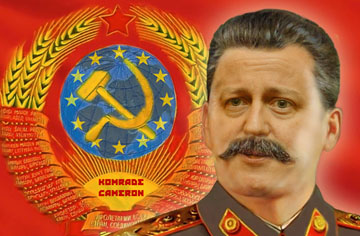
Why David Cameron Feels No Shame About Spending £9 Million Taxpayers Money to Print Pro-EU Propaganda Leaflets

0

The government, which has been hijacked by pro-EU officials, have thus breached ministers’ assurances that the Government would not seek to play a significant role in the campaign and unfairly skew the debate.

The blatantly biased nature of the In campaign does not only extend to the nefarious use of taxpayers’ cash to pay for their own demise, but also extends to the BBC, which has received £2 million just prior to the EU referendum campaign announcement.

The misappropriation of taxpayer money is a key factor in losing the vote for the In campaign now, and has backfired on the pro-EU camp. There is a resolute rejection of this bias by David Cameron and his cohorts to sway public opinion by using money that would be served better being used for actually running the country in stead of running it into the ground by staying in the EU.

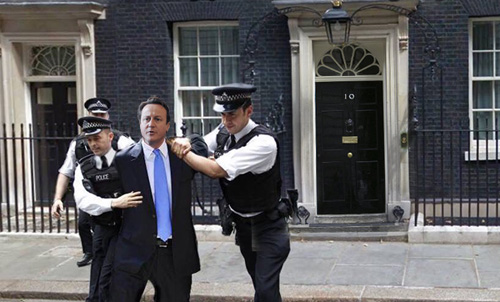
Mr. Cameron. How about fixing the pot holes on Britain’s pockmarked roads? Surely, that £9 million could be put forward towards something that is useful?

We urge you, if one of these erroneous pieces of garbage comes through your letter box, to take into your lavatory, wipe once, then send the leaflet back to Number 10 and don’t forget to sign the petition to stop Cameron spending British taxpayers’ money on EU propaganda.

Brexit Boost: The Dutch Fight Back Against Soviet EU Expansionism

0

Britain, as a nation, has the power now to stop the EU dead in its tracks, to eviscerate its Soviet expansionist collectivist ideals and to regain Britain’s sovereignty.

Just as the Dutch stood up to unelected eurocrats behind the scenes, so too can British voters on June 23 stand up to years of unfair payments, ridiculous diktats, rip-off prices, and move Britain to global International status once again.

We must stop the planned TTIP legislation proposed by the EU rendering our NHS into a privatised mess, we must stop the further encroachment of legislated Brussels laws onto our parliament where we have no say, we must stop the unfair trade deals brokered by the EU, and forge our own deals globally opening up new markets for our businesses and corporations.

We are stronger out of the EU, our NATO ties will always be there, our cooperation with Europe will always stand, and our security will strengthen outside the EU but firmly still in Europe, and a major part of the International community.

Think Tank: Post Brexit Britain Should be Inclusive Yet Selective

0


Selective migration is something that should be adhered to post Brexit Britain, where each individual case is reviewed before entry to the UK.

Wouldn’t it be better to involve people who are beneficial to the UK instead of hindering its progress and economy?

The current Home Secretary, Theresa May seems to have things the wrong way around, when she is deporting skilled workers from the rest of the world with Tier 2 visas, yet still allowing anyone from the EU to settle in the UK regardless of their qualifications or criminal records. There is no logic in this action by the pro-EU members of the government and their debilitative stance on migration is an affront to good economic sense.

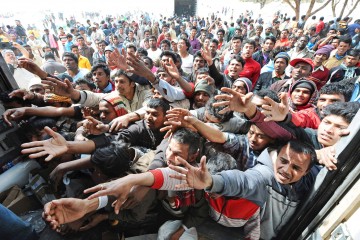
With the NHS falling victim to endemic levels of health tourism leaving its coffers empty, and other public services reeling under the strain of mass unfettered EU migration to Britain, there should be a re-think into migratory policy when Britain leaves the EU.

Post Brexit governments should therefore think clearly in defining the usefulness of incoming migrants, and tailor laws to be inclusive in a fair manner, yet discriminatory towards those who will be a burden towards the economy, justice or welfare system.

The fate of Britain’s economy now rests on voting to leave the EU on June 23. Britain has always welcomed diversity, and innovation, and we must think globally with distinction of those who will be beneficial to the long term standing of the country, or to remain in an unordered chaotic bloc and be flooded further killing off the NHS, the schools, the welfare and essential services.

Lord Owen: TTIP Will Kill NHS – Britain Must Brexit

1


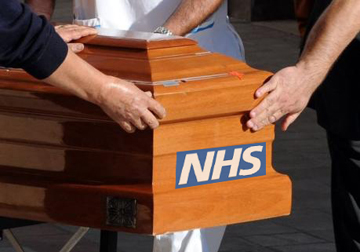
The Transatlantic Trade and Investment Partnership (TTIP) will have negative implications towards Britain’s health service, and will eventually lead to its full privatisation unless there is a Brexit. This is why David Cameron and his cohort George Osborne are so keen for Britain’s people to vote to remain in the EU.

The majority of people who wish to remain in the EU are clueless to TTIP and how it will impact on the NHS, and the Britain Stronger in Europe team are not keen to divulge the true information regarding the TTIP treaty between the EU and US.

Speaking today, former Labour Health Minister, Lord Owen demystified the many variables and faults of TTIP with regards to the NHS, and how it is ultimately in Britain’s interests to vote to leave the EU on June 23.

We have included Lord Owen’s speech in full:

Protecting our NHS from the EU

The EU could have been the champion of the social market and by including the term in its treaty structure I hoped it would be its prime exponent worldwide. Yet in 2016, for many millions of young people, the EU is indelibly linked to unemployment and  ‘austerity’, not the social market. The fatal flaws in the design of the Eurozone have created a dysfunctional EU, united only in its incapacity to run a social market or a single currency.

Can anyone justify the appalling figures for unemployment – a direct result of the euro crisis – for the under 25s in Spain, that reached 54% and is expected to be between 18-19% in 2017 despite encouraging economic growth. In Greece, Portugal, Italy there is still savage unemployment, in Ireland many young people left to go abroad. Still the euro crisis persists; a dysfunctional EU cannot, it appears, make the structural reforms.

Can anyone justify the secret trade negotiations the Commission have signed up for in TTIP? Despite protests little has been done to redress its errors. No regard for the social purpose of healthcare and the erosion of health as a Member State responsibility. The EU/Eurozone from 1992, in marked contrast to the old European Community of 1975, creeps into every nook and cranny of our life. It is now becoming entrenched in the NHS and this June we have a once-in-a-lifetime opportunity to get it out.

The Second World War brought the Emergency Medical Service in the UK, the Beveridge report and the 1944 White Paper outlining the provisions of a UK-wide service. A cross-party resolve emerged in wartime within the British people that when peace came there would be a different and better system of healthcare for everyone. The result was the NHS of 1948. It lasted until 2002. In England it is no longer national in the sense of being comprehensive or planned.

Healthcare, in a very real sense, is infinite. The amount of money invested in the NHS is a democratic choice, relative to what we choose to spend on education, housing, welfare, defence. That rationing process within the 1948 design of the NHS was flexible, professional and democratically accountable. In England it is barely answerable to the Westminster Parliament. The Scottish Parliament, the Welsh and Northern Ireland Assemblies still run recognizable national health services. Different designs exist in many parts of the world but no system has been judged internationally as being able to match, for overall cost effectiveness, the 1948 UK design.

In this EU referendum, as in the September 2014 Scottish independence referendum, the design of the marketised English NHS promises to be a source of legitimate political division.  Politics cannot be an ideology-free zone. The report released on Friday of the collapse of the Cambridgeshire and Peterborough contract calls for a review of “all current and planned clinical commissioning groups and NHS England contracts of this sort as a matter of urgency, before entering into any new commitments.” That manifest failure is a dire warning about the massive extra costs of market structures and advisers.

We in the cross-party Vote Leave Campaign, however, share a common democratic commitment. We will restore legal powers and democratic control of the NHS to voters in the UK. If we vote Leave – we will be able to protect our NHS from EU interference.

We all need to respect and value, whatever political parties we support, those elements which bind the citizens of the UK together and the NHS is one of those. Now is the time to take back control from the EU and protect our NHS for future generations.

From 1973-2002 the European Commission, by and large, stayed out of interfering in the UK NHS. It was assumed that this was politically too sensitive and in those days the Commission was not obsessed with proposing market solutions to social policy. The EU social market was always open to exceptions, perhaps the most famous being the French railway system, where Paris has historically not accepted any EU intervention. Lately, however, on health it has been accepted in Brussels that for ‘consumer’ the Commission can read ‘patient’.

In 2006 the Labour government commissioned a legal opinion on the effect of EU legislation on the NHS. The Health Department’s then commercial director, Ken Anderson, who had been involved with independent surgical treatment centres (ISTCs), told the Financial Times in January 2007: ‘My personal conviction is that once you open up NHS services to competition, the ability to shut that down or call it back passes out of your hands. At some point European law will take over and prevail … In my opinion, we are at that stage now.’ As if recognising the truth of this interpretation on 13 December 2007, with not much publicity, the Department of Health issued a document titled Principles and Rules for Cooperation and Competition, running through which are EU legal positions which have become the law that operates in the UK.

The advisory Co-operation and Competition Panel was reported in the Financial Times to have been applying its interpretation of the law since 2009 – by advising on NHS mergers and handling complaints about anti-competitive practices by hospitals and primary care trusts.  In truth, since 2002 the Labour government, the Coalition government and now the Conservative government have accepted an EU market in health.

Personally I believe a ‘progressive alliance’ government supported by Labour, SNP, Green, Plaid Cymru and Northern Irish politicians from all parts of the UK will emerge within the next decade which will challenge that market consensus. As democrats we agree they must have the democratic right to reinstate the 1948 design.

Barbara Castle predicted in the 1975 referendum, against my view as the then Minister of Health, when she was Secretary of State for Health and Social Security, that the NHS would be challenged by Brussels. She has been proven right.

The NHS Operating Framework from the Department of Health for 2011 encouraged, for the first time, price competition below a maximum tariff. David Bennett, the current chief executive of Monitor, who had been a senior partner at McKinsey and head of the Downing Street policy directorate and strategy unit under Tony Blair, gave an interview to The Times in February 2011 which described the regulator’s new role in promoting competition. ‘We did it in gas, we did it in power, we did it in telecoms,’ he said. ‘We’ve done it in rail, we’ve done it in water. So there is actually twenty years’ experience of taking monopolistic, monolithic markets and providers and exposing them to economic regulation.’ It was, he declared, ‘too easy to say “How can you compare buying electricity with buying healthcare services?” Of course they are different. I would say … there are important similarities and that’s what convinces me that choice and competition will work in the NHS as they did in those other sectors’. This encouraged the Commission to apply competition rules.

Nigel Edwards, the acting chief executive of the NHS Confederation, underlined the degree to which under the 2012 legislation it was intended that the state would ‘be withdrawing from the day-to-day management of health care’, with the service becoming ‘like a regulated industry’ on the lines of telecommunications, water and the energy industries. It could, he warned, ‘trigger a major reshaping of the way care is delivered with services closing and changing’. ‘I do not think most people have grasped the scale of this change,’ he continued. ‘By 2014, the NHS will no longer be a system which still contains the characteristics of an organisation. Instead it will be a regulated industry in which that management chain no longer exists.’ Amid ‘any willing provider’, services would have to become more responsive to patients. But in a system with no real financial growth that would mean that new providers would have to replace existing ones. ‘There will have to be an element of Joseph Schumpeter’s “creative destruction”.’That too encouraged the Commission.

The campaigning group 38 Degrees commissioned an important legal opinion on the EU and the NHS. ‘It is likely that, even as matters stand, and in view in particular of recent non-statutory reforms which increase the involvement of the private and third sector in health services provision, competition law already applies to PCTs and NHS providers.’ They concluded that the 2012 legislation reinforced that view, adding that there was ‘nothing in the Bill which has or can have the effect of preventing the application of competition law’ since prohibitions on anti-competitive conduct ‘gives rise to actionable claims in the High Court by any person affected’.

The Dutch competition authority (the NMa) has had the effect of fragmenting service provision and impeding the provision of high-quality care.  A €7.7 million fine levied on the Dutch GP association for a ‘bad case of anti-competitive behaviour’, which was the association’s efforts to ensure that all areas of the country were adequately provided with GP services. The Dutch Patients’ and Consumers’ Federation called for the involvement of competition in healthcare to be urgently reviewed.

The EU has deliberately obfuscated TTIP. The hugely experienced Pascal Lamay has rightly criticised the design of TTIP for it is not just a trade agreement, it is also a regulatory agreement. This always was an indefensible mixing up of what are two quite different legislative matters and all done with no reference whatever to the British Parliament.

In September 2014 in order to head off the growing opposition in the SPD and German trade unions to the ISDS terms, the Economic Affairs Ministry – headed by SPD leader Sigmar Gabriel – issued a joint position paper on the TTIP along with the DGB, Germany’s trade union confederation including the country’s largest trade unions like IG Metall and Ver.di.  The paper, while praising elements of the TTIP, pledged on the ISDS: ‘Investment protection provisions are generally not required … In any case, investor–state arbitration and unclear definitions of legal terms such as “fair and just treatment” or “indirect expropriation” must be rejected.’ The German government and the European Commission are at odds over whether national parliaments will need to ratify alongside the European Parliament. The Commission said no, but Berlin argued that a ‘mixed agreement’ with some of the issues, goods and services covered falling outside of the EU’s sole jurisdiction, the Bundestag and Bundesrat  should also get to scrutinise the agreement and vote on it. The German government warned that it was willing to go all the way to the ECJ on this issue.

After having carefully considered the joint statements by the Commission and the United States government of 20 March 2015 and the defence of the present TTIP by the British government, the legal advice from Michael Bowsher QC, is very critical about its implications for the UK NHS . He advised that despite the new right to regulate it was vague and subject to inherent uncertainties as to how it would be interpreted by arbitral tribunals and that the valid exercise of a right to regulate could, nonetheless, give rise to compensation even when there was no valid claim in domestic law.

We are agreed in Vote Leave, that whatever our political views on the present marketization of the NHS, decisions on the NHS should for the future be for the UK Parliament and devolved administrations to take. It should not be for the European Commission nor the European Parliament.

Our longstanding democracy has hitherto for a century and more accepted as a principle that the people through their vote in national elections should decide the policy and direction of  health care.


If people Vote to Leave on 23 June – as I hope they will – it will automatically follow that no British government can ratify the present TTIP.  Thereafter, UK legislation will govern the NHS in future and as a consequence we can take back control and protect the NHS from the EU. The NHS will not have to be part of any new UK-EU free trade agreement.    There will no longer be competition and market led interference from the European Commission.
Music News: New Elton John Album Out Soon

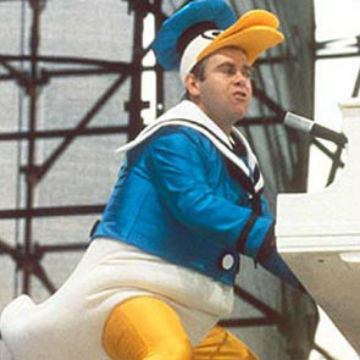
“I can’t leak the full album details but Elton pushed it to the max with this album, and it even has a cameo from his husband playing the piccolo whilst rolling around his Italian marble floor. The first track is the real kicker, we get the sound of a stool being pushed in kinda screechy sounding, then a splat as loads of blokes bundle in with their instruments. Some nice arpeggiation although the bridge is a bit floppy, but we just added more compression to the mix for a nice brown sound,” producer Vance Stubber, told Melody Maker magazine.

Where the album lapses in melodic function it prolapses in sheer volume of hits crammed into such a loose record.

“At one junction, we thought he lost it, Elton had a tantrum, because of something or rather,but after he stopped throwing things around we were back in junction and moving along fine.”

The homosexual couple hope to adopt more children from some Eastern European shit hole into their friendly family in the future, maybe they can all make albums together.


Ten Horse Mutations From The Future

0


To make sure you have every chance of profiting this year, Paddy Power have travelled to the future and returned with genetically modified winners ready for the Grand National Live Streaming!

Bendy Dave
Splicing in a little Beckham DNA gives this mutant the stamina and agility it needs to complete the race.

1


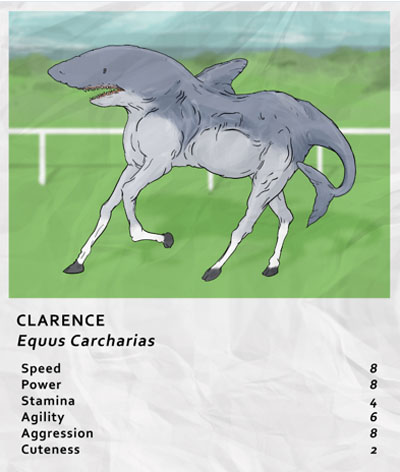
Clarence
Fast and deadly, with a taste for Jockey blood, this terrifying mutant can’t stop moving and can be a beast to control.

2


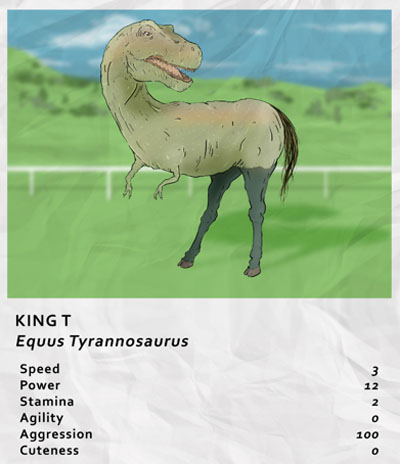
King T
Like something from Jurassic park this blast from the past has raw aggression and car-crushing power which promises to make the race more exciting.

3


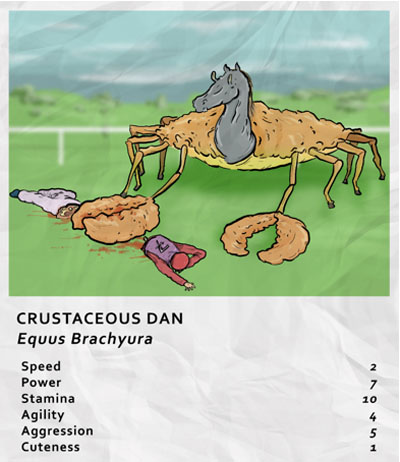
Crustaceous Dan
Giant claws slice Jockeys clean in half. This mutant’s claws have the crushing power of a black hole, but the sideways running is distracting and cumbersome.

4


Ivory Sprinter
Using its’ powerful trunk, the ele-horse removes Jockeys from their steeds causing them to lose control and head into the stands.

5


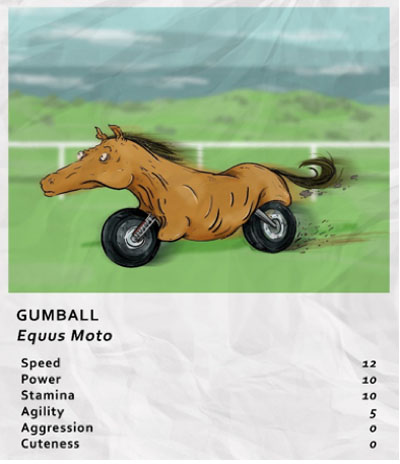
Gumball
Do motorbikes have DNA? It doesn’t matter as you won’t have time to ask with this speed-obsessed, petrol headed mutant power-house.

6


Savanna Affair
This lion based mutation might not have the best stamina, but it’s razor sharp claws and hunting instinct make it the ideal mutant to take out the competition one by one.

7


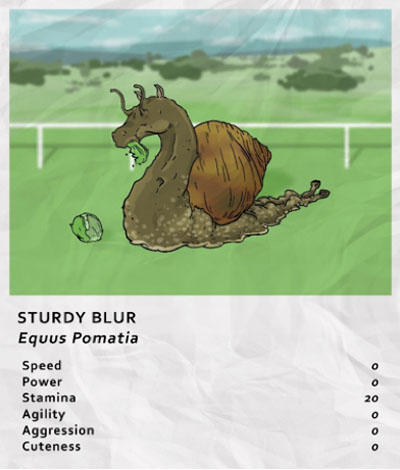
Sturdy Blur
Slow and steady wins the race! If this armoured behemoth can survive until the end it might just win.

8


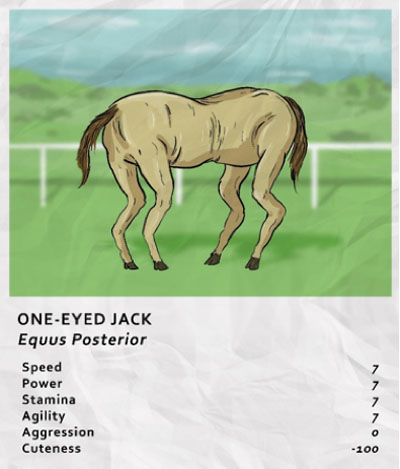
One Eyed Jack
Scientists combined the DNA of two of the greatest living race horses, but ended up with this monstrosity…

9


Whippin McWhiskers
OMG JUST SOOOOOOOOOOO CUTE!!!!!!!

10


Sponsored

UK Gives £5.8 Billion More to EU Countries for Medical Costs Than it Gets Back

0

Under EU legislation, persons temporarily staying in and some permanent residents in another member state (such as a UK pensioner living in Spain) may be entitled to benefits in kind ‘which become necessary on medical grounds during their stay’.

Member states are in theory required to reimburse medical costs incurred by their nationals overseas. Greater numbers of British holidaymakers visit the EU compared to EU citizens visiting the UK but this is balanced out by the fact there are 2.7 million EU citizens living in the UK, but just 1.1 million UK citizens living in the EU.

The disparity in treatment costs shows that the UK is currently getting a bad deal and why the UK could secure friendly health co-operation with the EU after we Vote Leave.

The research shows that:

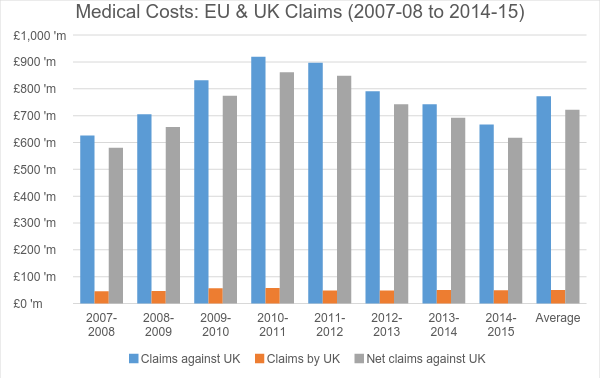
  • Since records began in 2007-2008, the UK has paid £6.18 billion to other EU member states for the treatment of British citizens in the EU, but was able to recoup just £405 million from other EU countries for the cost of treating EU citizens in the UK, a payment gap of £5.78 billion.

  • The UK’s payments to other EU countries for healthcare over the last eight years average £772 million per year (gross) and £723 million (net). The net figure is enough to more than double spending on the NHS Cancer Drugs Fund, to pay the salaries of an additional 2,638 GPs, to abolish dental fees and charges in England or abolish Prescription Charges.

  • Just in 2014-2015 alone, the UK paid £667.4 million to other EU countries for the treatment of British citizens in the EU, but was able to recoup just £49.3 million from the EU for the cost of treating EU citizens in the UK, a deficit of £618 million. That is enough to employ an additional 4,458 NHS hospital consultants or to abolish prescription fees and charges in England.


Commenting, Vote Leave Chair Gisela Stuart said:

‘The UK has been getting short changed by the EU for years. We hand over £350 million to Brussels every week but get less than half of that back – with strings attached.

‘On top of that, health tourism from the EU has cost us billions. This money could have been much better spent – it could have been invested to improve care for NHS patients.

‘If we Vote Leave we will be able to stop handing over so much money to the EU and we would be able to spend our money on priorities here in the UK like abolishing prescription charges and investing in the NHS.’

Under EU legislation, persons temporarily staying in another member state may be entitled to benefits in kind ‘which become necessary on medical grounds during their stay’. This also applies to those in receipt of a British state pension who have retired elsewhere in the EU. Member states are in theory required to reimburse medical costs incurred by their nationals overseas in these circumstances.

In 2014, there were 23.0 million visits by EU citizens to the UK and 43.8 million visits by British citizens to the EU. This means there were 90.4% more visits by British citizens to the EU than there were visits by EU citizens to the UK. The scheme could, therefore, be expected to cost the UK more for temporary visits. Given that there are 2.7 million EU citizens in the UK, but just 1.1 million UK citizens in the EU, it might be thought that this scheme would not impose costs on the taxpayer and should actually result in a net income to the UK in respect of permanent residents. Permanent residents are also necessarily resident for longer periods of time, meaning they are liable to impose higher costs. It is hard to estimate in advance whether the UK should be paying more to the EU or vice versa.

Vote Leave requested data from the Department of Health under the Freedom of Information Act 2000. The information requested was:

‘(a) the amount paid by the UK to each EU member state for the cost of treating British citizens abroad and (b) the amount paid by each EU member state to the UK for the cost of treating EU citizens in the United Kingdom, for the financial year 2014-2015 and every previous year for which the Department has records.’

The Department of Health disclosed the data in full. A breakdown of the data by each EU member state is provided in the Annex. The table below shows the annual figures for the whole of the EU-27 states.


Annual claims

Year

EU-27 claims

UK claims

Net

2007-2008

£626.35 m

£45.88 m

(£580.47 m)

2008-2009

£705.19 m

£47.18 m

(£658.01 m)

2009-2010

£831.50 m

£57.17 m

(£774.33 m)

2010-2011

£919.24 m

£57.81 m

(£861.43 m)

2011-2012

£897.40 m

£48.45 m

(£848.95 m)

2012-2013

£791.10 m

£48.72 m

(£742.38 m)

2013-2014

£742.67 m

£50.18 m

(£692.49 m)

2014-2015

£667.42 m

£49.32 m

(£618.09 m)

Average

£772.61 m

£50.59 m

(£722.02 m)


image00

In 2014-2015, EU member states claimed £667.4 million for the treatment of British citizens in the EU, whereas the UK was able to claim just £49.3 million, less than a thirteenth of money paid by the UK abroad. If the UK recouped that money in proportion to the number of visitors between the EU and the UK, it would obtain more than seven times what it actually does. The deficit in 2014-2015 amounted to a deficit of £618.1 million.

This is enough:

Over the period 2007-2008 to 2014-2015 as a whole, EU member states claimed an average of £772.6 million for the treatment of British citizens in the EU, whereas the UK was able to claim just £50.6 million. This amounts to an average annual deficit of £722.0 million.

This is enough:

The data also reveal the cumulative total claims made by and against the UK for medical costs, as the table below shows:

Cumulative claims

Year

EU claims

UK claims

Net

2007-2008

£626.35 m

£45.88 m

(£580.47 m)

2008-2009

£1,331.55 m

£93.06 m

(£1,238.48 m)

2009-2010

£2,163.05 m

£150.24 m

(£2,012.81 m)

2010-2011

£3,082.29 m

£208.05 m

(£2,874.24 m)

2011-2012

£3,979.69 m

£256.50 m

(£3,723.20 m)

2012-2013

£4,770.79 m

£305.21 m

(£4,465.58 m)

2013-2014

£5,513.46 m

£355.40 m

(£5,158.06 m)

2014-2015

£6,180.88 m

£404.72 m

(£5,776.16 m)


image01

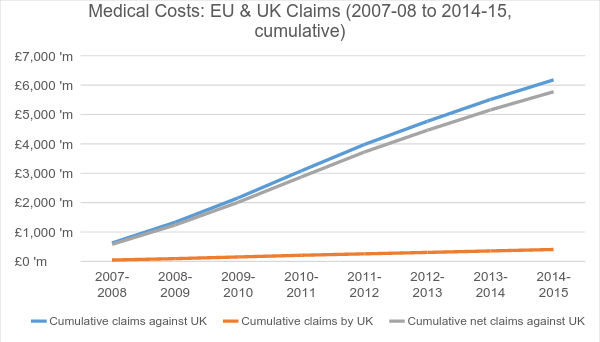
The graph shows that in the period 2007-2008 to 2014-2015, the UK has paid £6.18 billion to other EU member states for the treatment of British citizens in other EU countries, but was able to recoup just £405 million from other EU member states for the cost of treating EU citizens in the UK, a total payment gap of £5.78 billion.

This is enough:

  • To have built 17 new 1,159 bed hospitals.

  • To have trained 71,480 NHS nurses, 14,982 GPs or 11,352 consultants.

  • To have purchased and fitted out over 1,100 new GP surgeries.


Prescriptions charges

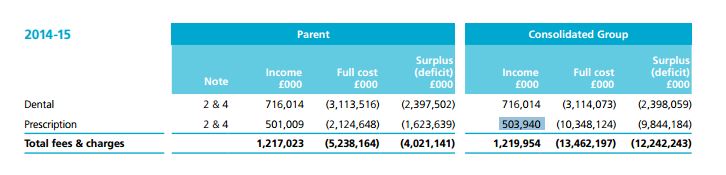
Persons in England pay over £500 million per year in prescriptions charges.

Capture (1)


Karl Marx Turning in His Grave Say Witnesses

0


“Sometimes we heard rustling sounds as if someone was turning over, and then later the sound of spinning came from Marx’s grave. Here is a man who birthed the Communist Manifesto buried for eternity, spinning like a silk worm — why?”

The answer to the man’s question may possibly be revealed in Panama, where staunch communists like the Chinese President Xi Jinping and British EU Marxist David Cameron have subverted the true meaning of communism.

“David Cameron has been revealed to be a Marxist EU elitist with offshore bank accounts, along with communist Xi Jinping, they exemplify the ultimate hypocrisy of socialism and communism, a tool for the elite to cream off the goodies from the top while the people are subjected to tortuous poverty, and despair,” one man said before letting go a long frothing green lurgie string of spittle onto the sodden ground.

Panama Wikileak: At Least Now We Know Where Some of the Greek EU Money Went

0

It’s not only the Cameron estate which benefits from avoiding taxation on their wealth. Investigative journalists have uncovered a massive treasure trove of information regarding Greece.

Cypriot and Greek ministers as well as businesses have been hiding their ill gotten gains from the EU in offshore accounts like Panama, and when the country went belly up in 2012 due to frittering away 350 Billion euros from the EU in less than two years, this is where the money went.

It is quite a find, and maybe some of these crooks who stole the money will be held accountable but it is highly unlikely knowing the unorganised multi-tiered bureaucratic hell that is the EU.

With news that the IMF is to force a Greek default one month after the UK’s EU referendum, somehow there does not seem to be any surprises left for the jaded.

Cameron Cracking Down on Offshore Tax Havens

2


“There will be nowhere to hide. I will make sure that the tax man finds you wherever you stash your money or that massive inheritance daddy arranged. Let me make this clear, we will be uncovering some serious stuff here. Some of us could be in the shitter if this tax avoidance nonsense comes out, but I have arranged for the tax man to come after me, even if I’m the PM. Oops! Did I just say that? Never mind..ahem.”

You can read the full papers here.