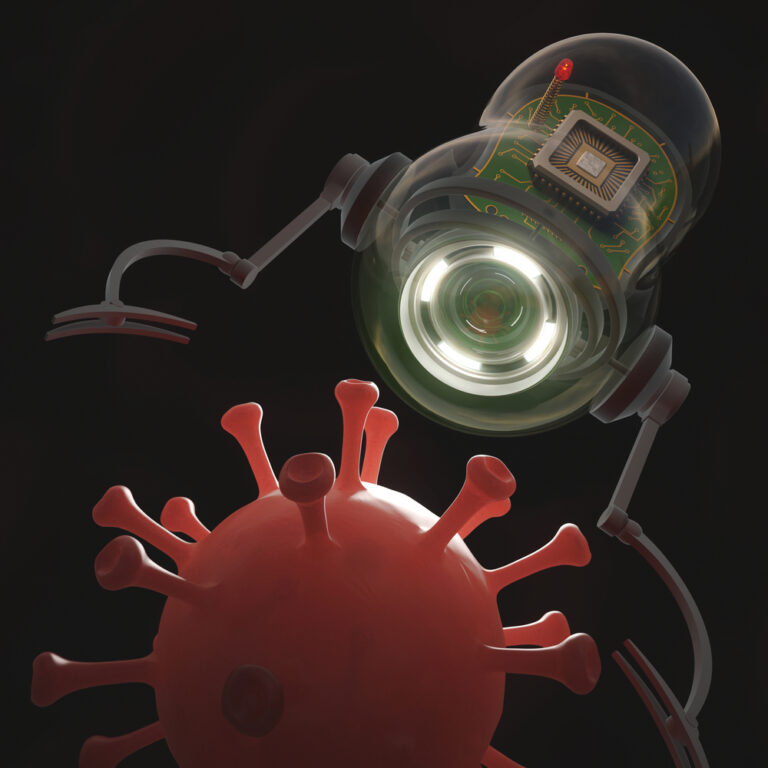
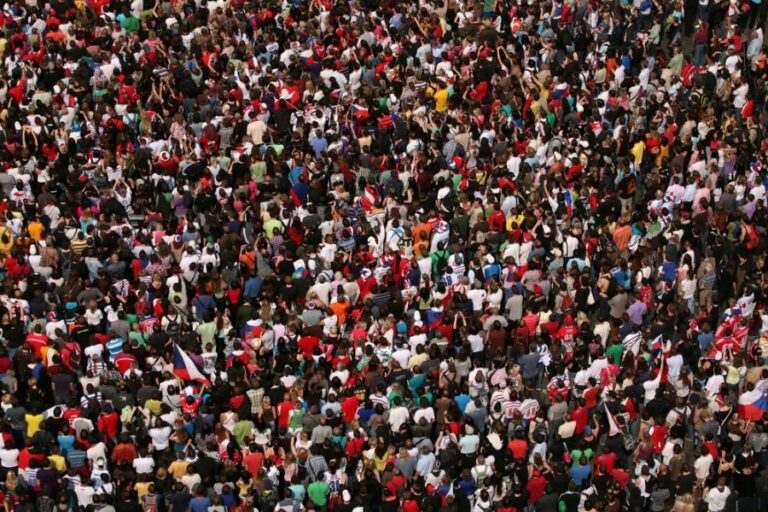
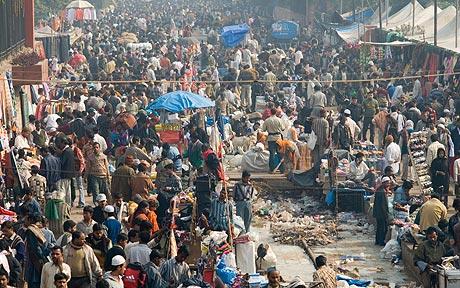
For generations, we have confused frenetic movement with productivity, and we have confused productivity with virtue for longer than that. Likewise, we have confused the extroverted with the social and the social with the caring. With the emerging public, economic, and governmental responses to COVID-19, such may have finally stopped.
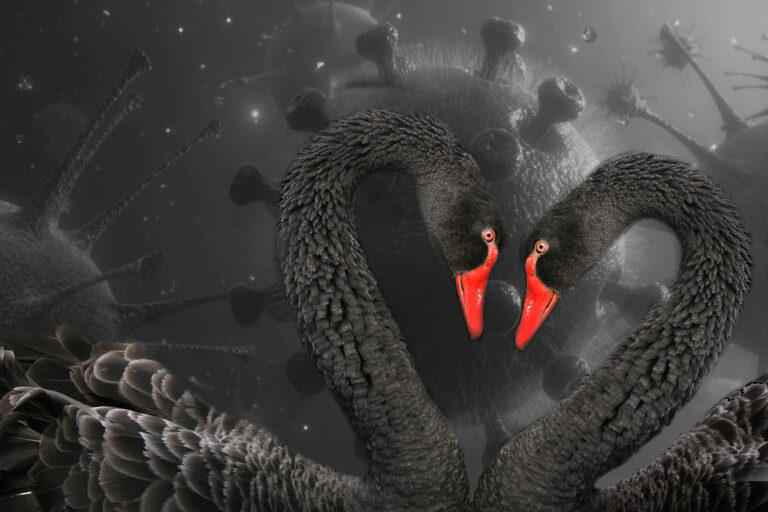
COVID-19 is a black swan attack, but this is not the first time, even in the span of a single generation, the world has changed suddenly and with only the slightest and most uncertain of warnings. Death from above is hardly novel—swans do what swans do—we should expect this, although we cannot predict the when or the where. We have not responded to previous aerial assaults well. By studying our past mistakes, we can learn to do better.
The virus is not the issue here . . .
The cult and culture of busyness may not hold so much sway over our hearts and minds as do the various religions, but if not as much, they are not far removed in importance. We take their role in society as a given—they always have been with us, and they always will be with us. The first statement is categorically false, and the second is speculative.
The Cult . . . Mythology, Ceremonies, and Sacrifices
Unless the ancestors of the American people (physical, spiritual, or intellectual) were always harder working than their peers—always on-the-sundial, efficiency-driven cave/salarymen and women who put their leisurely slash, burn, and nap counterparts to shame—than our present emphasis on work, particularly on being busy, must have come from somewhere and someone.
Max Weber’s Protestant work ethic has a certain appeal, most strongly to the WASP nest and its many denizens who fancy themselves self-made, and thus ever so slightly morally superior to lesser ruling classes in lesser cultures, who are (unlike America’s buzzing overlords) lazy, nepotistic, and corrupt.
Like any good overarching historical theory, Weber’s has an almost Marie-Kondo tidiness. Yet life is not a linen closest. The Chinese developed agriculture faster than did most European peoples and were producing standardized artwork and goods since at least the era of the Terracotta Army. And the Venetians were mass manufacturing ships since Dante.
In Uncommon Grounds: The History of Coffee and How It Transformed Our World, Mark Pendergrast suggests that the replacement of alcohol with coffee in Europe led to great increases in productivity. At least superficially, this makes sense. Switch a depressant for a stimulant and the populous becomes . . . less depressed and more stimulated. Yet this theory has flaws of its own. Alcohol has been verboten in vast swaths of the Middle East since the age of Muhammad, but even today, the region has an underwhelming industrial base compared to East and Southeast Asia, where is such an integral part of business culture that teetotaling is a professional hazard.
And then there is the matter of bigger and better stimulants. As far as stimulants go, caffeine is good, but cocaine is better. There may well be too much of a great thing, but its raw form, coca, does not cause the extreme highs of refined cocaine, does far less in the way of cardiovascular damage, and provides essential micronutrients. It is, in effect, a natural energy and nutritional supplement. South Americans have been using this stimulant, both more effective and arguably healthier than coffee, for thousands of years, yet again, the industrial revolution took place in Europe, where stimulants had to be imported, not South America, where they could be easily grown.
Caffeine’s introduction to Europe may well have shifted the course of history, but it seems less of a factor than changing notions of property and property rights. The land enclosure movement should be given some credit for increases in productivity, partially by encouraging more efficient use of the land and discouraging freeloading and partially by way of creating paupers and vagrants, who were landless and homeless, respectively, and who would take whatever work they could get (or that they were forced to take, depending upon circumstances).
None of these theories are perfect. None are entirely complete, so we are left with myth and speculation, ranging from the economic to the celestial to the racial, with none adequately explaining why we work as much as we do, why we value appearing to work (busyness) as much as we do, and why we sustain our love of busyness even as we discard so many other traditions and values, be they our traditional family structure; our religious beliefs; or our concepts on propriety, decency, and chastity, however inconsistently practiced these values and traditions have been. Busyness and its accouterments have become symbols nonpareil of the right kind of person and the right kind of life.
Symbols and ceremonies of a shared delusion can become so ubiquitous that they are nearly invisible to those acclimated to them. With about as much subtlety as a Hooters logo on a NASCAR uniform, we advertise our busyness—a proxy of personal worth and decency—and with considerably less concern for timeliness or decorum. And just as is the case with those ads adorning the noble Knights of the Speedway, our incessant declamations and declarations of our ain’t-got-time-to-bleed harried and hectic hurriedness are notable only during their absence. Try finding someone, at least anyone who is in or aspires to be a member of the managerial class, who is not busy and acknowledges as much without embarrassment or hesitation. The odds are not in your favor.
Our complaints of being overwhelmed and short on time; checking of our phones and schedules throughout the day; our eating while standing, walking, or somewhat less commonly, driving; and our perpetual and conspicuous inattention—looking and acting desperately rushed—these are no less markers of devotion and piety than a cross drawn upon one’s forehead.
To busyness, we surrender our health, our communities, our family and social relationships, and if sufficiently unlucky behind the wheel, our lives. For little else, aside from team sports, do we make so many offerings of blood and oil for so little certain return, and an alien looking down from on high might well conclude that busyness is the American virtue, with the same pride of place that filial piety, chastity, or honor hold in other cultures. And not all oblations are made purely of the sacrificer’s volition. One minor mistake—a lapse of judgment or finding oneself at the wrong place and time—can entrap those who can least afford it in a system that sees busyness as both a good to be promoted and as a punishment to be administered.
Long-term probation for misdemeanors and felonies alike; mandatory counseling (reeducation by another name); the constant micromanaging of citizens’ lives on a day-by-day basis: These keep almost 4 million Americans at the beck and call of petty bureaucrats, professional do-gooders, and busybodies, sometimes for years on end, and compel them to participate in the most ‘Merican of American pastimes—hoop-jumping—a sport that requires thousands of courts, an army of referees, and no balls at all. And the only note accepted to excuse the daft draft pick from this miserable game is a death certificate.
Patriotism, respect for the environment, and sanity are all subordinate to the moral imperative to flit, hustle, and drift about from one marginally productive task to the next. Busyness may not quite be our Moloch, but only because that role is already claimed our ever-expanding security apparatus.
Decades where nothing happens . . .
Shit happens. Sometimes it is most terrible. Sometimes it is merely bad. Our responses to the filth and stepping in it defy prediction by way of ordinary graphing and rational analysis, except in retrospect, from which all things make sense. In a period of about three years—August 1992 to April 1995—the siege at Ruby Ridge, the first World Trade Center bombing, the Waco siege, and the Oklahoma City bombing occurred. Although none of these resulted in the same loss of life as did September 11, they were well-publicized events that revealed significant cracks in the system—that nebulous and oft-reviled thing that allows those in power to maintain social, economic, political, and legal order through the judicious and timely use of force. Yet nothing happened. Protests against the government’s actions were limited, policies and institutions changed only slightly, and life carried on with so little change that one could be forgiven for thinking that these events had all taken place in far-off lands, and to people so dissimilar from the average American that they might as well have been Pygmies.
Our response to disease is no more predictable. COVID-19 is not the first potentially disastrous outbreak of the 21st century. Middle East Respiratory Syndrome (MERS) is caused by a coronavirus not all that dissimilar from COVID-19. From a public health standpoint, the two are not entirely equal—MERS appeared to be less contagious—but it did prove virulent enough to spread throughout South Korea in 2015, and that spread resulted in 36 deaths. That the MERS outbreak did not lead to public health disasters is not the point. It could have, and had the virus that caused it been even slightly different genetically, probably would have.
September 11 proved to be a different beast entirely from the events of the 1990s, and it spurred a series of policy and legal changes of such breadth and depth that we have yet to fully fathom their import. The hell of war aside, we, as a people and a nation, changed so dramatically that an American circa 1995 would hardly recognize the post-Snowden U.S. security state of 2015. From the caterpillar of compartmentalized intelligence gathering; small-scale international military involvement; and End-of-History irrational exuberance for a freewheeling culture and liberal-democratic way of life that could not be defeated, to the glorious drone/butterfly of Total Information Awareness; mass private and governmental data storage and sharing; and a decade entrenched in the Graveyard of Empires—we are different creatures, and our memories are those of beings that can no longer fully comprehend what they were. Firewood becomes ash, and it does not become firewood again. Indefinite detention, torture, and the extrajudicial execution of Americans all went from rank extremism to matter-of-fact present reality with little fuss. Friends and Frasier to 24 and Homeland—the war for our hearts and minds has already been fought. The Rebels lost. The Millennium Falcon crashed and burned. Dick Cheney was our spirit animal for the aughts.
What made this happen? Technology explains part of it. The Stasi collected about 69 miles of files in around 50 years and had about 270,000 workers at its peak. The Utah Data Center, which serves as one of the largest information storage facilities for the U.S. Intelligence Community and which has been open less than a decade, has only hundreds of employees and at least yottabytes of files. A conservative estimate of one yottabyte would be (very roughly) about as much information as 300,000 times that currently archived in the Library of Congress.
None of this means much. Outside of a certain scale, numbers evoke no emotional response. How many grains of sand are there on a beach? How big is the beach? Would an order of magnitude make much difference to the soft tissue between your ears—how can you explain this to a beast built to chase prey across the savanna?
Were that not enough to confound and confuse, consider this: Around 2002, the largest commercially available hard drive had around 120 gigabytes of storage capacity. As for 2020, the same dollar amount will get 8 terabytes—8,000 gigabytes—about 65 times more capacity. A great many of the information-gathering programs in place today would have been impossible in the first few years after September 11. But such does nothing to break the technology/ surveillance link. Current tech influences our behavior. Anticipated tech—that not so remote that it is more the realm of science than of engineering—does so only slightly less. Once we can make plans for their development and deployment, we can start to build infrastructure around the shiny new things. Technology demands use; uses demand technology. And if all is timed well enough, the two nurture each other in a marriage of perfect codependence.
So the last shall be first, and the first last . . . or The Revenge of the Introverts
JAPAN: SCHOOLGIRLS :: AMERICA : ________________
- Football players
- Billionaires
- Underdogs
- Mathematicians
- All of the above, excluding D
(The answer is E.)
A people can be judged by their demigods and their fetishes. We do not necessarily love either—they are more objects than humans to us—and projection is more about the projector than the projectee. Our hero is the underdog, and the underdog is a symbol with a person attached. The underdog gives us hope. The underdog is us.
We are the last, to soon be first. But not always. The underdog need be of the right sort. Spunky (check). Hopeful (check). Hard-working (check). Unpretentious (check). And we can forgive him of a great many faults. But he had better well be social. He had better try to Win Friends and Influence People. And he had better not enjoy being alone. The underdog on the street is a winner in the making. The underdog at home is a basement-dwelling loser at best. At worst, he is an active shooter yet to be activated.
Our students may well be Academically Adrift—that’s fine. Let the immigrants do the engineering work Americans do not want to do—but students must be properly socialized. Socialized to what and to what end? AP classes and the great college crunch? Great! Sports and band practice? Even better! Killing time and getting stoned? Why not, dude? Upskirting and sexting? Ooh, how terrible! (to be breathed in appropriately, or in inappropriately, titillated tones) Child sacrifice and cannibalism? No . . . well, that depends on whose kid is going in the soup. Socialization is not a means, but an end, an inherent good. So long as socialization happens, so long as the student learns that it is better to be with others than to be alone, he has learned his lesson.
Yet yesterday’s heroes are today’s monsters—Cecil Rhodes, once respected enough to have a university, an Oxford scholarship, and an African colony named after him, can barely avoid being crammed down the memory hole. Even those who have benefitted from his legacy of largesse—recipients of the achingly prestigious Rhodes Scholarship—have felt free to attack the man. Thomas Jefferson’s effigies have not fared much better, and Christopher Columbus’s statue was kicked out of the San Jose City Hall, which is only slightly less humiliating than being dragged from an Applebee’s by one’s underpants.
And with the ever-louder clamor for the citizens of the world to stay at home, the extrovert and his busyness may find that his day has come and gone.
This has been a long time in the making. We were Bowling Alone in 2000, and now we but rarely bowl at all. Social has become a prefix—social media, social distancing, social disease (granted, the last is hardly a new term)—that is as likely to be affixed to a negative as a positive. Spectator sports, capitalisms answer to the hairless ape’s instinctive need for tribal affiliation, are being incrementally replaced by e-sports. The rough and tumble animal interaction, the tackles and pats on the ass, are being digitized, little by little. And the world-famous athlete now works from home. There is no reason for him to run to practice, not much for him to walk across the room. Instead, he sits. And as famous as he is, he can be as introverted as wishes.
Nike, a sports ad agency with an apparel arm, is urging us to play inside, play for the world, and with good reason. We are all turning Japanese, at least a little, and perhaps we should. Hikikomori—Japanese, nearly all of them men, who cut themselves off from the world and spend their days indulging in thought and fantasy—may be less unwell than simply far ahead of the curve. Who else is better suited to ride out a pandemic? A mountain man, perhaps, but we are not made of such stuff. And the world cannot tolerate many of them: Their territorial needs are too large, and their dispositions too fierce for a ball of dirt and rock and water with 7 billion inhabitants. Better that we remain behind screens. There are not mountains enough, or men, for us to suck from the tit or the fat of the land.
All these cultural trends and elements—busyness, the service economy, our fragility as individuals and as people, and our growing social disconnect and cruelty—are more closely related than they might appear to the casual observer. Rather than trying to consider this in relation to America in all her complexity, we would be better served by way of the story of a mythic place, one near and dear to the hearts and genitals of at least half the population (if not more).
Whore Island . . . and Zombies
Clear your mind of the detritus of the moment. Hear the rush of blood in your ears. Note the cracking and popping of your joints and the shifting of your organs. Chase the air into and out of your lungs and imagine it gathering round your nostrils like the flames round the nose of a dragon as he waits for his prey. Think only upon the void.
Feeling better?
Now we populate the emptiness. Here are the shores: Water laps at them and kisses your bare feet. The sun is falling below the horizon, setting the ocean and her waves aflame. Your clothes are loose cotton, and you feel them brush against your skin, softly, barely touching it. You hear . . . the breeze rising, rustling the fronds of the coconut trees. A thud and you realize the fruit, dangerous and nutritious and deadly, is dropping. You are glad you are not too close. To your back is the coolness of night, and to your front is the infrared warmth of the fast-departing chariot of the heavens.
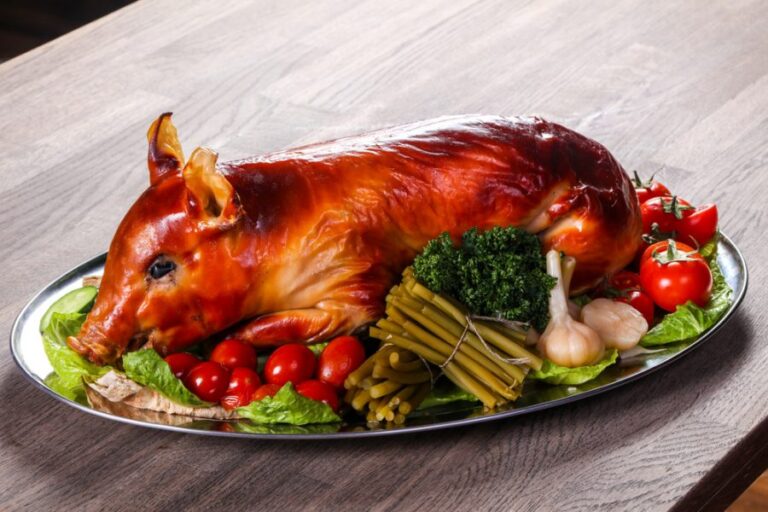
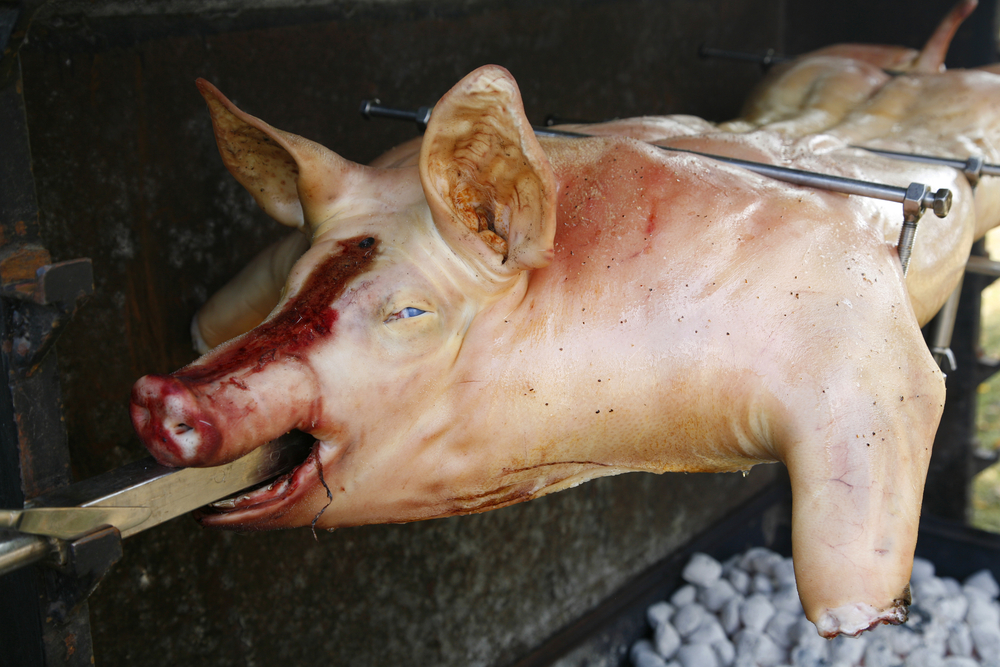
Now there is another sound, faint at first, but louder by the moment. Is that the sound of wild things calling? Is it battle? Or is it women in distress? There is a light on the beach, a bonfire blazing in the distance. As you advance the noises grow louder—here is the rhythm. Are those drums? Are hands and mallets striking taut heads? You draw nigh, and the wind comes up again. You smell it, not the smoke, not the scent of roasting pig and pineapple, but the gentle sourness of lust, and you catch sight of the tableau, all writhing tan flesh and slickness. This is animal joy—a carnal carnival in the flickering.
Welcome to Whore Island.
Whore Island seems like a great idea. The dream of every hormone-fueled teenage boy (and every saggy-breasted middle and high school teacher/succubus who gropes him), its success was all but guaranteed by its intrinsic appeal. Were that not enough, the business proposal for Whore Island was written by 10 (10!) of Harvard Business School’s smartest 2015 graduates and three University of Chicago professors and was presented to a top-five venture capital firm (one of the original backers of Theranos), which agreed to invest 275 million dollars during the first round of funding, with additional monies to be made available as warranted. Whore Island Sado-Hedonistic Enterprises, Santiago (WISHES), a Panamanian corporation with headquarters in Chile, was immediately lauded by entrepreneurs, economists, free-trade advocates, sexual liberationists, and marketers as one of the greatest business innovations of the last 50 years.
The people of Whore Island, which was previously known as Ile de la Misère, would be freed from the drudgery of production. (Historically, the island’s exports were lava salt and guano. The coconuts, of a variety unique to locale, were banned from international transport—a result of their spontaneously combusting at altitudes greater than 30 feet.) These lucky souls would climb the value chain to provide humanity with that what it needs most—pleasure—either as direct service providers or as support staff for said service providers. Thus, the world’s first nearly pure service economy—where everybody who is anybody would invariably go to get serviced—was born.
Everything from edible panties to hooker boots to flavored condoms would be imported, with the goal being to eliminate all forms of manufacturing on Whore Island and in its territorial waters within five years of the Whore Island Development Entity (WIDE)’s commencement. And to the extent that anything would be processed, rather than simply consumed in the Whore Island Territories (WIT), such would be done only if requiring the smallest amounts of time, money, and skill, and if doing could increase the saleable price of the item by an order of magnitude. Shirts with lipstick on their collars and pre-worn undergarments (and syphilis) are all the material goods the WIT contributes to the world.
Imitation being the sincerest form of flattery and the surest sign of others’ confidence in an idea, many tried to duplicate the success of the WIT. The L-WIDE (Lesser Whore Island Development Entity) was the first to have a go of it, but reputation and customer service simply could not compare. HEI (Happy Endings Island), located seven miles off the Jersey Shore and that mainly attracted elderly gentlemen on fixed incomes, proved to be less a direct competitor than a complimentary collaborator—a low-stakes keno to the WIT’s million-dollar blackjack—and cross-marketing plans were briefly in the works. Even a few SSRRs (Somewhat Satisfactory Riverboat Rubs) were established in the Deep South, but the clients’ tips were so small that the masseuses found the work to be more trouble than it was worth.
Every time some nation or business encroached on the business and brand of WIT, WISHES simply moved to more upscale services, with the leader of the WIT (the WIT-Head) confident the elite consumers would opt for an ever-more luxurious experience.
What defines the culture of WIT and her many imitators (and emulators—the Second Life counterpart to WIT is flourishing, partially with the help of SL’s BDSM community)? Is it the raw sexuality? Yes and no. Sex can be had any number of places and at lower prices. The fine dining? Unlikely. No one goes to WIT to eat (food). The clean beaches? They’re lovely, but no.
The difference is busyness. Those who are not getting busy themselves help others get busy or busily clean up the aftermath. This is what pure customer service requires. For products of a certain prestige, one may wait, sometimes for years. And a well-orchestrated shortage can increase the cachet of the brand. But erections are perishable, and those not . . . handled with deliberate speed do little to stand up the economy. Just as importantly, everyone must look busy. When nothing is being made, the appearance of productivity is one of the few available measures, even if it be an unreliable one.
WIT was a roaring success for years. A marvel of market efficiency heretofore unknown! wrote one analyst. The Future is Coming! declared Forbes, a smiling photograph of the WIT-Head on its cover. Buy! Buy! Buy! For the love of God, buy! screamed a certain television personality best known for throbbing forehead veins and the incongruous use of buzzers, when WISHES went on the NYSE and WIT became the first publicly traded nation-state.
And then came the collapse.
The airlines failed. They were never well-run. And investing in fleets of 100-million-dollar machines to provide a fickle public with a luxury of uncertain consequence—travel—is a risky proposition on the best of days. In times of hardship, it is not much wiser than spending a mortgage payment on lottery tickets and hoping to pay off the principal in one fell swoop. The cruise lines failed shortly thereafter. Why they failed is best left to historians. Markets rise and fall. One day a man is rich, and the next he is stuck wondering if his ten pounds of tulips can be exchanged for a loaf of bread or if he should just throw the accursed things—all 50,000 guilders of them—in a pan and see how they taste after being fried.
To every thing is a season . . . a time to plant, and a time to pluck. And as went the flowers, so went WIT: Without imported food and goods, WIT was plucked, and by the roughest of ungloved hands. The coconut industry, already enervated and etiolated by years of neglect, was no longer able to support the small pre-WIDE population of the region, much less one engorged by years of whore-tourism. And the guano, having been scraped off the island and dumped into the sea as a part of a WIT-WIDE beautification initiative, no longer did the people much good either. So shipping vessels stayed away. The people of WIT, now quite accustomed to being (and getting) busy found that they had nothing to do, little to eat, and had forgotten how to ration their energy, their food, and their time, as is bound to be the case in when consumption is prioritized above all else.
Ergo, cannibalism.
A major problem with dining on the flesh of one’s peers (aside from the pesky matter of it requiring the slaughter of people for food) is that it spreads diseases. Kuru, heavy-metal poisoning, halitosis—even a well-fed cannibal may be so afflicted that he is not a happy one. But the people of WIT did one better. What started as a common disease of tremors progressed to a lumbering, erratic walk. And the cannibals grew picky, preferring not the dry and sinewy muscles of their former friends and lovers, or even tenderer flesh baked into a pie, but brains, nothing but brains.
Better apprised of the history of this former island paradise, you look again at the scene before you. We have talked and walked, and you are that much closer than before. What is that on their skin? From what do their bodies get their sheen? The growls of satiation are not as comforting as they were from a distance. And the sharpness in the air is fear, not lust. A man from the mass looks up in your direction, but you know not what he sees. You can see color, but just—the cones in your retina are at the bare threshold of triggering. He offers a rictus grin, his teeth crimson, his body speckled in blood and pale fragments of bone. The woman—what is left of her, her body drawn out on the sand, her scalp cast carelessly to the side—catches sight of you—they both can see you, you realize—and with the few neurons remaining in her half-scooped-out skull, formulates a proto-thought: My savior. But you are no one’s savior, not when outnumbered 20-to-1. You will be lucky to save your own wearable, edible hide.
And now is the time for you to be busy, running as fast as you can.
What a pity you left your shoes by the shore.
Principia
Those who do nothing, do nothing but be, until they cease to do even that. Those who are busy, who attempt to do everything, achieve no more, but at greater caloric expense. Both have paused mid-air before starting their swing back.
From the conformist, the extroverted, and the social come the hikikomori, the lone gunman, and the psychopath. Thus comes the capitalist Holodomor of Whore Island, no less severe than the communist first, only smaller in scale and with a tropical disease added for . . . flavor.
Push things hard and things push back.
The virus is not the issue here. The issue is learned blindness—cults teach this well. Cults teach principles first, information second (and only to the extent it conforms with expectations).
The cult of busyness is founded upon the idea that time must be spent rather than saved—a high velocity of time is the ideal. The cult of extroversion, upon a faith in the desirability of a high velocity of interpersonal interaction. Both value motion for its own sake.
We have pressed this as far as we can. We have built a machine of zero efficiency—with every meshing of gears resulting in infinite friction—which is perfect in its way: All it makes is heat. But there is much to be gained from this. We know how not to build a civilization. We know what does not work.
Today, we pause. We are forced to do nothing, without pretending to do anything at all. So we can finally start to get things done. This is the time to breathe slowly; to see the world, rather than to project our wants onto it. Natural principles do not hide themselves, but they make no advertisements either. Carefully observation is the cornerstone of discovery.
We may be stuck for a while, and when the world starts up again, it will not be the same. In an age of dreams and religious fervor—the Middle Ages, the Age of Busyness—belief trumps nature. Faith trumps facts. And then a part breaks. The inertia of fantasy dissipates. All that is left is the real.
Revolution is not a dinner party, and not all dinner parties are as genteel as one might hope—ask the guest of honor from a few scenes ago—but it can start with a quiet meal, with an apple dropped on one’s head, or with the rasping death rattle of a cult.
And with that death—be it from age, injury, or microscopic pathogen—room is made for something new under the sun. Death and deadly swans will keep coming, unannounced and without concern for our feelings or convenience. The questions: What do we do about this? Do we follow history, forever reacting, or do we lead?
We have followed for far too long. It has not served us well. But this does not need to be the case. Let us choose to make the most of a bad situation and an imperfect world. Let us make it less wasteful of our precious time, energy, and attention; less hateful, cold, greedy, and infuriating.
Let us make it something better.
Brant von Goble (born 1983) is a writer, editor, publisher, researcher, teacher, musician, motorcyclist, juggler, and amateur radio operator.
https://www.goodreads.com/author/show/18575596.Brant_von_Goble















 and can shorten the duration of the flu and reduce related symptoms by stimulating an immunity enhancement. It works against bacterial pathogens that are responsible for infections of the upper respiratory tract and strains of influenza virus.