17.7 C
London
Sunday, April 12, 2026
secret satire society
Home Blog Page 485

Published PAC Report Reveals Extent EU Financial Penalties Hit UK

0


Responding to the publication of the report of the Public Accounts Committee on Financial management of the European Union budget in 2014, which was ordered to be printed by the House of Commons this year, Chief Executive of Vote Leave, Matthew Elliot said:


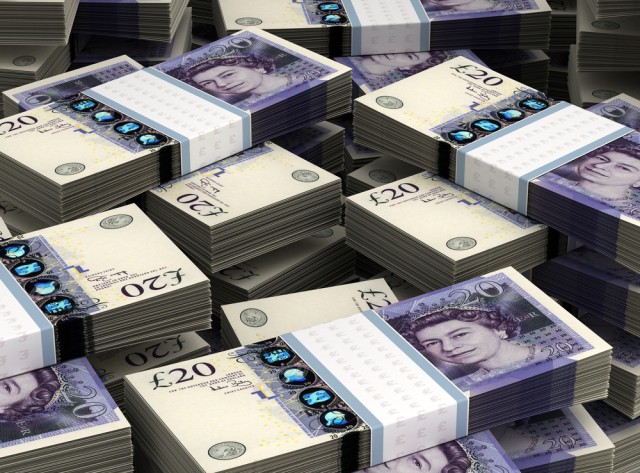
“We hand £350 million pounds to Brussels every week. Some of that money does get sent back to the UK but it is not necessarily spent on our priorities and it is laden with strict rules and conditions. Even worse, the EU often fines us if we don’t do exactly what Brussels says. The only way to get out of this racket is to Vote Leave on 23 June.”


The EU is fraught with red tape, fines and ridiculous diktats that serve little or no purpose whatsoever.

The National Audit Office (NAO) revealed that EU disallowances cost Britain £642 million between 2005 and 2015.

Out of funds received from the Commission 2.7% were disallowances, and the UK is subject to disallowances to a greater extent than twenty-one other member states, including France, Italy, Poland, Spain and Germany.

Forecasts by the NAO reveal that by 2021, £370 million will have to be paid to the Commission. A ridiculous sum that can only be halted by leaving the European Union.

The EU’s Common Agricultural Policy, is becoming more complex despite claims of reform, thus exposing the UK to a greater risk of fines in the years ahead. The UK’s attempts at simplifying CAP have been ignored by the EU, and many member states have no way of implementing half of the new regulations.

Not only are many of the regulations unworkable within a system that is overburdened by red-tape and unnecessary over complication, the UK pays twice as much into CAP as it gets out. What the UK does receive comes with the risk of fines. In 2015 the UK received £2.9 billion in CAP funding from the EU, whilst paying £5.5 billion to CAP, which is 12.57% of overall CAP EU wide expenditure. What is the point of paying in a vast amount to CAP  and getting nothing much back, which is fined anyway?

In addition, other member states receive far more funding than the UK does. In 2014, France benefited the most, receiving 15.7% of payments, followed by Spain with 11.7%, Germany with 11.3%, Italy with 10.0% and Poland with 9.1%. The UK received just 7.2%.

The skewed profligate red tape burdened EU is its own worst enemy, and logic states that leaving is the only answer to the dire EU mess. Let us use this wasted EU money on ourselves instead. Vote Leave on June 23.

Labour MP: “Corbyn’s Pro-EU Stance Pushing Millions to UKIP”

0

In his first major intervention in the EU referendum campaign, Field argues that Jeremy Corbyn’s position on the EU risks further undermining the already strained relationship between the party leadership and traditional Labour voters.

“This will be the second longest suicide note in Labour’s history – the longest being Michael Foot’s 1983 manifesto. It is a suicide note because Jeremy’s new pro-EU stance will drive another huge tranche of Labour voters over to UKIP as the only way they have of gaining a clear representation of their views on Europe.’

“The last thing Jeremy needs to do is to undermine further the traditional Labour vote, much of which wishes to leave the European Union. For the Party leader more actively to campaign for the Remain campaign will push even more Labour voters into the arms of UKIP.”

Speaking days after Theresa May’s admission that EU membership makes it harder to control immigration, the Labour MP remarked:

“The level of immigration is already a major issue for traditional Labour supporters, and never more so for those in lower paid jobs.’

“Our open door policy, which began under Tony Blair, has pushed down wages at the bottom of the labour market. It has increased the queues for health services and even more so for homes. And it prevents ever more parents from gaining a school of their choice for their children.’

Criticising the Labour party’s refusal to engage with the issues that really concern its members, he said:

“The European referendum holds out an untold danger if another swathe of Labour voters depart to UKIP – who they see registering more effectively their own sense of national well being and destiny. Whatever the referendum result, June 23rd holds huge danger for Labour remaining the contender for power.”

Escape From Europe 2030

3


There are still pockets of resistance fighters across the continent but every day more and more are discovered, flushed out and liquidated.

Internal body implants became mandatory in 2023, and replaced mobile phones as a means of tracking your every move, your every thought and your every word. Internal body implantation biometric devices are also used for every transaction, tracked and monitored. There is no more cash, and anyone found using other forms of currency are punished severely. The EU can also turn off your digital currency at any time to punish a person for any indiscretion against EU law.

Dissent is punished with imprisonment in a re-education camp, as prescribed by EU diktats, all must obey fully to the state now being led solely by Germany.

In 2020, the EU’s capital was moved from Brussels to Hamburg, to reinforce the EU’s Germanic supremacy.

Termination

Education begins in the womb, as EU edicts are programmed into foetuses before birth. Microchip brain implant technology introduced in 2028. Without the required programming, a birth licence is not granted, and the baby and mother are both terminated.

Undesirables are rounded up every day, those who have broken the law in any way, those who resist and those who have harboured thoughts deemed subversive by the authorities. The ones who can be reprogrammed to love the EU are spared, but those who still resist are taken to special chambers where their bodies are liquefied, and then fed into the water and food nourishment system to be consumed by the masses as a form of protein.

Britain lost their bid for freedom in 2016. Since then the former country’s population has risen to 180 million people by forced EU repatriation and migration. There were many riots, and it came close to civil war but mandatory implants soon quashed all resistance as well as harsh punitive measures by the EU authorities overseeing the transition.

The many absorbed nations under the EU are all now bound by one singular EU army, which is compulsory to join. The Russian threat is cited as the reason for full compulsory conscription and skirmishes in the Ukraine sector resulted in Russia moving into Finland in 2021. Sweden reported Russian Federation troops entering their borders in 2023.

To escape this EU totalitarian Soviet Islamo-Fascistic nightmare is now a missed opportunity for many. In 2024 thousands were able to flee through Sicily into Libya and then onto Africa, but many were cut down before they could escape the EU.

Permanent Austerity

In the British sector, there have been many riots, quelled by the militarised EU police, the influx of millions into the EU over the years, has left wages at rock bottom, the EU wide welfare system established in 2019 resulted in benefit cuts of over 75% because of the mass of welfare recipients. Hospitals also received huge cuts in funds, and even though nanotechnological medicine was introduced in 2025, this was only available to the elite and EU politburo.

The EU introduced a directive in 2026 banning all private property and land ownership, this law created a backlash from many who were then detained and terminated. Some estimate that over 400,000 EU citizens were culled in one month.

Food shortages due to mass migration from Sub Saharan Africa and the Middle East into the EU over decades resulted in EU citizens being fed on a GM produced porridge substance with the only protein derived from liquefied human cadavers. The protein is sufficient to keep many alive, as there is no room for crop growth any more, or to hold livestock. The EU tries to keep the source of the protein fed to the masses quiet but in 2027 a leaked dossier results in more mass riots, only quelled by EU military forces.

By 2030, the EU’s population has risen to 4.6 billion people. There is no European utopia but instead a dystopian nightmare so horrible that many choose death willingly than exist in the EU. But, hey, at least the EU food supply is safe as millions who resist are dealt with appropriately.

Home Secretary Admits Five New Countries Joining the EU is Dangerous for UK

0

Theresa May argued that they were ‘countries with poor populations and serious problems with organised crime, corruption, and sometimes even terrorism. We have to ask ourselves, is it really right that the EU should just continue to expand, conferring upon all new member states all the rights of membership?’

Vote Leave’s Iain Duncan Smith agreed with the Home Secretary:

“The Home Secretary is right to warn of the dangers of countries like Albania and Turkey being allowed to join the European Union. If these countries are let into the EU’s open border system it will only increase the pressure on our NHS, schools and housing. It will also vastly increase the risk of crime and terrorism on British streets.


“After the Home Secretary’s powerful intervention, is the Prime Minister now going to make clear that the UK no longer supports their bid to join the EU? If he does not, will he make clear why he disagrees with his own Home Secretary?”

Following the Home Secretary’s comments today there are key questions the Prime Minister must answer.

  1. Will the Prime Minister commit today to veto EU expansion to Albania, Macedonia, Montenegro, Serbia and Turkey under all circumstances?
  2. Does the Prime Minister accept the Home Secretary’s comment that it is a bad idea to welcome countries that have ‘serious problems with organised crime, corruption, and sometimes even terrorism’?
  3. Does the Government accept that giving 88 million persons the right to enter the UK will place a major burden on the NHS?
  4. Does the forecast of an extra 3 million net migrants by 2030 take into account future EU accessions?

Michael Gove MP added a few words after the Home Secretary’s admission:

“The EU response to the migration crisis is a Five Nations free-for-all with an invitation to Macedonia, Montenegro, Serbia, Albania and Turkey to join the Union. Because we cannot control our borders – and because our deal sadly does nothing to change this fact – public services like the NHS will face an unquantifiable strain as millions more become EU citizens and have the right to move to the UK. We cannot guarantee the same access people currently enjoy to healthcare and housing if these trends continue. There is a direct and serious threat to our public services, standard of living and ability to maintain social solidarity if we accept continued membership of the EU.

Junior Doctors Would Not Be Striking if We Were Out of the EU

5


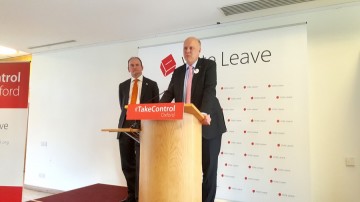
The Leader of the House of Commons Chris Grayling today commented on the junior doctors’ strike that will cause chaos in hospitals across the country.


“Getting to a proper seven day NHS could make a real difference to this country. It would be so much easier to pay for that change if we took back control of our £350 million a week contribution to the EU and spent it on our priorities. For example, the money at the heart of the current doctors dispute is just 5% of our overall annual contribution.


We shouldn’t be spending billions on the EU that could make our NHS better and help deal with its current challenges.


“The Remain campaign also need to explain how they would provide enough money and doctors to cope with the 3 million migrants they want to see come to Britain in the next fifteen years if we stay in the EU.


“The NHS is already running to keep up with the demands placed on it by the huge influx of people into the country and by the ageing population.


nhs corridor


Adding to the voice of reason was Vote Leave Chair Gisela Stuart MP, who said:

“On Jeremy Hunt’s watch the NHS has plummeted into financial crisis. This Government is hurting patients by starving the NHS of the funding that it needs.


“A small fraction of the money that the EU takes from us each year could be used to give junior doctors the pay settlement they are looking for and end these damaging strikes.


“If we Vote Leave and invest more in the NHS then we could end the current health crisis, nurse the NHS back to health and improve care for patients. We should spend our money on our priorities like the NHS.”


NHS


We send £350m to the EU each week – amounting to £19.1bn each year. This means that if we Vote Leave, we can afford to reintroduce automatic annual increases, as the increased cost amounts to only 5.1% of the annual EU contribution (the equivalent of just two and a half weeks’ worth of EU contribution).

Save our NHS by Voting Leave on June 23, you owe it yourself and your family’s health.

Theresa May Admits EU Makes Immigration Control Harder

1

Cracks are already being felt in the government’s taxpayer and Goldman Sachs funded campaign to keep Britain in a failing EU that has nothing much going for it.

With Obama back in America licking his wounds after being savaged for his heavily scripted meddling speeches, and the EU being inundated with even more migrants crossing into the continent from Libya and Greece, the augurs do not bode well.

MIGRANTS

Speaking today on the Andrew Marr show, the Home Secretary admitted that ‘free movement makes it harder to control immigration’ and ‘I understand why people are concerned about immigration. It has an effect on public services and jobs’.

Theresa May’s speech at the 2015 Conservative conference further reinforced the trepidation over mass unfettered immigration into the UK: “Even if we could manage all the consequences of mass immigration, Britain does not need net migration in the hundreds of thousands every year … The evidence – from the OECD, the House of Lords Economic Affairs Committee and many academics – shows that while there are benefits of selective and controlled immigration, at best the net economic and fiscal effect of high immigration is close to zero. So there is no case, in the national interest, for immigration of the scale we have experienced over the last decade. Neither is it true that, in the modern world, immigration is no longer possible to control … The numbers coming from Europe are unsustainable and the rules have to change.”

In 2015 the Home Secretary said that EU migrants should have to have a job offer to enter the UK, but David Cameron’s supposed renegotiation omitted this stipulation and all EU migrants who come to the UK can just say they are ‘looking for work’. Under EU law ECR I-745  it is illegal to refuse entry to anyone within the EU borders.

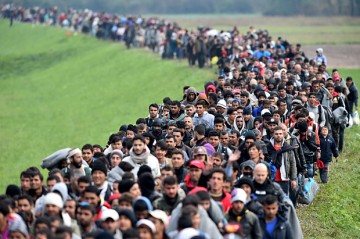
Thousands of people are pouring into the EU borders daily. The primary routes are through Greece and Italy, however there are new routes opening up from Russia and the Black Sea. Once in the EU, they have the right to make their way into the UK when they become registered by the authorities within the European Union.

Not only is the EU making it harder to deport dangerous criminals from the UK, but the head of Europol even admitted, Jihadists and dangerous terrorists are flowing into the continent and into the UK.

More than a quarter of a million people came to the UK from the EU over the last twelve months – a city the size of Newcastle – which adds to the pressures on our NHS and other public services.

The only way to take back control of our borders and have a fair immigration policy is to Vote Leave on 23 June.

Vote Leave FACTS: Obama’s 10-Year Trade Claims Not Backed Up by Reality of US Deals

1


As the fifth largest economy in the world, and a major export market for the USA, the United Kingdom is well placed to secure a swift deal too.

Commenting, Chris Grayling MP said:

“This is a case of political positioning trumping reality and is a million miles away from from the facts on the ground. The United States reached deals with Canada and Australia in two years so no one will seriously believe it will take five times as long to conclude a UK deal.


No American President would consider giving up as much sovereignty as we have. This referendum is about us regaining our independence as a nation and taking back control of our economy, our borders and the £350 million we hand to Brussels each week.


The US has previously concluded major free trade agreements in under two years. The UK can expect the same.


    • The US-Australia free trade agreement was concluded in less than two years. Formal negotiations for a free trade agreement began in Canberra on 18 March 2003. The agreement came into effect on 1 January 2005. The US Government states that: ‘as a result of the U.S.-Australia Free Trade Agreement, tariffs that averaged 4.3 percent were eliminated on more than 99% of the tariff lines for U.S. manufactured goods exports to Australia’.
    • The US-Canada free trade agreement was negotiated in less than two years. According to the Government of Canada, ‘In 1987, both countries agreed to the Canada-United States Free Trade Agreement (CUSFTA). Negotiations toward a free trade agreement with the U.S. began in 1986. The two nations agreed to a historic agreement that placed Canada and the United States at the forefront of trade liberalization. Key elements of the agreement included the elimination of tariffs, the reduction of many non-tariff barriers, and it was among the first trade agreements to address trade in services. It also included a dispute settlement mechanism for the fair and expeditious resolution of trade disputes’.


  • The US-Morocco free trade agreement was negotiated in less than two years. According to the US Government, ‘His Majesty King Mohammed VI and President Bush agreed to negotiate a Free Trade Agreement in April, 2002. Negotiations began in January 2003 and agreement was reached in March 2004’.
  • The US-Chile free trade agreement was negotiated in two and a half years. The Organization of American States notes that: ‘Chile and the United States announced their negotiations towards a free trade agreement on 29 November 2000. Negotiations began December 6-7, 2000 in Washington D.C. and concluded 11 December 2002. The agreement was signed in Miami on 6 June 2003’.


The US has concluded trade agreements with far smaller countries than the UK. As the fifth largest economy in the world, and a major export market for the US, the United Kingdom is extremely well placed to secure a swift deal.


  • The US currently has 20 free trade agreements in force, including with countries such as Bahrain, Costa Rica and El Salvador. Many of these are with far smaller economies than the UK. They include Australia (population: 23.4 million); Bahrain (population: 1.36 million); Canada (population: 35.5 million); Chile (population: 17.7 million); Colombia (population: 47.8 million); Costa Rica (population: 4.7 million); Dominican Republic (population: 10.4 million); El Salvador (population: 6.1 million); Guatemala (population: 16.0 million); Honduras (population: 7.9 million); Israel (population: 8.2 million); Jordan (population: 6.6 million); South Korea (population: 50.4 million); Morocco (population: 33.9 million); Nicaragua (population: 6.0 million); Oman (population: 4.2 million); Panama (population: 3.8 million); Peru (population: 30.9 million) and Singapore (population: 5.5 million) World Bank Statistics, 2016.
  • The UK is a major export market for the US. In 2015, the US exported $119.3 billion of goods and services to the UK. This amounts to 5.37% of total US exports of goods and services. It is therefore in the US’s interests to strike a free trade agreement.


The US is only negotiating one trade agreement at present. The ‘queue’ is not very long.


  • The US is currently negotiating one trade agreement. According to the Office of the United States Trade Representative, ‘The United States has completed negotiations of a regional, Asia-Pacific trade agreement, known as the Trans-Pacific Partnership (TPP) Agreement and is in negotiations of the Transatlantic Trade and Investment Partnership (TTIP) with the European Union, with the objective of shaping a high-standard, broad-based regional pact’.

Back in Washington D.C. Obama Recalls His Trip to the UK

1

President Obama has fond memories of his trip to the UK to try and persuade the Brits to give up their laws, their freedoms and sovereignty to the EU.

“I had a great trip. As soon as I landed, some guy came up to me and said ‘Back of the queue!’ I said what? In the U.S. we say ‘line’ we don’t say ‘queue’. Then another guy came up to me, he said he was the PM or something. He gave me a piece of paper and told me to say those words to the BBC.

“Oh, ain’t that Prince George cute? I bowed down to him, and said ‘Massa what can I do you for?’ he just looked at me and rode off on his little horsie.

“Michelle and I got a ride from Prince Philip, you know the guy with the Tourettes. He kept telling me to mind my own business, and to take my TTIP and wipe my ass with it. I said ‘do you mean TP?’ He said no, the TTIP that you’re peddling and will kill the British welfare system designed to keep the oiks happy.

“Those guys at the BBC were great to me, they gave me my own talk, and I immediately phoned Brussels to tell them to up the funding.

“Oh, and I played golf with that Lord Haw Haw guy, whatsisname? He said I did good and I read the script fine. Only thing is I didn’t fool anyone, so now I must leave before I do’s more damage. I aksed him, what I did wrong? He said that the whole thing has now backfired and more people are going to vote Brexit because they don’t like meddling Kenyans telling them what to do. Then I aksed him why a lame duck like me would possibly make any difference anyway? Cameron gave me the silent treatment after that.

“Anyways, good to be back home. Plain sailing from now on till retirement. I’m just going to do what I did throughout my presidency. Play golf, take expensive taxpayer funded holidays, talk about gay rights and ignore everything else.”

Soon to be Ex-President Obama Threatens UK With Back of Queue Trade Deals

24

Britain is already back of the queue in the EU, paying £19 Billion to Brussels every year. EU regulations cost British businesses £41 Billion every year. The costs outweigh the benefits of EU membership. Britain is the EU’s cash cow and needs to break free from this costly unprofitable exploitative EU money black hole.

Firstly, Obama is a lame duck president, and has no powers left. On June 24, if the country has voted to leave, nothing much would happen. There is no sudden cut-off period, and there will certainly not be any volcanoes erupting in Shropshire or Nuneaton as the scaremongering Remain campaigners are suggesting.

Respected credit agency Moody’s acknowledged in a recent conclusive report that: “No tariffs or treaties would change on 24 June, in the event of a vote to leave“.

Secondly, Obama will not be president in November, he will be gone and will not be able to damage Britain further, so his intervention is misplaced scaremongering from a lame duck with no qualification to lecture the UK, or spread malicious scare stories to skew the EU referendum.

Thirdly, the UK has the highest growth in the G7. The OECD has forecast that the UK will be the fastest growing economy in the G7 in 2016, with growth of 2.1%. On Brexit, this would be an immense bargaining chip to open up further global deals across areas currently restricted by the EU. Voting Leave opens the door to a myriad of trading deals, that will be lucrative for Britain in the long term, and increase its economic status to much higher projected levels than ever before.

Not only does Obama not have the power any more to stick Britain in the back of the queue, but as an example the US-Australia FTA was concluded in less than two years: Formal negotiations for a free trade agreement began in Canberra on 18 March 2003. The agreement came into effect on 1 January 2005. The US Government states that ‘as a result of the U.S.-Australia Free Trade Agreement, tariffs that averaged 4.3 percent were eliminated on more than 99% of the tariff lines for U.S. manufactured goods exports to Australia’. Therefore, Obama’s misplaced scaremongering comments are moot and false.

If the country Votes to Leave on June 23 not only will Britain take control over its laws, and retain its sovereignty, but our economy would grow solidly with newer better trade deals, we would also increase levels of employment. In a recent report for the CBI, PwC had to admit that employment will grow if we Vote Leave. It also stated that ‘our model estimates suggest that [t]otal real UK GDP could be around 36-39% higher in 2030 than in 2015 in the two exit scenarios’. The paper also admits that growth will continue in the short term and that, in the long term, economic growth will be stronger outside the EU compared to remaining inside.

Do not listen to people putting Britain down, do not listen to the scaremongering threats.

We Will Vote Leave on June 23 and there is NOTHING they can Do About It.


Lord Owen: People Puzzled by Obama Intervention to Stay in Dysfunctional EU

0


US Presidential visits traditionally do not occur close to elections and the British people are ‘puzzled’ that Obama is urging the UK to remain in a ‘dysfunctional’ EU, especially as the Eurozone is so close to ‘impending collapse’, Lord Owen says in his speech this evening.


“When you are a member of a dysfunctional organisation like the EU that can neither reform nor restructure you have two choices: either to reluctantly remain in the organisation or be brave enough to leave.  That is the choice that faces individual British voters on 23 June.

“There has been a long tradition that US Presidential visits to this country do not take place close to General Election periods. The reasons for this are obvious and hitherto scrupulously observed by Washington D.C. They also govern Prime Ministers visiting the United States.

“In the autumn of 1978 as Foreign Secretary I mused about possibly inviting President Carter to repeat his very successful 1977 visit to Britain before October 1979. In the event we had an election in May. But I was wisely reminded that there had been some criticism of the only precedent of a visit close to a likely election when President Eisenhower met with Harold Macmillan on a visit to Britain from 27 August – 2 September 1959 with an election being called for 8 October.  President Carter played these sort of issues by the book and so I quickly shelved the idea. There were correctly no Presidential visits by President Ford surrounding the 1975 referendum on coming out of the Common Market.

“President Obama’s first Secretary of the Treasury has used some very tough language about the Eurozone in his book Stress Test published in 2014. He wrote, ‘The second drag on our recovery was Europe, which was in financial and economic disarray,’ and ‘the European mess was a serious threat to us… The sudden panic in Europe was shocking… Now Europe was burning again, and it did not seem to have the tools or the desire to control the fire. The Eurozone was sixteen [now 19] nations with sixteen fiscal policies and sixteen banking systems‘.

“Geithner writes in words with which I totally agree.  ‘For all the flaws of the U.S. system, our fragmented regulatory agencies were at least part of the same nation, with a common language and traditions. And we routinely transferred resources to economically weak regions through our national budget.’

“Six years later, despite constant urging by Geithner and Jack Lew, his successor as Secretary of the Treasury, the Eurozone remains basically unchanged, though now practising quantitative easing under ECB Chairman Draghi.

‘No wonder many British people are puzzled, to say the least, why President Obama should, in the light of his and our failure to reform the Eurozone, come into the midst of our referendum campaign to urge us to remain in the EU, despite an impending collapse of the Eurozone which would impact far more on the UK than the US.

“The U.S. Defence Department for decades has been hostile to EU ‘common defence’ and to ‘autonomous defence’ in the EU as well as to having two planning centres for defence in Europe, one in the EU and one in NATO. That is no secret and a factual judgement which I and many other people in Britain share.

“President Obama in his recent interview for the Atlantic magazine, correctly, and in the view of many Europeans rightly, openly criticised us in Europe for ‘freeloading’ on the NATO defence budget. It is clearly not tolerable for the U.S. voters that they should pay 73% or 75% of the NATO budget. That direction of travel has got to be corrected and soon.  But it will not be done by the EU.

“While the EU is dysfunctional NATO is not. NATO would benefit today from a solely committed British voice not one hovering between it and EU defence. By the people’s choice, not its elite, Denmark is not part of some EU treaty language on defence. A core priority after Brexit must be for the UK to strengthen NATO and help improve the Alliance’s capability to act cooperatively to preserve peace and security including dealing with ISIL.

“President Obama is, I am sure, aware that his former Secretary of Defence, Robert Gates, records in his book Duty  that the then Secretary General of NATO, Anders Rasmussen ‘had shared with him his concern that Germany would not agree to any NATO action on Libya, mainly because it wanted the European Union to be in the lead.’  We also know from General David Richards, the then UK Chief of Defence Staff, that he ‘insisted in the National Security Council that any military operation in Libya had to be a NATO operation’ and that President Sarkozy was advocating an essentially Anglo-French operation ‘but we could not have done it with the French alone.’ As it turned out the handling of the aftermath in Libya was a failure which President Obama admits more openly than David Cameron. There are many lessons for EU and NATO to be learnt here. They also have implications for the UN. Russia and China, having abstained over Libya in the Security Council so the military intervention was legal, have been far less receptive to help over Syria in the Security Council apart from negotiations over sarin gas.

“In Europe we are sleepwalking in relation to security questions and the situation is not stable.  There is no shadow of doubt that all European NATO member states should now increase their defence budgets as agreed two years ago in their Newport meeting to 2 per cent of their GDP. Sadly, there is little chance that they all will, but at least the UK has committed itself to doing so. There should also in future be less talk about EU military defence in EU documents such as the EU–Ukraine Association Agreement, less talk about EU common defence, and a far greater European commitment to NATO, not just in words but in actions.

“Outside the EU, the UK has an unique opportunity to shield itself from a future collapse in the Eurozone by starting to negotiate global trading arrangements, improving our competitiveness and simultaneously demonstrating a greater commitment to NATO.”

KAjwhriuw024hvjbed2SORH