17.7 C
London
Sunday, April 12, 2026
secret satire society
Home Blog Page 474

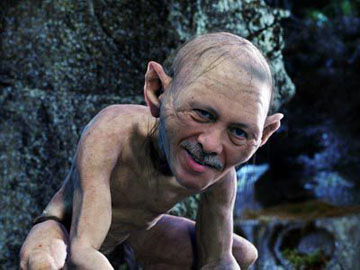
Izzard: The Sad Face of Fractured Remain Campaign

Amongst the disinformation and fearful headlines spouted from the morose Britain Stronger in Europe campaign we also have Eddie Izzard, a dilettante luvvie political dabberer, and confirmed champagne socialist media whore only concerned for shallow trivial EU arguments.

What is Izzard doing here, apart from confusing the issue of EU referendum?

Auntie Haw Haw

Izzie, is an ignorant fool, he is uninformed and doesn’t even know he is surreptitiously working for Goldman Sachs and JP Morgan, his naive inconsequential smatterings are bereft of fact only fuelled by flappy worthless emotion.

To stamp on Izzard with a shod foot would be a nicety he would probably enjoy it such are the pithy orchestrations displayed by this flapping freakshow auntie and his moribund pinko commie message.

Shut Up!

Brexit: Control Over Trade Policy Will Create 284,000 Jobs.


The EU’s failure to conclude just five trade agreements with the United States, Japan, ASEAN, India and Mercosur has, according to the European Commission’s own figures, cost the UK 284,341 jobs.


The UK will be able to strike more valuable free trade deals than the EU has done to date.

The aggregate GDP of all the countries with which the EU had a trade agreement in force in January 2014 was $7.7 trillion. By contrast, the aggregate GDP of all countries with which Chile had trade agreements was $58.3 trillion. The figure for South Korea was $40.8 trillion and that for Switzerland was $39.8 trillion.


It is possible to strike free trade deals very quickly.

Oxford Economics has said that ‘an analysis of regional trade deals conducted over the past 20 years found an average duration of 28 months’.

There are many examples: the US-Australia free trade agreement (FTA) was concluded in less than two years; the Switzerland-China FTA was negotiated in a little over two years; and the US-Canada FTA was negotiated in less than two years.


It is in the commercial interests of the EU to strike a deal.

In 2015, the EU sold £67.8 billion more in goods and services to the UK than the UK sold to the EU.

The UK is the EU’s biggest single export market, bigger even than the United States.


Output has been growing, with production output up 2.0% in the last month. Manufacturing output is up by 2.3%, driven by higher exports.

The ONS states that: ‘Total production output is estimated to have increased by 2.0% in April 2016 compared with March 2016′.

Manufacturing output ‘increased by 2.3%, the largest rise since July 2012’. ‘Anecdotal evidence suggested increased exports as a contributing factor’. This suggests that companies are continuing to engage in international commerce.

The ONS states that ‘Total production output is estimated to have increased by 1.6% in April 2016 compared with April 2015′.

Independent studies have found that:  Over the years 1993 to 2011, the first 19 years of the Single Market, exports of goods from 27 non-member countries to EU members have grown at a faster rate than those of the UK and over the 11 years for which we have reasonable data, the services exports of 21 non-members have also done so’.

Latest NHS Waiting Time Statistics Show We Must Vote Leave

0


Commenting on the release of the latest NHS waiting time statistics, doctor and ex-minister Andrew Murrison MP said:


‘Our NHS is under pressure from increasing demand and the fact that we have finite resources. If we Vote Leave we can spend some of the money we set aside for Brussels on the NHS. The extra £100 million a week for the NHS after we Vote Leave would be a big boost, meaning more doctors, more nurses and more hospital beds. Outside of the EU we can spend our money on our priorities and take back control of our borders, economy and democracy. To do that we need to Vote Leave on 23 June.”


  • The statistics show significant increases in NHS waiting times in England.
  • If we Vote Leave, we will spend an additional £100 million per week on the NHS, paid for by our savings from the EU budget.
  • The NHS is under pressure due to uncontrolled migration. ‘Rising demand’ is one of the main reasons for the NHS’s perilous financial situation.


nhs corridor

The statistics show significant increases in NHS waiting times in England.


In April 2016, there were 3.603 million patients waiting for treatment, up from 3.503 million in March 2016. It is up from 3.023 million in April 2015. This is likely an underestimate: ‘Factoring in estimates based on the latest data submitted for each missing trust suggests the total number of RTT patients waiting to start treatment at the end of April 2016 may have been just under 3.8 million patients‘.

Waiting times have increased over the last year. The median time for patients waiting to start treatment was 6.6 weeks, up from 5.9 weeks in April 2015.

In April 2016, 302,908 patients were waiting for treatment for longer than 18 weeks, up from 201,424 in April 2015. This is an increase of 50.4%. This is contrary to patients’ rights. The Department of Health states that: ‘Patients have a right to start consultant-led treatment within 18 weeks of referral or request an offer of alternative providers that can start their treatment sooner. The NHS must take all reasonable steps to meet patients’ requests’.


If we Vote Leave, we will spend an additional £100 million per week on the NHS, paid for by our savings from the EU budget.


The NHS is in need of more money. In 2015-2016, NHS providers in England recorded a deficit of £2.45 billion.

If we Vote Leave, we will spend an additional £100 million per week on the NHS by 2020, paid for by ending the UK’s £19.1 billion contribution to the EU budget each year. Leading Vote Leave figures Michael Gove, Boris Johnson and Gisela Stuart have all committed to do this.

This will mean the NHS will only have to make 1.5%, not 2% net efficiency savings as planned in the Five Year Forward View, much closer to the NHS’s historical productivity improvements.


The NHS is under pressure due to uncontrolled migration. ‘Rising demand’ is one of the main reasons for the NHS’s perilous financial situation.


In the financial year 2015-2016, NHS providers experienced a record NHS deficit of £2.45 billion. NHS Improvement has stated: ‘Rising demand, especially for urgent and emergency care… continued to add significant cost pressures to the sector’.

The Chief Executive of NHS England, Simon Stevens, has admitted this is the case, stating: ‘Demand is continuing to rise. The NHS is looking after more patients and looking after them better each year. And we’re doing that in the context of a – five years into the deepest slowdown in funding growth that we’ve had because of the need to dig ourselves out of the effects of the recession for the British economy’.

This puts pressure on accident and emergency services: ‘The number of patients who waited longer than four hours on a trolley for a bed in 2015/16 increased by 26.3% to 387,809, compared to 2014/15’.

Between 2005 and 2014, there were 475,935 live births to mothers who were EU citizens.  The number of births to EU mothers rose from 24,942 in 2005 to 64,067 in 2014, an increase of 157%). This is the equivalent of adding a city the size of Manchester to the UK population (population is 503,100) . With the estimated cost of maternity care in the NHS being £2,800, the cost of providing NHS services to those families could be over £1.33bn.

Remain Campaign Comments on Northern Ireland Are the Height of Irresponsibility

0


Responding to the appearance of Sir John Major & Tony Blair in Northern Ireland tomorrow, Theresa Villiers MP said:


‘Support for the peace process in Northern Ireland is rock solid. The vast majority of people in Northern Ireland believe their future should only ever be determined by democracy and consent and not by violence. I very much hope figures who played such an important role in the peace process would not suggest that a Brexit vote would weaken that resolve in any way. Whatever the result of the referendum, Northern Ireland is not going back to the troubles of its past and to suggest otherwise would be highly irresponsible.’

‘Northern Ireland, like the rest of the UK, will flourish outside the EU. We can keep an open land border. The Common Travel Area between the UK and Ireland has existed for nearly 100 years since the creation of the Irish state in the 1920s. It will continue if we vote to leave. There would be risks to manage but they are not significantly more serious than risks that are already managed effectively today through bilateral cooperation between the UK and Ireland.

‘The idea that thousands of non-Irish EU citizens would suddenly start crossing the border is far-fetched. If we vote leave and change the rules on free movement for non-Irish EU citizens, then if they come to the UK across our land border without legal clearance to do so, they would not be able to work, or claim benefits, or rent a home, or open a bank account and could ultimately be deported. There are plenty of mechanisms we can use to control immigration and deal with risks around illegal migration which do not involve physical checks at our land border. The reality is that there has never been a genuinely “hard border” enforced between the UK and Ireland and there would not be one if we leave.’


  • Leaving the EU would not endanger the peace process. The pro-EU Northern Ireland Minister has said ‘I just do not think it would be put at risk if we left the EU’.
  • The passport free Common Travel Area has existed since 1923. It is enshrined in UK law and will continue if we Vote Leave. The Irish Ambassador has said it would ‘still apply fully’.
  • It is possible to be in the Common Travel Area without accepting the free movement of persons.
  • The Republic of Ireland will not be used as a backdoor for migrants to enter the UK if we Vote Leave.
  • John Major, Tony Blair and Alex Salmond all have a history of disastrous judgments on the EU. 


Leaving the EU would not endanger the peace process. The pro-EU Northern Ireland Minister has said ‘I just do not think it would be put at risk if we left the EU’.

It is scaremongering to suggest that the Peace Process would be put at risk if we Vote Leave.

The Good Friday Agreement was a bilateral treaty between the Government of Ireland and Her Majesty’s Government. It did not depend on EU membership and would not be put at risk by the UK leaving the EU.

The Northern Ireland Minister, Ben Wallace MP (who is campaigning to remain in the EU), has said: ‘I just do not think it would be put at risk if we left the EU’.

The Irish Ambassador to London, Daniel Mulhall, has said: ‘we would continue to work together with the UK with regard to Northern Ireland. The provisions of the Good Friday Agreement would still apply fully‘.

The main international influence on the peace process was the United States, not the EU.


The passport free Common Travel Area has existed since 1923. It is enshrined in UK law and will continue if we Vote Leave. The Irish Ambassador has said it would ‘still apply fully’.

As the then Irish Minister of Justice, Kevin O’Higgins said in 1925, ‘there are no passport regulations as between this country and England [sic]. Consequently a person landing in England can come freely here, and a person landing here can go there without the necessity of procuring a passport’.

The Irish Ambassador to London, Daniel Mulhall, has said ‘the arrangements under the Common Travel Area’ would ‘still apply fully’ if the UK voted to leave.

The Immigration Act 1971 provides: ‘Arrival in and departure from the United Kingdom on a local journey from or to … the Republic of Ireland shall not be subject to control under this Act, nor shall a person require leave to enter the United Kingdom on so arriving… and in this Act the United Kingdom and [the Republic of Ireland] are collectively referred to as “the common travel area”‘.


It is possible to be in the Common Travel Area without accepting the free movement of persons.

The Isle of Man and the Channel Islands are part of the Common Travel Area.

While the Channel Islands and the Isle of Man participate in the free movement of goods, persons in the Channel Islands do not ‘benefit from Community provisions relating to the free movement of persons and services’. The islands are ‘outside of the European Union for most purposes’.


The Republic of Ireland will not be used as a backdoor for migrants to enter the UK if we Vote Leave.

The Irish Republic has an opt-out from the Schengen borderless area. Migrants will have to pass through either UK or Irish border controls before entering the UK.

Ireland has an opt-out from the EU’s common immigration policy in respect of third country nationals. Third country nationals without a right of residence in Ireland will not be able to enter the UK.

Prospects of mass movements into the UK via Ireland are speculative. In the year ending 2015, just 21,700 EU citizens migrated to the Republic of Ireland.

The incentive for EU migration to the UK via Ireland will substantially diminish after a leave vote. The vast majority of EU citizens who move to the UK enter the UK in order to work. After free movement ceased to apply to the UK, however, many seeking to enter the UK will no longer have the right to work. Immigration powers would therefore apply:

An employer employing a person without a right to work in the UK is liable to a civil penalty of £20,000.

It is a criminal offence to employ knowingly a person subject to immigration control.

Illegal working itself has also just been made a criminal offence.

In addition, persons without the right to remain will be unable to rent housing or open a bank account.

major

Sir John Major’s record on the EU


  • Sir John Major supported the ERM. This was a disaster for the UK.
  • Sir John Major claimed he ‘addressed and corrected’ the EU’s ‘centralising tendency’ in 1992. He has since admitted the EU has ‘bypassed’ what he negotiated.
  • Sir John Major refused to rule out joining the single currency. This would have been a disaster.
  • Sir John Major’s Government was wrong about how the European Union would develop.


John Major supported the ERM. This was a disaster for the UK.

In October 1990, when John Major was Chancellor of the Exchequer, the UK joined the ERM. The ERM caused interest rates to rise to 15 per cent, led to millions of households going into negative equity, and pushed unemployment up to 2.9 million in 1993.

Major insisted remaining in the ERM for as long as possible at enormous cost to the UK economy. In September 1992, he claimed in a speech in Glasgow that: ‘The soft option, the devaluer’s option, the inflationary option, would be a betrayal of our future. And it is not the Government’s policy’ (The Guardian, 28 September 1992).

The resulting ‘Black Wednesday‘ debacle that resulted from Britain’s membership of the ERM cost the UK economy £3.3 billion, according to HM Treasury analysis.

The UK economy recovered rapidly after leaving the ERM.


Sir John Major claimed he ‘addressed and corrected’ the EU’s ‘centralising tendency’ in 1992. He has since admitted the EU has ‘bypassed’ what he negotiated.

John Major claimed that ‘the very centralising tendency that many are so worried about was addressed and corrected at Maastricht‘.

These claims have proven to be false. Since the Maastricht Treaty was ratified, there have been three other major Treaty changes – all of which passed significant power to the EU institutions.

Sir John Major has since admitted that the ‘subsidiarity safeguard‘ he had negotiated ‘was bypassed’ by the EU.


Sir John Major refused to rule out joining the single currency. This would have been a disaster.


  • Sir John Major initially ruled out a referendum on joining the single currency and later refused to rule out scrapping the pound, with the 1997 Conservative Manifesto stating ‘we believe it is in our national interest to keep our options open to take a decision on a single currency’.


Sir John Major’s Government was wrong about how the European Union would develop.

It claimed subsidiarity mattered. In March 1993, the Foreign Secretary, Douglas Hurd, stated that ‘the principle of subsidiarity is now for the first time enshrined in the treaty as a substantial and legally-binding decision’ and that ‘the court is there and it will be the legal underpinning for subsidiarity’. The European Court of Justice has never struck down an EU law for breach of the principle of subsidiarity and it is unlikely that it will ever to do so. In December 2015, Advocate General Juliane Kokott said that EU legislation could comply with the principle of subsidiarity even if it merely recited an ’empty formula’ to the effect that the matter was better dealt with at EU-level.

It claimed EU citizenship would be benign. In June 1993, the Lord Chancellor, Lord Mackay of Clashfern, said: ‘Union citizenship does not override national citizenship … The concept of Union citizenship is benign’. In September 2001, the European Court of Justice declared that ‘Union citizenship is destined to be the fundamental status of nationals of the Member States’.

It claimed free movement would not apply to third country nationals. In July 1993, Earl Ferrers, a Government Minister, said: ‘The free movement provisions of the Treaty of Rome apply, in our view, only to European Community nationals’. Directive 2004/38/EC provides that free movement applies to the family member members of EU citizens, regardless of whether or not they are EU citizens themselves.

It claimed we would remain in control of our borders. In 1995, Major told the House of Commons that ‘we shall retain our border controls’.  In December 2014, the European Court of Justice (ECJ) in Luxembourg decided that the UK could not require third country nationals who are married to EU citizens to obtain a permit from UK authorities to be able to enter the UK. The British Government is now instead obliged in principle to accept as valid permits issued by other EU countries. This is despite the fact that a High Court Judge had found that forgery of such permits was ‘systemic’.


blair evil eye1

Tony Blair’s record on the EU


  • Tony Blair led the campaign to scrap the pound. This would have been a disaster.
  • Blair continues to support Turkish accession.
  • Blair has said there should be no limit to migration, even if it reached 1 million a year.
  • Blair consistently gave up control to Brussels, claiming it was ‘utterly sensible’ to scrap British vetoes.
  • Blair falsely claimed that the UK was exempt from the Charter of Fundamental Rights. His deception enabled the European Court to take control of the security services.
  • Blair broke numerous promises on the EU, including that he would not diminish the size of the rebate and that there would be a referendum on the European Constitution.
  • Blair is in the pay of a major donor to the IN campaign which caused the financial crisis.


Blair led the campaign to scrap the pound. This would have been a disaster.

In 2002, Tony Blair claimed it ‘would be a betrayal of our national interest’ not to join the euro. Blair is using the same arguments to stay in the EU that he used to make to join the euro. Today, he claims that ‘it would be a betrayal of the British interest’ to leave the EU.

Blair told The Andrew Marr Show that: ‘We were never in favour of Britain joining the euro’. This is false. In 2000, Tony Blair said: ‘our intention is clear. Britain should join a successful single currency… a successful single currency can bring clear benefits: in currency stability, in lower transaction costs, in transparency, trade, investment and jobs… The single currency can provide macro-economic stability’.

In 2011, he claimed the case for the UK to scrap the pound could become ‘compelling’. In 2012, he claimed the country faced ‘a very interesting choice’ about whether the pound should be scrapped.


Blair has said there should be no limit to migration, even if it reached 1 million a year.

When asked whether there should be any limit to EU migration, ‘If it was half a million next year, a million the year after‘, Blair refused to contemplate abrogating free movement.

He advocated an open door to Eastern Europe, claiming: ‘those who say migration is out of control… are simply wrong’.

He accused those who warned of a flow into Britain of propagating ‘scare stories about the movement of workers from Eastern Europe’.


Blair continues to support Turkish accession.

During the campaign, Blair has said he will ‘always will be an advocate’ of Turkey joining the EU.

In 2002, Blair said: ‘I think this is a very important and exciting moment for the European Union and for Turkey. I believe we have an historic opportunity to set a firm date for the opening of accession negotiations for Turkey, and to send the clearest possible signal that the European Union wants Turkey inside the European family as a full partner’.

Blair has said: ‘I sincerely believe that EU membership is Turkey’s future. We shall work towards achieving that’.

In 2006, he affirmed that: ‘I support Turkish accession to the European Union, we have been working very hard with the Turkish government to achieve this’.


Blair consistently gave up control to Brussels, claiming it was ‘utterly sensible’ to scrap British vetoes.


Tony Blair signed the Amsterdam, Nice and Lisbon Treaties, which transferred control to the EU institutions and the European Court from the British Parliament and the British courts.

Blair was utterly indifferent about surrendering the UK’s veto in countless areas, claiming it was ‘entirely sensible’ for the veto to be scrapped. The UK has been outvoted on all 72 occasions that it has opposed a measure in the EU Council, with the rate of defeat accelerating since the Lisbon Treaty which Blair agreed to, costing the UK £2.4 billion each year.


Blair falsely claimed that the UK was exempt from the Charter of Fundamental Rights. His deception enabled the European Court to take control of the security services.


  • Tony Blair claimed he had achieved an opt out at the time of Lisbon. Blair told the House of Commons’ Liaison Committee that ‘we will not accept a treaty that allows the Charter of Fundamental Rights to change UK law in any way’. He also told the House of Commons that: ‘it is absolutely clear that we have an opt-out from … the charter’.


The European Court has made clear there is no opt out. The European Court has made clear the Protocol negotiated by Blair is worthless, ruling that it ‘does not intend to exempt… the United Kingdom from the obligation to comply with the provisions of the Charter or to prevent a [UK] court … from ensuring compliance with those provisions’. The UK Supreme Court has since confirmed the Charter has ‘direct effect‘ in UK law.

The Charter has allowed the European Court to take control of our security services. Because of judgements of the European Court, the Divisional Court in London annulled the Data Retention and Investigatory Powers Act 2014 on the ground it was inconsistent with the Charter. The Home Secretary, Theresa May, had described the legislation as ‘crucial to fighting crime, protecting children, and combating terrorism’. She argued that without the legislation, ‘we run the risk that murderers will not be caught, terrorist plots will go undetected, drug traffickers will go unchallenged, child abusers will not be stopped, and slave drivers will continue their appalling trade in human beings’. The law has now been referred to the European Court for a decision as to whether it will be allowed.


Blair broke numerous promises on the EU, including that he would not diminish the size of the rebate and that there would be a referendum on the European Constitution.

No reduction in the rebate. In 2005, Tony Blair claimed that: ‘the UK rebate will remain and we will not negotiate it away. Period’. A few weeks later, he said that the rebate was ‘an anomaly that has to go‘. In December of that year, his Government agreed to give up a large part of the rebate during negotiations on a new EU budget deal. This has cost the UK over £10.4 billion.

No European Constitution without a referendum. The 2005 Labour Party Manifesto promised a referendum on the Constitution. The Constitution was revived under the guise of the Lisbon Treaty, which Blair agreed to without a referendum. This was also in breach of a clear promise Blair made that, if the Constitutional Treaty was rejected, that would be it: ‘What you cannot do is have a situation where you get a rejection of the treaty and bring it back with a few amendments and say, “Have another go”. You cannot do that’.

No European Court control over justice and home affairs. Blair claimed that cooperation in justice and home affairs ‘will remain intergovernmental’ and that ‘the European Court will have no authority to decide cases brought in United Kingdom courts on those issues’. Under changes as a result of the Lisbon Treaty (which Blair agreed to), the European Court acquired jurisdiction over justice and home affairs. As a result of this, the European Court is now in control of extradition, child protection and victims’ rights .

No legal personality for the EU. In 1997, Tony Blair claimed that he would make sure that the EU would not gain full legal personality, saying: ‘Others wanted to give the European Union explicit legal personality across all the pillars of the treaty. At our insistence, that was removed’. He agreed to this as part of the Lisbon Treaty and the EU Treaties now explicitly state that: ‘the Union shall have legal personality’.

No more institutional debates. Following the signature of the Treaty of Amsterdam in 1997, Tony Blair claimed that ‘the successful conclusion of the intergovernmental conference enables Europe to put institutional wrangles behind it and to move on to the issues that affect people’s daily lives’. This was misleading. The EU spent the next decade tied up in institutional debates, over the Nice Treaty, the failed Constitution and subsequently the Lisbon Treaty, all of which Blair supported.


Blair is in the pay of a major donor to the IN campaign which caused the financial crisis.


Blair has been paid around £2 million per year as a part time adviser to JPMorgan.

JP Morgan has given £500,000 to the IN campaign.

In 2015, JPMorgan spent between €1,250,000 and €1,499,999 lobbying the European Commission.

In November 2013, JPMorgan reached a $13 billion settlement with the US Department of Justice ‘for Misleading Investors About Securities Containing Toxic Mortgages’. ‘As part of the settlement, JPMorgan acknowledged it made serious misrepresentations to the public’. The United States Attorney General Eric Holder said: ‘the conduct uncovered in this investigation helped sow the seeds of the mortgage meltdown’, and said JPMorgan had ‘knowingly bundle[d] toxic loans and [sold] them to unsuspecting investors’.

EU TV Debate: Cameron Called for Honesty Then Told Five Outright Lies in 30 Minutes

0

Responding to David Cameron’s appearance in the ITV debate, Vote Leave Chief Executive Matthew Elliott said:

‘Earlier David Cameron called for more honesty in the EU debate but he told five outright lies.

‘He lied about being able to remove EU jobseekers without a job after six months, our ability to stop foreign criminals walking into the UK, our ability to deport foreign criminals, his pledge to restrict benefits and how much his government is investing in the NHS.

‘He still claims that Turkey won’t join the EU while his Government is spending £1 billion to help speed up their membership. The truth is you can’t trust anything David Cameron says on the EU. That is why you should Vote Leave on 23 June.’


The myriad of lies and falsities spouted by David Cameron are comprehensively debunked


  • Terrorists. In 2015, the Special Immigration Appeals Commission ruled the UK could not exclude ZZ from the UK because of EU law, despite the fact that he was a suspected terrorist. The Commission concluded that: ‘We are confident that the Appellant was actively involved in the GIA [Algerian Armed Islamic Group], and was so involved well into 1996. He had broad contacts with GIA extremists in Europe. His accounts as to his trips to Europe are untrue. We conclude that his trips to the Continent were as a GIA activist’.

  • Killers. In 1995, Chindamo, who is an Italian citizen, murdered the headteacher Philip Lawrence who went to help a 13-year-old boy who was being attacked. He was sentenced to life imprisonment in 1996. Chinamo was released in 2010 but recalled to prison due to accusations he intimidated and robbed a man at a cash machine, charges of which he was later acquitted. In 2007, Mr Justice Collins, sitting in the Asylum and Immigration Tribunal, ruled that removing Chindamo would be ‘disproportionate’ under EU law‘. David Cameron said that Tribunal’s decision ‘flies in the face of common sense. It is a shining example of what is going wrong in our country. He is someone who has been found guilty of murder and should be deported back to his country… What about the rights of Mrs Lawrence or the victim?’. Cameron said: ‘This does seem to be complete madness‘.

  • Rapists. Mircea Gheorghiu, a Romanian national, entered the UK without leave in January 2007. In November 2007, he was convicted of driving a motor vehicle with excess alcohol, fined and disqualified from driving for 20 months. It later emerged that he had ‘a criminal record in Romania. In 1990 he was convicted of the offence of rape and sentenced to 6 years imprisonment. Between 2001 and March 2002 he was convicted on three occasions of forestry offences, cutting timber without a licence, and received custodial sentences on the last two occasions.’ The Secretary of State removed him from the UK in March 2015. Nonetheless, on 18 November 2015, Mr Justice Blake, sitting in the Upper Tribunal, decided this was unlawful under EU law, ruling Gheorghiu must be ‘reunited with his family as quickly as possible’ and that he was ‘entitled to a permanent residence on his return and the residence card issued to him will reflect that

  • The Government claims that the renegotiation means it will be able to ‘prevent dangerous EU nationals from coming to the UK and make it easier to deport them if they have been living in the UK’. This is false. The renegotiation does not in any way relax the onerous requirements of EU law which prevent the UK deporting dangerous criminals.

  • There is no proposal to amend the Treaties or the 2004 Free Movement Directive. The proposals agreed at the European Council will be contained ‘in a Communication’ to be issued by the European Commission. As the Commission accepts, a ‘Communication is a policy document with no mandatory authority. The Commission takes the initiative of publishing a Communication when it wishes to set out its own thinking on a topical issue. A Communication has no legal effect’.

  • The Government’s proposals will have no legal status and are, in any event, merely restatements of the status quo.


David Cameron is misleading the public when he says he is putting an additional £12 billion into the NHS. This was a lie.

The Government has only committed to spend an additional £8 billion. The Chancellor of the Exchequer, George Osborne, said: ‘we will commit to a minimum real-terms increase in NHS funding of £8bn in the next five years’.

The Government will not even meet this target. In December 2015, the Nuffield Trust, the Health Foundation and the King’s Fund said that health spending in England will rise by just £4.5 billion in real terms between 2015/2016 and 2020/2021. This is because health spending not included in NHS England’s budget will fall by £3.6 billion, despite NHS England’s budget being protected. The organisations stated the real terms increase was ‘clearly much less than was expected when the NHS settlement was announced‘.


David Cameron claimed he got what he wanted on benefits. This was a lie.

The 2015 Conservative Manifesto stated ‘We will insist that EU migrants who want to claim tax credits and child benefit must live here and contribute to our country for a minimum of four years’. Migrants will still be able to claim benefits during their first four years in the UK.

The Conservative Manifesto promised: ‘If an EU migrant’s child is living abroad, then they should receive no child benefit or child tax credit, no matter how long they have worked in the UK and no matter how much tax they have paid’. The export of child benefit will continue after his deal.


David Cameron claimed EU jobseekers must leave after six months. This was a lie.

The Prime Minister promised that all jobseekers would be removed after six months and has claimed this has already been achieved. In 2014, David Cameron promised that: ‘[I]f an EU jobseeker has not found work within six months, they will be required to leave’. In his Chatham House speech in November 2015, the Prime Minister said that this pledge had ‘already been achieved’.

The EU Treaties forbid the removal of all jobseekers after six months. In 1991, the European Court of Justice ruled that the Treaties forbid the removal of jobseekers from another EU member state regardless of the duration of their stay if ‘the person concerned provides evidence that he is continuing to seek employment and that he has genuine chances of being engaged’.

The Free Movement Directive forbids the removal of all jobseekers after six months. The Free Movement Directive provides that: ‘an expulsion measure may in no case be adopted against Union citizens or their family members if… the Union citizens entered the territory of the host Member State in order to seek employment. In this case, the Union citizens and their family members may not be expelled for as long as the Union citizens can provide evidence that they are continuing to seek employment and that they have a genuine chance of being engaged’.

The Government admitted in December that many jobseekers could remain for longer than six months. The Home Office Minister, James Brokenshire, admitted in December that some EU migrants can ‘keep the status of jobseeker for longer than six months’.

There is no mechanism for monitoring whether or not jobseekers remain in the UK for over six months. In any event, EU law forbids systematic verification of whether EU citizens are lawfully resident in the UK. It states that ‘this verification shall not be carried out systematically’.


David Cameron claimed he had a deal to deport foreign criminals. This is a lie.

We are not able to deport EU criminals because of EU free movement rules. David Cameron was actually referring to the EU’s prisoner transfer agreement – this has been a failure. The number of foreign nationals offenders from the EU has increased since it came into force. This costs us over £150 million each year.

In November 2008, the EU established a prisoner transfer agreement, which allows for the transfer of prisoners to serve their sentences in their country of nationality without their consent. This entered into force in December 2011, but is yet to enter into force in respect of transfers to certain member states such as Poland. The Government has claimed that: ‘the EU PTA will result in a significant increase in the number of prisoners transferred’.

Just 73 prisoners have been transferred under this agreement according to the Government.

The number of FNOs who are EU citizens has increased from 3,427 on 31 December 2010 to 4,203 on 31 March 2016, an increase of 22.6%, or 776 prisoners. The proportion of FNOs who are EU citizens has increased from 31.54% on 31 December 2010 to 42.15% on 31 March 2016, an increase of 34%..

The cost of providing 4,203 prison places to house them is £152.4 million each year.


Cameron claims he got a substantial renegotiation. No powers will be brought back by his deal.

The Decision states that: ‘The competences conferred by the Member States on the Union can be modified, whether to increase or reduce them, only through a revision of the Treaties with the agreement of all Member States.’ Since there will be no Treaty, no powers will be returned to the UK.

Before the agreement, the EU had 28 legislative competences over the UK. Today, it still possesses 28.

The Decision states that it respects ‘the powers of the institutions of the Union, including throughout the legislative and budgetary procedures’. This makes clear the Decision will not affect the EU’s powers to legislate for the UK or to demand £350 million per week from Britain.


David Cameron’s deal failed to return powers. These include:


  • Social and employment legislation. David Cameron once said that ‘it will be a top priority for the next Conservative government to restore social and employment legislation to national control’. This deal does nothing to return control of social and employment legislation.

  • The Charter of Fundamental Rights. David Cameron once promised ‘a complete opt-out from the Charter of Fundamental Rights’. The last Conservative Manifesto promised to ‘make our own Supreme Court the ultimate arbiter of human rights matters in the UK’. None of this is possible while the Charter remains in force. This deal does not end the Charter’s application in the UK.

  • Breaking the link between British courts and Strasbourg. The last Conservative Manifesto promised to ‘break the formal link between British courts and the European Court of Human Rights’. Yet the contents of the European Convention on Human Rights (as interpreted the European Court of Human Rights) will continue to constitute ‘general principles’ of EU law‘.

  • Ending the European Court’s control of criminal law. David Cameron once said his proposals involved ‘limiting the European Court of Justice’s jurisdiction over criminal law to its pre-Lisbon level’. The Home Secretary promised that the Prime Minister ‘must look again at this matter in our renegotiations with the European Union before the referendum’. This has not happened.

  • Ending the EU’s ability to regulate working hours in the NHS. In his Bloomberg Speech, the Prime Minister said: ‘it is neither right nor necessary to claim that the integrity of the single market, or full membership of the European Union requires the working hours of British hospital doctors to be set in Brussels irrespective of the views of British parliamentarians and practitioners’. This has not happened.


Cameron claimed GDP was the key measure of political success. He has previously rejected this view.

In 2010, Cameron has said ‘GDP is an incomplete way of measuring a country’s progress‘.


The UK has no influence in the EU institutions which are unaccountable to the British public.

Every time the UK has voted against a measure in the Council of Ministers, it has been outvoted. This is happening with increased frequency: of the UK’s 72 defeats, over half (40) have occurred in the last five years.

The UK’s representatives are often outvoted in the European Parliament as well. The majority of UK MEPs voted against 576 EU proposals between 2009 and 2014, but 485 still passed.

The UK has lost 101 cases in the European Court since it joined the then European Economic Community in 1973, a failure rate of 77.1%. The current Government has lost 16 out of 20 cases in the European Court, a failure rate of 80%.

Research for the House of Commons Library shows 60% of UK law is made in Brussels.


An Australian-style points system will make it easier to recruit skilled staff.

11% of doctors are from the European Economic Area, whereas 25.7%, or 70,404 are from the rest of the world. This is despite the stringent restrictions that apply to migrants from outside the EU coming to the UK.

If we Vote Leave, we can prioritise those with the skills our NHS needs and we can end the open door to the rest of Europe.


The NHS is under major pressure from immigration.

In the financial year 2015-2016, NHS providers experienced a record NHS deficit of £2.45 billion. NHS Improvement has stated: ‘Rising demand, especially for urgent and emergency care… continued to add significant cost pressures to the sector’.

This puts pressure on accident and emergency services: ‘The number of patients who waited longer than four hours on a trolley for a bed in 2015/16 increased by 26.3% to 387,809, compared to 2014/15’.

In the year ending September 2015, 172,000 persons (net) came to UK from the EU.

Between 2005 and 2014, there were 475,935 live births to mothers who were EU citizens.  The number of births to EU mothers rose from 24,942 in 2005 to 64,067 in 2014, an increase of 157%. This is the equivalent of adding a city the size of Manchester to the UK population. With the estimated cost of maternity care in the NHS being £2,800, the cost of providing NHS services to those families could be over £1.33bn.

GP registrations have risen by a million and a half over the last three years. In April 2013, there were 56.0 million patients registered with a general practice. In January 2016, there were 57.5 million patients registered with a general practice.

The number of A&E attendances has increased from 14.0 million in 2002-2003 to 22.4 million in 2014-2015, an increase of 59.16% in the last thirteen years.


David Cameron used to admit you could control immigration without harming the economy. He was right.

In 2011, Cameron said: ‘So what I’m trying to say today is, you know, those who say you can’t control immigration without damaging the economy, that this is a forlorn hope, I really believe that’s wrong. We can control immigration. We can do it in a way that doesn’t damage the economy’.

A report for the Institute and Faculty of Actuaries shows that introducing an Australian-style points system and reducing migration would bring billions in additional revenue and lead to a higher state pension.


Cameron has broken his promise to fix free movement and to cut migration to the tens of thousands. He failed.

In his 2014 conference speech, Cameron said: ‘Numbers that have increased faster than we in this country wanted at a level that was too much for our communities, for our labour markets. All of this has to change – and it will be at the very heart of my renegotiation strategy for Europe.

The 2010 Conservative Manifesto promised that ‘we will take steps to take net migration back to the levels of the 1990s – tens of thousands a year, not hundreds of thousands’.

The 2015 Conservative Manifesto promised to ‘keep our ambition of delivering annual net migration in the tens of thousands, not the hundreds of thousands’.

In 2015 alone, 270,000 persons came to the UK from the EU. This is the equivalent of a city the size of Newcastle. This is up from 264,000 in 2014. In the same year, net migration from the EU was 184,000.


EU migrants can come without a job offer, despite David Cameron’s promises he would end this.

As early as 1991, the European Court held that the ‘Treaty entails the right for nationals of Member States to move freely within the territory of the other Member States and to stay there for the purposes of seeking employment.

This is still the case – in the last year alone 77,000 EU migrants came to the UK looking for a job – despite the PM’s promise in 2014 to stop this. In November 2014, the Prime Minister, David Cameron, promised that ‘we want EU jobseekers to have a job offer before they come here… So let’s be clear what all these changes taken together will mean. EU migrants should have a job offer before they come here’.


Cameron claimed that proposals on ‘ever closer union’ will have an impact. This is wrong.

The UK’s former Advocate General in the European Court, Professor Sir Francis Jacobs QC, has said the phrase ‘does not create rights or obligations. It does not impose obligations on member states’ and that there is ‘very little basis’ for the view it has been used in integrationist judgments of the European Court. Removing the phrase will have no impact on the European Court and will not stop further European integration.

Redwood: This Alarmist Rhetoric is Ill Befitting of the Chancellor


Commenting on the Chancellor’s reaction to movements in the foreign exchange markets, John Redwood MP said:


‘This alarmist rhetoric is ill befitting of the Chancellor – and betrays a growing desperation in Number 10.

‘Any serious economist will tell you that the pound is up against the dollar since February, and the UK’s foreign exchange reserves have increased this year.

‘We are the fifth largest economy in the world, and will fare perfectly well outside of the EU – as the Prime Minister himself acknowledged. In fact, the economic health of this country will increase when we detach ourselves from the perilous state of the Eurozone.’


  • Sterling is higher against the dollar than when the referendum was called.

  • The UK’s foreign exchange reserves are increasing..

  • The Governor of the Bank of England has admitted the risks from China are greater and that there are risks to remaining in the EU.

  • The Prime Minister has acknowledged the UK could succeed outside the EU.


Sterling is higher against the dollar than when the referendum was called.

Sterling is currently trading at 1.4591$/£, up from 1.4406$/£ on 19 February.


The UK’s foreign exchange reserves are increasing.

The UK Government’s international reserves in May 2016 were $140.0 billion, up from $130.4 billion in December. In May 2015, they were $122.4 billion.


The Governor of the Bank of England has admitted the risks from China are greater and that there are risks to remaining in the EU.

The Governor of the Bank of England, Dr Mark Carney, has said: ‘In my judgement, the global risks, including from China, are bigger than the domestic risks’.

The Governor has said: ‘we do think that there are risks of remaining in the European Union’, and that these manifested themselves ‘in particular, in relation to the development of the euro area. The Governor affirmed this statement, noting: ‘UK membership of the European Union brings risks‘.

The Governor assessed the chance of a fiscal union being created in the Eurozone: as ‘less than 5’ out of ten, suggesting the Euro area will remain permanently unstable.

The former Governor of the Bank of England, Lord King of Lothbury, recently warned that the Eurozone ‘might explode‘.


The Prime Minister has acknowledged the UK could succeed outside the EU.

The Prime Minister has said: ‘I am not saying for one moment that Britain couldn’t survive outside the European Union. Of course we could. We are a great country. The fifth largest economy in the world. The fastest growing economy in the G7 last year. The biggest destination for foreign direct investment in the EU. Our capital city a global icon. The world, literally, speaks our language. Last month the President of China spent a week in this country. This week the Prime Minister of India will visit. They see a great future for this country that we all love. No one doubts that Britain is a proud, successful thriving country. A nation that has turned round its fortunes though [sic] its own efforts. A far cry from the “sick man of Europe” at the time we entered the European Economic Community 4 decades ago. Whether we could be successful outside the European Union – that’s not the question’.

The Prime Minister, David Cameron, has admitted: ‘If we were outside the EU altogether, we’d still be trading with all these European countries, of course we would … Of course the trading would go on … There’s a lot of scaremongering on all sides of this debate. Of course the trading would go on‘.

Even the Head of the IN campaign, Lord Rose of Monewden, has admitted that ‘nothing is going to happen if we come out of Europe… It’s not going to be a step change or somebody’s going to turn the lights out and we’re all suddenly going to find that we can’t go to France, it’s going to be a gentle process’.

Voting to Remain Puts Your Assets At Risk Because UK Will Be Forced to Join Euro

2


If you vote to remain in the EU, not only are you destroying Britain’s sovereignty, freedom and democracy but you are also destroying the Pound Sterling — a stalwart guarantee to stability and wealth.

Because David Cameron gave away Britain’s right to veto EU treaties during his failed negotiation, the UK will be forced to agree with everything the EU says.

We will be forced to capitulate to an EU Army, where our armed forces will be ordered into military situations by a Brussels high command. The EU army which is in the process of formation, was ordered by Jean Claude Juncker, and it is not only a threat to Russia, but to NATO as well.

The Pound Sterling currency will be no more. This will precipitate a drop in the value of property across the country, and in many areas your homes will be practically worthless. Business assets, previously under the pound currency will have lower valuation under the Euro. Wages will drop by over 10% to be more in line with the Continent. The value of shares, and pensions will fall, not only from future eurozone shocks, but because the UK will be tied to a low-growth eurozone, where capital controls are heavily regulated by the European Central Bank. In the event of a downturn, Britain will not have the power to adjust its interest rates, or to implement quantitative easing.

Within the eurozone, there is a risk of bail-ins at any turn. Much like what happened in Southern Cyprus in 2013 where deposits from civilian bank accounts were confiscated by the EU, this same scenario can happen at any time in the eurozone, subject of course to the next economic crisis. When it comes to economic depressions, the EU will not hesitate in raiding bank accounts of citizens to keep the banks afloat.

Let’s say your home is valued at a reasonable £2.5 million today, if the UK remains in the EU and it is forced to join the euro, your home will be worth £450,000 in euros. In real terms, that is a loss of enormous proportions to the value of your property from its pound valuation.

The destruction of Britain hangs on the June 23 date, a day in the diary that could be the deciding factor on whether Britain Lives or Dies. Once Britain is gone, it will be gone forever, there will be no turning back from the EU as it is assimilated into the soviet bloc of already destroyed nations.

The EU’s collectivist strategy is one that entails the loss of private property. To the EU state, the individual should not own property, they should only rent, and the accumulation of equity is discouraged at all cost.

The people who have been duped into supporting ‘remain’, are most probably not fully aware of what they are doing, and have also been tricked by the likes of George Osborne and David Cameron, who are being advised by Blair and Mandelson behind the scenes.

There is only one choice on June 23 and that is to Vote Leave.

Cameron Panics Over Flagging ‘In’ Campaign

0


What the ‘experts’ say on David Cameron’s claims this morning:

On promises of opt outs from Eurozone bailouts. George Osborne has said, when it comes to the EU forcing the UK to bailout Eurozone countries, the Commission has acted ‘in flagrant breach of the agreement we’d all signed up to’ in 2011.

On the rebate. George Osborne has said: ‘It is not a unilateral decision of the British Treasury or the British Government to just say, “This is our rebate. We are entitled to it. Pay up”. The way this works and has always worked is there is a negotiation with the European Commission’.

On the ability to veto future EU Treaties. George Osborne has said: ‘Rather than stand in your way, or veto the Treaty amendments required, we, in Britain, can support you in the Eurozone make the lasting changes that you need to see strengthen the euro. In return, you can help us make the changes we need to safeguard the interests of those economies who are not in the Eurozone’. David Cameron says: ‘we will not stand in the way of those developments’. His renegotiation (which he claims is ‘legally-binding and irreversible’) requires the UK to ‘facilitate’ Eurozone integration.

On an economic shock hitting the public finances. David Cameron has said that trade will continue after we Vote Leave and we should not believe scaremongering: ‘If we were outside the EU altogether, we’d still be trading with all these European countries, of course we would … Of course the trading would go on … There’s a lot of scaremongering on all sides of this debate. Of course the trading would go on’.


Responding to David Cameron’s comments at an impromptu press conference in London this morning, Douglas Carswell MP said:


‘The In campaign is in a blind panic. David Cameron’s renegotiation was a failure – no-one believes he got a deal worth the paper it was written on. Now people are rejecting his campaign of fear. The Prime Minister says we need a proper debate about the facts but he is too chicken to take on anyone from the Vote Leave campaign head-to-head.


‘David Cameron and George Osborne have both admitted that they have given up our right to veto future EU treaties, that the EU has ignored us in the past over bailouts and they know their guarantees on the renegotiation are about as trustworthy as their mate Nick Clegg’s pledges on tuition fees. On 23 June, the public have a choice: if they trust David Cameron and other EU politicians they should vote “in”. If not, they should Vote Leave to take back control. ‘


The six claims made by the Prime Minister: The Facts


  • The Prime Minister claims that the UK is not liable to bailout the Eurozone. The Eurozone has broken its promises before, as Osborne has admitted.
  • The Prime Minister claims the UK rebate is secure. Osborne completely disagrees with him.
  • The Prime Minister claims that we have not given up our right to veto new EU Treaties. His own renegotiation agreement and Chancellor have contradicted this.
  • The Prime Minister claims that the MFF is falling and the UK will block its increase. This is unreal.
  • The Prime Minister claims we can block an EU army. We cannot block EU permanent structured cooperation in defence and Cameron may have promised support for the proposal to Germany as part of his renegotiation.
  • The Prime Minister claimed there would not be an additional £8 billion to spend on public services. There would be £10.6 billion. Not even David Cameron believes there will be an economic shock.


The Prime Minister claims that the UK is not liable to bailout the Eurozone. The Eurozone has broken its promises before, as Osborne has admitted.

Article 122(2) of the Treaty on the Functioning of the EU still allows the Council of Ministers by qualified majority to ‘grant… Union financial assistance’ as part of ad hoc bailouts of the Eurozone.

The European Court has consistently ruled that the establishment of Eurozone-only bailout mechanisms does not affect the EU’s powers under article 122(2). In 2012, it ruled that: ‘The establishment of the ESM [European Stability Mechanism, a eurozone-only fund] does not affect the power of the Union to grant, on the basis of art.122(2) TFEU, ad hoc financial assistance to a Member State when it is found that that Member State is in difficulties or is seriously threatened with severe difficulties caused by natural disasters or exceptional occurrences beyond its control’. In September 2015, the EU’s General Court confirmed that article 122(2) ‘enables the Union to grant ad hoc financial assistance to a Member State‘.

Until this Treaty provision is changed, the UK will be liable to bailout the Eurozone. The Treaties remain unamended.

The Prime Minister previously claimed that he had secured a deal to protect the UK from Eurozone bailouts, saying ‘look too at what we have achieved already. Ending Britain’s obligation to bail-out Eurozone members’.

This promise was quickly broken. On 17 July 2015, contrary to the 2011 agreement, the Commission decided to use the EFSM to grant €7.16 billion in bridging finance to Greece. George Osborne later accepted that the Commission had acted ‘in flagrant breach of the agreement we’d all signed up to’ in 2011‘.

The new deal is in a document that is widely regarded to not be legally binding. The EU has the legal right to force the UK into Eurozone bailouts and will break its promises again.


The Prime Minister claims the UK rebate is secure. Osborne disagrees with him.

Not even George Osborne believes David Cameron. He has said: ‘It is not a unilateral decision of the British Treasury or the British Government to just say, “This is our rebate. We are entitled to it. Pay up”. The way this works and has always worked is there is a negotiation with the European Commission‘.

Osborne has said that: ‘the rebate involves a discussion between member states and the European Commission, which is why we were discussing with the Commission, in parallel, the size of the British rebate… If the rebate was always going to apply, and to such an extent, why did neither he nor any other Labour Member raise the matter?… we were engaged in the intensive discussions to nail down the rebate… it was not clear that the rebate would apply’.

David Cameron previously said the Blair Government’s plan to ‘give up’ the rebate in return for CAP reform ‘is not an unreasonable position’.

The Executive Director of the Britain Stronger in Europe campaign, Will Straw, has previously called for the rebate to be scrapped in its entirety.

The only legal basis for the rebate is a 2014 Council Decision which expires five years after the referendum.


The Prime Minister claims that we have not given up our right to veto new EU Treaties. His own renegotiation agreement and Chancellor have contradicted this.

David Cameron’s renegotiation agreement (which he claims is ‘legally binding and irreversible’) states that: ‘Member States not participating in the further deepening of the economic and monetary union will not create obstacles to but facilitate such further deepening’. It also obliges the UK to ‘refrain from measures which could jeopardise the attainment of the objectives of economic and monetary union.’. This means the UK is committing to support the planned new EU Treaty.

The Five Presidents’ Report contains the Commission’s proposals for this new Treaty. These include more powers over ‘social security systems’, ‘company law’, ‘insolvency law’, ‘property rights’ and taxation.

The Government was clear it gave up the veto in return for other member states agreeing to its renegotiation. George Osborne said: ‘So let me be candid: there is a deal to be done and we can work together. Rather than stand in your way, or veto the Treaty amendments required, we, in Britain, can support you in the Eurozone make the lasting changes that you need to see strengthen the euro. In return, you can help us make the changes we need to safeguard the interests of those economies who are not in the Eurozone’.

David Cameron has said ‘we will not stand in the way of those developments, as long as we can be sure that there are mechanisms in place to ensure that our own interests are fully protected’. He believes this happened during his renegotiation.

There is also no prospect of the UK vetoing accession Treaties, which the Prime Minister and Foreign Office strongly support.


The Prime Minister claims that the MFF is falling and the UK will block its increase. This is unreal.

If we vote to remain we will have lost all of our political capital. It is commonly accepted that the EU has overspent and will need to increase its spending ceilings.

A briefing note for the European Parliament states that ‘implementation of the 2014-2020 MFF has already proven to be challenging, even in its first two years… This raises questions about the functioning of the MFF through to 2020, and, in particular, about the adequacy of the agreed spending ceilings… the budgetary authority has already had to resort to almost all the special, “last-resort”, levers and flexibility instruments provided for in the MFF Regulation’.

British politicians have constantly failed to use the veto on the MFF. In 2005 when Tony Blair went to negotiate the MFF he had a veto and promised to secure fundamental changes. He ended up securing no reform but gave up half of the UK’s rebate.


The Prime Minister claims we can block an EU army. We cannot block EU permanent structured cooperation in defence and Cameron may have promised support for the proposal to Germany as part of his renegotiation.

The EU Treaties allow other member states to establish ‘permanent structured cooperation’ in defence. The UK has no power to block this step which would undermine NATO.

It has also been widely reported that David Cameron did a deal with Germany in which he agreed to support a euro army in return for the EU agreeing to his renegotiation.


The Prime Minister claimed there would not be an additional £8 billion to spend on public services. There would be £10.6 billion. Not even David Cameron believes there will be an economic shock.

He was right. The UK’s net contribution to the EU in 2015 was £10.6 billion, not £8 billion.

Claims about a shock and decline in trade which would hit the public finances have been disputed by David Cameron:  ‘If we were outside the EU altogether, we’d still be trading with all these European countries, of course we would … Of course the trading would go on … There’s a lot of scaremongering on all sides of this debate. Of course the trading would go on’.

Gove and Johnson: The PM Should Debate the Risks of Staying in the EU With Vote Leave

0


In a joint statement they said:


‘The real risk for Britain in this referendum is voting to remain in the EU with a broken single currency and a rogue European Court. The safer choice is voting to leave, so we can take back control of our money, borders, security, trade and taxes.


‘If we needed a reminder of just how risky it is to remain in the EU, the European Court has today issued extraordinary judgements that undermine our ability to deal effectively with asylum.


‘We think that the public deserve the chance to hear these issues debated face-to-face between the Prime Minister and a spokesman for Vote Leave so they can judge for themselves which is the safer choice on 23 June. The Prime Minister was absolutely right to hold this vote and allow Ministers the chance to disagree with him. We hope that in the same spirit he will accept this invitation.’


Rogue European Court is a Threat to Our Borders

0


Commenting on the European Court of Justice’s rulings this morning, Dominic Raab MP said:


‘These rulings by the European Court of Justice threaten the integrity of our borders, and create serious risks for our security. It’s also a stark illustration of our loss of proper democratic control to the EU over a sensitive area of policy.


‘The ruling increases the risk that illegal immigrants will be able to enter the UK, because it weakens the ability of other EU governments to put in place proper checks. The EU is simply not fit for purpose, and the only way to take back control is to Vote Leave on 23 June.’


euchr


  1. The European Court has prevented EU member states in the Schengen Area from imprisoning persons who entered their territory from another EU member illegally without first applying the EU Returns Directive. This gives illegal entrants thirty days to return voluntarily. The decision will help illegal entrants to come to the UK. It could mean illegal migrants are released from detention.
  2. The ruling follows a marked increase in persons using forged documents to enter the UK from the EU.
  3. The European Court has also made it harder to remove asylum seekers to safe third countries within the EU. This will make it more difficult for the UK to remove illegal entrants who have already claimed asylum in another member state.
  4. The European Court also delayed removals of asylum seekers from the UK, on the sole ground their asylum application in another member state was more than three months old.
  5. The European Court has prevented EU member states in the Schengen Area from imprisoning persons who entered their territory from another EU member illegally without first applying the EU Returns Directive. This gives illegal entrants thirty days to return voluntarily. The decision will help illegal entrants to come to the UK. It could mean illegal migrants are released from detention.

Ms Affum, a Ghanaian national, was on a bus from Ghent to London. She was stopped by police officers at the entrance to the Channel Tunnel. ‘After presenting a Belgian passport with the name and photograph of another person, and lacking any other identity or travel document in her name, she was placed in police custody on the ground of illegal entry into French territory’. She was placed in administrative detention with a view to her return to Belgium.

The European Court held it was unlawful to imprison third country nationals for illegal entry unless the return procedure under EU law had been completed. The Court states that: ‘the Member States cannot permit third country nationals in respect of whom the return procedure established by Directive 2008/115 has not yet been completed to be imprisoned merely on account of illegal entry, resulting in an illegal stay’. A return decision in principle ‘shall provide for an appropriate period for voluntary departure of between seven and thirty days’. This will make it easier for illegal entrants to come to the UK.

The court held France could not exclude Ms Afum from this rule because she had entered from another country within the Schengen Area.


The European Court’s ruling follows a marked increase in persons using forged documents to enter the UK from the EU.


The EU’s own Frontex Agency has noted that: ‘The number of persons aiming to get to the UK with fraudulent document significantly increased (+70%) compared to 2014. This trend is mostly attributable to the increasing number of Albanian nationals often misusing Italian and Greek ID cards followed by Ukrainian nationals abusing authentic Polish ID cards’.

EU law permits EU nationals to enter the UK using identity cards, despite the high rate of forgery.


The European Court has also made it harder to remove asylum seekers to safe third countries within the EU. This will make more difficult for the UK to remove illegal entrants who have already claimed asylum in another member state.

Mr Ghezelbash is an Iranian national who applied for asylum in the Netherlands in March 2014, having already made an asylum application in France. The French authorities agreed to take him back under the Dublin Regulation. The UK is bound by the Dublin Regulation.

Mr Ghezelbash requested his application be examined ‘under the extended asylum application procedure in order to take full account of the documents produced by him’.

The Court ruled that the EU ‘did not confine itself… to introducing organisational rules simply governing relations between Member States for the purpose of determining the Member State responsible, but decided to involve asylum seekers in that process by obliging Member States to inform them of the criteria for determining responsibility and to provide them with an opportunity to submit information relevant to the correct interpretation of those criteria, and by conferring on asylum seekers the right to an effective remedy in respect of any transfer decision that may be taken at the conclusion of that process’.

The Court stated that: ‘the EU legislature did not provide for any specific link or, a fortiori, any exclusive link’ between the right to an effective remedy and the possibility that an asylum seeker might be subject to inhuman and degrading treatment.

This means that asylum seekers in the UK can object to being removed to another EU country in which they made an asylum claim, even if there is no risk of them being subject to persecution there.


The European Court also delayed removals of asylum seekers from the UK, on the sole ground their asylum application in another member state was more than three months old.

The Swedish Government attempted to return Mr Karim, a Syrian national, to Slovenia. He applied for asylum in 2014 in Sweden, having already done so in Slovenia in May 2013. The Slovenian authorities agreed to take him back.

The European Court held that because Mr Karim had been outside Slovenia for more than three months, his application in Sweden ‘is to be regarded as a new application giving rise to a new procedure for determining the Member State responsible’ and that ‘the Member State in which the new asylum application was made is required to complete the process for determining the Member State responsible for examining that new application’.

The Court held as a result that Mr Karim could challenge the summary decision to remove him because he had been outside Slovenia for more than three months .

KAjwhriuw024hvjbed2SORH