17.7 C
London
Sunday, April 12, 2026
secret satire society
Home Blog Page 475

Ten Jumps That Are Just Too Difficult!


It’s not only jumping over holes that gets so frustrating.

Jumping up onto ledges, jumping from one rope to another, it doesn’t matter where the jump is, some jumps are just too difficult to master, and they become a case of luck rather than skill!

We’ve put together a list of jumps that we are sure you will find just as infuriating as we do!

1• Ecco the Dolphin
1
This jump from out the water to ledge just mocks you. Honestly though, in our (many!!) years of gaming, Ecco the Dolphin, and Ecco: The Tides of Time are the only two games that truly made me feel like I accomplished something once I beat them.
Old school hard, very frustrating – and these days those emotions would make me completely quit a game. For some reason, this stupid (… but loveable!) game made me keep playing it!

2• Destiny

2a
Destiny – Crota’s End Hard – Hunter Lamp Jump. This jump is proving more and more difficult amongst all Destiny video game players, so we managed to find some tips for you should you still be having trouble…
– Hold down the jump button on both the first and second jump to get the most out of both
- Don’t sprint, just hit forward and jump at the same time
- Time the second jump at the very peak of your first jump
- Have a weapon that gives +2 agility when held.

MIDA Multi-Tool is even better if you have it

. After jumping up to the second level, switch Fleet Footed to Shadowjack.

3• Wreckfest

3
The sandpit track jumps are epic, but this jump is absolutely awesome. It’s something you can mess around with, and is so much fun to do. It’s hard to nail it like a pro, but you can keep going back to attempt it again and again.

Try to get a little bit of a run up and try to make your entry somewhat smooth to make this jump. There is jumps all over the place and mounds around but doing this should give you a general idea of what’s needed to beat this jump.

4• The Crew

4
From Yellowstone down the highway to The Ski Jump, this jump is amazing, but to jump it to perfection you don’t want to hit the snow banks or else you will go flying in the air in the wrong direction. Use nitrous in 5th gear to get the best oomph before take-off.

5• The Crew Wild Run

5
This insane Grand Canyon jump is just mental! You need nitrous for this thing if you are going to do well at this jump, and a drag spec car may come in handy too if you want to pull this off otherwise you might not even make it. To get a gold medal for this jump you will need the fastest car in the game.

6• GTA V – Parachute Jumps

6
There are 13 parachute jumps overall in the game that will become unlocked after completing the first mission. To complete the game 100% you need to complete all the jumps, but that’s a lot easier said than done. Especially with Parachute Jump #10: ‘Carving The Mountain’ in the mix.

Up near Cassidy Creek, this one is the Southwest jump. This is a rather long jump and the hardest of the lot, with a total of seven checkpoints to get through. If you manage to0 get through all the checkpoints and get a decent landing you are looking at around $5000 for a reward. Nice!

7• GTA V – Stunt Jump Richman – Los Santos

7

Not necessarily the hardest jump around, but trying to line your buggy up on the run up to the jump is a challenge within itself. Master this jump to gain more trophy’s and show off exactly what you can achieve.

8• Dennis The Menace

8
Ocean decided that instead of finishing a game because they ran out of budgets, they would be extra harsh and add in a jump at the end of the game that was impossible to beat!! Yes that’s right, there are some evil people living amongst us. If you ever had trouble doing this jump. Well now you know why. On the plus side, this issue only seems to be on the Omega A500 release of the game.

9• Dick Tracey

9
You get to the clue, but actually jumping at it is another mission altogether! You can never tell what is actually a platform and just a part of the background. There is a platform above the clue that you jump on to when attempting to jump into the clue. Could they have put this clue in a more unreachable spot!

10. Trials Fusion

10
Last but not least, it has to be the ultimate jump game around, Trials. If you just love jumps on a motor-crosser then you have got to give Trials a go. There are easy, medium rated, and super hard levels for you to choose from. How can you possibly not make these jumps?

So there you have it, ten of the most difficult video game jumps you are ever likely to face. Do you think you have what it takes to master them all?

sponsored

‘Dodgy Dave’ Says Vote Leave FACTS are ‘Con Trick’

0


Responding to the BSE campaign’s press release accusing Vote Leave of a ‘con trick’, Vote Leave Chief Executive Matthew Elliott said:


‘This is desperate stuff from an increasingly desperate campaign. Number 10 are panicking and are resorting to petty personal attacks because they know they are losing the arguments. People are rejecting their pessimistic campaign of doom in favour of our positive vision for Britain’s future.


‘We have set out a series of pledges about how life will be better if we take back control. We want to invest more in the NHS, create 300,000 jobs through new trade deals, cut energy bills for families and introduce a new Australian style points-based immigration system. The only way to get those changes is to Vote Leave on 23 June.’

dodgy_dave

Defence Minister Says EU Threatens Our National Security

0


Speaking at a debate with Shadow Defence Secretary Emily Thornberry MP at RUSI, Mr Brazier will highlight how it has been NATO – rather than the EU – which has kept the peace in Europe, and that decisions by the European Court, and uncontrolled migration weaken the UK’s ability to keep its citizens safe.


Mr Brazier points out how the forerunner of the current troubled Eurozone, the Latin Monetary Union from 1864 – 1927, set the economic context for the origins of the First World War in the Balkans and Southern Europe:

Prosperity is a friend of peace … poverty drives discontent. So, rather than stabilising Europe, this early attempt at monetary union helped to create the unhappy economic conditions which contributed to Europe’s slide towards the First World War.

It is NATO, underpinned by American military might which has kept Europe from another war after 1945 – not the (then) EEC.


Mr Brazier gives examples of how EU legislation undermines our forces at the working level:

‘If you ask any young officer today, what is the worst part of the job, it is endless paperwork.


‘Military drivers are subject to EU mileage limits… so exercises have to be planned around this constraint… sometimes have to stop altogether if limits are broken.


‘Again…all civilian posts have to be advertised to meet EU regulations. So imagine … the top expert in some branch of aviation technology has just reached his 55th birthday and wants to continue as a civilian.  MoD cannot simply re­employ him. His job has to be advertised, shortlisted and filled… sometimes many months later.’

‘… this reminds us of the way the EU sees defence… as another routine area for exerting bureaucratic control… rather than a vital and risky business.’


He will illustrate how this bureaucratic mind-set has failed in military crises in Europe:

‘First the two stage fallout from the breakup of Yugoslavia. The EU encouraged Bosnia to declare its independence from Yugoslavia. So where was it when the killing started and the Americans… understandably… said it was European business?


‘Slow off the mark while tens of thousands died… NATO had to pick up the pieces.


‘And again…when the West confronted Serbia over Kosovo, and the Serbs drove a million refugees out of their homes… EU countries queued up to say they were unwilling to put boots on the ground.’


Turning to the Ukraine crisis, Mr Brazier will describe how the ‘EU poked the bear in a way that was decidedly risky’:

‘The EU got into the dangerous position of provoking the Russians… and did so without the military means to defend its will…

‘…it was Ukrainian citizens who paid the price in Russia’s brutal reaction … And America was ahead of the EU in applying economic sanctions.’


On the prospect of further European integration in defence, he will say that it undermines NATO and is an unnecessary extra cost when defence spending is low across the EU:

‘This is just one more attempt to set up a structure duplicating NATO. Do we need more headquarters when European defence spending averages only 1.3% of GDP?’… At the height of operations in Afghanistan, many European NATO members were having difficulties deploying just dozens of troops at a time. Many non-NATO EU members barely deployed troops at all. Many of those who went were restricted by caveats, such as no flying at night or no combat patrols beyond a certain distance from a base.


Mr Brazier points to decisions by the European Court of Justice which interfere with the UK’s national security:

‘The ECJ is considering whether our proposal to build a mass surveillance database infringes European privacy rules. So European judges are to decide what information we need to keep our citizens safe. The same court ruled that we could not deport Abu Hamza’s daughter because his baby grandson had EU citizenship.’


Cases like this already threaten the exemption of essential security matters from EU override, and the surrender of our veto over other countries moving ‘forward’ further adds to risks of us being sucked into EU defence structures we oppose:

If the ECJ is willing to consider this case, despite the national veto on security issues, in Article 346, what else may we face cases over? The court has a long history of overriding states’ vital interests even ignoring pledges publicly made – those given to Denmark after their referendum on membership have been overruled 79 times. Who knows what will be next? Perhaps procurement of military equipment… the commission had a go at the Czechs over buying aircraft for operations in Afghanistan. Perhaps failing to participate in new structures set up by other countries within the EU?

‘As a 2014 brief from the EU institute for Security Studies put it ‘It is now crystal clear that Article 346 is neither an automatic exclusion of defence from EU Law, nor a provision limiting EU competence.’


Mr Brazier says that the UK will continue to cooperate with European partners in NATO and on an ad hoc basis on defence matters after we Vote Leave:

‘Of course, leaving the European Union does not mean ending valuable sovereign arrangements with our most trusted European allies…

… Because of course, besides continuing with all our other arrangements… from bilateral… to coalitions of the willing… to joint procurement projects… we will all remain members of the overarching structure of our defence and security… that is NATO.’


He will conclude that in this referendum, the status quo is not on the ballot paper:

‘A vote to remain is a vote for uncontrolled immigration and even more of our legislation dictated by Brussels, with a growing proportion affecting our armed forces and national security.

‘A vote to leave means we can take back control of our laws. We can continue trading with Europe but engage directly with the fastest growing economies in the world outside the EU. And… crucially… we can take control of our borders.

If Britain Remains in EU We Will Lose Our Rebate

0


The Chancellor of the Exchequer has made clear the rebate is a discretionary grant which is subject to annual renegotiation: ‘It is not a unilateral decision of the British Treasury or the British Government to just say, “This is our rebate. We are entitled to it. Pay up”. The way this works and has always worked is there is a negotiation with the European Commission’.

The rebate has no basis in the Treaties. It’s only existence is in article 5 of Council Decision 2014/335/EU. This expires in 2021, so the rebate could be abolished entirely in the event of a vote to stay.

During David Cameron’s ‘EU negotiations’ the UK lost its last bargaining chip veto, and if we remain in the EU we will be vulnerable to any changes the EU wish to implement on the UK.

Iain Duncan Smith: “They know that that right to veto gave us quite a strong position to stop development in the European Union which we did not want.

“We have given it away and that makes our position, if we vote to remain, even weaker than it was before.

“So don’t be fooled by the idea that there is some negotiation that we undertook.”

When the EU starts to negotiate the next Multiannual Financial Framework (MFF), the rebate will certainly be on the table again. Many other EU countries would like to see it scrapped or reduced.

But with the EU leaders required to approve the MFF unanimously, the UK which previously could have used its veto power would now be powerless because of David Cameron’s loss during the recent ‘EU negotiations’ which did not achieve any real concessions, but also lost Britain’s last bargaining chip in the EU.

Perhaps David Cameron is attempting to undo all the great work achieved in the past..

Gove: The Optimistic Case For Taking Back Control of Our Borders, Money and Democracy


Michael Gove’s optimistic, positive view of a Brexit is a refreshing change from Prime Minister, David Cameron’s negative campaign where scaremongering the populace was the aim.

There has been a definite positive reception from the public on Michael Gove’s message and the polls are reflecting this change in tempo in the EU referendum.

The positive points Gove makes bring forth forward-looking initiatives as opposed to Remain’s horrific visions of imprisonment within an EU system of enslavement.

Introducing a points-based immigration system, concentrating on our NHS, and supercharging the economy. The UK  does not need to send £19.1 Billion to Brussels each year after we Vote to Leave on June 23. We do not have to send £350 million per week for little in return. Our businesses will be freed from expensive EU regulations costing them £33.3 Billion per year.

The message is that Britain can break free, we can return to democratic governance once again, we can spend our money on our own priorities, we can control our borders, and ultimately we can break free from an EU that has no freedom or democracy costing the UK billions every year.

We Will Vote Leave on June 23.


There is already a crisis in the housing market which could be relieved if we Vote Leave.

The 2011 census showed that 1.1 million households were overcrowded.

The construction industry suggests that the UK is already ‘1 million homes short of the number it needs to meet its housing needs’.

If net migration continues at current levels, there is almost no chance of today’s overcrowding or undersupply being addressed. Shelter has already noted that: ‘Each year we build 100,000 fewer homes than we need, adding to a shortage that has been growing for decades’.


Turkey and four other countries are joining the EU. This will place a major burden on the NHS and housing.

The accession process is being accelerated. On 4 May 2016, the European Commission announced that: ‘The accession process will be re-energised, with Chapter 33 to be opened… and preparatory work on the opening of other chapters to continue at an accelerated pace’.

David Cameron strongly supports this. In 2010, Cameron said he was ‘angry’ at the slow pace of Turkish accession, that he was the ‘strongest possible advocate for EU membership’ for Turkey, and that ‘I want us to pave the road from Ankara to Brussels‘. In 2014, he said that: ‘In terms of Turkish membership of the EU, I very much support that. That’s a longstanding position of British foreign policy which I support’.

The Government admitted it supported Turkish accession last month. Last month, the Europe Minister, David Lidington, said: ‘The UK supports Turkey’s EU accession process.

The British public will not get a vote on the accession of Turkey to the EU. The European Union Act 2011 allows the Government to ratify EU accession treaties without a referendum. There was no referendum on the accession of Croatia to the EU in 2013 (European Union.

The Government opposes giving the British people a say. As the Minister for Europe, David Lidington, said in 2011: ‘A few years ago, 10 new member states joined the European Union at the same time. I believe that their combined population then was 73 million, which is slightly greater than Turkey’s population is now. I do not believe that anybody in this country argued at that time that a British referendum on those accessions was right’.

The UK is paying £2bn to help Turkey, Albania, Macedonia, Montenegro and Serbia to join the EU. Turkey alone is set to receive over £1 billion of UK funds to help prepare it for membership.


There will be no staff shortages in the NHS if we Vote Leave: hiring skilled workers from abroad will become easier.

Leaving the EU would affect the UK’s ability to attract skilled migrants from the EU to work in the NHS.

11% of doctors are from the European Economic Area, whereas 25.7%, or 70,404 are from the rest of the world. This is despite the stringent restrictions that apply to migrants from outside the EU coming to the UK.

If we Vote Leave, we can prioritise those with the skills our NHS needs and we can end the open door to the rest of Europe.


The safer option for British steel is to Vote Leave.

The EU Treaties in principle prohibit ‘any aid granted by a Member State or through State resources in any form whatsoever which distorts or threatens to distort competition by favouring certain undertakings’, which might have an affect on trade between member states. Aid must be approved by the EU institutions to be lawful.

The European Commission‘s own guidelines on state aid are explicit. They provide that ‘the Commission considers that rescue aid and restructuring aid for firms in difficulty in the steel sector… are not compatible with the common market’. European Commissioner Margrethe Vestager said in January ‘EU state aid rules don’t allow public support for the rescue and restructuring of failing steelmakers‘.

Public procurement is controlled by EU law. It is illegal under EU law for the public sector to be required to purchase British steel.


There is no guarantee of the border between Gibraltar and Spain remaining open in the event of a vote to remain, as the pro-EU Government of Gibraltar has conceded.

The Chief Minister of Gibraltar, Fabian Picardo QC MP, has conceded that: ‘the European Commission has failed to act with the speed or with the clarity required to really show it is defending the treaty rights of persons crossing our frontier. The Commission has also failed to act decisively to enforce our rights to access the single sky aspects of the EU’. This directly contradicts the Foreign Secretary’s claim today that ‘Gibraltar’s future is clearly in the European Union’s single market’.

There is no certainty that the border will remain open in the event of a vote to remain in the EU. In August 2013, the European Commission stated that Spain was ‘obliged to carry out checks on persons and on goods’ when crossing the frontier.


Expelling British citizens from the EU would be illegal.

As the former Head of the EU Council’s Legal Service, Jean-Claude Piris, has said: ‘Those with permanent residency in EU states could stay’.

Article 19(1) of the EU’s Charter of Fundamental Rights states that: ‘collective expulsions are prohibited’.


The UK has no influence in the EU institutions which are unaccountable to the British public.

Every time the UK has voted against a measure in the Council of Ministers, it has been outvoted This is happening with increased frequency: of the UK’s 72 defeats, over half (40) have occurred in the last five years.

The UK’s representatives are often outvoted in the European Parliament as well. The majority of UK MEPs voted against 576 EU proposals between 2009 and 2014, but 485 still passed.

The UK has lost 101 cases in the European Court since it joined the then European Economic Community in 1973, a failure rate of 77.1%. The current Government has lost 16 out of 20 cases in the European Court, a failure rate of 80%.


The rogue European Court is keeping dangerous people in the UK.

Terrorists. In 2015, the Special Immigration Appeals Commission ruled the UK could not exclude ZZ from the UK because of EU law, despite the fact that he was a suspected terrorist. The Commission concluded that: ‘We are confident that the Appellant was actively involved in the GIA [Algerian Armed Islamic Group], and was so involved well into 1996. He had broad contacts with GIA extremists in Europe. His accounts as to his trips to Europe are untrue. We conclude that his trips to the Continent were as a GIA activist’.

Killers. EU law prevents us from removing serious criminals, such as violent killer Theresa Rafacz, a Polish national who killed her husband, including by kicking him in the face with a shod foot while he lay on the ground defenceless and drunk. Mr Justice Hart ruled the offence involved ‘gratuitous violence’. She was sentenced to four years’ imprisonment. Nonetheless, Mr Justice Blake later ruled that EU law prevented her removal, stating that there was ‘no basis’ which could ‘justify her deportation on the grounds of public policy’.

Rapists. Mircea Gheorghiu, a Romanian national, entered the UK without leave in January 2007. In November 2007, he was convicted of driving a motor vehicle with excess alcohol, fined and disqualified from driving for 20 months. It later emerged that he had ‘a criminal record in Romania. In 1990 he was convicted of the offence of rape and sentenced to 6 years imprisonment. Between 2001 and March 2002 he was convicted on three occasions of forestry offences, cutting timber without a licence, and received custodial sentences on the last two occasions.’ The Secretary of State removed him from the UK in March 2015. Nonetheless, on 18 November 2015, Mr Justice Blake, sitting in the Upper Tribunal, decided this was unlawful under EU law, ruling Gheorghiu must be ‘reunited with his family as quickly as possible‘ and that he was ‘entitled to a permanent residence on his return and the residence card issued to him will reflect that’.


If we Vote Leave, we can cut VAT on fuel.

Charging VAT on energy bills imposes disproportionate costs on low income households, which must spend a greater proportion of their income on necessities such as heating and lighting. The lowest decile on average spends 9.1% of average household income on electricity, gas and other fuels. The average UK household spends 4.9% of its income on energy, while the top decile spends just 3.1% of its income on energy.

European Union law prevents the UK from cutting VAT on household energy bills. Article 102 of the 2006 EU Directive on the common system of VAT permits the UK to ‘apply a reduced rate to the supply of natural gas, electricity or district heating’. However, the Directive requires that the reduced rate must ‘not be less than 5 %‘. This means the UK cannot reduce VAT on household energy bills below 5%, its current level.

If we Vote Leave, we will be able to scrap VAT on household energy bills, as the UK will have left the EU’s common system of VAT. Each household on average spends £25.80 per week on electricity, gas and other fuels, or £1,341.60 per year. Subtracting VAT of 5% would reduce this figure to £1,277.70, a saving of £63.89 per household.


Last year, 270,000 persons came to the UK from the EU, the equivalent of a city the size of Newcastle.

In 2015, 270,000 persons came to the UK from the EU. This is the equivalent of a city the size of Newcastle. This is up from 264,000 in 2014.

In 2015, net migration from the EU was 184,000. This is the equivalent of adding a city the size of Oxford to the UK population. This is up from 174,000 in 2014.

Total net migration in 2015 was 333,000, up from 313,000 in 2014.


The Prime Minister has categorically failed to reduce net migration to the tens of thousands as he repeatedly promised.

The 2010 Conservative Manifesto promised that ‘we will take steps to take net migration back to the levels of the 1990s – tens of thousands a year, not hundreds of thousands’.

In his 2014 conference speech, Cameron described: ‘Numbers that have increased faster than we in this country wanted at a level that was too much for our communities, for our labour markets. All of this has to change – and it will be at the very heart of my renegotiation strategy for Europe. Britain, I know you want this sorted so I will go to Brussels, I will not take no for an answer and when it comes to free movement – I will get what Britain needs’.

The 2015 Conservative Manifesto stated the Government would ‘keep our ambition of delivering annual net migration in the tens of thousands’.

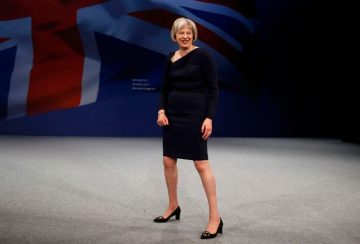
In her speech to the 2015 Conservative Party conference in Manchester, the Home Secretary, Theresa May, said: ‘not all of the consequences can be managed, and doing so for many of them comes at a high price… But even if we could manage all the consequences of mass immigration, Britain does not need net migration in the hundreds of thousands every year… The evidence – from the OECD, the House of Lords Economic Affairs Committee and many academics – shows that while there are benefits of selective and controlled immigration, at best the net economic and fiscal effect of high immigration is close to zero.  So there is no case, in the national interest, for immigration of the scale we have experienced over the last decade. Neither is it true that, in the modern world, immigration is no longer possible to control… The numbers coming from Europe are unsustainable and the rules have to change’.


The UK population is rapidly expanding as a result of migration from the EU. Over 1.25 million persons have been added to the UK population since 2004, more than the population of Birmingham.

Since 2004, 1,257,000 persons have been added to the UK population as a result of net migration from the EU.

This is bigger than the population of Birmingham.


Last year, 77,000 persons came from the EU looking for work.

In 2015, 77,000 persons came to the UK from the EU who were looking for work, without a definite job offer. This is up from 63,000 in 2014.

If this rate of migration of jobseekers continues for a decade, 777,000 jobseekers will come to the UK as a result. This is greater than the population of Glasgow.


The Prime Minister, the Chancellor of the Exchequer and the Home Secretary promised EU migrants should have to have a job offer to come to the UK.

In November 2014, the Prime Minister, David Cameron, promised that ‘we want EU jobseekers to have a job offer before they come here… So let’s be clear what all these changes taken together will mean. EU migrants should have a job offer before they come here’.

The Chancellor of the Exchequer, George Osborne, has said: ‘What we’re going to address is this question of how freedom of movement operates in the 21st century. It was never envisaged that you would have such large numbers of people coming, people coming who don’t have job offers’.

The Home Secretary, Theresa May, has argued: ‘when it was first enshrined, free movement meant the freedom to move to a job, not the freedom to cross borders to look for work… we must take some big decisions, face down powerful interests and reinstate the original principle underlying free movement within the EU’.


The Prime Minister did not even ask for this as part of the renegotiation as it was illegal under EU law.

The renegotiation agreement notes that EU citizens are ‘entitled to reside… [in the UK] solely because of their job-search‘.

The demand that EU migrants must have a job offer was not contained in the Prime Minister’s letter to Donald Tusk of November 2015 or his Chatham House speech of the same day.

This is because it is illegal under EU law. As early as 1991, the European Court held that the ‘Treaty entails the right for nationals of Member States to move freely within the territory of the other Member States and to stay there for the purposes of seeking employment’.


A former senior International Monetary Fund economist, Ashoka Mody has said the establishment’s view is fundamentally wrong. He is a visiting professor at Princeton University. He has said: ‘Consensus amongst economists quickly unravels. In April 1999, “Britain’s top academic economists” voted strongly in favour of switching from the pound to the euro. Mercifully, the government had better sense… economics is neutral on whether to leave or remain. The battle for Brexit must be fought on other grounds… he claim that Brexit will impose a huge cost rests on the twin beliefs that British trade with Germany will go down sharply and trade with the United States will not increase. Is that reasonable? First, British trade with Germany will not decline significantly. As economists have long known, trade is embedded in business and social networks into which partners invest enormous social capital. Studies repeatedly show that businesses make accommodations in profit margins to retain the benefits of trust and reliability. For this reason, all productive trading relationships will remain intact. For this reason too, German Finance Minister Wolfgang Schaeuble’s threat that renegotiation of Britain’s trade arrangements with the EU would be “most difficult” and “poisonous” is bluster. Germans run a trade surplus with Britain. Mr Schaeuble can humiliate the IMF, but he dare not hurt the interests of his exporters (or his importers). And even if British trade with the EU falls, trade with other regions will undoubtedly increase’.


The OECD recommended British entry into the euro. This would have been a disaster for the economy and for jobs.

In 1999, the OECD stated: ‘The introduction of the euro delivers a number of benefits. These include reduced transaction costs associated with trade and financial interactions with other euro area countries, no intra euro area exchange rate risk, greater overall price stability and sharpened price transparency. Lower exchange rate risk also implies that interest rate risk premia should be small, and therefore lower borrowing costs in many countries. These benefits will complement the single market in goods and services and are likely to reinforce the long-run efficiencies associated with the single market. The European Commission estimated nine years ago that the direct static benefits of monetary union linked to lower transaction costs could be around 1/2 a per cent of EU GDP, equivalent to around $40 billion a year. Recent studies have estimated larger gains (up to 1 per cent of GDP). EMU is also likely to generate endogenous consequences such as more transparent prices unleashing stronger competitive forces, possibly fewer policy induced shocks compared with the past as a result of the stability-oriented macroeconomic policy framework and it may serve as a catalyst to speed-up structural changes’.

In 2000 it was reported that the OECD wanted the UK to join the euro: ‘Britain told: economy is ripe for euro… The government’s attempt to keep the lid on the debate over joining the euro until after the election was undermined yesterday by an independent report from the world’s top economic thinktank which said the British and core European economies were close to converging. In spite of strenuous efforts by the Treasury to delete mention of anything remotely contentious, the Organisation for Economic Cooperation and Development’s regular healthcheck on the UK economy said that in some respects the UK would soon be more like Euroland than some of the new currency zone’s existing members’.

It was also reported that: ‘Britain is more suitable to join the euro single currency than many of its existing members as the difference in output and GDP growth rates are continually narrowing, the Organisation for Economic Cooperation & Development said today’ (Evening Standard, 8 June 2000).

The author of the study, Vincent Koen, said: ‘If Greece is deemed fit to join, it would be strange if the UK wasn’t’.


The OECD said the Exchange Rate Mechanism would benefit Britain. It was a disaster.

In December 1990, the OECD said: ‘while the benefits are potentially great, ERM participation constitutes an ambitious strategy for the United Kingdom’ (Xinhua General News Service, 20 December 1990).

‘Pointing out the full members of the European Monetary System have an average inflation rate of slightly more than 4%, compared to 8.3% in Britain, OECD economists make clear their support for a quick decision by the British government on joining the exchange-rate mechanism of the system’ (The Financial Post, 30 June 1989, p. 7).

In October 1990, the UK joined the ERM. The ERM caused interest rates to rise to 15%, led to millions of households going into negative equity and unemployment reaching 2.9 million in 1993. The resulting ‘Black Wednesday’ debacle that resulted from Britain’s membership of the ERM cost the UK economy £3.3bn, according to HM Treasury analysis. The UK economy recovered rapidly after leaving the ERM.


The IMF has been consistently wrong about its forecasts for the UK economy. It is wrong now. The Government has previously condemned the IMF’s errors.

The IMF has tried to talk Britain’s economy down before – but its negative forecasts for the UK economy have been consistently wrong. In 2013 the IMF’s chief economist, Olivier Blanchard, warned that Britain’s growth prospects were very low. When challenged, the Chief Economist responded: ‘I am right and they are wrong’. His estimates turned out to be inaccurate and UK growth was much stronger than he predicted.

The IMF later had to accept that it was wrong about its warnings for the UK. Christine Lagarde later admitted that she had ‘underestimated’ the strength of growth when the IMF assessed the UK economy in 2013.

The IMF has made other major errors of forecasting. In June 2013, the IMF was forced to admit it had issued ‘economic projections that were too optimistic‘ about its joint austerity programme with the EU in Greece.

Even the Head of the IN campaign has dismissed siren voices like the IMF’s. The Chairman of the IN campaign, Lord Rose of Monewden, has admitted that there are no short-term risks in voting to leave, stating: ‘Nothing is going to happen if we come out of Europe in the first five years … There will be absolutely no change … It’s not going to be a step change or somebody’s going to turn the lights out and we’re all suddenly going to find that we can’t go to France, it’s going to be a gentle process’.

The Chancellor of the Exchequer has previously been very critical of the IMF. In April 2014, the Chancellor made a speech to the American Enterprise Institute which was widely perceived to be a direct attack on the IMF for its previous negative forecasts about the British economy. Mr Osborne said: ‘pessimistic predictions that fiscal consolidation was incompatible with economic recovery have been proved comprehensively wrong by events… many of those same pessimists have now found new grounds to be gloomy about our future… I want to explain why I believe both of these predictions will be proved wrong too… I have a different prescription. My message today at the IMF is this. The pessimists said our plan would not deliver economic growth. Now they say economic growth will not deliver higher living standards. They were wrong about the past and they are now wrong about the future’.


Other ‘experts’ have been disastrously wrong

65% of economists backed scrapping the pound.


World leaders do support leaving the EU.

The former Australian Prime Minister, John Howard, has said that Britain should leave the EU.


Wages will rise if we Vote Leave as the IN campaign has admitted.

The Chairman of the IN campaign, Lord Rose of Monewden, believes this claim. He has admitted that: ‘the price of labour will go up‘ in the event of a vote to leave (Evidence to Treasury Committee, March 2016, link).

A BlackRock report in February co-written by Rupert Harrison, a former close advisor to the Chancellor, said leaving the EU could mean ‘lower immigration [which] could make labour scarcer in the long run, pushing up wage costs’. The Bank of England has found that ‘the immigrant to native ratio has a small negative impact on average British wage’. The study found that ‘immigrants in recent years are most predominant in low-skill occupations’. The study concluded that: ‘the biggest effect is in the semi/unskilled services sector, where a 10 percentage point rise in the proportion of immigrants is associated with a 2 percent reduction in pay’.


Trade in cars will continue.

If we Vote Leave, we will strike a free trade deal with the EU, meaning jobs in the car industry will be protected. In 2014, the UK had a £26 billion trade deficit in road vehicles with the remaining 27 members of the EU.


The EU’s economic policies to date have had the opposite effect to that intended.

Academic studies show the EU’s austerity policies have had the reverse effect to what was intended,with Germany becoming more competitive and Greece becoming less competitive. Between 2007 and 2013, ‘the pattern of adjustment within the eurozone has been dramatically perverse, with Germany having improved competitiveness by 9 percent and with Greece’s having deteriorated by 9 percent’.


Economic policies in the Eurozone have caused severe problems for states in the Southern Mediterranean.

Youth unemployment in Greece is 51.9%. In Spain, it is 45.5%.

In 2015, public debt in Greece was 176.9% of GDP. In Italy, it was 132.7%.

The mean suicide rate in Greece rose by 35% between 2010 and 2012. Suicides in Spain have risen by 20 per cent since the start of the economic crisis.

Average net earnings for a single person without children in Greece fell by 17% between 2010 and 2015.


The UK does pay £350 million to the EU each week

The ONS says £19,107 million (or £367 million per week) is the UK’s ‘total debits’ in favour of the EU institutions.

It is wrong to say this figure is misleading. The Chair of the UK Statistics Authority, Sir Andrew Dilnot, has said that ‘The UK’s gross contributions to the EU in 2014 were £19.1 billion, according to the latest official statistics available’. The Head of the Statistics Authority, Sir Andrew Dilnot CBE, has said: ‘Yes, the £19.1 billion figure is a legitimate figure for gross contributions… the official statistics are the £19.1 billion‘.

The Chancellor of the Exchequer has made clear the rebate is a discretionary grant which is subject to annual renegotiation: ‘It is not a unilateral decision of the British Treasury or the British Government to just say, “This is our rebate. We are entitled to it. Pay up”. The way this works and has always worked is there is a negotiation with the European Commission’.

The rebate has no basis in the Treaties. It’s only existence is in article 5 of Council Decision 2014/335/EU. This expires in 2021, so the rebate could be abolished entirely in the event of a vote to stay.

We pay over £10 billion which we never see again. The UK’s net contribution to the EU was £10.6 million in 2015.

The UK has no control over the money the EU spends in the UK. The European Commission itself states that ‘funding is managed according to strict rules to ensure there is tight control over how funds are used’. EU funding also costs money which could be saved. For example, since 2005, England has incurred £642 million in ‘disallowance’ penalties from the European Commission for failing to properly implement the common agricultural policy. This waste could be eliminated entirely if we spent our money ourselves.


JPMorgan is a major donor to the IN campaign, called the euro wrong and spends millions lobbying Brussels.

JPMorgan has donated a sum of £500,000 to the pro-EU Britain Stronger in Europe campaign.

The Vice Chairman, Investment Banking at JPMorgan, Lord Renwick of Clifton was a member of the Council of Britain in Europe, the failed campaign to scrap the pound and to ratify the European Constitution.

JPMorgan warned the UK could be left ‘isolated’ outside the ‘single currency’: ‘This time round, as the investment bank JP Morgan noted yesterday: “A ‘yes’ vote could leave the UK isolated as the only one of the 15 European Union members without a clear timetable for entry’… As the JP Morgan analysis notes, if that happened: “Investors are unlikely to react positively to the rejection of the single currency by a country that has been a member of the EU for 27 years, with a fixed exchange rate for 18 years’.

JPMorgan claimed that staying out of the ‘single currency’ would lead to banks relocating to the rest of the EU: ‘Despite all this, JPMorgan does not see “Project 1992” as the real threat to London. Potentially more dangerous is the distant prospect of a single currency and central bank. JP Morgan argues that financial business would be likely to gravitate to the place where such a central bank operated, although policy-making could be split from the operations – as the US Federal Reserve is divided between Washington and New York. At least JP Morgan reckons London has a fair claim to be the operating centre’ (Independent, 20 September 1988).

In 2015, JPMorgan spent between €1,250,000 and €1,499,999 lobbying the European Commission.

It has been noted that: ‘JP Morgan Chase says its lobbying costs in Brussels went up from €50,000 in 2013 to between €1,250,000 and €1,499,999 in 2014 – a 30-fold increase’.


JPMorgan was a major cause of the global financial crisis and had to pay out $13 billion for its wrongdoing.

In November 2013, JPMorgan reached a $13 billion settlement with the Department of Justice ‘for Misleading Investors About Securities Containing Toxic Mortgages‘. ‘As part of the settlement, JPMorgan acknowledged it made serious misrepresentations to the public’.

The United States Attorney General Eric Holder said: ‘the conduct uncovered in this investigation helped sow the seeds of the mortgage meltdown‘, and said JPMorgan had ‘knowingly bundle[d] toxic loans and [sold] them to unsuspecting investors’.

Associate Attorney General Tony West said the bank ‘helped create a financial storm‘ and that ‘the conduct JPMorgan has acknowledged – packaging risky home loans into securities, then selling them without disclosing their low quality to investors – contributed to the wreckage of the financial crisis’.


Jamie Dimon is paid $27 million a year, eighteen times his basic salary. His remuneration above his basic salary could buy three more Border Force cutters.

Jamie Dimon was paid $27 million in 2015, a 35% pay rise. His basic salary is $1.5 million, one eighteenth of his total pay package.

Mr Dimon’s remuneration above his basic salary is $25.5 million or £16.7 million. This could pay for an additional three border force cutters: the cost of procuring a border force cutter is £4.3 million..


JPMorgan pays for advice from pro-EU lobbyist Tony Blair.

Blair has been paid around £2 million per year as a part time adviser to JP Morgan.

EU to Make Every Internet User Have Mandatory Government ID


The Digital Single Market (DSM) initiative spearheaded by unelected official Andrus Ansip for the European Commission will identify each user of the internet in the EU and assign them an electronic identification tag enabling authorities to better track individuals on the internet.

 More generally, this issue includes the ways in which users identify themselves in order to access online platforms and services. It is recognised that a multitude of username and password combinations is both inconvenient and a security risk. However, the frequent practice of using one’s platform profile to access a range of websites and services often involves non-transparent exchanges and crosslinkages of personal data between various online platforms and websites. As a remedy, in order to keep identification simple and secure, consumers should be able to choose the credentials by which they want to identify or authenticate themselves. In particular, online platforms should accept credentials issued or recognised by national public authorities, such as electronic or mobile IDs, national identity cards, or bank cards Digital Single Market (Pg 10)

By introducing a mandatory ID system for all internet users, the reasoning behind the EU initiative is to do away with multiple passwords for all internet portals and to track users more accurately. The drawback for the user is that their loss of internet anonymity will result in their every move on the internet being tracked by the EU government as well as commercial corporations and marketers. Anonymity, which is one of the hallmarks and original concepts of the internet will thus be removed.

This Orwellian move by the EU is only a totalitarian tiptoe step, as in the future, any form of questioning the EU could be deemed as Thoughtcrime, or in today’s terminology (hate speech/fake news). In other words, any form of dissent, questioning of political ideology, alternative view to the state or satire would be punishable with physical imprisonment and arrest.

The future of the EU is a dystopian nightmare becoming reality every day, as little embers and revelations come to light, bit by bit.

Britain must preserve its democracy, its freedom of expression, it must separate itself from this totalitarian EU march towards certain digital imprisonment and Stasi hell.

We must Vote Leave on June 23, not only for your sake, but for the sake of future generations, for the mantle of freedom, democratic accountability, and the right to free expression.

Letter to the Prime Minister re: Claims That Ineligible EU Citizens Have Been Sent Polling Cards

0


We are writing to you to express our serious concerns about the conduct of the European Union referendum and its franchise.


As you know, Parliament decided that the franchise for this important referendum should be the same as for general elections with the addition of peers of the realm and citizens of Gibraltar. Parliament decided very clearly that EU citizens resident in the UK should not be able to cast a vote in this referendum to determine the UK’s membership of the EU. In September last year, the House of Commons voted against this by 496 to 54.


Nonetheless, we have been contacted by a number of concerned electors who have alerted us to the fact that ineligible EU citizens have been sent polling cards telling them that they have a vote in the referendum on 23 June. We have also seen media reports of this happening in other parts of the UK.


Most troublingly, we have seen the Electoral Commission’s press release, dated 1 June, which seeks to shrug this highly concerning development off, and which entirely misses the point. It contains a statement from an unnamed spokesperson that:


‘Anyone who applies to register must state their nationality as part of their application and this information is collected by their local Electoral Registration Officer (ERO). EROs are required to mark on their register who’s an EU national so that they do not receive poll cards for elections or referendums that they’re not eligible to vote in.’


In other words, there are no checks conducted to make sure anyone applying to vote is indeed eligible. We have seen an email from the Electoral Services Officer at Nottingham City Council to one of our supporters, which confirms this in clear and shocking terms:


‘If an elector lies during their registration, we are not able to check to see if the nationality is correct or not. We have to assume that the elector is submitting their correct nationality.’


We believe the British public will be as shocked as we are to discover that the integrity of the franchise for this long-awaited referendum with profound consequences for the future of our nation is being protected in such a lax manner. The Electoral Commission’s press release abdicates all responsibility for this highly concerning breach of the law, simply saying:


‘As part of the registration application process, all applicants are asked to give their nationality. It is an offence to knowingly give false information on a registration application. A person who knowingly provides false information could, in England and Wales, face an unlimited fine and/or up to six months in prison. If anyone has evidence that an offence has been committed, they should contact the police.’


It is not good enough to expect people to report their friends, family or neighbours to the police if they believe they have been sent a polling card in error. Many of these people will have applied for a vote in good faith for one of the other elections in which they are entitled to vote (e.g. local elections or elections to the European Parliament) and could make the honest mistake of casting a vote in this referendum illegally.


This deeply disturbing news begs a number of urgent questions:


  1. Can you confirm that no checks are conducted to verify someone’s nationality when they apply to join the electoral roll? Do you believe that is sensible?

  2. What provisions are made to ensure that EU citizens who are entitled to vote at local or European elections are not sent polling cards or postal vote ballots for the EU referendum?

  3. Given the many and widespread examples of these being sent to ineligible EU citizens, do you believe these safeguards are working?

  4. The Electoral Commission says that: ‘A poll card does not entitle someone to vote. In order to be able to cast their vote, a person must appear on the electoral register and be shown on it as being eligible to vote.’ Given the apparent errors with the electoral roll which have led to the issuing of polling cards to ineligible voters, why should the public have greater confidence in this process?

  5. Those checks only apply to people voting in person on 23 June. More than 7.5 million people choose to vote by post instead. It seems likely that ineligible EU citizens have been sent postal vote ballot papers and have already returned them. What steps can be taken to ensure that these ineligible postal votes are not counted?

  6. The Government is campaigning for the EU to remain in ultimate control of UK laws. It has spent considerable sums of taxpayers’ money to achieve this and has coordinated its activities with the EU institutions and other governments around the world. Given the serious concerns that have been raised about the conduct of this referendum, what do you propose to do to correct the serious problems that have been identified?

  7. What estimate do you have of the scale of this problem?

  8. Will you make clear to EU nationals that they are not legally allowed to vote in this referendum and that doing so could be a criminal offence?


Given the gravity of this issue – and the fact that postal votes are already being issued and cast – we hope you will answer these questions by noon tomorrow. We are making this letter available to the press.


We are writing in similar terms to Jenny Watson, the Chair of the Electoral Commission, and have copied in the Cabinet Secretary, Sir Jeremy Heywood.


Yours sincerely,


Rt Hon Iain Duncan Smith MP

Bernard Jenkin MP

The Labour Party’s Support For the EU is Out of Touch With its Voters’ Concerns

0


Responding to new ICM polling – which shows that Labour voters think the current system of free movement of people in the EU is damaging, and puts unsustainable pressure on public services – Chair of Vote Leave Gisela Stuart MP said:


‘This polling shows that the Labour Party’s support for the EU is not only out of touch with views previously expressed by our own leader, but out of touch with Labour voters too.’


Below are the answers from respondents who voted Labour in 2015 General Election.

Those polled were asked – Do you think the amount of immigration from EU countries over the last ten years has been:


Good for NHS: 30%

Bad for NHS: 43%

Good for schools: 17%

Bad for schools: 47%

Good for housing: 11%

Bad for housing: 62%

Good for job and wages: 23%

Bad for jobs and wages: 43%

Good for the UK’s national security: 15%

Bad for the UK’s national security: 44%

Led to less crime: 5%

Led to more crime: 44%


If we were to have the same amount of immigration that we have had over the last ten years over the next ten years would you be:


Happy: 26%

Unhappy: 45%

There are five more countries – Albania, Macedonia, Serbia, Montenegro and Turkey – currently receiving money from the EU to help them join the EU.  Do you think it would be:


Good for the UK if these five countries joined the EU:  17%

Bad for the UK if those five countries joined the EU: 54%

Liam Fox: ‘Memories of Green? The Cost of Uncontrolled Migration’

0


Liam Fox will use a village in his constituency as an example of a community facing pressures on housing:


‘Despite having no surplus school places, fully saturated GP surgeries and an already overstretched road…[it is] being asked to absorb large numbers of extra houses without any realistic possibility that the money will be found to provide the extra infrastructure required.’


The former Defence Secretary will note that this pressure is compounded by uncontrolled migration from the EU:


‘As the Government fails to control the increase in the population due to migration, it forces local authorities to build more and more houses to deal with the ripple effect. If we remain in the European Union we will be forced to accept unlimited free movement of people – but there will be no free movement of space coming with them. The inevitable result will be worsening overcrowding in our land limited country.’


Turning to the Prime Minister’s reforms, he will state that it will do nothing to reduce the number of people coming to the UK, and that the continuing eurozone crisis will see the number of EU migrants rise:


‘The outcome of the recent renegotiation of benefits will make no significant difference to these numbers, as the Office for Budget Responsibility, the government’s advisory body has confirmed…


…The continuing failure of the Eurozone and the tragically high levels of unemployment in Southern Europe is likely to mean that more and more young people will head to the North of Europe, including the UK, in search of work.’


Dr Fox will outline the impact the rise in migration will have on UK housing:


‘Yet population growth on the present scale means making our urban areas still more overcrowded or building over valuable green belt or farmland with all the loss of amenity involved.


‘At current levels of immigration, the Office for National Statistics project that our population will continue to grow by around half a million a year – a city the size of Liverpool every year.

‘This will mean that, in England, we will have to build a new home every six minutes, or 240 a day, for the next 20 years to accommodate just the additional demand for housing from new migrants. That is before we take into account the needs of those who were born here.’


He will also point to the effect it will have on rents and the ability of young people to get on the housing ladder:


‘Most new immigrants move into the private rented sector which has grown as the immigrant population has grown. Competition for rented accommodation obliges all those in the private rented sector to pay high rents which take a large share of income and makes saving to buy a home even harder.

‘These resulting high rents and a shortage of housing make it much more difficult for young people to set up home on their own so they have to spend more time in house shares or with their parents.’


Addressing the impact the increase in migration will have on the green belt, he will say:


‘A constant unchecked flow of migration will inevitably result in more of our open spaces and natural greenery being turned over to housing.’


Concluding, he will appeal to younger voters, saying:


‘If we remain in the EU, if we have uncontrolled migration year after year after year after year, you will find it harder to get a home of your own.

‘You will find it harder to see a GP or you will find it harder to get a school place and you will see our green spaces disappear at an even greater rate.’

Osborne’s Commitment to Reducing Migration Within the EU is the Real Fantasy Politics

0

Responding to George Osborne’s accusations of ‘fantasy politics’, Vote Leave Chair Gisela Stuart said:

‘The real fantasy politics is George Osborne’s commitment to reduce net migration to the tens of thousands while at the same time campaigning to remain in the EU.

‘The reality for the British people if we stay in is that Albania, Macedonia, Montenegro, Serbia and Turkey – with a combined population of 88 million – will all soon join the EU. When they do, EU migration to the UK could increase by 5 million.

‘David Cameron’s renegotiation was another flight of fantasy which has achieved nothing. The only way to get real change – to take back control of our borders, introduce a points-based non-discriminatory immigration system and achieve an immigration rate that has the consent of the public is to Vote Leave on 23 June.’

KAjwhriuw024hvjbed2SORH