17.7 C
London
Tuesday, January 13, 2026
secret satire society
Home Blog Page 459

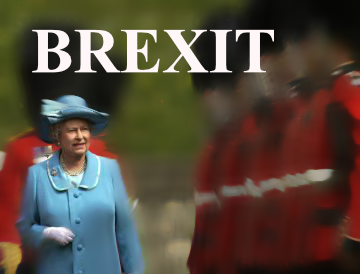
Queen Backs Brexit: Her Majesty Confirmed By Royal Biographer Backing Leave EU


Further confirmation of the Queen’s stance against the Remain campaign have been confirmed by Her Majesty’s royal biographer Robert Lacey.

His comments in the Telegraph via the Daily Beast confirm the Queen favours withdrawal from the European Union.

The Queen has been canvassing opinion on the EU debate by asking dinner companions: “Give me three good reasons why Britain should be part of Europe.”

Of course, if one was present at one of these dinners, there would be no valid answer to such a question. Anyone with any form of logic or reasoning would not think of any single reason to stay in the EU; especially when the whole globe is waiting for Britain to leap out and embrace it as opposed to being tied down to some restrictive meddlesome undemocratic EU ball and chain.

This news comes in concert with the leaked story of a pro-EU Nick Clegg being firmly put in his place by Her Majesty at a post Privy Council meeting in the past.

The 89-year-old monarch firmly told passionate pro-European Mr Clegg that she
believed the EU was heading in the wrong direction.

Her stinging reprimand went on for “quite a while”, leaving other guests
around the table stunned.

We have already written numerous articles about how the British monarchy will be put at severe risk if Britain remains in the EU, and we stand by those words.

Britain must regain its freedom and democracy once again, and embrace global trade, an International standing that befits a Great Britain — not to be relegated to a mere zone in a totalitarian EU that does not have our country’s interests at heart.

Out! – Voices for Freedom and Democracy

0

Having originally planned to hold an ‘Out!’ rally early this week, it was decided to cancel the event out of respect for Jo Cox MP, whose murder last week horrified us all. With the referendum just around the corner, our speakers have instead written their own short articles setting out what they would have told the rally and why each of them reject Project Fear and embrace this country’s historic opportunity to embrace the world.


From left to right, liberal to conservative, libertarians to trades unionists – we have gathered many of the voices who believe that this is their last chance to speak Out!


Giving a voice to the arguments not yet heard – and telling us how the EU has brought down the living standards of the poor in Britain and the world and put power in the hands of a tiny elite instead of the people – our 28 contributors:


  • Cllr Gurjit Kaur Bains – Cabinet Member for Community at Gravesham Borough Council
  • Saqib Bhatti – Chairman of Muslims for Britain
  • Malin Bogue – Americans for Britain
  • Dr Peter Chadha – British-Sikhs for Britain
  • Brian Denny – Trade Unionists Against the EU
  • Paul Embery – Fire Brigades Union
  • Richard Fairbrass – Right Said Fred
  • Anna Firth – Women for Britain
  • Claire Fox – Institute of Ideas
  • Manick Govinda – Manifesto Club, writing in a personal capacity
  • Vicky Griffiths – Farmers for Britain
  • James Heartfield – author, The European Union and the End of Politics
  • Rafe Heydel-Mankoo – Poles for Britain
  • Harsimrat Kaur – Mathematician
  • Pasha Khandaker – President, Bangladeshi Catering Association
  • Adam Lake – Out & Proud/Boyz
  • Kunle Olulode – campaigner and activist
  • Kevin Rooney – Teacher
  • Shahmir Sanni – Research Director, BeLeave
  • Graham Stringer MP – Labour Leave
  • Chloe Westley – Aussies for Britain
  • Ella Whelan – assistant editor at spiked
  • Toby Young – journalist and co-founder of the West London Free School


Speaking in advance of the referendum, Claire Fox, Director, Institute of Ideas, said:


“This Thursday gives the British people – from all communities and all walks of life – a unique opportunity to vote for freedom and democracy. Let’s take this once in a generation opportunity to embrace an open, ambitious and optimistic future for the UK”.


Vote Leave on June 23

Bob Geldof’s Boat Funded by Goldman Sachs

3


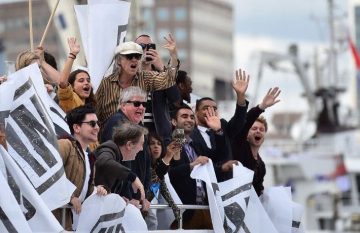
Reports from insiders also reveal that the BBC director was on board the boat as Geldof made vile remarks and gestures to bemused fishermen protesting the loss of their fishing grounds to EU regulations.

Bob Geldof was seen on the boat swearing and shouting at the fishermen, and the millionaire champagne socialist compounded his ridiculous protest with a continual barrage of insults from his Goldman Sachs funded boat.

Geldof, who recently lost his daughter Peaches to a heroin overdose, encourages negligence at every turn and is not a good example of human fortitude unlike the fishermen he was berating.

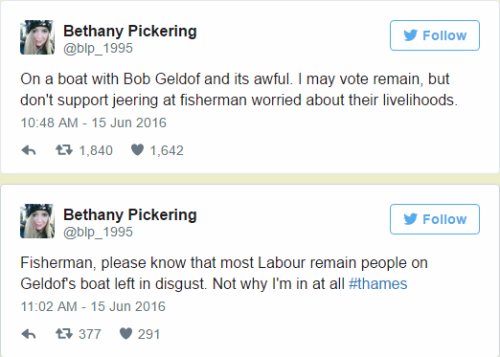
Several people who were onboard the boat were disgusted by the vile Geldof display.

geldof boat twitter


Meanwhile the fishermen fight on despite the jeering protests from the likes of Geldof.

Vote Leave on June 23

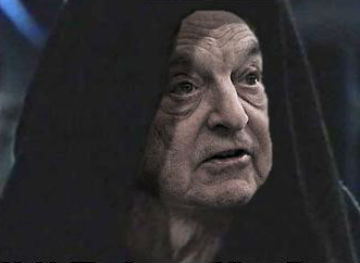
Lord Lamont Responds to George Soros

0


‘The devaluation of sterling in September 1992 didn’t do the UK economy any harm, far from it. Nor would a fall in the pound this time necessarily be a disaster. The key difference  between now and 1992 is that today the pound is floating and any devaluation could be self-correcting and temporary.’


  • Leaving the Exchange Rate Mechanism in 1992 was a boon for the British economy.

  • Unlike at the time of Black Wednesday, the pound is today a floating currency.

  • Soros supported the euro and British entry into it, despite knowing of its manifest flaws when it was set up.

  • Soros has consistently called for further EU integration, including for the abolition of Britain’s ability to make asylum and immigration policy and the UK’s border controls.


Leaving the Exchange Rate Mechanism in 1992 was a boon for the British economy.

Following Black Wednesday, the pound fell from 2.002 $/£ on 16 September 1992 to 1.474 $/£ on 25 March 1993.

Far from leading to a spike in inflation, leaving the ERM led to a reduction in inflation. Inflation in the third quarter of 1992 was 3.3%. This was not exceeded until the second quarter of 2008.

Following its exit from the ERM in September 1992, the UK enjoyed uninterrupted growth until the third quarter of 2008.

Far from leading to a rise in interest rates, leaving the ERM saw interest rates fall. On 16 September 1992, the Bank of England official rate was 9.875%. It has not exceeded this rate since then.


Unlike at the time of Black Wednesday, the pound is today a floating currency.

As part of the Exchange Rate Mechanism, the value of the pound was tied to the value of the Deutschmark, with a floor of 2.78 DM/£.

The British Government tried to keep the pound at its ERM floor. It was this which allowed Soros to make a $1 billion profit at the UK’s expense betting against sterling in the run up to ‘Black Wednesday’.


Soros supported the euro and British entry into it, despite knowing of its manifest flaws when it was set up.

When asked whether: ‘you’re discouraged about the mechanism that’s in place now but you do believe in the ultimate goal, which would be a single currency for all of Europe?’, George Soros replied: ‘Very much so’.

‘George Soros, the financier, yesterday warned that Britain would suffer damage “in the long run” if it stayed outside the single currency. Speaking in Davos, Mr Soros said that, while there was good reason for Britain to delay entry into monetary union, it could not stay outside permanently without repercussions for inward investment’.

‘In the face of such international financial instability, Soros regards the euro as a “highly desirable arrangement” and a potential financial anchor – part of the solution rather than part of the problem’.

George Soros has said that the euro was ‘a very desirable political project’. Nonetheless, he knew in 1999 that it was institutionally flawed, stating that there were ‘internal tensions inherent in a common currency without a common fiscal policy’.


Soros has consistently called for further EU integration, including for the abolition of Britain’s ability to make asylum and immigration policy and the UK’s border controls.

Soros is a noted supporter of the transfer of further control to the EU. Last year, he said: ‘As it pursues one integrated migration and asylum policy, the EU should eliminate the waste and redundancy of 28 parallel systems. There should be a single European asylum and migration agency, for example, that processes asylum applications for the entire union. Eventually, a joint border guard should be established too’.

EU Law Keeps Killers in the UK


Commenting, Dominic Raab MP said:


‘This case shines a light on the skewed moral compass at the heart of EU rules on free movement. An EU national convicted of brutally killing someone in this country, by hammering and strangling them to death, can’t be removed on the basis of the conviction by a UK court. It’s dangerous and undemocratic. The Prime Minister is absolutely right to describe the legal position as “complete madness”. The only way to restore some sanity is to vote leave and take back control of our borders on 23 June.’


  • The UK Supreme Court is today hearing an appeal by the Home Secretary, Theresa May, to permit her to remove an Italian national, FV, from the UK.

  • FV, who has a lengthy criminal record, was convicted of a brutal killing in 2002, but the Court of Appeal ruled that Theresa May could not remove him from the UK.

  • EU law has meant the UK cannot remove convicted murderers and persons involved in terrorism. David Cameron once described this as ‘complete madness’.

  • David Cameron’s renegotiation will do nothing to change this. The European Commission states that it will have ‘no legal effect’.

  • If we Vote Leave, we will take back the power to remove dangerous persons whose presence in the UK is not conducive to the public good.


The UK Supreme Court is today hearing an appeal by the Home Secretary, Theresa May, to permit her to remove an Italian national, FV, from the UK.

The UK Supreme Court will today hear the case of the Secretary of State for the Home Department v FV (Italy) (UKSC 2012/0226). The case will be heard by Lady Hale, Lord Mance, Lord Wilson, Lord Reed and Lord Hughes.


FV, who has a lengthy criminal record, was convicted of a brutal killing in 2002, but the Court of Appeal ruled that Theresa May could not remove him from the UK.

FV, an Italian national, was convicted of the manslaughter of Edward Mitchell by reason of provocation in 2002. He inflicted at least 20 blows to the head with weapons, including a hammer, before strangling Mr Mitchell with a flex from an iron. He was sentenced to eight years’ imprisonment. FV had previous convictions for assaulting police, driving a motor vehicle while unfit through drink or drugs, and driving while disqualified. The Secretary of State ordered his deportation.

Nonetheless, in September 2012, the Court of Appeal ruled his deportation was inconsistent with EU law because, in light of rulings of the European Court, ‘imperative grounds’ did not exist to justify his deportation.


EU law has meant the UK cannot remove convicted murderers and persons involved in terrorism. David Cameron once described this as ‘complete madness’.

EU law stopped the UK removing convicted murderer Learco Chindamo. In 1995, Chindamo, who is an Italian citizen, murdered the headteacher Philip Lawrence who went to help a 13-year-old boy who was being attacked. In 2007, Mr Justice Collins, sitting in the Asylum and Immigration Tribunal, ruled that removing Chindamo would be ‘disproportionate’ under EU law. David Cameron said that Tribunal’s decision ‘flies in the face of common sense. It is a shining example of what is going wrong in our country. He is someone who has been found guilty of murder and should be deported back to his country… What about the rights of Mrs Lawrence or the victim?’. Cameron said: ‘This does seem to be complete madness’.

EU law stops us removing persons who have been involved in terrorism. In 2015, the Special Immigration Appeals Commission ruled the UK could not exclude the French national ZZ from the UK because of EU law, despite the fact that he was a suspected terrorist. The Commission concluded that: ‘We are confident that the Appellant was actively involved in the GIA [Algerian Armed Islamic Group], and was so involved well into 1996. He had broad contacts with GIA extremists in Europe. His accounts as to his trips to Europe are untrue. We conclude that his trips to the Continent were as a GIA activist’.


David Cameron’s renegotiation will do nothing to change this. The European Commission states that it will have ‘no legal effect’.

There is no proposal to amend the Treaties or the 2004 Free Movement Directive. The proposals agreed at the European Council will be contained ‘in a Communication’ to be issued by the European Commission. As the Commission accepts, a ‘Communication is a policy document with no mandatory authority. The Commission takes the initiative of publishing a Communication when it wishes to set out its own thinking on a topical issue. A Communication has no legal effect’.

The Commission’s declaration states that the UK ‘may take into account past conduct of an individual in the determination of whether a Union citizen’s conduct poses a “present” threat to public policy or security’. Yet the European Court has already ruled that a previous conviction can ‘be taken into account in so far as the circumstances which gave rise to that conviction are evidence of personal conduct constituting a present threat’.

The Commission’s declaration also states that member states ‘may act on grounds of public policy or public security even in the absence of a previous criminal conviction on preventative grounds but specific to the individual concerned’. Yet the European Court ruled this was the law in 1974 in the first case referred to that court after the UK joined the EU.


If we Vote Leave, we will take back the power to remove dangerous persons whose presence in the UK is not conducive to the public good.

On 8 May 2016, Vote Leave set out plans immediately to ‘amend the European Communities Act 1972 to provide that the Home Secretary can remove all foreign nationals on the ground their presence would not be conducive to the public good and that all foreign nationals sentenced to more than a year’s imprisonment are subject to automatic deportation’ .

Michael Gove MP said that: ‘I agreed with the Prime Minister when he set out his vision for getting a permanent opt out from the Charter of Fundamental Rights. Sadly, the deal did not touch this area and the Charter is being used more and more by EU judges to interfere with how we keep people in the UK safe. EU judges are stopping us from deporting dangerous criminals and terrorist suspects. This makes us less safe – that’s why we should take back control’.

The European Union Law (Emergency Provisions) Bill could be introduced shortly after the referendum. Chris Grayling MP has said we should ‘end the situation where an international court can tell us who we can and cannot deport’.

The EU Increases Cost of Living For UK Consumers On Everyday Goods and Shopping

0


  • Independent studies have shown the EU increases the cost of living.
  • The European Court has consistently increased the price of everyday goods and services, such as insurance, beer and the installation of solar panels.
  • If we Vote Leave, we will scrap VAT on household energy bills, saving £64 for each household each year.
  • The EU and European Court are putting up the cost of travelling on the West Coast Mainline by forcing the UK to create a new freight corridor, as the Government has admitted.
  • Sterling is currently higher than where it was shortly after the referendum was called. There is nothing to suggest a major devaluation would follow a leave vote.
  • The IN campaign wrongly assumes the UK would impose tariffs on imports.
  • The IN campaign claims its retail letter is ‘unprecedented’. Five of the signatories have already said the same thing. Another signatory is a Government Minister, another is a registered IN campaigner and the last recently resigned following a wave negative of headlines.


Independent studies have shown the EU increases the cost of living.


The independent House of Commons Library has concluded that EU membership actually increases the costs of consumer goods, stating that the EU’s Common Agricultural Policy ‘artificially inflates food prices’ and that ‘consumer prices across a range of other goods imported from outside the EU are raised as a result of the common external tariff and non-tariff barriers to trade imposed by the EU. These include footwear (a 17% tariff), bicycles (15% tariff) and a range of clothing (12% tariff)’.


The European Court has consistently increased the price of everyday goods and services, such as insurance, beer and the installation of solar panels.

In March 2015, the European Court held insurance claims handling services were not exempt from VAT. Richard Asquith, the Vice President of Avalara, said the judgement could increase the cost of car insurance policies by £14 per year in the UK. Richard Insole, direct tax partner at Deloitte LLP, has said the decision could result in significantly increased operating costs for UK insurers and an impact on policy premiums as a result.

In March 2011, the European Court ruled that the EU’s Charter of Fundamental Rights meant that women could not be charged lower premiums than men, increasing the cost of car and life insurance.

On 12 July 1981, the European Court ruled that the UK’s low duty on beer ‘afford[ed] protection to domestic beer production’ and was therefore illegal under EU law. In his 1984 budget statement, the Chancellor of the Exchequer, Nigel Lawson, said ‘we lost; and I am now implementing the judgement handed down by the court last year. Accordingly, I propose to increase the duty on beer by the minimum amount needed to comply with the judgement and maintain revenue: 2p on a typical pint of beer’.

In June 2015, the European Court ruled the UK’s 5% rate of VAT on the installation of energy saving materials such as solar panels and wind turbines was illegal. HMRC is now proposing to raise VAT to 20%, which will cost consumers £310 million between 2016-2017 and 2021-2022. The Solar Trade Association predicts that the cost of installing solar panels could increase by approximately £1,000 if the Government’s proposed changes are introduced.


If we Vote Leave, we will scrap VAT on household energy bills, saving £64 for each family.

European Union law prevents the UK from cutting VAT on household energy bills.

If we Vote Leave, we will be able to scrap VAT on household energy bills, as the UK will have left the EU’s common system of VAT. Each household on average spends £25.80 per week on electricity, gas and other fuels, or £1,341.60 per year. Subtracting VAT of 5% would reduce this figure to £1,277.70, a saving of £63.89 per household.

This will benefit low income households in particular. The lowest decile on average spends 9.1% of average household income on electricity, gas and other fuels. The average UK household spends 4.9% of its income on energy, while the top decile spends just 3.1% of its income on energy.


The EU and European Court are putting up the cost of travelling on the West Coast Mainline by forcing the UK to create a new freight corridor, as the Government has admitted.

The EU is in the process of forcing the UK to create a rail freight corridor between London and Glasgow and London and Felixstowe as part of the North Sea – Mediterranean Freight Corridor by 1 November 2018. This could mean international freight trains have the right to be operated instead of passenger services.

On 13 March 2014, Transport Minister Robert Goodwill stated that the EU’s decision to create the corridor ‘circumvented requirements under EU legislation’ and constituted ‘unlawful competence creep’.


Mr Goodwill stated that the Decision left ‘the UK exposed to some potentially significant risks’, including that the EU will ‘have more influence on decisions of infrastructure use and transport planning that fall within Member State competence’ and that Network Rail could have ‘to set aside more capacity for international freight at the expense of well-used passenger services’, with particular consequences for ‘the heavily used West Coast Main Line’.

Mr Goodwill accepted that ‘there are likely to be… financial costs and physical impacts to the UK’s rail network’.

On 12 November 2015, the European Court rejected the UK’s attempts to annul EU legislation extending the North Sea — Mediterranean rail freight corridor from London to Glasgow by 2018. The Court ruled that the UK had no veto over the creation of such corridors, stating ‘it would not have been necessary to seek the consent of the United Kingdom’.


Sterling is currently higher than where it was shortly after the referendum was called. There is nothing to suggest a major devaluation would follow a leave vote.

Sterling is higher than where it was shortly after the Prime Minister’s deal. The value of the currency has increased from to 1.3871 $/£ on 26 February to 1.4721 $/£ today.


The IN campaign wrongly assumes that a fall in the currency would necessarily lead to higher inflation. After Black Wednesday, the pound fell and did inflation.

It is simply wrong to suggest that a fall in the currency would necessarily lead to higher inflation. Consumers might choose to buy domestically produced goods instead of imported goods.

Following Black Wednesday, the pound fell from 2.002 $/£ on 16 September 1992 to 1.474 $/£ on 25 March 1993.

Far from leading to a spike in inflation, leaving the ERM led to a reduction in inflation. Inflation in the third quarter of 1992 was 3.3%. This was not exceeded until the second quarter of 2008.


The IN campaign wrongly assumes the UK would impose tariffs on imports.

The UK will strike a free trade deal with the EU, as leading IN campaigners have accepted, so there is no prospect of new import duties being imposed. The UK’s former Ambassador to the EU and leading supporter of the IN campaign, Lord Kerr of Kinlochard, has admitted: ‘there is no doubt that the UK could secure a free trade agreement with the EU. That is not an issue’. The Foreign Secretary, Philip Hammond, has admitted that a free trade agreement in goods ‘would be relatively simple to negotiate’.

In any event, there is no obligation under World Trade Organization rules to impose tariffs on imports.


The IN campaign claims its retail letter is ‘unprecedented’. Five of the signatories have already said the same thing. Another signatory is a Government Minister, another is a registered IN campaigner and the last recently resigned.

Dalton Phillips ‘walked away from the supermarket [Morrisons] with nearly £3m and could get a further £1.6m in payouts over the next two years, despite presiding over a collapse in the company’s profits, losing customers to discount rivals Aldi and Lidl and overseeing a tanking share price’.

Four of the eight signatories, Sir Terry Leahy, Justin King, Marc Bolland and Sir Ian Cheshire, signed a letter supporting the IN campaign a few weeks ago.

Andy Clarke signed Number 10’s pro-EU business letter in February.

Lord Price was appointed a Minister of State at the Department for Business, Innovation and Skills and the Foreign and Commonwealth Office in April.

USDAW, of which John Hannett is the General Secretary, is a registered IN campaigner. John Hannett is the ‘responsible person’ registered with the Electoral Commission.

David Cameron: The Neville Chamberlain of Our Time NOT Churchill

2


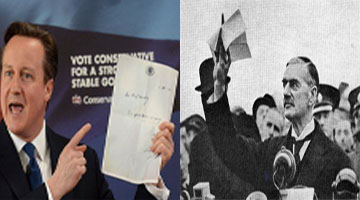
David Cameron much like Neville Chamberlain wants to work with an entity that does not have Britain’s interests at heart.

In 1938 Chamberlain came back with a piece of paper and declared he had secured ‘Peace in our time’ after signing the Munich Agreement in 1938, conceding the German-speaking Sudetenland region of Czechoslovakia to Germany, just as Hitler had fooled him, and was building up a vast army.

In 2016 David Cameron came back from Brussels and waved a piece of paper in his hand claiming he had secured negotiations from the EU, when the evidence was to the contrary and he had not achieved anything, but in fact lost Britain’s last remaining veto.

Neville Chamberlain denied there was any threat from Hitler with his army in 1938. In 1939, Hitler invaded Poland, and Britain declared war on Germany.

David Cameron denied that the EU is building an EU army when in fact it is building one as the evidence reveals to the contrary.

Chamberlain_Cameron

The parallels are uncanny. Neville Chamberlain was an appeaser, and so is David Cameron. He wishes to sell off Britain to the EU at the lowest price, to have Britain watered down, amalgamated within the New German Empire, and no one can deny this fact — the EU is the New German Reich reborn, rebranded, and it is set to take Britain without a single shot being fired.

We have been abandoned by our American so-called friends once again, urging us to join the EU monstrosity and turn over our sovereignty. Just as the Americans nearly abandoned Britain in the first years of World War II, we are once again fighting not only an enemy without but within by ourselves,

Chamberlain sought to conciliate Germany and make the Nazi state a partner in a stable Europe.

Cameron seeks to conciliate Germany and make the EU state a partner in a stable Europe.

“My good friends, this is the second time there has come back from Germany to Downing Street peace with honour. I believe it is peace for our time. We thank you from the bottom of our hearts. Now I recommend you go home, and sleep quietly in your beds.”

And so history repeats itself, in different ways, yet the same ways. The Daily Squib itself warned of this way before any other newspaper was even talking about it.

To appease an entity that will no doubt take away the pound sterling and replace it with the euro, to appease an entity that is actively building an EU Army threatening Russia and NATO, to appease an entity that is undemocratic with laws conjured up by a European Commission manned solely by unelected eurocrats unaccountable to any voter, to appease an entity that will eviscerate Britain of its democracy is a criminal act that must be stopped.

David Cameron is Neville Chamberlain through and through.

Dear voters, remember history, remember the past, because if we forget the past, we are doomed to repeat the mistakes of the past, over and over again.

Vote Leave on June 23 or we surrender a thousand years of history and Britain will be gone forever.

British Embassies Dedicated Teams to Help Turkey, Serbia and Others Join the EU

0


The Government webpage for the British Embassy in Ankara states ‘we have a dedicated team working on projects to improve Turkey’s prospects of joining the EU’, whilst the Government webpage for the British Embassy in Belgrade explains that ‘the UK’s main goal in Serbia is to see the implementation of the political, economic and social reforms necessary for Serbia’s EU accession.’


Furthermore, the webpages for British Embassies in Bosnia and Herzegovina, Ukraine and Georgia all contain statements that the UK is supporting their ambitions of EU membership.


UK taxpayers are already paying almost £2 billion to support the accession of Albania, Macedonia, Montenegro, Serbia and Turkey, however these findings suggest that further dedicated resources are being used to help them join the EU.


Responding to the findings, Matthew Elliott, Vote Leave Chief Executive, said:


‘It is clear that despite David Cameron protestations, the machinery of Government is being used to accelerate the pace at which Turkey and other nations join the EU.


‘ This evening the Prime Minister failed to clarify whether it remains official Government policy to pave the road from Ankara to Brussels and how much, and in what way, taxpayers’ money is being spent to help Turkey and other nations join the European Union, on top of the £2 billion bill we already know about.


‘We send £350 million every week to the EU. With our public services already under huge pressure, it is perverse for taxpayers’ money to be spent on helping these countries join the EU when the result would inevitably be increased migration to the UK, only adding to the strain. This is why it’s safer to take back control on 23 June.’


istanbul turkey


British embassies clearly show that the UK is supporting the accession of countries to join the EU


  • The official Government website for the British Embassy in Turkey states that there is ‘a dedicated team working on projects to improve Turkey’s prospects of joining the EU.’
  • The official Government website for the British Embassy in Serbia states that ‘the UK’s main goal in Serbia is to see the implementation of the political, economic and social reforms necessary for Serbia’s EU accession.’
  • The official Government website for the British Embassy in Bosnia and Herzegovina states ‘we are working in Bosnia and Herzegovina to help reform areas including the rule of law, justice, anti-corruption and defence, to meet conditions for EU and NATO membership.’
  • The official Government website for the British Embassy in Ukraine states ‘we work closely with Ukrainian authorities to support the EU integration of Ukraine’
  • The official Government website for the British Embassy in Georgia states ‘we support Georgia’s Euro-Atlantic aspirations.’


UK pays £1.8 billion to help Albania, Macedonia, Montenegro, Serbia and Turkey to join the EU


In 2014, the EU Council agreed to an Instrument for pre-accession assistance to pay money to potential candidate countries. These include Albania, Bosnia and Herzegovina, Iceland, Kosovo, Montenegro, Serbia, Turkey and the former Yugoslav Republic of Macedonia. The UK voted against the creation of this instrument in the EU Council, but was outvoted.


Money is paid to ‘align’ candidate countries’ laws ‘with EU laws and standards’ in order that they can join the EU. The Commission describes it as ‘an investment in the future of the EU’, which ‘creates incentives for EU future members’. The Commission is explicit that the funds are paid to prepare the countries ‘for the rights and obligations that come with EU membership’.


The total amount to be paid to these countries between 2014 and 2020 is €11.7 billion. Using HM Treasury figures for the total proportion of EU revenue accounted for by UK contributions, it is possible to calculate the UK’s total and annual payments into this fund. For consistency, we have used 2014 exchange rates.


Instrument for pre-accession assistance
Budget (2014-2020) (€m) €11,699
UK share (€m) €1,471
UK share (£m) £1,186
UK annual payment (£m) £169.5

Source: Regulation 2014/231/EU, art. 15HM Treasury, HMRC


The table shows that the UK will pay £1.19 billion to the EU’s pre-accession assistance programme between 2014 and 2020, or £170 million each year.


In addition, the UK agreed to pay up to an additional £640 million to Turkey as part of the recent EU-Turkey deal. This deal has been struck with the stated aim of ‘re-energis[ing] the accession process’ of Turkey to the EU. The UK will pay Turkey £250 million in bilateral assistance and will pay a further £97 million as part of EU payments to Turkey: £347 million in total between 2016 and 2017. A further €3 billion will be provided by the EU by 2018. The UK’s share of this payment will be at least £293 million.


Combining commitments under the Instrument for Pre-Accession Assistance and obligations to Turkey under the recent deal, the UK’s total payments to candidate countries will be £1.8 billion. The EU as a whole will be paying over €17.5 billion in total to candidate countries to join the EU.

Total UK payments to Turkey in the period 2014 to 2020 could be as high as £1.19 billion.

10 Falsities: The PM and Chancellor Spouting Factual Errors Debunked

0


1 The supposed requirement for EU migrants to have a job offer


The Chancellor of the Exchequer has claimed that EU migrants must have a job offer to come to the UK. Asked by Andrew Neil whether David Cameron’s ‘fallback then was to say that EU citizens couldn’t just come here looking for work, they had to have a job, that’s what he promised, and he bottled that too, because that’s not the case?’, George Osborne said: ‘I’m afraid it is the case’. Asked to clarify this, the Chancellor reiterated that ‘if you don’t have a job, you have to go.’


This claim is false. As early as 1991, the European Court held that the ‘Treaty entails the right for nationals of Member States to move freely within the territory of the other Member States and to stay there for the purposes of seeking employment’. Even David Cameron’s own renegotiation agreement notes that EU citizens are ‘entitled to reside… [in the UK] solely because of their job-search’.


2 The purported inability of all EU migrants to claim unemployment benefit


The Prime Minister has repeatedly asserted that EU migrants cannot claim unemployment benefit in the United Kingdom. On SkyNews on 2 June, he claimed ‘if you come to our country first of all you don’t claim unemployment benefit’. On ITV, he claimed: ‘What I have secured is this idea, this proposal that if people come here, first of all they can’t claim unemployment benefit’.


This claim is false. EU law gives EU nationals the same rights to jobseeker’s allowance as UK nationals following a period of employment of a year in the UK, and an equivalent right for six months if they have been employed in the UK for less than a year. It is certainly true that there is no requirement under EU law to pay non-contributory cash benefits designed to provide subsistence to persons who entered the UK seeking work and who have never found it. However, that was clear before the Prime Minister began his renegotiation.


3 The length of time in which EU jobseekers can reside in the UK


The Prime Minister has claimed EU migrants must leave the United Kingdom after six months. On SkyNews, he claimed that ‘after six months if you haven’t got a job you have to leave’. On ITV, he alleged that ‘if they don’t have a job within six months, they have to go home’. George Osborne has told Andrew Neil that ‘if you don’t have a job after six months, you have to go.’


These claims are false. In 1991, the European Court of Justice ruled that article 45 of the Treaty on the Functioning of the European Union forbids the removal of jobseekers from another EU member state regardless of the duration of their stay if ‘the person concerned provides evidence that he is continuing to seek employment and that he has genuine chances of being engaged’. This applies regardless of the length of time that jobseekers have resided in the UK.


This ruling is incorporated in the Free Movement Directive. This provides that: ‘an expulsion measure may in no case be adopted against Union citizens or their family members if… the Union citizens entered the territory of the host Member State in order to seek employment. In this case, the Union citizens and their family members may not be expelled for as long as the Union citizens can provide evidence that they are continuing to seek employment and that they have a genuine chance of being engaged’. Contrary to the Prime Minister’s claims, therefore, EU law precludes national rules under which all jobseekers are removed after six months.


It should be noted that the Government admitted in December that many jobseekers could remain for longer than six months. The Home Office Minister, James Brokenshire, admitted in December that some EU migrants can ‘keep the status of jobseeker for longer than six months’. It is also the case that there is no mechanism for monitoring whether or not jobseekers remain in the UK for over six months. EU law forbids systematic verification of whether EU citizens are lawfully resident in the UK, providing that: ‘this verification shall not be carried out systematically’.


4 The nature of proposed reforms to in-work benefits


The Prime Minister has stated that it is a certainty that proposed reforms to in-work benefits will take place and that these only apply to the United Kingdom. On ITV, he said: ‘Uniquely in Britain, you are going to have to work here for four years paying into the system, contributing to our economy for four years before you get full access to our welfare system’.


This contains several errors. Leaving aside the very real question of the compatibility of the ’emergency brake’ with the Treaties, there is no certainty that it will come into force. Since the new proposed new Regulation is to be adopted by co-decision, it could be vetoed by the European Parliament after the referendum. In addition, the European Council’s conclusions make clear that the Council of Ministers ‘could’ authorise the UK to restrict the payment of non-contributory benefits, not that it would do so. Contrary to the Prime Minister’s claims, there is nothing in the renegotiation to suggest this applies ‘uniquely’ to Britain.


The Government has itself admitted that the ’emergency brake’ may not come into force since it will be subject to ‘further renegotiation’. Just after the renegotiation agreement of 19 February, the Commercial Secretary to the Treasury, Lord O’Neill of Gatley, conceded that: ‘Details of the proposals for restricting in-work benefits for EU nationals will be subject to further negotiation and we cannot speculate on these’. The Minister was unable even to state which benefits the ’emergency brake’ might apply to.


5 The supposed ability of the United Kingdom to exclude EU citizens


The Prime Minister has made several false statements about the UK’s ability to exclude EU citizens from the UK. On SkyNews, he asserted ‘of course it isn’t freedom of movement if you are a criminal, it isn’t freedom of movement if you are a terrorist’. On ITV, he asserted ‘we can stop anyone at our border, EU nationals included, and if we think they are a risk to our country, we don’t have to let them in’.


It is false to suggest that those involved in terrorism cannot exercise free movement rights in the UK. ZZ was an Algerian-French national who had resided in the UK between 1990 and 2005. In 2005, the Home Secretary, Charles Clarke, refused him readmission on return from a trip to Algeria and expelled him on the grounds of public security. Following a series of legal challenges, including a reference to the European Court of Justice, in 2015, the Special Immigration Appeals Commission ruled the Home Secretary, Theresa May, could not exclude ZZ from the UK because of EU law. The Commission noted that:


‘We are confident that the Appellant was actively involved in the GIA [Algerian Armed Islamic Group], and was so involved well into 1996. He had broad contacts with GIA extremists in Europe. His accounts as to his trips to Europe are untrue. We conclude that his trips to the Continent were as a GIA activist’.


It is also wrong to suggest there is no free movement for criminals. The Free Movement Directive (which in this respect is unchanged by the renegotiation) provides that persons can only be removed for reasons ‘based exclusively on the personal conduct of the individual concerned. Previous criminal convictions shall not in themselves constitute grounds for taking such measures.’ Recently, the UK was required to readmit a Romanian rapist, Mircea Gheorghiu, whom the Home Secretary had expelled, and grant him permanent residence. It is notable that the Government has in the past conceded there is ‘free movement of criminals’.


It is also false to suggest that the UK can turn away anyone who we think is a risk to the country. EU law requires that ‘the personal conduct of the individual concerned must represent a genuine, present and sufficiently serious threat affecting one of the fundamental interests of society.’ This is patently a much higher threshold than mere ‘risk’.


6 The effect of the renegotiation on the UK’s ability to exclude EU citizens


The Prime Minister claimed he had strengthened the ability of the UK to exclude EU citizens during his renegotiation. On ITV he stated: ‘in my renegotiation, I strengthened that [the ability to exclude EU citizens] to give us more freedom to do that… my renegotiation means we have more freedom to stop people coming in in the first place’.


This is false. As part of the renegotiation, there is no proposal to amend the Treaties or the 2004 Free Movement Directive in this respect. The proposals agreed at the European Council will be contained ‘in a Communication’ to be issued by the European Commission. As the Commission accepts, a ‘Communication is a policy document with no mandatory authority. The Commission takes the initiative of publishing a Communication when it wishes to set out its own thinking on a topical issue. A Communication has no legal effect.’ The European Court has held that a declaration of member states which purports to limit rights under EU law has ‘no legal significance’ unless and until it is incorporated in EU law.


The Commission’s declaration states that the UK ‘may take into account past conduct of an individual in the determination of whether a Union citizen’s conduct poses a “present” threat to public policy or security’. Yet the European Court has already ruled that a previous conviction can ‘be taken into account in so far as the circumstances which gave rise to that conviction are evidence of personal conduct constituting a present threat’.


The Commission’s declaration also states that member states ‘may act on grounds of public policy or public security even in the absence of a previous criminal conviction on preventative grounds but specific to the individual concerned’. Yet the European Court ruled it was possible to remove persons in the absence of a criminal conviction in 1974 in the first case referred to that court after the UK joined the EU.


7 The UK’s supposed exemption from Eurozone bailouts


The Prime Minister has said that the UK can never be required to contribute to a Eurozone bailout. On SkyNews, he said ‘we can never be asked to bail out eurozone countries’.


This is false. Article 122(2) of the Treaty on the Functioning of the EU (which was not, and could not be changed by David Cameron’s renegotiation) permits the Council of Ministers by qualified majority to ‘grant… Union financial assistance’ as part of ad hoc bailouts of the Eurozone. It was article 122 which was used as the legal basis for the creation of the European Financial Stabilisation Mechanism in 2010, which was subsequently used to bail out Ireland and Portugal. There is nothing in EU law which would prevent its use to create another fund, financed out of the EU budget, to which the UK would be obliged to contribute.


The European Court has consistently ruled that the establishment of Eurozone-only bailout mechanisms does not affect the Council of Ministers’ powers under article 122(2). In 2012, it ruled that:


‘The establishment of the ESM [European Stability Mechanism, a eurozone-only fund] does not affect the power of the Union to grant, on the basis of art.122(2) TFEU, ad hoc financial assistance to a Member State when it is found that that Member State is in difficulties or is seriously threatened with severe difficulties caused by natural disasters or exceptional occurrences beyond its control’.


In September 2015, the General Court confirmed that article 122(2) ‘enables the Union to grant ad hoc financial assistance to a Member State’. Unless and until article 122(2) is amended, the UK remains liable to bail out the Eurozone.


8 The VAT lock and last year’s judgement of the European Court


The Prime Minister has claimed that the European Court has not overruled his ‘VAT lock’. When asked on SkyNews whether the European Court was ‘overruling the sense of one of your promises in a Queen’s Speech to decide what British VAT was’, the Prime Minister said: ‘I don’t accept that.’


This claim is false. The Prime Minister made a clear commitment before the last election that there would be ‘no increases in VAT – nor an extension of its scope’. Parliament legislated to give effect to this soon after the election. On 18 November 2015, the Finance (No.2) Act 2015 became law. Section 2 of the Act contains the ‘VAT lock‘. It provides that no item subject to the reduced rate of VAT on the date the Act became law may be made subject to the standard rate of VAT before the next general election.


On 4 June 2015, the European Court upheld an action by the European Commission against the United Kingdom that the UK’s reduced rate of VAT on energy saving materials was contrary to EU law. HMRC has admitted that ‘the UK is required to implement judgements of the CJEU without any undue delay’ and is proposing an increase in VAT as a consequence. The UK is therefore obliged to raise VAT on the installation of some energy saving products in direct breach of the VAT lock set out in the Finance (No.2) Act 2015.


9 The supposed absolute requirement for a referendum before further transfers of powers to the EU


The Prime Minister has asserted it is impossible for further powers to be transferred to the EU without a referendum being held. On SkyNews, he alleged: ‘Any powers passed from Britain to Brussels have to be put to a referendum of the British people so Labour could not join or no other government could join the euro without asking the British people in a referendum… you can’t transfer further powers from Britain to Brussels without asking the British people first in a referendum’. On ITV, he alleged ‘if there is any proposal to pass further powers from our Parliament to Brussels, automatically there has to be a referendum. So there’s a lock on whether more powers can be passed.’


These claims are false. It is an established constitutional principle that no Parliament can bind its successor. As a result, the European Union Act 2011 (to which the Prime Minister must be referring) does not bind future Parliaments. It is therefore inaccurate and misleading to suggest there is any legal guarantee of a referendum in case of a future Treaty conferring new competences on the European Union.


Further, it is unarguable that the European Court of Justice can issue judgements that remove powers from the UK. It routinely does so. There is no appeal. There is no referendum. In many respects the remorseless weight of the European Court’s judgements over time is one of the most significant ways in which the EU undermines British democracy.


10 The supposedly ‘legally binding’ nature of the Prime Minister’s deal


The Prime Minister has claimed that the renegotiation agreement is ‘legally binding and irreversible’. The justification for this claim was set out by the Government in its White Paper on the renegotiation, which states: ‘As the European Court of Justice has confirmed in the case of Rottmann, it is required to take these provisions into account when interpreting the Treaties in the future, giving our decision force before the courts.’


This is extremely misleading. In order to assess the substance of the claim, it is necessary to consider the fate of the Danish renegotiation of 1992, which was cited in the case of Rottmann by the European Court.


In 1992, Denmark was promised – via exactly the same type of deal that the UK is now being offered – that EU citizenship would ‘not in any way take the place of national citizenship. The question whether an individual possesses the nationality of a Member State will be settled solely by reference to the national law of the Member State concerned’. The Prime Minister, John Major, said the Danish deal was ‘a legally binding decision’. Less than a decade later, the European Court broke this agreement, declaring EU citizenship would ‘be the fundamental status of nationals of the Member States’.


The European Court explicitly ignored the Danish renegotiation in the only case in which it has been cited, Rottmann. In that case, the European Court said that ‘Member States must, when exercising their powers in the sphere of nationality, have due regard to European Union law’, blocking member states from automatically stripping national citizenship from those who acquire it fraudulently, in direct breach of the Danish deal. The European Court took the Danish renegotiation into account (as the Government says), but nonetheless ignored it.


Our own Supreme Court has said the Danish renegotiation has been ignored by the European Court. Last year, Lord Mance JSC said, with the concurrence of a majority of the court, that the decision in Rottmann is ‘in the face of the clear language’ of promises made to Denmark. Several leading lawyers have also made clear that the deal will not bind the European Court. These include Lord Pannick QC, Marina Wheeler QC and John Howell QC.


It is therefore false to claim that the Prime Minister’s deal will bind the European Court, just as Michael Gove pointed out in February. The ECJ itself will decide which parts of Cameron’s deal it will uphold, if any. There is no appeal from its decisions.


Conclusion


The Prime Minister and Chancellor have said repeatedly that the British public should not expect another vote on the EU for at least a generation. The voters are being asked by them to vote to maintain the current supremacy of EU law with all that entails for the democratic legitimacy of policies as diverse as immigration, tax, and terrorism.

It is therefore vital that false statements made by the Prime Minister and Chancellor are challenged and brought into the light, as the fate of the nation depends on truth — not lies.

We Will Vote Leave on June23
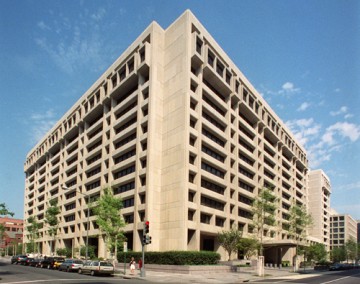
Vote Leave Response to IMF Report

0


‘The IMF has chosen to ignore the positive benefits of leaving the EU and instead focused only on the supposed negatives. If we Vote Leave we can create 300,000 jobs by doing trade deals with fast growing economies across the globe. We can stop sending the £350 million we pay Brussels every week. That is why it is safer to Vote Leave.’


  • The IMF’s analysis is partial. It does not provide any analysis of a new bilateral free trade agreement between the UK and the EU.
  • The IMF finds UK growth in the medium-term could increase if we left the EU and that EU membership does not increase economic growth.
  • The IMF underplays the value of new free trade agreements to the British economy, which could create 300,000 jobs.
  • The IMF ignores a major Treasury study showing that the cost of the EU could be as high as 7% of GDP, or £4,638 per household.
  • The Bank of England has said the IMF is wrong and that wages would rise.
  • The real risk to the economy is staying tied to the failing Eurozone, as the IMF admitted yesterday.
  • The IMF’s view on the economics of European Union membership has been strongly criticised by its former senior economist.
  • The IMF has been wrong about its forecasts in the past. George Osborne has criticised these errors.
  • The EU institutions are planning to take the UK’s seat on the IMF. Just this week the Commission referred Germany to the European Court for failing to adopt a common EU position in an international organisation.


The IMF’s analysis is partial. It does not provide any analysis of a new bilateral free trade agreement between the UK and the EU.

The report does not assess what the economic consequences of a UK-EU free trade agreement would be. It considers only a ‘limited’ scenario, where the UK joins the European Economic Area, and an ‘adverse scenario’, where the UK trades with the EU on WTO terms (p. 30). This is despite the IMF acknowledging that a ‘new UK-EU Free Trade Agreement’ is possible (p. 46). The UK’s former Ambassador to the EU and leading supporter of the IN campaign, Lord Kerr of Kinlochard, has admitted: ‘there is no doubt that the UK could secure a free trade agreement with the EU. That is not an issue’.

The IMF says whether or not such an agreement could be agreed ‘is clearly a political question’, which it does not attempt to address.

The IMF claims that leaving the EU could mean that the UK loses the financial passport. The Governor of the Bank of England has said: ‘that mutual recognition arrangements are possible to achieve’.


The IMF finds UK growth in the medium-term could increase if we left the EU and that EU membership does not increase economic growth.

The IMF’s literature review concludes that ‘joining the EU… did not affect the long-run growth rate of the economy’.

The IMF finds that in the medium-term growth could be higher if we left the EU. It concludes that, in 2020, growth if we remain in the EU would be 2.1% but if we left the EU would be between 2.1% and 2.6%. In 2021, it finds growth if we remain in the EU would be 2.1% but if we left the EU, it would be between 2.1% and 2.9%.


The IMF acknowledges that Foreign Direct Investment from the EU has fallen.

The IMF report states that ‘FDI inflows to the UK reached a peak… in 2008 and have since fallen in subsequent years’.

Official figures from the ONS show that over the last ten years the EU’s net investment into the UK has declined. Recently, the EU as a whole has disinvested from the UK. Today flows of FDI from the United States are more important to the British economy than those from the EU.


The IMF underplays the value of new free trade agreements to the British economy, which could create 300,000 jobs.

The IMF downplays the value of new trade agreements to the British economy, stating that ‘substituting to other export markets would likely take time’. As the IMF itself accepts, however, ‘the China-Switzerland agreement was reached relatively quickly-three years’. The EU, by contrast, has not struck a free trade agreement with China.

Oxford Economics has said that ‘an analysis of regional trade deals conducted over the past 20 years found an average duration of 28 months’. There are many examples: the US-Australia free trade agreement (FTA) was concluded in less than two years; the Switzerland-China FTA was negotiated in a little over two years; Swiss State Secretariat for Economic Affairs, 2016; and the US-Canada FTA was negotiated in less than two years.

The EU’s failure to conclude just five trade agreements it has promised to strike has, according to the European Commission’s own figures, cost the UK 284,000 jobs.


The IMF ignores a major Treasury study showing that the cost of the EU could be as high as 7% of GDP, or £4,638 per household.

The IMF claims that: ‘the potential for cuts in costs of regulation sufficient to outweigh losses from reduced access to the single market appears slim’.

In making this assessment, the IMF ignores an important study from HM Treasury in 2005, which found that: ‘although Europe’s founders aimed to remove barriers and reap the benefits of expanded markets internally, they also sought protection and special treatment for particular aspects of their economies such as agriculture. This has brought costs: expensive subsidies still remain in some sectors and it is estimated that barriers to external trade and investment – such as tariffs, quotas and unjustifiably restrictive standards – could cost Europe’s consumers up to 7 per cent of EU GDP’.

This is the equivalent of £125.2 billion per year in today’s prices, or £4,638 per household.


The Bank of England has said the IMF are wrong and that wages would rise.


The Bank of England has found that ‘the immigrant to native ratio has a small negative impact on average British wage’. The study found that ‘immigrants in recent years are most predominant in low-skill occupations’. The study concluded that: ‘the biggest effect is in the semi/unskilled services sector, where a 10 percentage point rise in the proportion of immigrants is associated with a 2 percent reduction in pay’.

The head of the IN campaign, Lord Rose acknowledged this and admitted wages will go up’ if we Vote Leave, stating: ‘the price of labour will go up’ .

George Osborne’s former close adviser, Rupert Harrison, agrees. A BlackRock report in February co-written by Harrison said leaving the EU could mean ‘lower immigration [which] could make labour scarcer in the long run, pushing up wage costs’.


The real risk to the economy is staying tied to the failing Eurozone, as the IMF admitted yesterday.

In its Article IV statement on the Eurozone published yesterday, the IMF stated that: ‘The medium term outlook is still weak… Productivity remains below pre-crisis levels and faces greater pressures from adverse demographics… high unemployment and debt burdens are likely to persist, leaving the euro area vulnerable to the risk of stagnation’.


The IMF’s view on the economics of European Union membership has been strongly criticised by its former senior economist.


A former senior International Monetary Fund economist, Ashoka Modi, who is now visiting professor at Princeton University, has said the IMF’s view on the referendum is fundamentally mistaken.

Professor Modi has said: ‘Consensus amongst economists quickly unravels. In April 1999, “Britain’s top academic economists” voted strongly in favour of switching from the pound to the euro. Mercifully, the government had better sense… economics is neutral on whether to leave or remain. The battle for Brexit must be fought on other grounds… the claim that Brexit will impose a huge cost rests on the twin beliefs that British trade with Germany will go down sharply and trade with the United States will not increase. Is that reasonable? First, British trade with Germany will not decline significantly. As economists have long known, trade is embedded in business and social networks into which partners invest enormous social capital. Studies repeatedly show that businesses make accommodations in profit margins to retain the benefits of trust and reliability. For this reason, all productive trading relationships will remain intact. For this reason too, German Finance Minister Wolfgang Schaeuble’s threat that renegotiation of Britain’s trade arrangements with the EU would be “most difficult” and “poisonous” is bluster. Germans run a trade surplus with Britain. Mr Schaeuble can humiliate the IMF, but he dare not hurt the interests of his exporters (or his importers). And even if British trade with the EU falls, trade with other regions will undoubtedly increase’.


The IMF has been wrong about its forecasts in the past. George Osborne has criticised these errors.

The IMF previously significantly underestimated growth in the British economy. In 2013 the IMF’s chief economist, Olivier Blanchard, warned that Britain’s growth prospects were very low. When challenged, the Chief Economist responded: ‘I am right and they are wrong’. His estimates turned out to be inaccurate and UK growth was much stronger than he predicted.

The IMF later had to accept that it was wrong about its warnings for the UK. Christine Lagarde later admitted that she had ‘underestimated’ the strength of growth when the IMF assessed the UK economy in 2013.

The IMF has made other major errors of forecasting. In June 2013, the IMF was forced to admit it had issued ‘economic projections that were too optimistic’ about its joint austerity programme with the EU in Greece.

The IN campaign has admitted there are no short-term risks to leaving the EU. The Chairman of the IN campaign, Lord Rose of Monewden, has admitted that there are no short-term risks in voting to leave, stating: ‘Nothing is going to happen if we come out of Europe in the first five years … There will be absolutely no change … It’s not going to be a step change or somebody’s going to turn the lights out and we’re all suddenly going to find that we can’t go to France, it’s going to be a gentle process.

George Osborne has criticised the IMF’s forecasts in the past. In April 2014, George Osborne made a speech to the American Enterprise Institute which was widely perceived to be a direct attack on the IMF for its previous negative forecasts about the British economy. Osborne said: ‘pessimistic predictions that fiscal consolidation was incompatible with economic recovery have been proved comprehensively wrong by events… many of those same pessimists have now found new grounds to be gloomy about our future… I want to explain why I believe both of these predictions will be proved wrong too… I have a different prescription. My message today at the IMF is this. The pessimists said our plan would not deliver economic growth. Now they say economic growth will not deliver higher living standards. They were wrong about the past and they are now wrong about the future’ .


The European Commission has already announced it intends to silence the UK’s voice in the IMF.

The EU’s blueprint for further integration and future Treaty change, the Five Presidents’ Report, calls for common EU representation ‘in the international financial institutions’ rather than letting individual member states speak for themselves. It suggests that the EU’s ‘fragmented voice means the EU is punching below its political and economic weight’ and specifically singles out the IMF as one such example.

In October 2015, the European Commission proposed a Council Decision to establish unified representation of the euro area in the IMF. The draft Decision, on which the UK will not have a vote, states that: ‘Close cooperation with non-euro area Member States shall be organised within the Council and the [Economic and Financial Committee], on matters related to the IMF. Common positions shall be coordinated on matters relevant for the European Union as a whole’.


The European Parliament voted for the UK to be silenced in the IMF in April.

In April, the European Parliament called for the EU to ‘seek full membership of international economic and financial institutions where this has not yet been granted and is appropriate (e.g. in the cases of the OECD and the IMF)’ .

The Parliament demanded that there should be ‘a single European Union constituency in the long term’, with voting in the EU Council ‘moving away from consensus to a weighted majority voting system’ .


The European Court will force this through. Just this week the Commission referred Germany to the European Court for failing to adopt a common EU position in an international organisation.

In an October 2014 decision, the European Court ruled, rejecting the UK’s arguments, that the EU may require the UK to adopt a common EU position in an international organisation of which the EU is not a member, provided that the subject matter of the decision relates to an EU legislative competence. As a result, the UK was forced to adopt an EU common position in the International Organisation of Vine and Wine.

Since the EU has legislative competence over financial services, the UK could be forced to adopt a common EU line in the IMF whenever the EU wants.

This week, the European Commission referred Germany to the European Court for failing to vote for amendments to the Convention concerning International Carriage by Rail, contrary to an EU common position.