17.7 C
London
Tuesday, January 13, 2026
secret satire society
Home Blog Page 458

Scots Cannot Have Another Referendum to Split UK

0


This EU referendum has been more about England and Wales Versus Ireland and Scotland as demonstrated by the voting pattern. With the Scots voting overwhelmingly in favour of the EU, the SNP leader, Nicola Sturgeon is now citing this as a reason to hold a second Scottish referendum, thus leading to the breakup of the United Kingdom.

According to the Edinburgh Agreement of 2014, the Scottish referendum was a once in a generation legally bound opportunity for Scotland to break away from the UK. They chose not to do so by 55.3% once the referendum was held on 18 September 2014. The EU referendum result is nothing to do with the SNP manifesto, and Sturgeon’s threats are not legally sound.

The SNP have lost their majority in the Scottish parliament, and any move to split the UK up would be contested heavily.

Oil revenues have dropped by 94% with the price of oil at a now perpetual low which will not rise any time soon. Revenue from North Sea Oil from 2015/16 – fell to £130 million. That is a drop from the £2.2 billion of the previous year.

Due to a decreasing revenue stream Scotland relies solely on the UK paying them money to keep afloat as the majority of the Scottish population are not able to pay taxes. The UK pays Scotland through the Barnett Formula £15 Billion over the amount that is raised by their taxes just to keep their public services afloat. Therefore, Scotland relies on England just to keep it afloat, especially with oil revenues at such a low level.

If Scotland wanted to leave, they would not only lose the UK handouts which amount to 15% of GDP, but they would not be granted use of the Pound Sterling.

Regarding currency, if Scotland wishes to join the EU, they would have to adopt the euro currency, additionally Scotland will have to pay Brussels £1.5 Billion per annum as is required by every member state.

If Nicola Sturgeon is willing to increase taxation on Scots by 65% to accommodate a 15% loss in GDP and a £1.5 Billion EU charge, she should not consider her vindictive knee-jerk move for a second Scottish Independence Referendum which will make her country poorer than it already is.

The EU May Barely Survive Brexit But Democracy and Justice Have Prevailed in Europe Today

1


Today was a historic moment that your children will remember, they will tell their children, and their grandchildren, and their children’s children.

It was the day democracy came back to Europe.

The road to a place where the firmament of justice and democracy lies is not paved with gold, but it is paved with hardship, with thorns and it is perilous, but it is the right path to take, and the British people chose this path over the undemocratic easy EU path where Britain would have become a subservient slave to other masters.

To forge your own path in life, embodies courage, honour and guts. Bravery of immense proportions was displayed at the EU referendum polls last night, as Britain broke free from an entity that eviscerates nations, and in a calculated nature condemns countries to a future of conformity and allegiance to unelected Eurocrats.

Yes, the EU will survive Britain leaving, but it will be an EU made up of sclerotic stuttering countries, most in vast debt, unemployment, unable to solve their economic circumstances because of restrictive EU regulations and economic curbs. Most importantly, the EU through its malevolent obstinate unwillingness to reform has resulted in Britain leaving, a nation that is truly the head of Europe, not only geographically but historically, economically, militarily and culturally.

No doubt, we will still get nil point at the insipid, politically motivated Eurovision song contest, if it is even held next year, although not many care, but our legacy has been about bringing forth a real democratic force back to the European continent so all of that other dross does not matter any more.

Democracy

This is a dawn of a new era, where Britain will regain its voice once again, taking back the reins of its own destiny.

The guileless protestations of the youthful naive Europhiles on the likes of twitter, are merely that. These people did not know how the EU really operated, they did not know of the machinations of the EU behemoth, and were brainwashed, comprehensively tricked by the likes of Cameron and his ministries of disinformation. Such was the inclusive brainwashing of some of these people that they actually believed ‘we are stronger IN’ within some Borg-like EU cube of multiple regulatory undemocratic restrictive gravy train driven soviet enslavement.

Those brainwashed citizens have now been educated in democracy, and let us hope they learn their lesson well, and break free from their mind-altered EU hypnosis. To awaken from their state may be quite a shock, but it is a good shock to the system.

The chief architects of this British EU misery were Tony Blair, Gordon Brown, Peter Mandelson, David Cameron and George Osborne. Their evil plan failed. They were scuppered by the Brexit campaign, democracy, and ultimately the people.

Today, you can walk the fields of England with your head held high, and know you are a free man or woman. You can be proud that Britain stood up for what it believed in, for freedom from tyranny, totalitarian rule, undemocratic restrictive laws, and that awful circular starred flag where each star depicts a death of a nation. Soon that flag will have one less star, and that loss will symbolise the rebirth of a nation from the ashes of EU servitude.

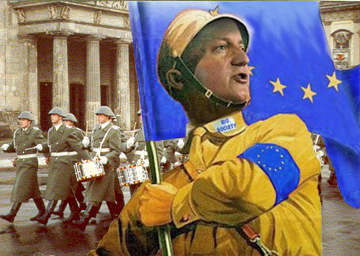
Farewell Big Society

1


Now that Comrade Cameron’s Project Fear is over, and the dust is settling over a very fine drubbing of the treacherous IN campaign, it has fallen upon a final farewell for the fellow, otherwise known as ‘Dodgy Dave’.

To fall on ones sword after such a mean spirited dirty fight is a sign that there is truly justice in the universe.

His legacy is one of lies, more lies, and even more lies, whilst lying.

Farewell, and don’t let the door hit you on the way out or forget to take that viper Osborne with you.

Vorsprung Durch Brexit!

1

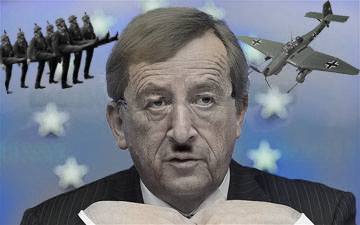
Thank you Jean Claude Juncker, without your help Brexit would never have happened.

This is a historic day for Britain and for Europe as well, because it means democracy has finally come back and won against an undemocratic totalitarian EU regime.

BREXIT

Britain has broken free from the shackles that held it back.

This is a great moment.

We will need time to repair the damage the EU has done to Britain but we shall prevail and move on for the better. Acknowledgement must come to Nigel Farage who fought for this referendum to be held, and won Britain’s freedom.

We fucking did it. Brexit will be imminent.

Great Britain is BACK!

Vote Leave For Democracy – Vote Remain For No Democracy

1


We will dispense with the intricacies and multiple reasons not to remain in the EU with a very simple sentence, especially for any undecideds out there.


Vote Leave for Democracy, Vote Remain for No Democracy. 


THAT’S IT…


SIMPLE!


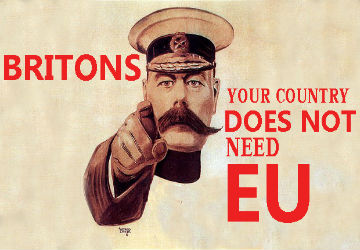
EU POSTER 6

Juncker: If Britain Remains There Will Be No More Reform in EU

0


One of the primary reasons IN campaigners spout their robotic rants during the EU referendum is that if we remain in the EU, Britain will be able to reform it, and change the EU.

Today, the EU president, Jean Claude Juncker said that Britain will have to agree to everything if it remains in the EU and it will never be able to reform the European Union, directly contradicting the ailing PM, David Cameron.

“We have concluded a deal with the prime minister, he got the maximum he could receive, we gave the maximum we could give.”

“So there will be no renegotiation, not on the agreement we found in February, nor as far as any kind of treaty negotiations are concerned.”

This is why to preserve our democracy, it is imperative that we Vote Leave on June 23. This is the only way the UK can ensure our sovereignty.

  • The UK has been outvoted every time it has voted against an EU measure – 72 times in total. 40 of these defeats have taken place since David Cameron became Prime Minister. This costs the UK taxpayer £2.4 billion a year. We do not get our way on the issues we care about.
  • Since the UK joined the EU in 1973, it has lost 101 out of 131 cases before the European Court, a failure rate of 77.1%. Since David Cameron became Prime Minister in May 2010, the UK has been defeated on 16 occasions: a failure rate of 80%.
  • EU rules mean that we don’t have the power to intervene to get our way at home. The Government has acknowledged that its scope to intervene in the steel crisis is limited by EU state aid rules. The Business Minister, Anna Soubry MP, has said ‘We have to be very careful because we have to be compliant with state aid rules.

This latest intervention by the EU president represents a major blow to the Tory leader’s hopes of persuading still undecided voters to vote Remain with the promise of a further renegotiation of Britain’s relationship with Brussels.

It is thoroughly clear from Juncker’s words that if Britain remains in the EU, there will be no room for reform.

Vote Leave on June 23

German Industry Calls for Free Trade Deal if We Vote Leave Tomorrow

0


New research shows that 5.5 million jobs in the EU depend on trade with the UK while the Chief Executive and Director General of the German CBI has said it would be ‘very, very foolish’ to impose trade barriers and called for continued free trade between the UK and the EU if we Vote Leave.


Responding to Markus Kerber’s comments that fatally undermine the IN campaign’s claims of future trade barriers,  Boris Johnson MP said:


‘After the incessant doom mongering of the IN campaign, we now hear the truth from the “Voice of German Industry” – that they would be desperate for free trade after we Vote Leave. Of course EU countries will continue trading with us on a tariff free basis – they would be damaging their own commercial interests if they didn’t. That’s why EU politicians would be banging down the door for a trade deal on Friday.


‘As Sir James Dyson said today, this is the last opportunity to regain control of our futures. If we want to take back control and a more secure and more prosperous future, we have to Vote Leave on 23 June.’


  • The Chief Executive and Director General of the BDI, Markus Kerber, has called for continued free trade if the UK leaves the EU.
  • The BDI is the German equivalent of the CBI.
  • New research from the House of Commons Library shows 5.5 million jobs in the EU depend on trade with the UK.
  • It is in other EU countries’ interests to strike a free trade agreement with the UK.
  • Leading pro-EU campaigners have conceded the UK will easily strike a free trade deal with the EU.


The Chief Executive and Director General of the BDI, Markus Kerber, has called for continued free trade if the UK leaves the EU.

Markus Kerber, the Chief Executive and Director General of the BDI, which represents German industry, has said his organisation would make the case for continued free trade in the event the UK votes to leave the European Union tomorrow.

Mr Kerber said ‘Imposing trade barriers, imposing protectionist measures between our two countries – or between the two political centres, the European Union on the one hand and the UK on the other – would be a very, very foolish thing in the 21st century. The BDI would urge politicians on both sides to come up with a trade regime that enables us to uphold and maintain the levels of trade we have’.


The BDI is the German equivalent of the CBI.

The BDI describes itself as ‘the Voice of German Industry’.

Markus Kerber is the Chief Executive and Director General of the BDI.

George Osborne made a speech to its conference last November, which he described as an ‘impressive gathering of German industry and ingenuity’.


New research shows 5.5 million jobs in the EU depend on trade with the UK.

New research from the House of Commons Library has revealed a ‘rough estimate’ of over 5.5 million EU jobs dependent on exports to the UK. It’s in the EU’s interests to strike a free trade deal with the UK. They need a deal more than we do.

The research concludes: ‘Compared to the figures for 2011, the number of EU jobs associated with exports to the UK has increased from 5.0 million to 5.5 million. This is because EU exports to the UK have increased by 10% in cash terms over this period. By contrast, the number of UK jobs associated with exports to the EU has fallen… as UK exports to the EU have fallen by 5% in cash terms between 2011 and 2014’.


It is in other EU countries’ interests to strike a free trade agreement with the UK.

The EU sells the UK far more than the UK sells the EU. In 2015, the UK bought £67.8 billion more in goods and services than the UK sold to the EU.

In 2014, 20 EU member states sold the UK more than the UK bought from them.

The UK is the EU’s largest single export market for goods, larger even than the United States, with whom the EU is presently trying to negotiate a free trade agreement.


Leading pro-EU campaigners have conceded the UK will easily strike a free trade deal with the EU.

The Prime Minister, David Cameron, has admitted: ‘If we were outside the EU altogether, we’d still be trading with all these European countries, of course we would … Of course the trading would go on … There’s a lot of scaremongering on all sides of this debate. Of course the trading would go on’.

The Foreign Secretary, Philip Hammond, has admitted that a free trade agreement in goods ‘would be relatively simple to negotiate’.

The UK’s former Ambassador to the EU and leading supporter of the IN campaign, Lord Kerr of Kinlochard, has admitted: ‘there is no doubt that the UK could secure a free trade agreement with the EU. That is not an issue’ .

Even the pro-EU CBI has said: ‘the UK is highly likely to secure a Free Trade Agreement with the EU, and such an agreement would be likely to be negotiated at an extremely high level of ambition relative to other FTAs [free trade agreements]’.

The pro-EU Centre for European Reform has accepted that, ‘given the importance of the UK market to the eurozone, the UK would probably have little difficulty in negotiating an FTA’.

IN Campaign Can’t Find a Positive Reason to Stay in the EU

0


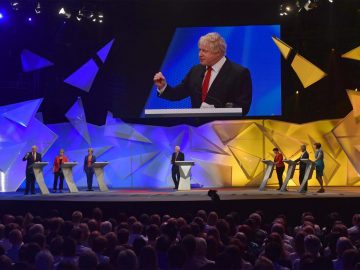
Responding to the BBC debate at Wembley, Vote Leave Chief Executive Matthew Elliott said:


‘The IN campaign had nothing positive to contribute tonight – just like they’ve failed to make a positive contribution during the whole campaign. They’ve lost the economic argument, they don’t want to spend the £350 million we send to Brussels every week on our priorities and can’t explain how we can ever control immigration from inside the EU. The couldn’t even be honest about how many laws in this country come from Brussels. The public will have a choice on Thursday, they can choose project fear and vote IN or they can chose project hope and take back control of their money and their borders. A Vote to Leave on Thursday is a vote for democracy.’


The Government gave up its veto over the next Treaty as part of the renegotiation.

Before the deal, Government Ministers made clear their consent to the next EU Treaty was the price for other member states agreeing to their renegotiation.

George Osborne said: ‘So let me be candid: there is a deal to be done and we can work together. Rather than stand in your way, or veto the Treaty amendments required, we, in Britain, can support you in the Eurozone make the lasting changes that you need to see strengthen the euro. In return, you can help us make the changes we need to safeguard the interests of those economies who are not in the Eurozone’.

David Cameron has said ‘we will not stand in the way of those developments, as long as we can be sure that there are mechanisms in place to ensure that our own interests are fully protected’. He believes this happened during his renegotiation.

David Cameron’s renegotiation agreement (which he claims is ‘legally binding and irreversible’) states that: ‘Member States not participating in the further deepening of the economic and monetary union will not create obstacles to but facilitate such further deepening’. It also obliges the UK to ‘refrain from measures which could jeopardise the attainment of the objectives of economic and monetary union.’. This means the UK is committing to support the planned new EU Treaty.


House of Commons Library research shows 61% of legislation comes from the EU.

Research by the House of Commons Library shows that in 2013, 61.2% of legislation was made by Brussels.

The CBI has admitted ‘over 50% of all government legislation originat[es] in Brussels’.

The CBI has said: ‘It is calculated that 70% of all new legislation relevant to business is now European rather than national in origin’.

Nick Clegg has admitted: ‘half of all new legislation now enacted in the UK begins in Brussels’.

Chuka Ummuna has said: ‘EU legislation… accounts for around half of all new regulation’.


The new EU Treaty will transfer major powers to the EU institutions from the British Parliament and courts.

An EU intelligence agency: In November, Dimitris Avramopoulos, the European Commissioner for Migration called for ‘the creation of a European Ιntelligence Agency’.

An EU army: In March last year, the President of the European Commission, Jean-Claude Juncker announced that he wanted to see the introduction of a European Army ‘to show that we are serious’.

Taking control of our NHS: Last February, European Commissioner for Health, Vytenis Andriukaitis, called to ‘change the European Union treaties in the future’ to allow the EU to take control of public health, including over alcohol. He has said ‘I can’t imagine a more economically effective possibility than to manage health issues at EU level’.

Scrapping the UK’s zero rates of VAT: The Economics Commissioner, Pierre Moscovici, has called for further harmonisation of taxation, including scrapping the UK’s zero rates, stating a ‘zero rate is not the best idea’.

Introducing a new ‘pillar of social rights’: The European Commission has called for the ‘development of a European pillar of social rights’, stating ‘the Commission will pursue two complementary work strands: firstly, modernising and addressing the gaps in existing social policy legislation to take account of today’s work environment and to ensure that new models of work maintain a fair balance in the relationship between employers and workers’. The Commission suggests areas such as wages, union rights, pensions and access to social services could form part of the ‘pillar’. This could mean the UK’s more generous social protections are weakened by EU harmonisation.


The EU has stopped us removing dangerous individuals from the UK.

Terrorists. In 2015, the Special Immigration Appeals Commission ruled the UK could not exclude the French national ZZ from the UK because of EU law, despite the fact that he was a suspected terrorist. The Commission concluded that: ‘We are confident that the Appellant was actively involved in the GIA [Algerian Armed Islamic Group], and was so involved well into 1996. He had broad contacts with GIA extremists in Europe. His accounts as to his trips to Europe are untrue. We conclude that his trips to the Continent were as a GIA activist’.

Murderers. In 1995, Learco Chindamo, who is an Italian citizen, murdered the headteacher Philip Lawrence who went to help a 13-year-old boy who was being attacked. He was sentenced to life imprisonment in 1996. In 2007, Mr Justice Collins, sitting in the Asylum and Immigration Tribunal, ruled that removing Chindamo would be ‘disproportionate’ under EU law. David Cameron said that Tribunal’s decision ‘flies in the face of common sense. It is a shining example of what is going wrong in our country. He is someone who has been found guilty of murder and should be deported back to his country… What about the rights of Mrs Lawrence or the victim?’. Cameron said: ‘This does seem to be complete madness’.

Rapists. Mircea Gheorghiu, a Romanian national, entered the UK without leave in January 2007. In November 2007, he was convicted of driving a motor vehicle with excess alcohol, fined and disqualified from driving for 20 months. It later emerged that he had ‘a criminal record in Romania. In 1990 he was convicted of the offence of rape and sentenced to 6 years imprisonment. Between 2001 and March 2002 he was convicted on three occasions of forestry offences, cutting timber without a licence, and received custodial sentences on the last two occasions.’ The Secretary of State removed him from the UK in March 2015. Nonetheless, on 18 November 2015, Mr Justice Blake, sitting in the Upper Tribunal, decided this was unlawful under EU law, ruling Gheorghiu must be ‘reunited with his family as quickly as possible’ and that he was ‘entitled to a permanent residence on his return and the residence card issued to him will reflect that’.


Turkey and four other countries are joining the EU. This is being accelerated with unanimous support. Talks could begin the day after the referendum.

The accession process is being accelerated. In a press release issued on 15 June, the European Commission has announced that ‘The Commission tabled the Draft Common Position on Chapter 33 (financial and budgetary provisions) in the Council on 29 April, enabling the Council to decide on the opening of this Chapter by end of June. In addition, preparatory work continues at an accelerated pace to make progress on five Chapters’.

There is unanimous support in the EU for the quickening pace of Turkish accession. On 18 March 2016, the European Council unanimously agreed that the EU should ‘re-energise the accession process’ and that Turkish acceleration should be ‘accelerated’.

David Cameron strongly supports this. In 2010, Cameron said he was ‘angry’ at the slow pace of Turkish accession, that he was the ‘strongest possible advocate for EU membership’ for Turkey, and that ‘I want us to pave the road from Ankara to Brussels’. In 2014, he said that: ‘In terms of Turkish membership of the EU, I very much support that. That’s a longstanding position of British foreign policy which I support’.

The Government admitted it supported Turkish accession last month. Last month, the Europe Minister, David Lidington, said: ‘The UK supports Turkey’s EU accession process’.

The British public will not get a vote on the accession of Turkey to the EU. The European Union Act 2011 allows the Government to ratify EU accession treaties without a referendum). There was no referendum on the accession of Croatia to the EU in 2013 (European Union.

The Government opposes giving the British people a say. As the Minister for Europe, David Lidington, said in 2011: ‘A few years ago, 10 new member states joined the European Union at the same time. I believe that their combined population then was 73 million, which is slightly greater than Turkey’s population is now. I do not believe that anybody in this country argued at that time that a British referendum on those accessions was right’.

The UK is paying £2 billion to help Turkey, Albania, Macedonia, Montenegro and Serbia to join the EU. Turkey alone is set to receive over £1 billion of UK funds to help prepare it for membership.


The UK has gone further than EU law on workers’ rights. Further harmonisation of social legislation poses a threat to the UK’s more generous protections.

The minimum wage, which was introduced in 1998, had nothing to do with the EU.

The Wilson Government passed the Equal Pay Act 1970 before it entered the then European Economic Community in 1973. The Labour Government passed the Sex Discrimination Act 1975, before the first EU Directive on the topic was adopted. There is no need to be in the EU to ensure equal pay for equal work.

The Employment Protection Act 1975 provided that a woman who was dismissed on the grounds of pregnancy was to be treated as unfairly dismissed. This was adopted long before the Pregnant Workers Directive.

The UK has been more generous than EU law on paid holidays, with 5.6 weeks entitlement each year, rather than the four contained in EU law.

The UK is more generous on maternity pay. Statutory maternity pay lasts for 39 weeks under UK law. This is much more generous than EU law, which provides for a period of 14 weeks.

UK legislation also gives women the right to receive 90% of their salary during the first six weeks of leave. EU law only requires that the rate of pay be equivalent to statutory sick pay in this period. This is £88.45 per week.

The UK is more generous on maternity leave. UK maternity leave may be taken for up to 52 weeks. EU law only requires a period of four months.

The right of part-time workers not to be discriminated against is contained in UK legislation. The enabling legislation was the Employment Relations Act 1999. This means that protections for part-time workers would remain in UK law if we left the EU.


The UK had legislation against discrimination on grounds of race long before the EU did.

The UK passed the legislation against race discrimination, the Race Relations Act 1965 and the Race Relations Act 1968, before we joined the EU.

High Court Judge Sir Rabinder Singh has said: ‘The Race Relations Act 1976 [which consolidated the 1960s legislation] was perhaps one of the strongest pieces of legislation of its kind in the world and certainly in Europe. It long predated legislation against racial discrimination in EU law’.

The TUC and the EEF Have Been Consistently Wrong About the EU

0


The TUC and the EEF have both been consistently wrong about the EU – most notably in their support for joining the euro. In hindsight it would have been an utter disaster for the UK economy if we’d followed their advice.


  • The EEF supported joining the single currency, claiming the UK was playing ‘Russian roulette with manufacturing jobs’ by staying out.

  • The TUC supported the single currency, claiming it would be a ‘grave error’ to stay ‘out in the cold’.

  • Seven in ten economists took the same view and said we should scrap the pound.

  • If we had followed their advice fifteen years ago, our economy would be in a disastrous condition.

  • The real risk to the economy comes from staying tied to the failing Eurozone and having to pay its bills.

  • If we Vote Leave, we can create 300,000 new jobs by taking back control over trade policy.


The EEF supported joining the Exchange Rate Mechanism and then the single currency, claiming the UK could become a Third World economy if it did not join.

The EEF said in 2000 of the Government’s decision not to scrap the pound immediately that: ‘The longer it goes on, the Government will just be playing Russian roulette with manufacturing jobs’.

‘The Engineering Employers’ Federation is backing the CBI’s call for the government to make a stronger case for the euro. “The government isn’t leading the debate,” said Martin Temple, EEF director-general’.

‘The Engineering Employers Federation, which represents some of Britain’s biggest businesses, is urging the Chancellor to set a date for entry to the single European currency. While welcoming last Monday’s Commons statement committing the Government to the principle of signing up for the euro in the next Parliament, EEF director -general Graham Mackenzie said no sensible company would devote significant resources to prepare for Emu without a more precise timetable. Mackenzie, who represents companies including GKN and Vickers, said: “We would urge the Chancellor to work with business in order to draw up a realistic convergence programme, based on a provisional date for entry”‘.

‘A campaign to stop manufacturing industry entering the “twilight zone” of a Third World economy was launched today. The Engineering Employers’ Federation published an 18-point manifesto… proposals included… Ensuring full UK involvement in European economic and monetary union including a single currency… EEF deputy director-general Peter Ball said engineering was the engine of the nation’s economic growth, but he complained that UK manufacturing was too small. “We have to change this, but time is not on our side. We have no wish to enter the twilight zone of a Third World economy”‘.


The TUC supported the single currency, claiming it would be a ‘grave error’ to stay ‘out in the cold’.

‘Gordon Brown, the shadow chancellor, came under pressure from the Trades Union Congress to adopt a more positive approach to the single currency’.

‘The Trades Union Congress yesterday plunged headlong into the controversy over the Government’s position on the European single currency, with John Monks, the general secretary, warning it would be a “grave error” if the Chancellor ruled out joining before the next general election’.

John Monks, the General Secretary of the TUC, said: ‘Staying out in the cold for the time being will look less and less attractive as we see the effects of the UK being excluded from the European Central Bank and the euro group of finance ministers’.


Seven in ten economists took the same view and said we should scrap the pound.

A poll of members of the Royal Economic Society in 1999 found that 65% of economists backed scrapping the pound. If we had followed their advice fifteen years ago, our economy would be in a disastrous condition.

Youth unemployment in Greece is 50.4%. Youth unemployment in Spain is 44.8%.


The real risk to the economy comes from staying tied to the failing Eurozone and having to pay its bills.

In its Article IV statement on the Eurozone published last week, the IMF stated that: ‘The medium term outlook is still weak… Productivity remains below pre-crisis levels and faces greater pressures from adverse demographics… high unemployment and debt burdens are likely to persist, leaving the euro area vulnerable to the risk of stagnation’.

The Governor of the Bank of England has also stated ‘we do think that there are risks of remaining in the European Union’, and that these manifested themselves ‘in particular, in relation to the development of the euro area’.

The former Governor of the Bank of England, Lord King of Lothbury, recently warned that the Eurozone ‘might explode’.


If we Vote Leave, we can create 300,000 new jobs by taking back control over trade policy.

The EU’s failure to conclude just five trade agreements with the United States, Japan, ASEAN, India and Mercosur has, according to the European Commission’s own figures, cost the UK 284,341 jobs.

The aggregate GDP of all the countries with which the EU had a trade agreement in force in January 2014 was $7.7 trillion. By contrast, the aggregate GDP of all countries with which Chile had trade agreements was $58.3 trillion. The figure for South Korea was $40.8 trillion and that for Switzerland was $39.8 trillion.

The EU has failed to negotiate a free trade agreement with China. By contrast, both Iceland (which has a population of less than half a million) and Switzerland have negotiated free trade agreements with China. Australia has done so as well. The time between New Zealand beginning negotiations for a free trade agreement with China and the agreement’s entry into force was just four years.

Public Services Buckling Under Pressure From Uncontrollable Migration

0


This week the IN campaign admitted that there can be no upper limit to migration if we stay in the EU.


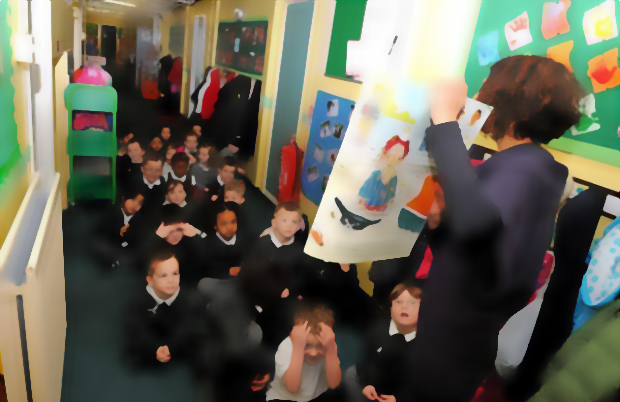
New research released shows the devastating impact of uncontrolled migration on our schools.


Commenting, Priti Patel MP said:


‘The EU is undemocratic and interferes too much in our daily lives. We have seen that with the scale of migration, and the impact this has had on local communities – and key public services such as the NHS, housing and schools.  With more countries waiting to join the EU, including Albania, Serbia, and Turkey – and with British taxpayers paying almost £2 billion to help them join – this problem can only get worse.

‘This research proves that class sizes are already overstretched, with an 8% increase over the last year in the number of pupils in classes over 30. These demands will only increase if the UK remains in the EU with no control over its borders.

‘Thursday offers a once in a lifetime opportunity to say that the situation is unsustainable – and to recognise that it is hurting British families. On Thursday, we have the chance to take back control and Vote Leave.’


Research shows if Britain remains in the EU, these problems will get worse:


  • 100,800 infants are now educated in classes over the legal limit of 30 pupils per class – an increase of 8% on the previous year.

  • Currently one in five primary school children has a first language other than English – in state funded primary schools it is 19.4%, in primary academies it is 19.3%.

  • 11.6% of children currently fail to get into their first choice primary school.

  • If the EU remains at its current size, we can expect an additional 261,000 school age European citizens to be in the UK school system by 2030. This could increase to 571,000 if the ‘A5’ accession countries (Albania, Macedonia, Montenegro, Serbia and Turkey) join in the near future, as currently planned.

  • The increase in school age European citizens is likely to cost between £12.3 billion and £21.7 billion.

  • Added to this, there are also capital costs needed to accommodate these extra children, estimated to range between £3.4 billion and £7.3 billion.

  • Added together, the total additional cost to the UK schools budget of this increase in the school age population due to EU migration can therefore be expected to range between £15.6 billion (assuming the A5 countries don’t join) and £28.9 billion (assuming they do join). The additional annual cost by 2030 will be between £1 billion to £1.9 billion per year.


The scale of the problem


Britain’s schools are under pressure from uncontrolled EU immigration. David Cameron has admitted, ‘in some areas, the number of migrants we’re seeing is far higher than our local authorities, our schools and our hospitals can cope with. They’re much higher than anything the EU has known before in its history’. This has caused a number of problems for many schools: something that the Prime Minister has also admitted: ‘There are primary schools where dozens of languages are spoken, with only a small minority speaking English as their first language’.


These claims are supported by official statistics from the Government:

100,800 infants are now educated in classes over the legal limit of 30 pupils per class – an increase of 8% on the previous year.

Currently one in five primary school children has a first language other than English – in state funded primary schools it is 19.4%, in primary academies it is 19.3%.

11.6% of children currently fail to get into their first choice primary school.

16% don’t get into their first choice secondary school.


New research shows that the pressures identified by the Prime Minister are set to get far more severe over the next fifteen years.


School-age migration from the EU since the A8 accession


The Chief Executive of the UK Statistics Authority has recently confirmed the high numbers of children migrating to the UK from other EU member states. From 2000-2014, 152,000 EU migrants of school age came to the UK.


EEA school-age migration, 2000-2014

2000

2001

2002

2003

2004

Average

10,000

4,000

2,000

10,000

3,000

5,800

2005

2006

2007

2008

2009

Average

3,000

6,000

8,000

14,000

10,000

8,200

2010

2011

2012

2013

2014

Average

13,000

13,000

16,000

14,000

25,000

16,200

Total, 2000-2014

152,000


Source: UK Statistics Authority, 3 May 2016.


These numbers are on a steep upward trajectory. From 2000-2004, the average number of school-age EEA migrants per year was 5,800. This rose to 8,200 in 2005-2009. It then nearly doubled to 16,200 in the period 2010-2014. This trend has been especially clear since the accession of the eastern European member states in 2004. It also increased at an unprecedented rate in the last year of recorded data.


Source: UK Statistics Authority, 3 May 2016.


Over the same period, around 1 million net migrants came to the UK from the EU, 515,000 of whom were from the EU8 accession states.


EU total and school-age net migration compared

Year

EU total

EU8 total

EU school

EU8 school

2000

6,000

10,000

2001

7,000

4,000

2002

7,000

2,000

2003

15,000

10,000

2004

87,000

49,000

3,000

2005

96,000

61,000

3,000

2006

104,000

71,000

6,000

2007

127,000

87,000

8,000

2008

63,000

20,000

14,000

2009

58,000

16,000

10,000

2010

77,000

49,000

13,000

2011

82,000

40,000

13,000

2012

82,000

30,000

16,000

2013

123,000

44,000

14,000

2014

174,000

48,000

25,000

Total

1,108,000

515,000

151,000

52,000


Source: ONS, 2015; ONS, May 2016; UKSA, 3 May 2016.


The school-age migrants as a percentage of the total was therefore as follows:


  • All EU states: 13.6%.

  • EU8 accession states: 10.1%.


The number of children in the UK of school age with one or more parent of EU/EEA nationality more than doubled between 2007 and 2015:


Total school-age population with one or both parents of EEA nationality

2007

309,000

2008

326,000

2009

361,000

2010

432,000

2011

475,000

2012

419,000

2013

520,000

2014

565,000

2015

699,000


Source: UK Statistics Authority, 29 April 2016.


Future school-age migration


A conservative estimate of future school-age migration from the EU is that one in ten migrants will be of school age. This allows for a forecast of future school-age migration from the EU to be calculated. Vote Leave has already set out forecasts for future inward migration. It is possible to adapt these models to calculate future school-age migration from the EU. This provides:


  1. A baseline forecast, in which the candidate countries do not accede to the EU.

  2. A low forecast, under which the accession countries join in 2020 and migrate to the UK at the same rate as the EU-8 countries did.

  3. A medium forecast is that net EU migration mirrors migration from the EU-2 countries.

  4. A high forecast – which builds on the medium forecast, and takes into account the pull factor of the national living wage.


We also include a scenario in which transitional controls are imposed for a period of seven years from 2020 until the end of 2027, the duration of transitional controls following the A2 accessions in 2007. This forecast assumes the same migration as in the case of the baseline until 2028, and the increases in net migration that occur under the low forecast thereafter).


Future school-age migration from the EU (cumulative)

Year

Baseline

Transitional Controls

Low Forecast

Medium Forecast

High Forecast

2016

18,400

18,400

18,400

18,400

18,400

2017

36,800

36,800

36,800

36,800

38,148

2018

55,200

55,200

55,200

55,200

58,648

2019

73,600

73,600

73,600

73,600

79,900

2020

92,000

92,000

94,061

98,114

110,118

2021

110,400

110,400

116,583

128,743

148,548

2022

128,800

128,800

141,166

165,485

195,192

2023

147,200

147,200

165,748

202,228

241,836

2024

165,600

165,600

190,331

238,970

288,480

2025

184,000

184,000

214,914

275,713

335,124

2026

202,400

202,400

239,497

312,456

381,767

2027

220,800

220,800

264,080

349,198

428,411

2028

239,200

241,261

288,662

385,941

475,055

2029

239,200

245,383

294,845

404,283

503,299

2030

239,200

251,566

301,028

422,626

530,195


Children born to EU parents in the UK


In 2014, 76,650 children were born in the UK to a parent or parents from the EU.


Children born to EU parents in the UK

Number

% total births

Father from EU

50,512

7.3

Mother from EU

64,067

9.2

Both parents from EU

37,929

5.5

One or both parents from EU

76,650

11.0


Source: ONS, August 2015.


These numbers are rising, as the long-term trend for those born in England and Wales to mothers from the EU shows.


Children born to EU mothers, England & Wales

Year

Number

% of total births

2008

44,022

6.2

2009

47680

6.8

2010

52,868

7.3

2011

55,194

7.6

2012

59,061

8.1

2013

60,448

8.7

2014

64,067

9.2


Source: ONS, August 2015.


Children born to future EU migrants


The current birth rate in England and Wales is 12.1 births per thousand of the population. Assuming this will be the birth rate for future EU migrants, the table below indicates the number of children expected to be born to net EU migrants coming to the UK between now and 2030. It should be stressed that the totals at the bottom of the table do not include children born to EU migrants who arrived before this year.


Births to EU net migrants arriving from 2016

Year

Baseline

Transitional Controls

Low Forecast

Medium Forecast

High Forecast

2016

2,226

2,226

2,226

2,226

2,226

2017

4,453

4,453

4,453

4,453

4,616

2018

6,679

6,679

6,679

6,679

7,096

2019

8,906

8,906

8,906

8,906

9,668

2020

11,132

11,132

11,381

11,872

13,324

2021

13,358

13,358

14,107

15,578

17,974

2022

15,585

15,585

17,081

20,024

23,618

2023

17,811

17,811

20,056

24,470

29,262

2024

20,038

20,038

23,030

28,915

34,906

2025

22,264

22,264

26,005

33,361

40,550

2026

24,490

24,490

28,979

37,807

46,194

2027

26,717

26,717

31,954

42,253

51,838

2028

28,943

29,193

34,928

46,699

57,482

2029

33,396

31,918

37,903

51,145

63,126

2030

33,396

34,892

40,877

55,591

68,769


Assuming that the children born to EU migrants will enter the school system five years after their birth, it is possible to combine the figures for the number of school age migrants from the EU and the number of births to EU migrants. Adding these two figures together reveals the total number of new persons of school age due to EU migration for the next fifteen years.


Persons added to school population due to EU net migration

Baseline

Transitional Controls

Low Forecast

Medium Forecast

High Forecast

2016

18,400

18,400

18,400

18,400

18,400

2017

36,800

36,800

36,800

36,800

38,148

2018

55,200

55,200

55,200

55,200

58,648

2019

73,600

73,600

73,600

73,600

79,900

2020

92,000

92,000

94,061

98,114

110,118

2021

112,626

112,626

118,809

130,969

150,775

2022

133,253

133,253

145,618

169,938

199,808

2023

153,879

153,879

172,428

208,907

248,932

2024

174,506

174,506

199,237

247,876

298,148

2025

195,132

195,132

226,295

287,585

348,448

2026

215,758

215,758

253,603

328,034

399,742

2027

236,385

236,385

281,161

369,222

452,029

2028

257,011

259,072

308,718

410,410

504,317

2029

259,238

265,420

317,875

433,199

538,205

2030

261,464

273,830

327,033

455,987

570,745

Total

2,275,252

2,295,861

2,628,838

3,324,241

4,016,362

Average

151,683

153,057

175,256

221,616

267,757


School funding


Schools in England have three main streams of current revenue: the Dedicated Schools Grant (Schools and High Needs Blocks), the Pupil Premium and the Education Services Grant (ESG). If these are added together and then divided by the number of schools pupils, it is possible to calculate education spending per pupil.


Education Funding

Schools Block (2016-17) (£m)

High Needs Block (2016-17) (£m)

Pupil Premium (2015-16) (£m)

ESG (2016-17) (£m)

Total Funding (£m)

No. pupils

Total funding per pupil (£)

32,649

5,229.87

2,411

507

40,867

7,041,321

5,803.89


Source: Education Funding Agency, 2016; Education Funding Agency, 2015; Education Funding Agency, 27 April 2016


As the 2016 cohort passes through the school system, each pupil will cost on average £5,803.89 per year. By assuming that per pupil funding remains at today’s levels, it is possible to calculate the cost of future school-age migration from the EU to the UK as set out above. In each cohort, we must allow for a certain proportion who will not enter state education: a generous assumption is that this is 7% (the same as the general proportion of children who attend independent schools in England).


Capital costs
The Department for Education provides £13,780 to cover the capital cost of each school place. This does not include the land values of new school premises.
The table below shows the capital costs of children born to EU migrants arriving from 2016. Those born 2016-19 will also enter secondary education, so will require both an additional primary and secondary school place. Likewise, children who enter the UK between 2016 and 2024 will also enter secondary education, so their capital costs are also doubled.Total current and capital spending
Combining the figures above gives an estimate of the total costs, both current and capital.

Combined current and capital costs


Baseline (£bn)

Transitional Controls (£bn)

Low (£bn)

Medium(£bn)

High (£bn)

Total current (£bn)

12.28

12.39

14.19

17.94

21.68

Total capital (£bn)

3.35

3.51

4.19

5.84

7.31

Total current and capital (£bn)

15.63

15.90

18.38

23.79

28.99

Total per year (£bn)

1.04

1.06

1.23

1.59

1.93

The total cost to the schools budget of EU migration from 2016 to 2030 is therefore expected to range between £15.6 billion and £28.9 billion. This is an annual cost of between £1 billion to £1.9 billion per year. It is worth noting finally that these are conservative estimates since they do not include: the cost of purchasing land for new schools; early-years education; pre-2016 EU migration, or migration of those under five years of age. The actual cost of a remain vote to our schools budget is likely to be far higher.