17.7 C
London
Tuesday, January 13, 2026
secret satire society
Home Blog Page 460

The Sad Death of MP Jo Cox Marred By IN Campaigners Exploitation

4


There are certainly questions about MPs’ safety within constituencies and every day movement which should be addressed.

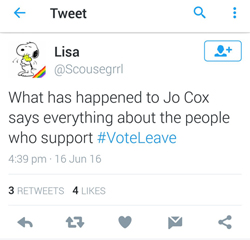
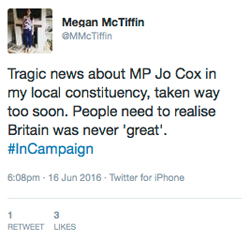
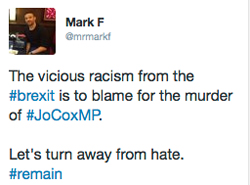
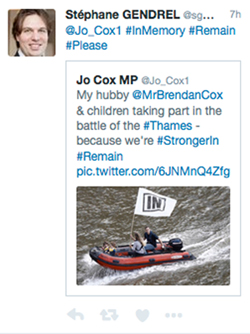
The DS has suspended all posts regarding the EU referendum since yesterday afternoon, however there are a sizeable amount of shameful IN campaigners pleading for Remain votes on social networks exploiting the shooting on Thursday.

‘Unconfirmed reports’

Some members of the media have decided to sensationalise the tragic death of the MP and put out a pro-European anti-Brexit  stance at the same time. This is a shameful exploitation of Joe Cox’s death for political gain.

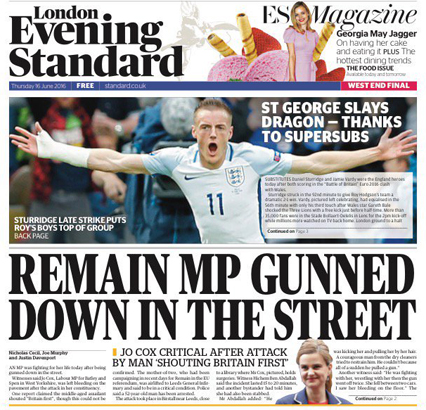
ES exploitation

This is wrong. We will not be swayed by the despicable exploitation of an MP’s death at the hands of a mentally ill person. The reprehensible exploitation for political gain by Remain campaigners is abhorrent.

R.I.P Jo Cox

tweet exploitation

tw 1

tw 2


tw 3

The Video the EU Tried to Shut Down – Strasbourg to Brussels


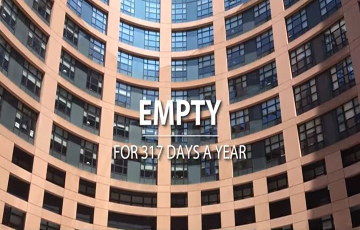
For four days each month, around 5000 bureaucrats, officials and translators along with thousands of boxes of paperwork travel 300 miles to the Strasbourg Parliament, which otherwise remains empty for over 300 days a year.


The EU is so keen for taxpayers not to know about this wasteful practice, that officials stopped our camera crew from filming lorries being loaded up in Strasbourg ahead of the four hour drive back to Brussels.

The video was posted on Facebook just 24 hours ago and has received 2.6 million views and over 100,000 shares. There has been no advertising of this video.


The cost of the move is estimated at £130 million each year, with the annual bill for maintaining the Strasbourg Parliament reaching £50 million alone. In total, this farce has cost taxpayers nearly £2 billion since it started. The move also generates over 10,000 tonnes of CO2, the equivalent to 12,000 cars driving round the world.


It is enshrined in the EU treaties that Strasbourg is the official seat of the European Parliament, therefore it requires the agreement of all 28 member states to change this. Although there is widespread support to stop this wasteful practice, France will always veto any changes due to the vast sums of money it brings to Strasbourg.

Turkish Government Exposes David Cameron’s Spin on Turkey

0


This week, UK diplomats, in collusion with other senior EU figures, rubber-stamped a decision to open the next stage of negotiations for Turkey’s accession to the EU.


The EU’s migration commissioner has said that Turkey now has the ‘road open’ to ‘join the European family’.


Boris Johnson, Michael Gove, and Gisela Stuart have written to David Cameron, urging him to clarify the Government’s position. Does he still want to ‘pave the road from Ankara to Brussels’, or has he changed his mind? If he has, then he must pledge to veto Turkey’s membership of the EU, and block the imminent granting of visa-free travel to nearly 80 million Turkish citizens.


Commenting, Vote Leave Chief Executive Matthew Elliott said:


‘David Cameron’s furious insistence that Turkey’s accession is not an issue in this referendum is looking increasingly bizarre – only yesterday, a spokesman for the Turkish government dismissed his claims as rhetoric to reassure voters.


‘It’s very clear that accession negotiations are rapidly accelerating, and if Cameron refuses to guarantee he will veto their membership then the public will draw the reasonable conclusion that the only way to avoid having common borders with Syria and Iraq is to Vote Leave on 23 June.’


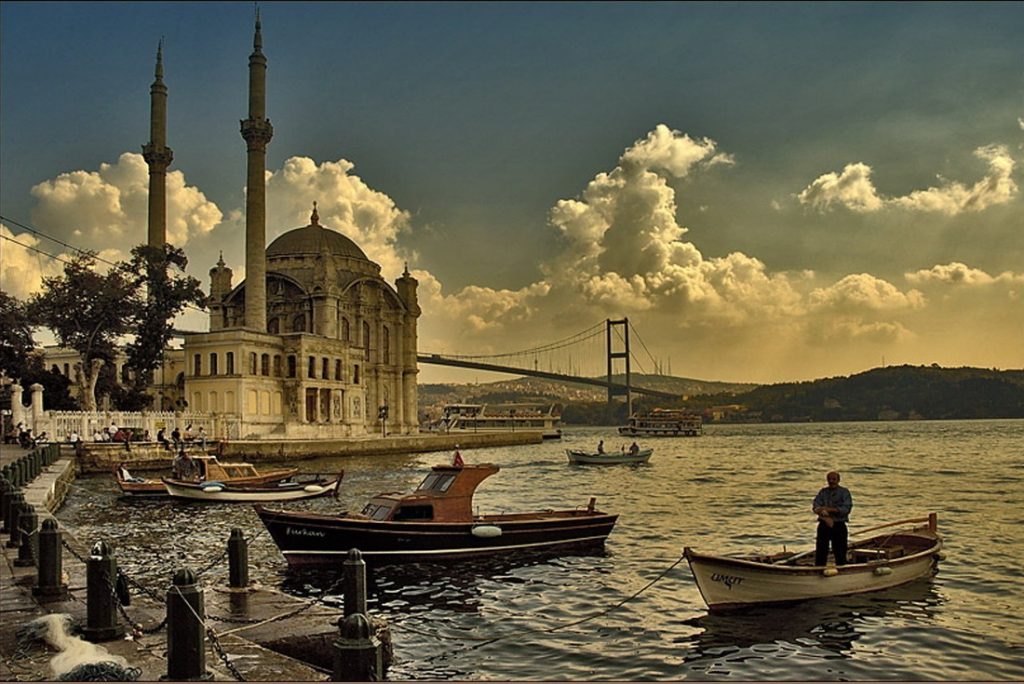
DreamShaper_v5_Istanbul_mosque_in_sunset_0


  • The Turkish Government has today slammed as spin claims by David Cameron that Turkish accession is not on the cards.

  • The European Commission yesterday announced that Turkish membership talks are being conducted ‘at an accelerated pace’.

  • This confirmed a report that David Cameron has agreed to a quickening of accession talks, which could begin as early as the day after the referendum.

  • David Cameron strongly supports Turkish accession at the earliest moment.

  • Turkey is set to join the EU in the near future: we are paying them £1 billion to join.


The Turkish Government has today slammed as spin claims by David Cameron that Turkish accession is not on the cards.

A report in The Times this morning notes that: ‘Diplomats, including those from the UK, yesterday rubber-stamped a decision to open the next chapter of Turkey’s accession negotiations by the end of the month. Mr Cameron insists that Turkey’s accession is not an issue for the future as on its present rate of progress it would not be ready “until the year 3000”. A spokesman for the Turkish government dismissed that yesterday as rhetoric to reassure voters’.

The European Commissioner for Migration and Citizenship, Dimitris Avramopoulos, has said that Turkey now has the ‘road open’ to ‘join the European family’.

The European Commission yesterday announced that Turkish membership talks are being conducted ‘at an accelerated pace’.

In a press release, the European Commission has announced that ‘The Commission tabled the Draft Common Position on Chapter 33 (financial and budgetary provisions) in the Council on 29 April, enabling the Council to decide on the opening of this Chapter by end of June. In addition, preparatory work continues at an accelerated pace to make progress on five Chapters’.

The Commission issued a detailed statement on the rapidly accelerating progress of Turkish accession this morning. Part of this process will occur ‘at the end of June’, just after the public votes.


This confirmed a report that David Cameron has agreed to a quickening of accession talks, which could begin as early as the day after the referendum.

The Financial Times reported this week that: ‘Turkey’s EU membership talks are set to be given a boost within a fortnight, after Britain abandoned its attempt to freeze the process of opening a new “negotiating chapter” with Ankara until after its EU referendum… At a meeting of diplomats on Tuesday morning, Britain was the only member state to refuse to give its consent for talks to begin with Ankara on financial and budgetary issues, in spite of its traditional standing as one of the biggest champions of Turkish membership talks. However, London’s resistance only lasted a few hours, which means the formal opening of talks is expected on June 24 or 30, in line with the Turkey-EU deal’.


David Cameron strongly supports Turkish accession at the earliest moment.

David Cameron strongly supports Turkish accession. In 2010, Cameron said he was ‘angry’ at the slow pace of Turkish accession, that he was the ‘strongest possible advocate for EU membership’ for Turkey, and that ‘I want us to pave the road from Ankara to Brussels’. In 2014, he said that: ‘In terms of Turkish membership of the EU, I very much support that. That’s a longstanding position of British foreign policy which I support’.

The Government admitted it supported Turkish accession during the campaign. In April, the Europe Minister, David Lidington, said: ‘The UK supports Turkey’s EU accession process’.

The British public will not get a vote on the accession of Turkey to the EU. The European Union Act 2011 allows the Government to ratify EU accession treaties without a referendum. There was no referendum on the accession of Croatia to the EU in 2013.

The Government opposes giving the British people a say. As the Minister for Europe, David Lidington, said in 2011: ‘A few years ago, 10 new member states joined the European Union at the same time. I believe that their combined population then was 73 million, which is slightly greater than Turkey’s population is now. I do not believe that anybody in this country argued at that time that a British referendum on those accessions was right’.


Turkey is set to join the EU in the near future: we are paying them £1 billion to join.

Turkey is due to join the EU in the next few years, having already signed a deal with the EU to prepare for accession (European Commission, March 2016, link).

It is set to receive over £1 billion of UK funds to help prepare it for membership.

The new European Council building contains chairs and building space for Turkey when it joins.

The North Will Be Stronger if We Take Back Control

0


Responding to claims by Gordon Brown and Lord Kinnock that the North of England would be damaged if we took back control, Vote Leave Chief Executive Matthew Elliott said:


‘These are desperate times for the IN campaign – recycling a declaration of support that was first made in February and then repeated again in April.


‘The truth is that the UK’s cities have prospered in spite of our EU membership, not because of it.


‘Every week we send £350 million to the EU, enough to build a fully staffed NHS hospital. Our cities would benefit hugely if took back control of this money and spent it on our priorities – such as public services and infrastructure – instead. The only way to do this is to Vote Leave on 23 June.’


Gordon Brown and Lord Kinnock will today claim that the North could be turned into ‘wastelands’ if we take back control.


  • Leading members of the IN campaign have already accepted we will strike a free trade agreement, so manufacturing industry in the North would not be affected.

  • If we take back control, we could strike new trade deals with major economies, boosting jobs in the North.

  • Leading employers, including Nissan, Hitachi, Bentley, Vauxhall Motors and Unilever, have made clear a leave vote will not affect their investments in the North.

  • Current EU funding will be guaranteed until 2020 if we Vote Leave.

  • There is no guarantee of EU funding past 2020 and it has been heavily cut back in recent years.

  • Gordon Brown has previously accepted that the EU costs consumers as much as 7% of GDP, or £4,639 per household.


Leading members of the IN campaign have already accepted we will strike a free trade agreement, so manufacturing industry in the North would not be affected.

David Cameron has admitted: ‘If we were outside the EU altogether, we’d still be trading with all these European countries, of course we would … Of course the trading would go on … There’s a lot of scaremongering on all sides of this debate. Of course the trading would go on’.

Philip Hammond has admitted that a free trade agreement in goods ‘would be relatively simple to negotiate’.

The UK’s former Ambassador to the EU and leading supporter of the IN campaign, Lord Kerr of Kinlochard, has admitted: ‘there is no doubt that the UK could secure a free trade agreement with the EU. That is not an issue’.

Even the pro-EU CBI has said: ‘the UK is highly likely to secure a Free Trade Agreement with the EU, and such an agreement would be likely to be negotiated at an extremely high level of ambition relative to other FTAs.

The pro-EU Centre for European Reform has accepted that, ‘given the importance of the UK market to the eurozone, the UK would probably have little difficulty in negotiating an FTA’.


If we take back control, we could strike new trade deals with major economies, boosting jobs in the North.

The EU’s failure to conclude just five trade agreements with the United States, Japan, ASEAN, India and Mercosur has, according to the European Commission’s own figures, cost the UK 284,341 jobs.

The UK will be able to strike more valuable free trade deals than the EU has done to date. The aggregate GDP of all the countries with which the EU had a trade agreement in force in January 2014 was $7.7 trillion. By contrast, the aggregate GDP of all countries with which Chile had trade agreements was $58.3 trillion. The figure for South Korea was $40.8 trillion and that for Switzerland was $39.8 trillion.

The EU has, for example, failed to negotiate a free trade agreement with China. By contrast, both Iceland (which has a population of less than half a million) and Switzerland have negotiated free trade agreements with China.


Leading employers, including Nissan, Hitachi, Bentley, Vauxhall Motors and Unilever, have made clear a leave vote will not affect their investments in the North.

Kevin Rose, Board Member at Bentley, has said: ‘We made our plans, we’ve announced the investments … and they were in full knowledge that there was a referendum so we believe in the UK … Regardless [of the outcome], we think that the UK is a good place for investment’.

Carlos Ghosn, the Chief Executive of Renault-Nissan has said: ‘Whatever is the decision of the UK we will adapt to it. I don’t think there is a reason to worry. We knew for many years that [an exit] was possible. So we’ll deal with it’. Trevor Mann, Chief Performance Officer at Nissan has said: ‘If there was a future trade agreement between the UK and EU then it wouldn’t make a lot of difference’

The Chairman of Hitachi, Hiroaki Nakanishi, has said that ‘we cannot say Brexit is the wrong way’ and that ‘we have a long history in the UK. From the Japanese side, the UK is more accessible from the viewpoint of the language and the long history between Britain and Japan. We have to find excellent leaders for each business we operate, so in that sense, the long history with the UK can help us to find good leaders’.

Tim Tozer, Chairman and Managing Director of Vauxhall Motors, has said: ‘If this country would vote to leave the EU, would that trouble or concern us? There my answer is no because I don’t think that in that event there would not be a trade agreement with what was left of the EU’.

Paul Polman, Chief Executive Officer of Unilever, has said: ‘The effectiveness of my research centre is the quality of the people I have there and the ideas coming out in terms of the innovations that we produce. We don’t make a decision on moving research centres around depending on if you are in the EU or not… I am in every country basically, in any trading zone, in the EU, out of the EU. People need to buy shampoo, people need to eat their Knorr or Cup-a-soup, and they want to buy their Coleman’s and they want to buy their Magnum ice cream. They are not going to say that is function of if I am in the EU or if I am not in the EU’.


EU funding will be guaranteed if we Vote Leave.

Ministers supporting Vote Leave have explicitly committed to maintain funding. They have stated: ‘There is more than enough money to ensure that those who now get funding from the EU – including universities, scientists, family farmers, regional funds, cultural organisations and others – will continue to do so while also ensuring that we save money that can be spent on our priorities. If the public votes to leave on 23 June, we will continue to fund EU programmes in the UK until 2020, or up to the date when the EU is due to conclude individual programmes if that is earlier than 2020. We will also be able to spend the money much more effectively. For example, some of the bureaucracy around payments to farmers is very damaging and can be scrapped once we take back control’.


There is no guarantee of EU funding past 2020 and it has been heavily cut back in recent years.

There is no guarantee of EU funding after 2020. The EU’s Seven Year Budget, the Multi-Annual Financial Framework, expires in 2020. As the pro-EU Northern Ireland Minister, Ben Wallace, has admitted ‘I cannot guarantee that [EU funding] past 2021’.

CAP spending is being cut. Figures from HM Treasury show that CAP spending on market support in the UK has fallen from £3.9 billion in 2011-2012 to £2.7 billion in 2014-2015.

Structural funds have been slashed in areas of the North. Structural funds are being cut, with some areas in England (such as South Yorkshire and Merseyside) receiving 61% cuts from the 2007-2013 period to the 2014-2020 period (R (Rotherham MBC) v Secretary of State for Business, Innovation and Skills.

Support could be made more efficient if we Vote Leave. A Government review in 2013 found that the majority of stakeholders considered that ‘CAP remains misdirected, cumbersome, costly and bureaucratic’ while the National Farmers’ Union said that EU arrangements were ‘close to impossible’. Similar complaints about EU science funding have been raised. Sir Andre Geim, 2010 Nobel Prize winner for physics has said: ‘I can offer no nice words for the EU framework programmes which… can be praised only by Europhobes for discrediting the whole idea of an effectively working Europe’.


Gordon Brown has previously accepted that the EU costs consumers as much as 7% of GDP, or £4,639 per household.

In 2005, Gordon Brown admitted that: ‘although Europe’s founders aimed to remove barriers and reap the benefits of expanded markets internally, they also sought protection and special treatment for particular aspects of their economies such as agriculture. This has brought costs: expensive subsidies still remain in some sectors and it is estimated that barriers to external trade and investment – such as tariffs, quotas and unjustifiably restrictive standards – could cost Europe’s consumers up to 7 per cent of EU GDP’.

This is the equivalent of £125.233 billion per year in today’s prices. It amounts to £4,639 per household or £23,236 per company per year.

Deep IN Campaign Splits On Freedom of Movement

0


Theresa May said reforms to free movement are needed, stating ‘I think again as I’ve said that we should look at further reform in the future‘.

This contrasts with what the George Osborne said earlier. Interviewed on the BBC Today Programme Osborne was asked whether there was ‘anything more to offer in terms of controls on freedom of movement’. He replied ‘the short answer is no’, before going on to try to argue that migration could be brought down through welfare controls.

Vote Leave Chief Executive Matthew Elliott said:

‘The IN campaign are in a complete mess. Not only are they divided over whether or not to talk about immigration, they are deeply split when they do.

‘David Cameron and George Osborne are adamant that there is no need to change the freedom of movement rules, while the Home Secretary says that they need reform. Jeremy Corbyn can’t agree with his own Deputy Tom Watson.

‘No wonder the public don’t trust the Government’s commitment to bring migration down to the tens of thousands. The only way to get back control of our borders – and introduce an Australian points based system – is to Vote Leave on 23 June.’


Vindictive Osborne Punishment Budget Reduces Chance of Becoming PM

1


The nasty Chancellor wants to punish Britons with £30 billion of tax rises, and already 57 Conservative MPs are commandeering an effort to stave off this punishment at the pass.

They have warned: ‘If he were to proceed with these proposals, the Chancellor’s position would become untenable.’

After a Brexit, there will no doubt be a cross-party effort to oust Osborne from his job before he does more damage.

The only thing to do is to Vote Leave so we can kick George into the twilight zone where he belongs.

Vote Leave Chair Gisela Stuart said:

‘I simply can’t believe that Alistair Darling and the Labour Party would support an Osborne punishment budget that is designed to hit the poorest hardest. George Osborne’s reckless and shameful proposals would, if not blocked, cut the NHS, cut pensions and cut funding for schools and I will never vote for this and nor do I think will any of my Labour colleagues.

‘I hope the Labour Party will now make clear that these desperate proposals would never have our support, and are nothing more than another sorry attempt to scare the British people into supporting George Osborne, David Cameron, and their rich friends who want us to remain in the EU.’


Joint statement from 57 Conservative MPs:

‘We find it incredible that the Chancellor could seriously be threatening to renege on so many manifesto pledges. It is absurd to say that if people vote to take back control from the EU that he would want to punish them in this way. We do not believe that he would find it possible to get support in Parliament for these proposals to cut the NHS, our police forces and our schools.

‘If the Chancellor is serious then we cannot possibly allow this to go ahead. It would be unnecessary, wrong and a rejection of the platform on which we all stood. If he were to proceed with these proposals, the Chancellor’s position would become untenable.

‘This is a blatant attempt to talk down the market and the country. The Chancellor risks doing damage to the British economy in his bid to win this political campaign.’


The MPs who have signed the statement are:


  1. Iain Duncan Smith

  2. Liam Fox

  3. Cheryl Gillan

  4. David Jones

  5. Owen Paterson

  6. John Redwood

  7. Sir Gerald Howarth

  8. Tim Loughton

  9. Crispin Blunt

  10. Sir William Cash

  11. Bernard Jenkin

  12. Julian Lewis

  13. Adam Afriyie

  14. Nigel Adams

  15. Lucy Allan

  16. Steve Baker

  17. Bob Blackman

  18. Peter Bone

  19. Andrew Bridgen

  20. David Burrowes

  21. Maria Caulfield

  22. Christopher Chope

  23. Chris Davies

  24. Philip Davies

  25. David TC Davies

  26. Nadine Dorries

  27. Steve Double

  28. Richard Drax

  29. Nigel Evans

  30. Michael Fabricant

  31. Marcus Fysh

  32. Chris Green

  33. Rebecca Harris

  34. Gordon Henderson

  35. Philip Hollobone

  36. Adam Holloway

  37. Kwasi Kwarteng

  38. Jonathan Lord

  39. Craig Mackinlay

  40. Anne Main

  41. Karl McCartney

  42. Nigel Mills

  43. Anne Marie Morris

  44. Sheryl Murray

  45. David Nuttall

  46. Matthew Offord

  47. Andrew Percy

  48. Tom Pursglove

  49. Jacob Rees-Mogg

  50. Andrew Rosindell

  51. Henry Smith

  52. Derek Thomas

  53. Anne Marie Trevelyan

  54. Martin Vickers

  55. David Warburton

  56. Bill Wiggin

  57. William Wragg


Let’s kick this shister where it hurts on June 23. Vote Leave!


Britain Clears Path for Turkey’s EU Membership

0


Commenting on revelations that Turkey’s accession to the EU is being accelerated, Vote Leave Chief Executive Matthew Elliott said:


‘This is the second time this week that the Government’s plans to accelerate visa-free travel and EU membership for Turkey have been revealed. David Cameron said he wants to “pave the road from Ankara” and the Brussels negotiations to make this happen are well underway. It is now abundantly clear that the only way to take back control of our borders is to Vote Leave on 23 June.’

istanbul turkey


  • The Financial Times  reports that David Cameron has just sped up Turkish accession, with talks to begin as early as the day after the referendum.
  • This is just the latest example of Turkey’s accession being fast-tracked.
  • David Cameron strongly supports Turkish accession at the earliest moment.
  • Turkey is set to join the EU in the near future: we are paying them £1 billion to join.


David Cameron has just sped up Turkish accession, with talks to begin as early as the day after the referendum.

The Financial Times reports that: ‘Turkey’s EU membership talks are set to be given a boost within a fortnight, after Britain abandoned its attempt to freeze the process of opening a new “negotiating chapter” with Ankara until after its EU referendum… At a meeting of diplomats on Tuesday morning, Britain was the only member state to refuse to give its consent for talks to begin with Ankara on financial and budgetary issues, in spite of its traditional standing as one of the biggest champions of Turkish membership talks. However, London’s resistance only lasted a few hours, which means the formal opening of talks is expected on June 24 or 30, in line with the Turkey-EU deal’.


This is just the latest example of Turkey’s accession being fast-tracked.


On 29 November 2015, ‘the EU welcomed a re-energizing of the accession process’ as part of its attempt to contain its migrant crisis.

A new Chapter of the accession negotiations, on Economic and Monetary Policy, was opened on 14 December 2015. This represented a quickening of Turkish accession talks.

In May 2016, the Commission announced that progress towards accession would ‘accelerate’.


David Cameron strongly supports Turkish accession at the earliest moment.


David Cameron strongly supports Turkish accession. In 2010, Cameron said he was ‘angry’ at the slow pace of Turkish accession, that he was the ‘strongest possible advocate for EU membership’ for Turkey, and that ‘I want us to pave the road from Ankara to Brussels’. In 2014, he said that: ‘In terms of Turkish membership of the EU, I very much support that. That’s a long-standing position of British foreign policy which I support’.

The Government admitted it supported Turkish accession during the campaign. In April, the Europe Minister, David Lidington, said: ‘The UK supports Turkey’s EU accession process.

The British public will not get a vote on the accession of Turkey to the EU. The European Union Act 2011 allows the Government to ratify EU accession treaties without a referendum. There was no referendum on the accession of Croatia to the EU in 2013.

The Government opposes giving the British people a say. As the Minister for Europe, David Lidington, said in 2011: ‘A few years ago, 10 new member states joined the European Union at the same time. I believe that their combined population then was 73 million, which is slightly greater than Turkey’s population is now. I do not believe that anybody in this country argued at that time that a British referendum on those accessions was right’.


Turkey is set to join the EU in the near future: we are paying them to join.

Turkey is due to join the EU in the next few years, having already signed a deal with the EU to prepare for accession.

It is set to receive over £1 billion of UK funds to help prepare it for membership.

The new European Council building contains chairs and building space for Turkey when it joins.

EU-funded CBI Does Not Represent British Business

0


Commenting on the CBI’s claims that there is no alternative to EU membership, Matthew Elliott, Chief Executive of Vote Leave said:


‘The CBI’s unflinching support for Brussels is simply not credible. They have consistently called it wrong on the EU, ranging from support for joining the euro to opposition to a referendum and support for the Exchange Rate Mechanism. Now they want us to believe that we can’t take back control from Brussels and secure new trade deals.


‘Not only they are wilfully misrepresenting the debate over leaving the EU but they are not even being straight over who they speak for. You can’t trust the CBI on EU, they are the voice of Brussels.’


The CBI claims that there is no alternative to EU membership.


  • The CBI knows the real Albanian option is to vote to stay and supports free movement with Turkey.
  • If Norway, Switzerland and Canada have such a bad deal, why do the peoples of those countries not want to join the EU?
  • The CBI refuses to disclose how many members it has. When it was campaigning for the euro, it admitted it had just 2,037 ‘direct’ members, 0.06% of British companies.
  • The CBI claims to speak for 190,000 businesses . It is doubtful the CBI is even in contact with this ‘indirect’ membership (i.e. companies that are members of trade associations that are affiliated to the CBI).
  • It appears that 28.9% of the 190,000 businesses the CBI claims to represent are farmers, who are opposed to EU membership by nearly 2:1.
  • The CBI misrepresented business opinion on the single currency. Its landmark EU membership survey was called ‘dodgy’ by the British Polling Council.
  • Recent business surveys have shown growing hostility to the EU.
  • Business polling has consistently shown a majority of firms want the British Government, not the EU, in charge of trade policy and reject the premise of the so-called ‘single market’.
  • The CBI hardly ever criticises the EU and is funded by the European Commission.
  • The CBI’s own report on the EU referendum showed growth would be higher in the event of a vote to leave the EU.


The CBI knows the real Albanian option is to vote to stay and supports free movement with Turkey.

Albania is currently a candidate country to join the EU and the UK is currently paying nearly £2 billion to it and four other countries to join the EU.

In Albania, average gross annual earnings are £3,690, 13.4% of the median annual salary in the UK, or 19.7% of what a person on the minimum wage will earn in 2020.

In 2008, Gary Campkin of the CBI said ‘the CBI would support free movement in relation to Turkey, as we have done with the A8 and the A2’.


If Norway, Switzerland and Canada have such a bad deal, why do the peoples of those countries not want to join the EU?

Norway: 74% of Norwegian voters would say no to Norway joining the EU. 17% want to join.

Switzerland: According to a 2012 poll for the Swiss Broadcasting Corporation, just 6% of Swiss voters favoured joining the EU, against 63% who want the present bilateral arrangements preserved and 11% who want to join the European Economic Area (EEA). The Swiss People’s Party, which is anti-EU, won the October 2015 general election. Switzerland has withdrawn its application to join the EU.


Canada: The prospect of Canada applying to join the EU is so fanciful no opinion polling has been conducted.


The CBI refuses to disclose how many members it has. When it was campaigning for the euro, it admitted it had just 2,037 ‘direct’ members, 0.06% of British companies.

The CBI claims that: ‘the CBI is the voice of business’ and that ‘we’re the voice of business’.

The CBI is notoriously secretive about the number of members it has and the composition of its membership. It has consistently refused to state how many members it has.

In 1999, when the CBI was campaigning to join the euro, it was forced to admit that it had just 2,037 ‘direct’ members. This was the equivalent of just 0.06% of British businesses in 2000.


The CBI claims to speak for 190,000 businesses (3.52% of British firms). It is doubtful the CBI is even in contact with this ‘indirect’ membership (i.e. companies that are members of trade associations that are affiliated to the CBI).

The CBI’s 2012 annual report refers to a ‘direct corporate membership’ and ‘organisations [represented] through their affiliations with trade associations that are direct members of the CBI’. The CBI has previously admitted to a parliamentary committee that it has both a ‘direct’ and an ‘indirect’ membership.

In 1999, when the CBI was campaigning to join the euro, it was only able to poll ‘indirect’ members with the consent of the relevant trade association, suggesting it has no direct contact with them.

190,000 companies amount to just 3.52% of the UK’s 5.39 million businesses.


It appears that 28.9% of the 190,000 businesses the CBI claims to represent are farmers, who are opposed to EU membership by nearly 2:1.

The National Farmers Union (NFU) is an affiliate member of the CBI.

The NFU has 55,000 members in England and Wales.

This would suggest that 28.9% of the 190,000 businesses the CBI claims to represent are, in fact, farmers.

A recent survey for Farmers Weekly showed that by 58% to 31%, farmers would vote to leave the EU.


The CBI misrepresented business opinion on the single currency. Its landmark EU membership survey was called ‘dodgy’ by the British Polling Council.

In 1999, the CBI claimed that three in every four businesses backed British membership of the single currency.

Polling by ICM showed that just 32% of British companies supported joining, with 64% of CBI members opposed to scrapping the pound.

The CBI’s landmark 2013 pro-EU survey was condemned as ‘pretty dodgy’ by the Nick Moon, Secretary to the Management Committee of the British Polling Council following a complaint from Vote Leave’s Campaign Director, Dominic Cummings.


Recent business surveys have shown growing hostility to the EU.

By 46.4% to 42.8%, British Chambers of Commerce (BCC) members who do not export would vote to leave the EU.

By 50.1% to 46.7%, BCC members which export to the rest of the world only would vote to leave the EU. Firms which do not export to the EU represent over 90% of British businesses.

A majority of IoD members (50%) agree that the UK could make an economic success of leaving the EU.


Business polling has consistently shown a majority of firms want the British Government, not the EU, in charge of trade policy and reject the premise of the so-called ‘single market’.

Polling by Perspective Research Services in August 2015 found that, by 69% to 25%, SMEs agree that the UK can trade and cooperate with Europe without giving away permanent control to the EU, rejecting the proposition that ‘the single market’ is good for jobs and living standards. By 74% to 22%, SMEs believed the British Government, not the EU, should be in charge of trade policy.

ICM polling in April 2004 found that by 82% to 14%, British Chief Executives believed that the British Government, not the EU, should be in charge of trade negotiations.


The CBI backed British membership of the Exchange Rate Mechanism (ERM) and subsequently campaigned to scrap the pound.

In a 2015 CBI document celebrating ‘[h]ighlights from the CBI’s first 50 years’, the CBI included how in 1987 it ‘called for full UK membership of the European Monetary System, arguing that the discipline of a more stable exchange rate could help to increase Britain’s share of world trade’.

In 1999, the CBI argued that joining the Euro would ‘deliver significant benefits to the UK economy’, including allowing British companies ‘to participate fully in a more complete and competitive single market’ and removing ‘from the UK economy the harmful impact of exchange rate volatility’.


The CBI has consistently called for the further transfer of control to Brussels. It welcomed the Nice and Lisbon Treaties and secretly lobbied the Government not to ask for substantive changes to the UK’s terms of membership during the renegotiation.

The CBI claimed that the need for the Nice Treaty was ‘pressing’.

In 2008, it stated that it ‘welcome[d] the attempt to clarify the role and remit of the EU’ in the Lisbon Treaty.

Leaked documents revealed the then President of the CBI, Sir Mike Rake, who is now campaigning to remain in the EU, privately urged the Government ‘not to overplay our hand in the negotiations with Brussels’.


The CBI hardly ever criticises the EU.

An analysis of a year’s worth of CBI press releases showed only 1% of them were critical of the EU, and that the CBI did not challenge any of the 2,337 laws or 852 judgments passed by Europe during the period.

The CBI recently failed to comment on a European Court ruling holding that insurance claims handling services had to be made subject to VAT. Freddy Macnamara, founder of insurance group Cuvva, said: ‘Removal of VAT exemption on claims management companies would be a disaster, meaning a multi-billion pound rise in premium for responsible insurance customers’. The CBI made no public comment.


The CBI is funded by the EU.

The CBI received £955,484 from the European Commission between 2009 and 2015.


The CBI’s own report on the EU referendum showed growth would be higher in the event of a vote to leave the EU.

A report by PwC for CBI found that in the periods 2021-2025 and 2026-2030, growth would be higher (or the same) if the UK left the EU (whether or not in struck a free trade agreement with the EU) than in the counterfactual in which the UK remained in the EU.

The report also found the economy would grow substantially in the event of a leave vote, stating: ‘Compared to 2015 levels, real UK GDP would be 39% larger in the FTA scenario and 36% larger in the WTO scenario in 2030’.

The report showed that 3 million jobs would be created even in the event the UK left the EU and traded on WTO terms.

School Place Statistics Show We Must Take Back Control of Our Borders

0


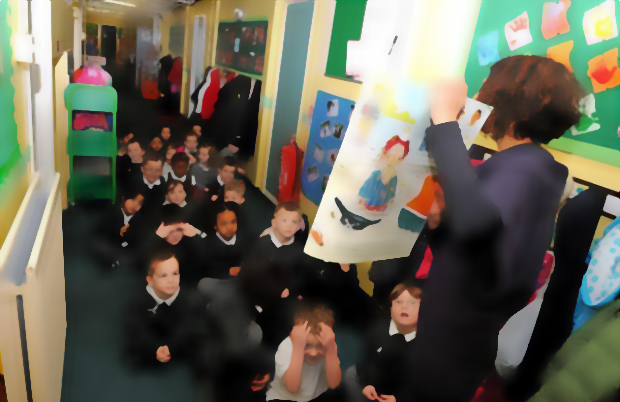
Commenting on the release of statistics on school places by the Department for Education, Priti Patel MP said:


‘The shortage of school places – with one in six children in England missing out on a place at their top choice of secondary school – is yet another example of how uncontrolled migration is putting unsustainable pressures on our public services. Education is one of the most important things that Government delivers, and it’s deeply regrettable that so many families and young people have been let down in this way.


‘The truth is that for as long as we remain a member of the EU we are completely unable to control the numbers of people coming to this country – and with another five countries in the pipeline to join the EU, including Turkey, Serbia and Albania, the problem can only get worse.


‘The only way to take back control of our borders is to vote to leave the EU on the 23 June. We can also take back control of the £350 million we send to the EU every single week, and reinvest it in our vital public services. This is yet another example of how Britain can look forward to a more prosperous, more secure future if we Vote Leave.’


The Department for Education has today published statistics on secondary and primary school applications and offers.


  • The proportion of first preference offers for 11 year olds is in decline.

  • The number of applications continues to increase.

  • Immigration is continuing to rise.

  • The EU’s free movement rules are placing an unprecedented burden on our schools, resulting in a growing shortage of school places.


The proportion of first preference offers for 11 year olds is in decline.

84.1% of 11-year-olds across the country were given a spot at their first preference, compared with 86.7% in 2013.

This means that around one in six children in England missed out on a place at their top choice of secondary school this year.

This is particularly acute in London, where the proportion of applicants receiving an offer of their first choice school in 2016 was 68.8%, down from 68.9% in 2015.


The number of applications continues to increase.

548,006 applications were received for a place at secondary school in 2016, nearly 50,000 more than the 2013 figure of 499,968.


Immigration is continuing to rise.

The UK population is rapidly expanding as a result of migration from the EU. Since 2004, 1.25 million persons have been added to the population, more than the population of Birmingham.

In 2015, 270,000 persons came to the UK from the EU. This is the equivalent of a city the size of Newcastle. This is up from 264,000 in 2014.

In 2015, net migration from the EU was 184,000. This is the equivalent of adding a city the size of Oxford to the UK population. This is up from 174,000 in 2014.

Total net migration in 2015 was 333,000, up from 313,000 in 2014 (ONS, 26 May 2016, link).

The EU’s free movement rules are placing an unprecedented burden on our schools, resulting in a growing shortage of school places.

The Local Government Association says that two out of five council areas will not have enough primary school places by September 2016.

Logic of IN Campaign’s Claims is to Vote Leave

0


Commenting on Alan Johnson’s remarks on immigration on The Today Programme, Tom Watson’s comments to the BBC, and Rachel Reeves’s comments on The Daily Politics, Labour MP John Mann said:


‘David Cameron failed to achieve any reform of the European Union – particularly in the area of border control. He asked them to change their open borders policy, but the resounding answer was no.


‘While some in the In campaign are desperately trying to hang on to the idea that Cameron’s renegotiation could reduce immigration, senior Labour figures are openly admitting defeat on this issue – and calling for a change to the EU’s obsession with freedom of movement.


‘While it is welcome that they are finally admitting that uncontrolled migration is a problem, the truth is that they still have no solutions. If Cameron’s “renegotiation” told us one thing, it is that the EU will not move on this founding principle.


‘The only way to take back control of our borders and introduce an Australian style points based immigration system is to Vote Leave on 23 June.’


  • Leading members of the IN campaign are now calling for restrictions on free movement and admitting David Cameron’s deal was a sham.
  • Changes to free movement are impossible within the EU. David Cameron didn’t win any concessions despite the threat of leaving the EU.
  • IN campaigners have previously accepted restrictions on free movement are impossible within the EU and its ‘single market’.
  • Freedom of movement drives down wages.
  • The Home Secretary, the House of Lords Economic Affairs Committee and the OECD have said that mass migration has brought no discernible fiscal benefits.
  • Leading IN campaigners have previously praised uncontrolled immigration from the EU stating it is the solution to our problems.
  • Alan Johnson claimed Turkey could join the EU without free movement. This is false.
  • Alan Johnson claimed juxtaposed border controls at Calais would end. The French Interior Minister has said they will continue.
  • Alan Johnson wanted the UK to join the single currency. This would have been a disaster.


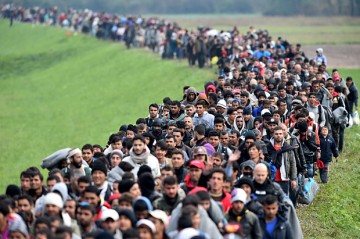
eu migrants boat

Leading members of the IN campaign are now calling for restrictions on free movement and admitting David Cameron’s deal was a sham.

Tom Watson has suggested that curbs on free movement may be needed today. BBC Political Editor Laura Kuenssberg has said: ‘Watson-voters been “telling us for a long time” party needs to do more on immigration, suggests any future govt need to curb freedom of movt’.

IN campaigner Rachel Reeves said today: ‘there are huge problems in the European Union at the moment. I am not that saying everything is fine. I think this referendum is a wake up call to the European Union, to the British Government that things have to be done differently on freedom of movement’.

Yesterday, former Secretary of State for Children, Schools and Families, Ed Balls, recognised that free movement was causing problems, stating we need to ‘put new controls on economic migration’.

Leading IN campaigner, Miriam Gonzalez Durantez, whose is married to pro-EU lobbyist Nick Clegg has claimed that the agreement in February was a ‘Mickey Mouse negotiation that the Prime Minister did’.

Alan Johnson has also admitted the renegotiation is a ‘sham’. When asked by Evan Davies whether the renegotiation ‘is a bit of a sham?’, Alan Johnson replied ‘I think so’.

Changes to free movement are impossible within the EU. David Cameron didn’t win any concessions despite the threat of leaving the EU.

EU law provides that: ‘Every citizen of the Union has the right to move and reside freely within the territory of the Member States’.

The European Commission states that: ‘free movement of workers is a fundamental principle of the Treaty’. The Council of Ministers argues that: ‘the free movement of persons is a fundamental pillar of EU policy and that the internal market and its four freedoms are indivisible’.

The Prime Minister promised to change this before his ‘renegotiation’. His final deal contained no changes to free movement.

In his 2014 conference speech, Cameron said: ‘Numbers that have increased faster than we in this country wanted at a level that was too much for our communities, for our labour markets. All of this has to change – and it will be at the very heart of my renegotiation strategy for Europe. Britain, I know you want this sorted so I will go to Brussels, I will not take no for an answer and when it comes to free movement – I will get what Britain needs’.

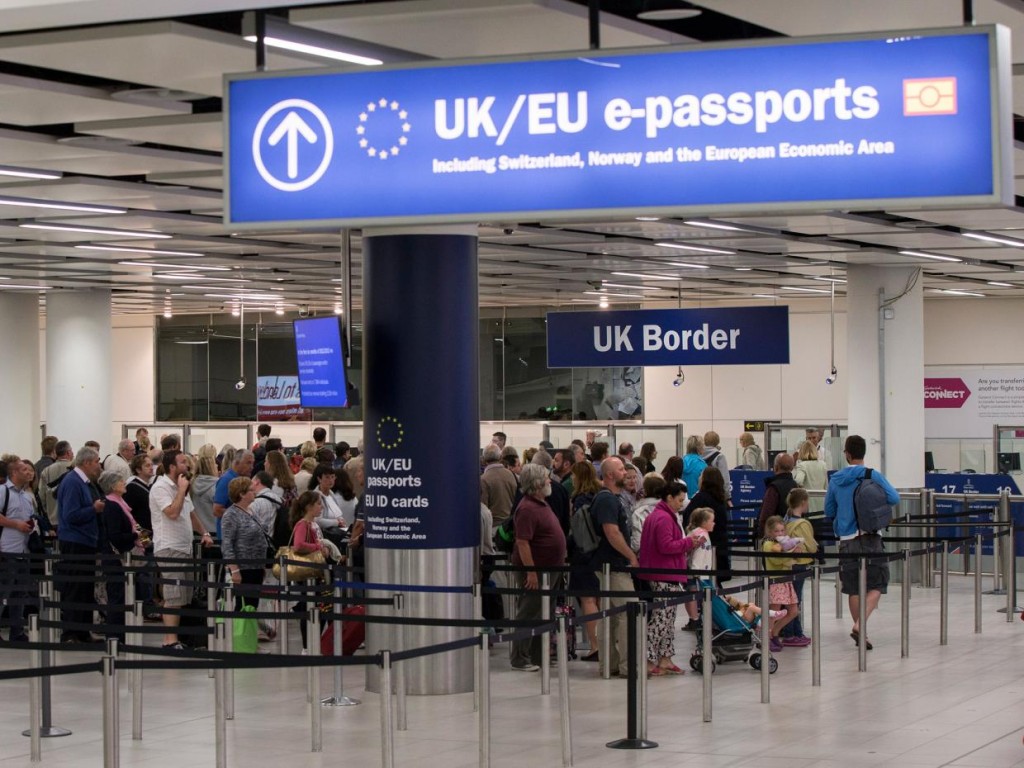
immigration

IN campaigners have previously accepted restrictions on free movement are impossible within the EU and the so-called ‘single market’.

The Chancellor of the Exchequer, George Osborne, has said it is impossible to be in the EU or the ‘single market’ ‘without accepting the free movement of people. That is an absolutely clear principle, which has been made very starkly clear to this country by Germany and France, and is internationally accepted’.

Shadow Foreign Secretary, Hilary Benn, has said ‘part of the deal of being part of the European Union is free movement of workers… we have a need for people to come in’.

The Executive Director of the IN campaign, Will Straw, has said: ‘we cannot end free movement, end budget contributions or unilaterally ignore EU regulations’.

Freedom of movement drives down wages.

The Bank of England has found that ‘the immigrant to native ratio has a small negative impact on average British wage’. The study found that ‘immigrants in recent years are most predominant in low-skill occupations’. The study concluded that: ‘the biggest effect is in the semi/unskilled services sector, where a 10 percentage point rise in the proportion of immigrants is associated with a 2 percent reduction in pay’.

The Chairman of the IN campaign, Lord Rose acknowledged this and admitted wages will go up if we Vote Leave, stating: ‘If you are short of labour, the price of labour will go up’.

The Chancellor’s former close adviser, Rupert Harrison, agrees. A BlackRock report in February co-written by Harrison said leaving the EU could mean ‘lower immigration [which] could make labour scarcer in the long run, pushing up wage costs’.

The Home Secretary, the House of Lords Economic Affairs Committee and the OECD have said that mass migration has no discernible fiscal benefits.

In her speech to the 2015 Conservative Party conference in Manchester, the Home Secretary, Theresa May, said: ‘not all of the consequences can be managed, and doing so for many of them comes at a high price… But even if we could manage all the consequences of mass immigration, Britain does not need net migration in the hundreds of thousands every year… The evidence… shows that while there are benefits of selective and controlled immigration, at best the net economic and fiscal effect of high immigration is close to zero. So there is no case, in the national interest, for immigration of the scale we have experienced over the last decade. Neither is it true that, in the modern world, immigration is no longer possible to control… The numbers coming from Europe are unsustainable and the rules have to change’.

The House of Lords Economic Affairs Committee found in 2008 that there is ‘no evidence for the argument, made by the Government, business and many others, that net immigration… generates significant economic benefits for the existing UK population… We also question the Government’s claim that immigration has generated fiscal benefits… The overall fiscal impact of immigration is likely to be small’.

The OECD has found that: ‘Immigrants are thus neither a burden to the public purse nor are they a panacea for addressing fiscal challenges’.

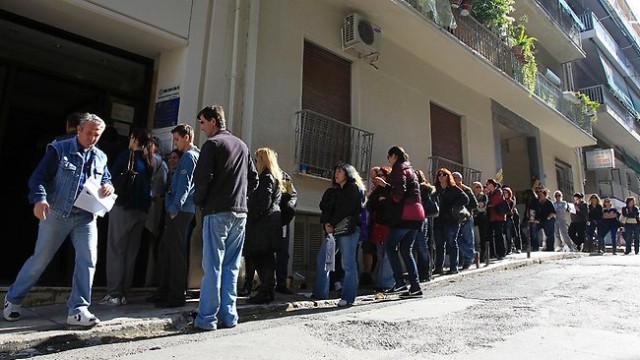
JOBLESS GREECE

Leading IN campaigners have previously praised uncontrolled immigration from the EU stating it is the solution to our problems.

Last month, Alan Johnson claimed that: ‘If you are thinking about free movement, the people who come over here under free movement… They are helping to solve a very important problem’. He has said that if free movement were ended, ‘you would have a very serious problem for the economy’.

The Executive Director of the IN campaign, Will Straw has said ‘ending free movement’ involves the ‘sacrifice jobs and low prices, which would be the consequence’.

Alan Johnson claimed Turkey could join the EU without free movement. This is false.

On The Today Programme, Alan Johnson claimed Turkey could join the EU without accepting free movement.

Not even the Government believes this to be the case. In April, the Government acknowledged that when Turkey and other accession countries join the EU, their citizens will have the right to come to the UK: ‘once a country becomes a Member State of the EU its citizens have the same rights under EU law as other EU nationals’.

Alan Johnson claimed juxtaposed border controls at Calais would end. The French Interior Minister has said they will continue.

On The Today Programme, Alan Johnson claimed that the UK’s juxtaposed border controls at Calais would end in the event of a leave vote. This is false.

The French Interior Minister, Bernard Cazeneuve, has said: ‘Calling for the border with the English to be opened is not a responsible solution. It would send a signal to people smugglers and would lead migrants to flow to Calais in far greater numbers. A humanitarian disaster would ensue. It is a foolhardy path, and one the government will not pursue’.

Mr Cazeneuve confirmed this remained his view in March and that he was in charge of French immigration policy.

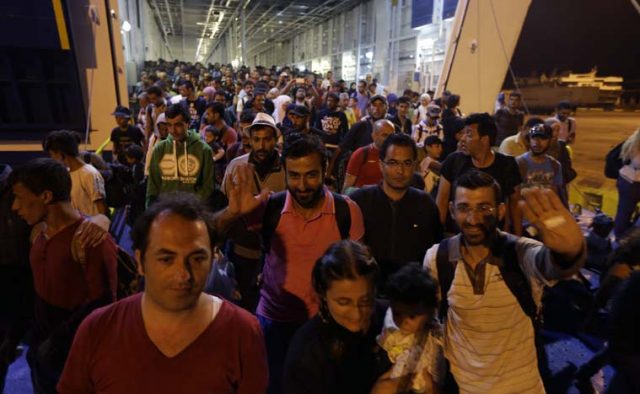
eu migrant


Alan Johnson wanted the UK to join the single currency. This would have been a disaster.

As a minister in the Department for Trade and Industry, Alan Johnson, said companies should be ‘pleased’ at the Labour Government’s ‘strengthened’ support for the single currency. He said companies would be ‘pleased to see we have strengthened our commitment to the principle of joining the euro’.

Alan Johnson also said: ‘we recognise the potential benefits of euro membership for our manufacturing exporters, which is why we support the single currency in principle’.