
17.7 C
London
Monday, January 12, 2026
secret satire society
Home Blog Page 467

EU Referendum: Former Chancellors Criticise Flawed Treasury Forecasts


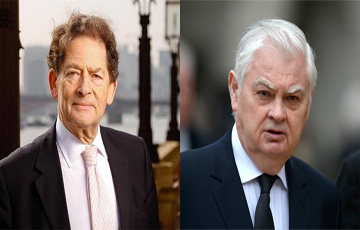
Commenting on the Treasury’s analysis of the immediate economic impact of leaving the EU, former Chancellor of the Exchequer Lord Lawson of Blaby said:


“The Treasury has enough trouble with forecasts even when they are trying to get them right.


“This time they have simply assumed a disaster in order to scare the pants off the British people.


“Steve Hilton’s honest assessment of the damage done to us by EU membership is a better guide than the Government’s unprincipled scaremongering.”


Former Chancellor of the Exchequer Lord Lamont of Lerwick added:


“A lot of the Government’s so-called forecast depends on business confidence, which the Government is doing its best to undermine. Economists are no better than anyone else in predicting shifts in confidence.


“The link between house prices and the economy is extremely difficult to forecast. The Chancellor claims that house prices will fall by 10% by 2018 if the UK votes to leave, but the independent OBR forecasts that by 2018 house prices will be 10% higher than now – so the Chancellor is claiming that a vote to leave the EU would mean stable house prices.


“As regards the supposed cost to each household, as the Financial Times – the house journal of the pro-Europeans, has said – far from this being even an educated guess, “more likely, the numbers are just made up”.


“The Single Market is not some secret garden to which members have some hidden key. Statistics show conclusively that many non-EU members export just as successfully to the EU as EU members do.


“We have nothing to fear but fear itself – which the Government is doing its best to stir up.”


Treasury Inconsistencies and Blatant Falsities Revealed


  • The Treasury’s ‘shock scenario’ is that the economy will remain the same size as it was on 31 December 2015.

  • The reviewer of this report, Sir Charles Bean, has said that models of economic shocks are based on ‘gross simplifications’. He also claimed the costs of joining the euro would be insignificant and that wages for British workers should be lower.

  • The Treasury document is predicated on predictions of uncertainty and short-term effects that even the Head of the IN campaign has admitted are false.

  • The Treasury failed to predict the last recession and championed the fact its erroneous assessment was supported by the Bank of England, the IMF and the OECD. It is doing the same today.

  • The Government today retreats from many of its past claims about the economic impact of the poll. This undermines the credibility of its economic judgment now.

  • The Government has previously accepted Treasury estimates are fixed to suit its political priorities, as this report has been.

  • The Treasury document makes a number of assertions that are either contestable or false.
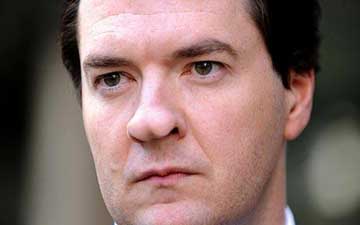
george-osborneChancellor of the Exchequer George Osborne

Today’s published Treasury command paper on ‘the immediate economic impact of leaving the EU’ is a misleading document full of erroneous projections not based on fact. 

Even David Cameron’s political guru, Steve Hilton reveals how the EU is making the UK ‘literally ungovernable‘.

“A decision to leave the EU is not without risk. But I believe it is the ideal and idealistic choice for our times: taking back power from arrogant, unaccountable, hubristic elites and putting it where it belongs – in people’s hands.”


The Treasury’s ‘shock scenario’ is that the economy will remain the same size as it was on 31 December 2015.

Under the ‘shock scenario‘, there are four quarters of negative economic growth of 0.1% between the third quarter of 2016 and the second quarter of 2017, amounting to a reduction of GDP of 0.4%.

In the first quarter of 2015, the economy grew by 0.4%. This means that, even under the Treasury’s unreliable central forecast, just one quarter’s economic growth would be removed.


The reviewer of this report, Sir Charles Bean has said models of economic shocks are based on ‘gross simplifications’. His economic judgement cannot be trusted.

He argued scrapping the pound would be an insignificant step. In 1992, Sir Charles said ‘the costs of monetary union may be rather small’ and that the debate over the single currency was ‘a storm in a teacup’.

Sir Charles has argued for lower pay for British workers, stating: ‘the cost of employing workers has been rising too fast’ and that ‘it is important for us that we continue to see subdued pay growth’.

He has admitted figures such as these can be ‘badly wrong’ and ‘gross simplifications’. In 2005, Sir Charles admitted there is an ‘inherent difficulty in measuring the large and complex phenomenon that is the economy, comprising millions of households and businesses, both accurately and in a timely fashion’ even after the event in question had occurred. He has admitted that ‘one needs to be acutely aware that judgement may be badly wrong’. He has admitted models of shocks ‘will inevitably remain as gross simplifications’.

The Treasury document is predicated on predictions of uncertainty and short-term effects that even the Head of the IN campaign has admitted are false.

The Treasury claims that the economy would be hit by ‘immediate and ongoing uncertainty about what the UK’s new relationships would mean in practice and how that would affect businesses and households’.

Contradicting the Treasury, the Chairman of the Britain Stronger in Europe campaign, Lord Rose of Monewden, has admitted there are no short-term risks, stating: ‘Nothing is going to happen if we come out of Europe in the first five years… There will be absolutely no change… It’s not going to be a step change or somebody’s going to turn the lights out and we’re all suddenly going to find that we can’t go to France, it’s going to be a gentle process‘.

The Treasury claims that ‘ real average wages would be around 2.8% lower after two years than under a vote to remain’.

Lord Rose has admitted that: ‘the price of labour will go up’ in the event of a vote to leave.

The Treasury failed to predict the last recession and championed the fact its erroneous assessment was supported by the Bank of England, the IMF and the OECD. It is doing the same today.

Today, the Treasury states that: ‘In the shock scenario, a vote to leave would result in a recession, a spike in inflation and a rise in unemployment… The Bank of England and International Monetary Fund (IMF) have both reported the possibility of such a recession following a vote to leave’.

The Treasury has used international bodies and the Bank to support its false predictions about recessions (or their absence) before.

In March 2008, the Chancellor of the Exchequer, Alistair Darling, predicted there would be no recession, stating: ‘This year my forecast is that—as growth in the world economy slows further—growth in the British economy will be between 1 3/4 per cent. and 2 1/4 per cent. in 2008, but faster than that in Japan, the US and the euro area. I expect growth to shift towards companies and exports, with growth rising to 2 1/4 to 2 3/4 per cent. in 2009 and 2 1/2 to 3 per cent. by 2010. My forecast shows that the UK economy will continue to grow throughout this period of global uncertainty—a view supported by the Bank of England, the International Monetary Fund and the Organisation for Economic Co-operation and Development’.

In fact, the UK economy entered recession in the third quarter of 2008, experiencing six successive quarters of economic contraction.


The Government today accepts many of its previous statements about the referendum’s economic impact were wrong. This undermines the credibility of its economic judgement now.

The Treasury states today that: ‘The evidence for the negative economic effects described … is already clear in advance of the referendum’.

This contradicts many of the Prime Minister and Chancellor’s past claims. The Prime Minister has said that the referendum has not caused uncertainty. In November 2014, the Prime Minister told the CBI conference that: ‘The worst thing for us to do as a country is to pretend this European debate isn’t happening … If there has been uncertainty, why is it that this has been such an extraordinary period of investment into this country?‘. In 2013, he said opponents of the referendum’s ‘whole argument about there being uncertainty is fatally undermined’ and that a vote on the EU ‘is right for business, it is right for our economy’.

Mr Osborne himself has previously dismissed allegations that the referendum would create uncertainty, stating: ‘I don’t agree with him on this and I don’t think it’s any secret that Liberal Democrats and the Labour Party don’t think the people should be asked about our future in Europe, whereas the Conservative Party does. I think the business community understands what we are doing’.


The Government has previously accepted Treasury estimates are fixed to suit its political priorities, as this report has been.

The Government has previously said that the public shouldn’t trust Treasury reports, owing to their bias.

The Chancellor of the Exchequer, George Osborne, has said: ‘the public and the markets have completely lost confidence in government economic forecasts… Unsurprisingly, these forecasting errors have almost always been in the wrong direction… The final decision on the forecast has always been made by the Chancellor, not independent officials.And that is precisely the problem… Again and again, the temptation to fiddle the figures, to nudge up a growth forecast here or reduce a borrowing number there to make the numbers add up has proved too great… I am the first Chancellor to remove the temptation to fiddle the figures by giving up control over the economic and fiscal forecast. I recognise that this will create a rod for my back down the line, and for the backs of future chancellors. That is the whole point. We need to fix the budget to fit the figures, not fix the figures to fit the budget. To do this, I am today establishing a new independent Office for Budget Responsibility’.

The Chancellor of the Exchequer, George Osborne has said: ‘The power that the Chancellor has enjoyed for centuries to determine the growth and fiscal forecasts now resides with an independent body immune to the temptations of the political cycle’.

When the Office for Budget Responsibility was established, Justine Greening, now Secretary of State for International Development, said: ‘Within a week of taking office, we had set up a new independent body to return credibility to official forecasts. Until then, the final decision on official Government forecasts had always been made by the Chancellor and his advisers-one of whom is now shadow Chancellor-rather than by independent experts. Over the past 10 years, the last Government’s forecasts for growth in the economy have been out by an average of £13 billion, and their forecasts of the budget deficit three years ahead have been out by an average of £40 billion. Unsurprisingly, those forecasting errors have almost always been in the wrong direction… We needed to make sure that we have official forecasts for the economy that the public can trust, even if that means we end up giving away some of our powers as Treasury Ministers. As my right hon. Friend the Chancellor has said, we need to fix the Budget to fit the figures, not fix the figures to fit the Budget’.

Despite these admissions, the Government has never asked the OBR to assess the economic implications of the leaving the EU.


The Treasury document makes a number of assertions that are either contestable or false.

The report claims ‘On leaving the EU, in addition to losing its current access to the EU Single Market, the UK would no longer benefit from the EU’s free trade agreements with the rest of the world’.

Contradicting this, the Director of the IN campaign, Will Straw has accepted that free trade agreements with third countries could continue, stating: ‘either eventuality could come to pass’.

The report claims that: ‘No existing alternative to EU membership, apart from EEA membership, preserves access to the passport’.

The Government has previously admitted this is misleading, stating: ‘In some areas the EU has “equivalence regimes” to allow financial services firms outside the EU to trade with the Single Market in a way that is similar to the EU financial services passport’.

The report claims that: ‘There would be major uncertainty about the future levels of agricultural subsidies and whether they would be maintained at their current levels once the UK left the EU’.

Contradicting this, David Cameron has guaranteed that British farmers would continue to be supported, stating that: ‘As long as I am Prime Minister, I would make sure that an agricultural support system would be properly maintained’.

FTSE 350: Collapse in Support for EU Among Big Businesses


Commenting on the ICSA’s survey of FTSE 350 companies released today, Chairman of the Vote Leave Business Council John Longworth said:


“The remain camp’s concerted campaign to do down the economy has failed. In fact it has had the opposite effect as the EU supporters have failed to make a positive case for continuing to hand Brussels more control of our economy, our democracy and our borders.’


“Business recognises it is possible for Britain to continue trading across Europe, part of the free trade zone that exists from Iceland to turkey, without handing Brussels £350 million a week and EU judges ultimate power over our laws. On 23 June the safe option is to take back control.


Barely a third of FTSE 350 companies support the EU. The survey shows a 24% collapse in support for the EU among FTSE 350 companies.

Only a minority of FTSE 350 companies think EU membership has had a positive impact on their business, down from 61% in December: ‘Just over a third (37%) of companies regard EU membership as having a positive effect on their business, substantially down from 61% in December 2015′.

This is evidence that the Prime Minister’s renegotiation has failed to convince big businesses of the merits of staying in the EU.


A majority of FTSE 350 companies do not consider leaving the EU would be damaging.

The survey reports that 57% of FTSE 350 companies do not think leaving the EU would be damaging. Just 43% think leaving the EU would be damaging.


This comes on top of collapses in support for the EU in other business surveys.

By 46.4% to 42.8%, British Chambers of Commerce (BCC) members who do not export would vote to leave the EU.

By 50.1% to 46.7%, BCC members which export to the rest of the world only would vote to leave the EU. Firms which do not export to the EU represent over 90% of British businesses.

A majority of IoD members (50%) agree that the UK could make an economic success of leaving the EU.


IDS: Osborne’s Economic Forecasts of Doom ‘Ridiculous Fantasy’


  • The Treasury has admitted its forecasts are fixed under political pressure.
  • The Treasury’s worst case estimate is worse than the Great Depression. This is fantastical.
  • The last time the Treasury forecast an economic shock was if the UK left the Exchange Rate Mechanism. All its predictions were hopelessly wrong.
  • The Treasury failed to predict the last recession and championed the fact its error was supported by the Bank of England, the IMF and the OECD.
  • Leaving the EU will cut the current account deficit. Claims of a run on the pound are ridiculous. Sterling has maintained its value since the referendum was called.
  • Foreign investors are continuing to invest in the UK despite the uncertainty supposedly created by the referendum and the prospect of leaving.
  • Industry experts have made clear that leaving the EU is unlikely to affect mortgages or house prices.


Responding to the Treasury’s report on the short-term impacts of leaving the EU, Iain Duncan Smith said:

“As George Osborne has himself admitted, the reason he created the independent forecaster, the OBR, was because by 2010 the public simply did not believe the Government’s own economic forecasts. The Treasury has consistently got its predictions wrong in the past. This Treasury document is not an honest assessment but a deeply biased view of the future and it should not be believed by anyone.

“It is a fact that we hand over £350 million a week to the EU. If we Vote Leave we can take back control of that money and use it to help people here in Britain. We will also take back control over our economy creating hundreds of thousands of new jobs as we do trade deals with growing countries in the rest of the world.”


The Treasury has previously admitted its economic forecasts are fixed by the Government of the day to suit its political policies. We cannot trust such forecasts today.

The Chancellor of the Exchequer, George Osborne, has said:

“..the public and the markets have completely lost confidence in government economic forecasts… Unsurprisingly, these forecasting errors have almost always been in the wrong direction… The final decision on the forecast has always been made by the Chancellor, not independent officials.And that is precisely the problem… Again and again, the temptation to fiddle the figures, to nudge up a growth forecast here or reduce a borrowing number there to make the numbers add up has proved too great… I am the first Chancellor to remove the temptation to fiddle the figures by giving up control over the economic and fiscal forecast. I recognise that this will create a rod for my back down the line, and for the backs of future chancellors. That is the whole point. We need to fix the budget to fit the figures, not fix the figures to fit the budget. To do this, I am today establishing a new independent Office for Budget Responsibility”.


The Treasury’s worst case estimate is worse than the Great Depression. This is fantastical nonsense.

The Treasury is suggesting the economy would contract between 3.6% and 6% within two years.

Such a contraction would be worse than the 1980s recession (4.6%) and the 1990s recession (2.5%). It would also be worse than the Great Depression (5.2%). Osborne’s scaremongering is beyond fantasy and laughable.


Leaving the EU will cut the current account deficit. Claims of a run on the pound are ridiculous.

The UK recorded a current account deficit of £96.3 billion in 2015, which could be substantially reduced if we left the EU.

Oxford Economics has concluded that if the UK voted to leave the EU, ‘in most cases (five out of nine), the UK’s trade balance improves’.


Contrary to Osborne’s False Claims, Sterling has maintained its value since the announcement of the referendum.

The minutes of the most recent meeting of the Monetary Policy Committee state clearly that: ‘The sterling exchange rate had appreciated on the month’.

Sterling has maintained its value since the announcement of the referendum from $1.4406/$ on 19 February to $1.4502/£ today. This suggests the growing prospects of a leave vote are not driving movement in the foreign exchange markets.


Foreign direct investment has continued during the referendum despite the prospect of a leave vote. This suggests UK will not have a problem financing the current account deficit if we Vote Leave.

Despite the referendum and the prospect of a British exit from the EU, the Chinese investment group SinoFortone announced £5.2 billion of investment into the UK in October 2015.

In November 2015, the UK and India struck £9 billion worth of commercial deals, with the Government noting that: ‘India invests more in the UK than the rest of the European Union combined’.

In February 2016, HSBC decided to remain headquartered in the UK, stating: ‘London is one of the world’s leading international financial centres and home to a large pool of highly skilled, international talent. It remains therefore ideally positioned to be the home base for a global financial institution such as HSBC’.


Mortgage lending is currently on the rise, suggesting the prospects of leaving the EU have had no impact on the supply or price of credit.

Gross mortgage lending in March 2016 was £25.7 billion, up by 59% from March 2015. This is in spite of ‘leave’ rising in the polls.

Gross mortgage lending has increased from £117.7 billion in 2013 to £253.6 billion in the year ending March 2016. This suggests that the increased prospect of leaving the EU since the Prime Minister announced the referendum has had no impact on lending.


Industry experts have made clear that leaving the EU is unlikely to affect mortgages or house prices.

Philip Shaw, Chief Economist at Investec Bank, has said: ‘I don’t necessarily see a massive impact on house prices. In the UK domestic property market, the biggest driver is demographics and regulation’. He has also claimed interest rates could be cut, stating that ‘is a risk’.

The Council of Mortgage Lenders has said: ‘As a relatively small, open economy and a major financial centre, the UK has, and will continue to have, close links with global economies, including those within the EU. There is no simple answer to the question of how Brexit might affect housing and mortgage markets’.


The EU’s failure to strike free trade agreements is costing hundreds of thousands of jobs.

The European Commission’s own figures show that the EU’s failure to conclude trade agreements has cost the UK 284,000 jobs.

A Government memo also suggests the UK economy is being disadvantaged to the tune of £2.5 billion per annum due to the EU’s protectionism.


The Treasury failed to predict the last recession and championed the fact its erroneous assessment was supported by the Bank of England, the IMF and the OECD.

In March 2008, the Chancellor of the Exchequer, Alistair Darling, predicted there would be no recession, stating: ‘This year my forecast is that—as growth in the world economy slows further—growth in the British economy will be between 1 3/4 per cent. and 2 1/4 per cent. in 2008, but faster than that in Japan, the US and the euro area. I expect growth to shift towards companies and exports, with growth rising to 2 1/4 to 2 3/4 per cent. in 2009 and 2 1/2 to 3 per cent. by 2010. My forecast shows that the UK economy will continue to grow throughout this period of global uncertainty—a view supported by the Bank of England, the International Monetary Fund and the Organisation for Economic Co-operation and Development’.

In fact, the UK economy entered recession in the third quarter of 2008, experiencing six successive quarters of economic contraction.


George Osborne’s blatant economic doom scaremongering is not working and the facts speak for themselves. No one believes Osborne any more, and this is why the majority will Vote Leave on June 23.

EU Referendum Video: Which NHS Will You Vote For?

0

Vote Leave has released its first referendum broadcast which focuses on the risks to the NHS of voting to stay in the EU. It shows a mother and daughter going to Accident and Emergency after the mother is taken ill.


It then shows two different realities: one if we stay in the EU and another if we Vote Leave. It shows how if we stay in the EU, the NHS will continue to be starved of cash and pressures from unlimited EU immigration will mean people will have to wait longer to be treated.


Outside the EU – after we Vote Leave and take back control – we will be able to spend billions more each year on the NHS and take back control of our borders. This will ease pressures on the NHS and will help people to get treated more quickly.

Vote Leave Chair Gisela Stuart said:

‘The NHS is struggling to cope with rising demand. The Government has simply not given it the funding that it needs.

‘Instead of handing over £350 million a week to Brussels we should spend our money on our priorities like the NHS.

‘If we Vote Leave we will be able to stop our money being spent on EU bureaucrats and instead invest in the NHS so that patients can get the best possible care.’

Diaspora Politicians Back Vote Leave to Boost Trade

They argue that Britain’s Membership of the EU is a barrier to ties being strengthened with the Commonwealth and the rest of the world – and say that a Vote to Leave will allow us to adopt fairer trade and immigration policies.


The cross-party group of signatories include Boris Johnson,  Priti Patel, Gisela Stuart, Rishi Sunak and Iain Duncan Smith.

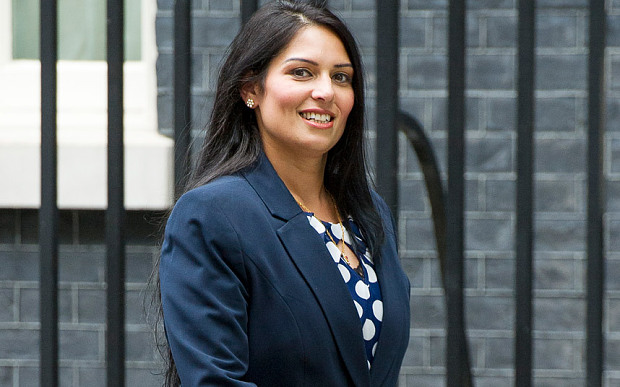
Priti-Patel

Priti Patel MP, who was appointed UK India Diaspora Champion by the Prime Minister in 2013, said:


‘India is a growing market with the fastest growing working age population of any other major economy – but it is a market that we are forbidden from striking a trade deal with because it is against EU rules. That’s just one example of how the EU is holding our great nation back – if we Vote Leave we can change that.


‘Similarly, EU membership has led to us having an immigration system with discrimination and prejudice at its core. At present, we discriminate against those outside the EU – all due to the fact that EU freedom of movement rules mean we are unable to control migration from countries that are members of the bloc.


‘If we Vote Leave we can look forward to a safer, more secure, and more prosperous future – we can introduce a fairer immigration system, and take back control of our trade policy. We can also take back the £350m we send to the EU every single week, and spend it on our priorities instead.’

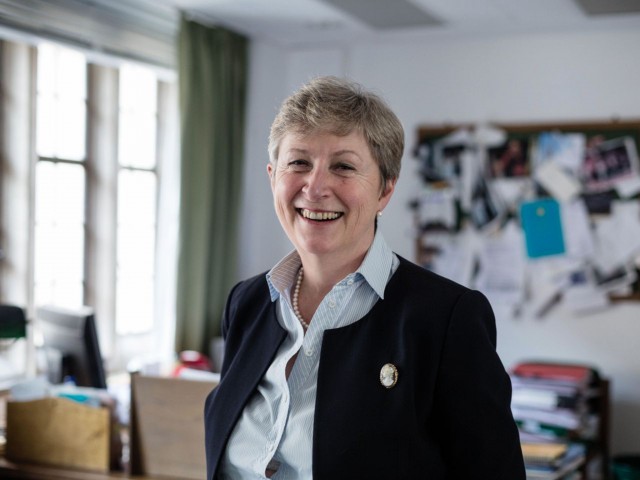
gisela-stuart

Gisela Stuart, Chair of Vote Leave said:


‘If we vote to remain, the UK will be unable to make trade deals with the rest of the world as the Eurozone economy stagnates.


‘This means that the UK may well remain unable to trade on favourable terms with major emerging economies in the years ahead, while remaining tied to the failing Eurozone.


‘The percentage of UK exports going to the EU has been in decline for a decade. If we vote to remain, we will tie ourselves to a shrinking market. It is beneficial to Vote Leave and take back control’.

The letter

We are a group of cross-party British Members of Parliament who represent constituencies with large numbers of hardworking people, from Commonwealth backgrounds or with strong cultural ties to those countries.

We all know that Britain’s Membership of the EU is a barrier to our ties being strengthened  with our friends and families in the Commonwealth and the rest of the world – which is why it is so important we Vote Leave on 23 June.

Britain’s trade policy is controlled by the EU. That means we are unable to sign bilateral free trade agreements with countries like Pakistan, India, Bangladesh, Australia, New Zealand or for that matter any other non-EU state. Commonwealth countries like India have been in talks with the EU about doing a trade deal since 2007 – to no avail. While we stand ready to trade and build close ties with countries across the world, the EU is inward looking, protectionist and more concerned with defending its own vested interests than supporting global trade and growth.

As well as damaging our economy, membership of the EU has left Britain vulnerable to the pressures of mass uncontrolled levels of Immigration from Europe. The pressures this causes means that we have to turn away qualified doctors, teachers, and entrepreneurs from non-EU countries who would make a positive contribution to this country. The ancestors of many people we represent fought alongside the British in two world wars, but are now forced to stand aside in favour of people with no connection to the United Kingdom. This is unfair.

Over six million residents from diverse ethnic backgrounds are eligible to vote, their voices are crucial in this debate if we are to secure a positive future for our country. We send £350 million pounds a week to the EU, money which would be better spent on our priorities. The referendum is an opportunity to take back control of our borders, our economy and our democracy and finally rejoin the rest of the world.

That’s why it’s essential to Vote Leave on 23 June.

The letter has been signed by:

Name

Constituency

The Rt Hon Priti Patel MP

The Prime Minister’s UK-India Diaspora Champion

Witham

Boris Johnson MP

Uxbridge

The Rt Hon Gisela Stuart MP

Chair of Vote Leave

Edgbaston

The Rt Hon Iain Duncan Smith MP

Chingford and Woodford Green

The Rt Hon Theresa Villiers MP

Chipping Barnet

Bob Blackman MP

Harrow East

Andrew Rosindell MP

Chairman of the Australia, New Zealand and Canada Parliamentary Groups

Romford

James Duddridge MP

Minister for African and Overseas Territories

Rochford and Southend East

Paul Scully MP

Chairman APPG of British Curry Industry

Sutton and Cheam

Richard Fuller MP

Bedford

Suella Fernandes MP

Fareham

Adam Holloway MP

Gravesham

Adam Afriyie MP

Windsor

Nusrat Ghani MP

Wealdon

James Cleverly MP

Braintree

Roger Godsiff MP

Birmingham Hall Green

David Burrowes MP

Enfield Southgate

Kelvin Hopkins MP

Luton North

Kwasi Kwarteng MP

Spelthorne

Nadhim Zahawi MP

Member of Foreign Affairs Select Committee

Stratford upon Avon

Graham Stringer MP

Blackley and Broughton

Rishi Sunak

Richmond (Yorkshire)

PM Blatantly Misleading Public On Support For Turkey EU Integration

0


Responding to the Prime Minister’s claims on Peston on Sunday, Matthew Elliott, Chief Executive of Vote Leave said:


‘David Cameron has said he wants to pave the road to Ankara and has repeatedly confirmed it is government policy for Turkey to join the EU. The EU is speeding up the process of Turkey joining and we are paying nearly £2 billion to help make it happen. If it isn’t on the cards why are taxpayers footing the bill for it already?


‘As with so much in the referendum the remain campaign are saying one thing now before the vote but are planning for the exact opposite after 23 June. The only safe option is stop handing Brussels £350 million a week and Vote Leave’


Commenting, Lord Owen, former Foreign Secretary said:


‘Only 9 weeks ago David Cameron committed the country at the European Council to re-energise the accession process of Turkey into the EU. The EU is continuing the preparatory work for Turkey at an accelerating pace with all of this going forward in parallel.’


The Prime Minister is misleading the public on Turkish accession, of which he is the ‘strongest possible advocate’.

The Prime Minister said on Peston on Sunday that ‘it is not remotely on the cards that Turkey is going to join any time soon.’ He also claimed that ‘Britain has a veto’, but he has been clear that he supports Turkish accession.

The accession process is being accelerated. On 4 May 2016, the European Commission announced that: ‘The accession process will be re-energised, with Chapter 33 to be opened… and preparatory work on the opening of other chapters to continue at an accelerated pace‘.

David Cameron strongly supports this. In 2010, Cameron said he was ‘angry‘ at the slow pace of Turkish accession, that he was the ‘strongest possible advocate for EU membership’ for Turkey, and that ‘I want us to pave the road from Ankara to Brussels‘. In 2014, he said that: ‘In terms of Turkish membership of the EU, I very much support that. That’s a longstanding position of British foreign policy which I support‘.

The Government admitted it supported Turkish accession last month. Last month, the Europe Minister, David Lidington, said: ‘The UK supports Turkey’s EU accession process.

The British public will not get a vote on the accession of Turkey to the EU. The European Union Act 2011 allows the Government to ratify EU accession treaties without a referendum. There was no referendum on the accession of Croatia to the EU in 2013.

The Government opposes giving the British people a say. As the Minister for Europe, David Lidington, said in 2011: ‘A few years ago, 10 new member states joined the European Union at the same time. I believe that their combined population then was 73 million, which is slightly greater than Turkey’s population is now. I do not believe that anybody in this country argued at that time that a British referendum on those accessions was right’.

The only thing to do is to Vote Leave on June 23 to stop the deluge on our already overloaded and crumbling public services.


Poll: 12 Million Turks Will Settle in UK Inundating NHS, Schools Unless We Vote Leave EU

0

The survey was conducted in 27 provinces of Turkey.

In response to the question “If Turkey becomes a full member of the EU, and Britain remains in the EU, would you, or any member of your family, consider relocating to Britain?” 16 percent of the respondents said they would.

This conservative number means 12 million citizens of Turkey would descend upon Britain, although the numbers would be far larger in the long term.

Fast Track Turkey EU Membership

Angela Merkel is fast tracking Turkey’s EU ascension, and David Cameron is 100% behind the country joining the EU. UK paying £2 billion helping Turkey join the EU.

Germany is also brokering a visa deal with Turkey which will allow all 77 million Turks access to Britain’s NHS if they so wish.

The Turks cannot be blamed for wanting a better life with free health care, well paid jobs, benefits and a high standard of education which can be found in the UK. When they are given the opportunity, they will take it with open arms.

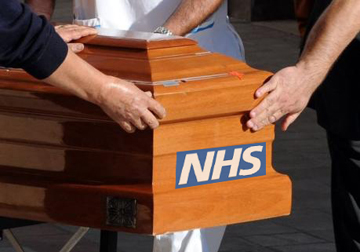
NHS Will Be Ruined

The drawback for Britain will be an overwhelming deluge upon the already strained NHS and other public services, which are under constant attack and have been inundated from years of EU migration after former Labour PM, Tony Blair opened the doors during his premiership.

If the UK does not Vote Leave on June 23 it will be sitting within an EU open corridor from Ankara to Dover. The NHS will be so overwhelmed that it will have to eventually be privatised and become a paid for service to survive. Schools will be overwhelmed to a point that indigenous British people will not be able to send their kids to school within their area, or at all. There will be no places for your children in local schools. Salaries and wages will be hit as the deluge overwhelms the UK.

Voting to remain in the EU is suicidal, and an act of ultimate destruction on Britain. Don’t do it.

Instead, You Must Vote to Leave to Save our NHS and Public Services.

Vote Leave on June 23 to save Britain.

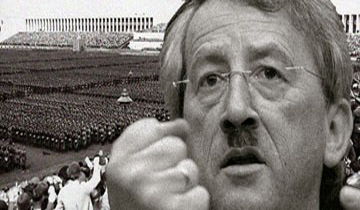
Juncker: “Britisher Deserters Vill Be Shot on Sight”

Jean Claude Juncker has threatened Britain once again with another comment about Brexit:

“If the British should say No, which I hope they don’t, then life in the EU will not go on as before,” he said. “The United Kingdom will have to accept being regarded as a third country, which won’t be handled with kid gloves.

“If the British leave Europe, people will have to FACE THE CONSEQUENCES — we will have to, just as they will. It’s not a threat but our relations will no longer be what they are today.”

Jean Claude Juncker’s father was a member of Hitler’s Nazi army and fought the Russians during the invasion of Russia in World War II. His wife’s fatherLouis Mathias Frising, was one of Hitler’s Propaganda Commissars, and was among those responsible for the Germanification of Juncker’s home country of Luxembourg. He also helped enforce the Nuremburg Laws that stripped Jews of their rights, and were a precursor to the Holocaust.

It is therefore, quite normal behaviour for someone like Juncker to act in an authoritarian fascistic manner as he is doing now by threatening Britons.

The EU has been orchestrating an organised terror campaign through the media called ‘Project Fear’ and it does not seem to be working very well.

Luvvie EU Parade Smacks of Corporatism, Hypocrisy and is Anti-Art

Who says an artist cannot create outside the EU?

Certainly the Beatles and the Stones had no problems creating their music outside the European Union.

Naturally the Cameron pro-EU corporates have brought out the celebrities and luvvie media whores to tout the EU, when it is a fact that these people most probably have no knowledge about the European Union or what it does to nations or their people.

Does some bamboozled celebritard luvvie know or even care that TTIP will kill off the NHS and privatise it? No, because said celebrity gets the best private healthcare and does not care what the plebs have to deal with.

Does some corporate controlled luvvie care that millions more people will flood Britain if we remain in the EU? Of course not, if you have a penthouse and numerous mansions in the Hollywood Hills, where you don’t mix with the lowly people, why would you care?

Does the remain touting celebrity know that the UK has to send £350 million per week to Brussels with little return? Probably not, and frankly they do not care less as long as they live their pampered lives in the cosy fantasy limelight of ego driven corporate funded dreams.

What about the evisceration of national sovereignty and ability to govern oneself under our own laws? Why would a pampered celebrity even care about such a thing? They are more concerned with trivialities and shallow pleasantries within their plastic self-obsessed lives.

One must also take into account that celebrities and film starlets are not real artists, even though they may sometimes be called that. They are merely corporate slaves wheeled out to affirm whatever corporate whim is in the news at the time.

Government Admits TTIP is Threat to Our NHS

2

Commenting on the Government’s humiliating climbdown over the omission of protecting the NHS in the Queen’s speech, Steve Baker MP Conservative member for Wycombe said:

‘The Government has today admitted that the EU is a threat to our NHS. The only way we can protect the NHS from TTIP is if we Vote Leave on 23 June.’

The Transatlantic Trade and Investment Partnership (TTIP) is a trade deal being orchestrated between the EU and the US. The clandestine project has been formulated in deep secrecy, and will seek to eventually privatise the NHS if the UK remains in the EU.

TTIP seeks to reduce the regulatory barriers to trade for big business, food safety law, environmental legislation, banking regulations, health care and the sovereign powers of individual nations. The primary aim of TTIP is to open up Europe’s public health, education and water services to US companies. This will most certainly mean the privatisation of the NHS.

David Cameron and George Osborne, are championing the TTIP deal because it will mean the costly NHS will become a business, and bring lucrative deals to the corporate bosses. This essentially means the NHS will have to be a paid for service and no longer ‘free’.

Although the Government’s StrongerIn campaign have claimed there is no danger to the NHS, they are covering up the finite details of the complicated TTIP contract which the UK will be forced to adhere to if we remain in the EU.

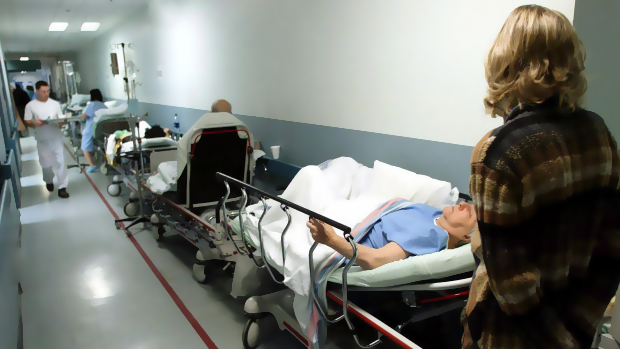
nhs corridor

If we remain in the inhibitive EU, big corporations from America and the continent will have a free-for-all with the spoils of the NHS. This would effectively mean certain branches of the NHS will be privatised and because the UK would be tied into the EU, there would be no recourse to eventually privatising the entire National Health Service. Successive governments would have no powers to repeal TTIP or to reverse the deal bringing the NHS back into public ownership.

This is why, the only way to save our NHS is to Vote Leave on June 23. If you vote remain, then the NHS will eventually be privatised and Britain will lose its greatest asset.

For the sake of future generations, your family’s health, your children and grandchildren, you must vote to leave. The consequences are too grave to think otherwise. Let us take back control of Britain, and stop sending £350 million to Brussels each week for little or no return.