17.7 C
London
Sunday, April 12, 2026
secret satire society
Home Blog Page 478

Prepare For 4 Million More Cars On Overcrowded Narrow Streets of Britain

0


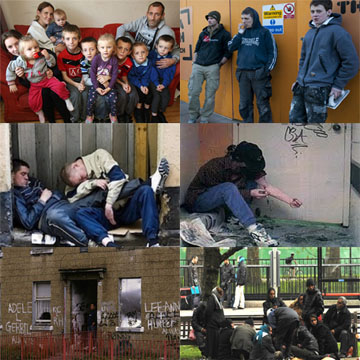
Naturally, London has borne the brunt of the deluge, but this is not over, if Britain remains in the EU, the numbers will exceed 4 million extra inhabitants within a decade.

If Britons see sense, and Vote to Leave, there will be respite, as the borders will finally come under some form of control.

The ONS today released figures that reiterate this urgency to take back control. David Cameron has failed in his pledge to reduce migration and if we remain in the EU it will get a lot worse as Britain will have no say in the levels coming into the UK. Net migration from the EU rose from 174,000 in 2014 to 184,000 last year.

Remaining in the EU, will condemn London to grow to a staggering 10-12 million, rendering it a wreck akin to some favela ridden South American city.

The previously protected green belt and much loved parks will be a thing of the past, concreted over forever to build tower blocks for EU migrants.


The Schengen zone, gives access to the UK, as anyone who enters the zone only has to wait to get their EU papers before they make their way to the free healthcare utopia that is Britain. The current population of the EU is 508, 000, 000 but that number will increase exponentially as the wars in the Middle East grind on and other nations like Turkey are added.

Britain is only 80,823 sq miles and there is no more room left. The schools are overcrowded messes, with some classes having 40-50 children per teacher, the NHS is crumbling with the deluge with hospital beds in corridors and medicine shortages, the roads are gridlocked, the housing shortage is punishing working Britons whose only crime was being born on a tiny island, there is no hope for Britain if it stays in the EU. There is no hope for your children, or their children.

nhs corridor

The hopelessness can only be alleviated by change. Stand up and vote to leave. It does not have to be this way, you do not have to follow David Cameron blindly or digest the propaganda being spewed from the BBC and other media on a constant basis.

Take Back Control

We can change this. There are alternatives to what we have now, and we can move forward to give Britain some space. We need space to grow, we need space for our children to play, we need space on our roads so we can drive, we need space for the sake of having space.

There is an alternative, there always was an alternative to what the mainstream message is always trying to indoctrinate the masses with. You can make a difference by voting to leave this EU corrupt mess. You can put an X on Vote Leave and get Britain out of this awful turmoil, this tyranny that has been foisted on us by stealth. This is not about race, xenophobia or any other construct, this is about space.

Let us open up Britain globally, through trade, through selective migration, through our sheer will we can save Britain from the deluge that will render us irrelevant if we don’t do something now.

David Cameron has seen fit to destroy Britain, once it is gone, it will be gone forever. There will be no other chance. This is it.

Vote Leave on June 23 is the only choice that a Briton should make, it is the only logical choice to take back control from the faceless unelected eurocrats who do not know who you are, they do not care who you are, and they certainly do not want to ever know who you are.

Save Britain. It is Your duty.


EU Public Procurement Legislation Creates Multi-billion Pound Bill for Taxpayer


New research by Vote Leave shows that:


  • EU public procurement law imposes extremely onerous requirements on public authorities, which can apply regardless of the value of a contract and/or whether any tenderers are from outside the UK. The Government pledged to change this, but EU procurement law remains unaffected by the renegotiation.

  • EU public procurement law imposes an annual cost of at least £1.69 billion to the taxpayer. This is five times what is spent on the NHS Cancer Drugs Fund, 34 times what is spent on the Government’s dedicated Pothole Action Fund, or enough to pay for 273,000 basic state pensions.

  • Between 2010 and 2014, EU public procurement legislation imposed costs of at least £8.4 billion in real terms on the taxpayer. This is three times what will be spent on flood defences in England between 2015 and 2021, six times the cost of the new Queensferry Crossing in Scotland, or enough to build 25 new hospitals.

  • Delays to projects caused by EU public procurement law amounted to 5,422 years in 2014 alone. Procurement legislation delayed the award of contracts between 2010 and 2014 by 27,912 years.


Commenting, Michael Gove MP said:


‘If we Vote Leave we can scrap the EU’s foolish rules on how Whitehall runs procurement processes which add billions to the cost of Government every year. I’ve experienced firsthand in the Department for Education how these rules add significant operational costs and generate expensive delays to construction projects. Across Whitehall, there are billions to save after we Vote Leave.’


Commenting, Vote Leave Chief Executive Matthew Elliott, said:


‘The EU already costs us a fortune thanks to our £350 million a week contribution to the EU budget, but the hidden costs of membership are compounding the bill to British taxpayers. Pernicious interference from Brussels not only stifles business, it makes government more bureaucratic and less responsive. The PM’s closest adviser has said EU membership makes Britain ungovernable while sixty per cent of our laws now come from Brussels. The only way to take back control is to Vote Leave on 23 June.’


Can the Teflon Don Bypass Serious Allegations of Multimillion Dollar Tax Fraud?


Trump said he could go to Fifth Avenue and unload a gun into a crowd and still not have his ratings drop? He’s the Teflon Don, nothing sticks to this guy.

That is until now…maybe.

Allegations have surfaced that tie trump to a multimillion dollar tax fraud where the US tax office was denied millions of dollars during a dodgy deal with Icelandic firm FL Group.

This action of disguising equity as a loan deal is fraudulent and cheated the IRS out of $100 million.

Julius Schwarz, Bayrock’s executive vice president: “Call it equity but for tax purposes its debt. Otherwise we write a huge check to the IRS. As a 49 per cent equity partner they are still equity. There is no other way around it.”

Whether Trump would be directly liable for such a crime is a question that only lawyers can answer, and whether the IRS ever get off their asses and actually do something about this is another matter.

trump fraud

Our feeling is the Teflon Don is going to skate through this obvious attack by either ignoring it, or denying it, despite his signature on the papers. Naturally, Drudge is ignoring this story as well.

A question of judgement? Is Trump president material when he seems to have his fingerprints all over a multimillion dollar fraud? Doubt we’ll ever know as this, like everything else is merely water off a ducks back for the Teflon Don.


EU Wide Tax ID Numbers Planned Keeping Track of Every Citizen in Europe


The EU wide taxpayer identification number (TIN) is planned to be implemented soon within the next year.

‘Properly identifying taxpayers is essential to the fight against fraud and evasion. A new web portal allows tax officials, and businesses involved in cross-border transactions, to check the structure of unique taxpayer identification numbers (TINs). These are tax identification numbers that EU countries allocate to their own taxpayers. The portal also provides useful samples of official identity documents containing national TINs. The Commission consulted on whether to move towards creating a single, unique EU-wide TIN.’

The EU Tax authority will have the power to access bank account data for every single citizen in the EU and even extract money from an account for taxation reasons.

The EU Monetary Affairs Committee is also cracking down on digital currencies by implementing new regulations that will halt the freedom of use of crypto-currencies within the EU. According to the Commission, the measures will ‘bring virtual currency exchange platforms under the scope of the existing Anti-Money Laundering Directive which is due for an update.’

The report also calls for the EU to take over member states’ corporate taxation powers with a common corporation tax base, banning sovereign states from increasing their competitiveness by cutting corporation tax below 15%.

Further moves to eventually outlaw cash within the Eurozone and implement a digital currency system are also on the table. The 500 euro note has already been scrapped, and in Sweden, the whole system is being adapted to outlaw cash altogether with the implementation of a full digital currency scheme.

No doubt, the future of the EU is one of heavy processing of all financial data, all transactions, all taxation will be implemented under one digital databank and when the cashless euro is introduced, there will be nowhere to hide within the Orwellian dystopian nightmare.

Vote Leave Responds to EU Funded IFS Release


Responding to the IFS’s study, ‘Brexit and the UK’s public finances’, Andrea Leadsom MP said:


‘It’s no wonder people are being turned off this debate given the continuous campaign to do down the British economy from EU-funded organisations. So many of these studies are based on entirely negative assumptions about our economy and the future decisions a UK Government outside the EU would make, but ignore the pressing need of EU countries to continue trading with the UK. They also ignore the very real risk of what will happen if we vote ‘In’; more money and power to a Brussels interested only in propping up an ailing eurozone.


‘If we Vote Leave we can secure our economic security for future generations based on expanding our trade across the globe, turbocharging our economy and taking control of our borders. On 23 June the safer option is to Vote Leave.’


  • The IFS is wrong about the level of the UK’s contributions to the EU budget.
  • The IFS uses the NIESR’s study as the basis for its forecasts. The NIESR has been wrong time and time again on the EU.
  • Even the IFS has to admit that any hypothetical ‘hit’ will be small and less than the OBR’s past errors in fiscal forecasting.
  • The IFS is wrong to claim trade will not become more expensive in the long-term.
  • The UK will not become a less attractive destination for Foreign Direct Investment (FDI).
  • The IFS is not a neutral organisation in this campaign. It would face an £800,000 deficit if we Vote Leave.


The IFS is wrong about the level of the UK’s contributions to the EU budget.

Contrary to the IFS’s claim, the UK does pay £350 million per week to the EU. In 2014, the UK’s gross contributions to the EU budget were £19,107 million, or £367 million per week. The Head of the UK Statistics Authority, Sir Andrew Dilnot, has said ‘Yes, the £19.1 billion figure is a legitimate figure for gross contributions… the official statistics are the £19.1 billion’.

The IFS wrongly deducts the rebate from the gross figure. The rebate is a discretionary grant which the European Commission can pay to the UK if it so chooses. There is no obligation on the Commission to pay it. As the Chancellor of the Exchequer, George Osborne, has said: ‘It is not a unilateral decision of the British Treasury or the British Government to just say, “This is our rebate. We are entitled to it. Pay up”. The way this works and has always worked is there is a negotiation with the European Commission’.

The IFS underestimates the net contribution. In 2014, the UK’s net contribution was £9.872 billion. This rose to £10.649 billion in 2015. This is much higher than the £8 billion suggested by the IFS, which takes into account payments to the private sector to the UK without taking into account money paid by British companies to the EU. The overall balance between the UK and the EU institutions (the current account deficit added to the capital account surplus) was £10.9 billion in 2014.


The IFS uses the National Institute of Economic and Social Research (NIESR)’s study as the basis for its forecasts. The NIESR has been wrong time and time again on the EU.


The NIESR backed scrapping the pound, which would have been a disaster. ‘The heavyweight and independent National Institute of Economic and Social Research agreed, saying joining Europe’s single currency would benefit Britain and that there was evidence of economic convergence with the European Union’ . The NIESR said: ‘Part of the foreign investment in Britain appears to take place because Britain offers a gateway to the European Union. If the United Kingdom remains outside the monetary union, then other countries are likely to offer a more attractive gateway’ (Birmingham Post, 29 July 2000, p. 19). A report by the NIESR in 2002 stated that: ‘We would argue the Chancellor’s five tests can be seen to be answered in the affirmative, and that the case for joining is clear’. In April 2003, the NIESR concluded that: ‘There is no longer a case for waiting’.

The NIESR recommended rejoining the ERM after Black Wednesday, which would have been a disaster. ‘Among the most optimistic is Andrew Britton of the National Institute of Economic and Social Research who believes that Britain will have to return to the ERM, though not for another six months at least’ (Evening Standard, 30 September 1992, p. 29).


Even the IFS has to admit that any hypothetical ‘hit’ will be small and less than the OBR’s past errors in forecasting.

The report states that the effects of leaving the EU ‘would certainly be much smaller than the effect of the 2008 recession, which hit the public finances to the tune of around £175 billion. Indeed, it would be below the downgrades to the forecasts made by the OBR between the Budgets of March 2011 and March 2013 (estimated at £43 billion). We have coped with those.’


The IFS is wrong to claim trade will not become more expensive in the long-term.


It is in other EU countries interests to strike a free trade agreement. The EU sells the UK far more than the UK sells the EU. In 2015, the UK bought £67.8 billion more in goods and services than the UK sold to the EU. In 2014, 20 EU member states sold the UK more than the UK bought from them in 2014. The UK is the EU’s largest single export market for goods, larger even than the United States, with whom the EU is presently trying to negotiate a free trade agreement.

Even pro-EU campaigners have conceded the UK will strike a free trade agreement. The Prime Minister, David Cameron, has admitted: ‘If we were outside the EU altogether, we’d still be trading with all these European countries, of course we would … Of course the trading would go on … There’s a lot of scaremongering on all sides of this debate. Of course the trading would go on’. The CBI, The UK’s former Ambassador to the EU and leading supporter of the BSE campaign, Lord Kerr of Kinlochard, the pro-EU Centre for European Reform all agree with him.


The UK will not become a less attractive destination for foreign direct investment (FDI).

There is very little evidence that being in the EU has had much of an impact on investment flows into the UK. Historically EU countries have not been major investors. Official figures show that the total net foreign direct investment (FDI) into the UK from the EU has been in decline over the last ten years, with the EU actually disinvesting in the UK in 2010 and 2013.

Despite the referendum and the prospect of a British exit from the EU, the Chinese investment group SinoFortone announced £5.2 billion of investment into the UK in October 2015. In November 2015, the UK and India struck £9 billion worth of commercial deals, with the Government noting that: ‘India invests more in the UK than the rest of the European Union combined’.

Major international investors have made clear that they will continue to invest in the UK regardless of the result of the referendum:

Toyota has been clear that it has located in the UK because of the tradition of UK vehicle manufacturing and the large domestic market, as well as good transport, workforce, working practices, the English language and a supportive government. The EU is not even mentioned on its list of factors. Its chief executive, Akio Toyoda, has pledged to keep building cars in the UK in the event of a Leave vote.

Nissan announced a £100m investment programme in their Sunderland plant last September, after it became certain that an EU referendum would take place. Its Chief Performance Office, Trevor Mann, has said that, with a future UK-EU trade agreement, ‘[Brexit] wouldn’t make a lot of difference’. Carlos Ghosn, Chief Executive of Renault-Nissan, has similarly commented that ‘I don’t think there’s a reason to worry’.

Hitachi’s Chief Executive, Takahiro Hachigo, has also confirmed that the company will continue to do business here after a British exit from the EU. In March last year, Honda also announced a £200m investment programme in the UK car industry.

Major international investors have made clear that they want the UK to have a looser relationship with the European Union. In an EY survey it was found that 72% of US investors and 66% of Asian investors wanted the UK to reduce its links to the EU.


The IFS is not a neutral organisation. It would face an £800,000 deficit if we Vote Leave.

The Institute for Fiscal Studies (IFS) has received €7.4m from the EU since 2007. It is not an independent organisation, but a paid-up propaganda arm of the European Commission, as the table below shows.


Payments to the IFS
2011 €2,446,857
2010 €817,791
2010 €1,626,262
2010 €817,791
2010 €1,626,262
2010 €61,404
2010 €3,092
2009 €1,515
Total € 7,400,974


Source: European Commission, April 2016


In addition, the IFS states that in 2014, 11% of its research funding came from the EU. It states that it has received £4,118,651 from the European Research Council in total and received £792,931 in 2014 alone.

This means that if we Vote Leave, the IFS will face a financial deficit of £792,931, or 11% of its income. It is therefore in the IFS’s interests to adjust its skewed biased report figures to favour membership of the EU.

BSE Referendum Broadcast: Misleading, Outright Falsehoods Debunked

0


Responding to the publication of Britain Stronger in Europe (BSE)’s first referendum campaign broadcast, Vote Leave Chief Executive Matthew Elliott said:


‘Pro-EU campaigners are repeating the same myths they told us when they declared it would be a disaster if we didn’t join the euro. They were wrong then and they are wrong now.


‘It’s amazing to see the BSE campaign claiming to have a positive message having spent the last 8 months doing down the British economy and our position in the world. On 23 June the safe option is to Vote Leave and take back control of the £350 million we hand Brussels every week.’


BSE False Claims Debunked


‘Over 3 million UK jobs are linked to our trade with the EU.’

The figure was invented by pro-euro campaigners. In 2000, Britain in Europe, the campaign to scrap the pound, claimed that 3 million jobs were ‘facing the axe’ if the UK left the EU.

The academic whose work they traduced, Dr Martin Weale, dismissed the claim as ‘pure Goebbels. In many years of academic research, I cannot recall such a wilful distortion of the facts’.

Even the Treasury (whose forecasts are extremely pessimistic) refuses to endorse the claim, saying the true figure is a sixth of this total. The Executive Director of the Prime Minister’s campaign, Will Straw, has admitted: ‘We have not and have never claimed that 3 million jobs would be lost if we left the EU‘.

It has been estimated that, if we Vote Leave, and strike free trade deals with all the countries that the EU has failed to secure FTAs with, it could create 300,000 British jobs.


‘Over 200,000 UK businesses trade with the EU.’

This amounts to just 3.7% of the UK’s 5.39 million businesses.

Despite the fact that only a small proportion of UK businesses trade with the EU, every business has to comply with EU law, which costs UK businesses £600 million per week.

This BSE figure is deceptive since it includes not just businesses which export, but also those which import. Since no rational Government would make it more difficult for British businesses to import goods after we Vote Leave, the figure is a significant overestimate.

The Prime Minister, David Cameron, has accepted trade would continue, meaning jobs would not be put at risk: ‘If we were outside the EU altogether, we’d still be trading with all these European countries, of course we would … There’s a lot of scaremongering on all sides of this debate. Of course the trading would go on’.

When asked whether he agreed with the Prime Minister, the Executive Director of the IN campaign, Will Straw, said he did so ‘absolutely‘.


‘Companies from around the world set up factories and offices here so they can do business throughout Europe, meaning more opportunities’.

Not even the Head of the IN campaign, Lord Rose, has said he doesn’t believe this claim ‘for a moment’ and that it is ‘all a red herring and it is just scaremongering’. He said just last year that: ‘The reason that people want to come to this country is because we have a flexible workforce, because we have stability, because we’ve got a growing economy, because we’ve got strong IPR, because this is a place to do business.  I think it’s ridiculous to suggest that everybody is going to suddenly go offshore, I don’t believe that for one moment … so I think this is all a red herring and it is just scaremongering.


‘The UK gets £66 million of investment a day from EU countries.’

These figures are wrong. In 2014, net Foreign Direct Investment (FDI) flows into the UK from the EU were £5,268 million or £14.4 million per day.

BSE wrongly suggests companies only invest because of EU membership, implying it would fall if we left the EU. Similar claims of a fall in FDI were made if the UK did not join the euro or even held a referendum on the EU. In fact, ‘FDI liabilities grew from £481.1 billion to £588.9 billion from the EU’ between 2011 and 2014, during a period in which overall FDI into the UK rose. This shows that FDI continued to grow in the two years following David Cameron’s January 2013 Bloomberg Speech, suggesting the prospect of leaving the EU has had no effect on investment.


‘And when you’re at work, your rights are secured by EU legislation: paid holiday and sick leave, equal rights, maternity and paternity leave, all protected by EU law.’


The UK had legislation on paid holidays before it joined. Its current legislation is more generous than EU law. The UK had legislation on paid holidays before we joined the EU. The Holidays with Pay Act was passed in July 1938, creating a right to paid holidays. The UK has also been more generous than EU law, with 5.6 weeks entitlement each year, rather than the four contained in EU law.

Maternity pay is more generous under UK law. Statutory maternity pay lasts for 39 weeks under UK law Statutory Maternity Pay. This is much more generous than EU law, which provides for a period of 14 weeks. UK legislation also gives women the right to receive 90% of their salary during the first six weeks of leave. EU law only requires that the rate of pay be equivalent to statutory sick pay in this period. This is £88.45 per week.

UK law on parental leave is more generous than EU law. The same is true of parental leave. UK maternity leave may be taken for up to 52 weeks. EU law only requires a period of four months. There is no need to accept the supremacy of EU law to protect workers’ rights.

The UK had legislation against discrimination long before the EU did. The UK passed the legislation against race discrimination, the Race Relations Act 1965 and the Race Relations Act 1968, before we joined the EU. As High Court Judge Sir Rabinder Singh has said: ‘The Race Relations Act 1976 [which consolidated the 1960s legislation] was perhaps one of the strongest pieces of legislation of its kind in the world and certainly in Europe. It long predated legislation against racial discrimination in EU law‘.


‘Being in Europe also means families enjoy lower prices in our shops and supermarkets. This saves an average household £350 a year – so as Sam grows older, he’ll have more money to put aside’.

The independent House of Commons Library has concluded that EU membership actually increases the costs of consumer goods, stating that the EU’s Common Agricultural Policy ‘artificially inflates food prices’ and that ‘consumer prices across a range of other goods imported from outside the EU are raised as a result of the common external tariff and non-tariff barriers to trade imposed by the EU. These include footwear (a 17% tariff), bicycles (15% tariff) and a range of clothing (12% tariff)’.

The EU also requires us to charge household energy bills to value added tax of 5%, increasing the cost of living for low income families.

The European Court has increased the cost of insurance. In March 2011, the European Court ruled that the EU’s Charter of Fundamental Rights meant that women could not be charged lower premiums than men, increasing the cost of car and life insurance.


‘Remaining in Europe will keep our economy stronger – so we can invest more in vital services like schools and the NHS’

Being in the EU means that we have to pay an annual gross contribution of £19.107bn to the EU. That’s over £350m every week. That means that there are less funds available for our NHS and schools.

In 2014, the NHS Chief Executive, Simon Stevens, said the NHS would need an additional £8 billion real terms increase in spending by 2020 to keep even. This is less than the net contributions that the UK is forecast to make to the EU over the same period.


‘It’s a leap in the dark’.

Not even the Head of the IN campaign, Lord Rose, can bring himself to agree with this. He has said ‘it’s not going to be a step change or somebody’s going to turn the lights out‘.


‘[it] would leave UK families £4,300 worse off’.

The Government calculated the £4,300 figure by dividing a putative lesser increase in GDP of 6.2% by the current number of households. This is extremely disingenuous, as official statistics show that the number of households in 2030 is projected to grow to 31.213 million. This is up from 26.994 in 2015, an increase of 4.219 million.

The report does not quantify any potential savings of not having to apply EU regulation in the UK, but instead claims regulation would increase if we Vote Leave.

The report asserts that: ‘under any of the alternatives, the potential gains from additional flexibility on leaving the EU are likely to be significantly constrained, including because of domestic priorities and international obligations. These would be future government decisions. In any case, any potential gains from reduced EU regulatory burdens in specific areas would be significantly outweighed by the losses from the increased regulatory barriers and divergence from no longer being a member of the Single Market. Consistent with this assessment and the approach throughout this analysis, the modelling does not prejudge these decisions and no further assumptions on regulation are made over and above the increase in regulatory barriers that would emerge over time, as captured in the modelling of the effects of the alternative arrangements on trade and FDI’.

In 2005, HM Treasury admitted that: ‘although Europe’s founders aimed to remove barriers and reap the benefits of expanded markets internally, they also sought protection and special treatment for particular aspects of their economies such as agriculture. This has brought costs: expensive subsidies still remain in some sectors and it is estimated that barriers to external trade and investment – such as tariffs, quotas and unjustifiably restrictive standards – could cost Europe’s consumers up to 7 per cent of EU GDP‘.

This is the equivalent of £125.2 billion per year in today’s prices, or £4,638 per household.

This is likely an underestimate, as the burden of EU regulation has increased. Open Europe‘s regular analysis of the cost of just the 100 most burdensome EU laws found in 2013 that the cost to the UK economy was £27.5 billion, but just a few months later had to uprate this to £33.3 billion.

Gisela Stuart: Best Way to Ensure Workers & Women’s Rights is to Have a Parliament That is Directly Accountable to the People

0


“The UK has led the way in promoting and protecting workers rights, and it’s deeply misleading to suggest that leaving the EU would put them at risk.


“The best way to ensure that workers rights are to protected is to have a parliament that is directly accountable to the people; in other words, to put power back in people’s hands. The EU prevents that, and means that unelected and unaccountable bureaucrats can impose rules and regulations that the British people have no say over.


“On 23 June we have the opportunity to take back control of our country and our democracy, as well as the £350 million we send to Brussels every week, by voting to leave the EU.”


gisela-stuart

Protection of Women’s Rights is not contingent on EU membership


Before we joined the EU:

In 1961 the contraceptive pill was made free and ‘available to all’ on the NHS, giving women more control.

Parliament passed the Abortion Act 1967, providing women greater autonomy.

Parliament passed the Divorce Reform Act 1969, allowing spouses an easier escape from unhappy.

Parliament passed the first Equal Pay Act 1970, demanding ‘equal pay for equal work’.


We have also since passed, without assistance from the EU:

The Sex Discrimination Act 1975, guarding against sexual harassment in the workplace.

The Employment Protection Act 1975, supporting mothers with paid maternity leave.

The Domestic Violence, Crime and Victims Act 2004, seeking justice for and providing assistance to the victims of domestic violence.


Membership of the EU actually undermines Women’s Rights and their interests

Car insurance: Decisions by European Courts have increased the cost of life and car insurance for women. The ECJ has held that its Charter of Fundamental Rights prevented insurance companies from charging women lower premiums.

Impact on family finances: The independent House of Commons Library has concluded that EU membership increases the costs of consumer goods, stating that the EU’s Common Agricultural Policy ‘artificially inflates food prices’ and that ‘consumer prices across a range of other goods imported from outside the EU are raised as a result of the common external tariff and non-tariff barriers to trade imposed by the EU. These include footwear (a 17% tariff), bicycles (15% tariff) and a range of clothing (12% tariff)’.

The VAT Directive also requires the charging to VAT of domestic supplies of fuel and power. The 1997 Labour Party Manifesto stated that ‘the tragedy is that those hardest hit are least able to pay. That is why we strongly opposed the imposition of VAT on fuel.‘ However, the party could only pledge to ‘cut VAT on fuel to five per cent, the lowest level allowed‘. When the Labour Party proposed a reduced rate of 17.5% VAT on petrol in 2011, the Economic Secretary to the Treasury, Justine Greening, said that EU law does ‘not permit a reduced rate or exemption to be applied to transport fuel’, and that renegotiating EU VAT rules could take as much as six years.

Taxation of sanitary products: The VAT Directive also requires the UK to charge sanitary products and contraception to tax of at least 5%. This means a requirement to charge VAT on tampons, despite the opposition of Government Ministers and a majority of MPs. As the Treasury Minister, David Gauke has admitted: ‘any change to EU VAT law would require a proposal from the European Commission and the support of all 28 member states. Without that agreement, we are not permitted to lower rates below 5%’.

Abortion: Abortion was legalised in Great Britain in 1967. Nonetheless, the EU Treaties specifically grant the Republic of Ireland the right to ban abortion.

Chris Grayling: The UK/US Relationship Will Continue to Flourish After We Vote Leave

0


Mr Grayling began his speech by stating that a politician in the United States would struggle to garner support by advocating joining an organisation which mirrored the European Union:


‘There should also be Supreme Court of the Americas, perhaps in Venezuela, to outrank the US’s own Supreme Court, and to take decisions that will be mandatory in the United States.

‘We should even consider having an army of the Americas, and do away with antiquated ideas like the United States having its own military.

‘And to achieve this dream, we have to give every citizen of the Americas the right to live and work wherever he or she chooses across the whole of North and South America…


‘…Suggesting that the United States should be part of such an organisation does not seem to me to be a political platform likely to command widespread support here.’


He went on to highlight how the creation of the euro has been damaging for the EU, and that a solution to the problem is difficult to find:


‘The seminal moment for the European Union came seventeen years ago with the creation of the single currency. In my view the countries that joined the euro created the economic equivalent of the San Andreas fault. They tried to create a single economy in a geographic area where there was no single government, no common culture or commonality of performance, and where the traditional escape valves when things went wrong in underperforming nations simply disappeared…


‘…But there’s no easy solution either. You can’t just kick a country out of the Eurozone without creating that massive collapse either. If Greece had been forced out of the Euro, it would have been left with a devalued currency, unable to afford to pay its Euro-denominated debts. It would have defaulted and left massive losses across the continent. And then the pressure would have built up on other countries, and the contagion would have spread. And would spread if and when all of this happens again.’


The Leader of the House of Commons discussed how as a result of the failures of the single currency, the eurozone must integrate further:


‘The plans are already taking shape. Angela Merkel, the German Chancellor, her deputy Wolfgang Schauble, the Italian Finance Minister, the French President Francois Hollande, the Speakers of the biggest Eurozone Parliaments, the Presidents of the big EU institutions have all called for political union. It means, according to Hollande, a Eurozone Parliament, a common budget and a common cabinet. Inevitably it means giving up independent nation status.’


Although recognising that the UK is outside the euro, Mr Grayling explained how this integration will still have a major impact on Britain:


‘And as the member countries of the Eurozone move to unify more and more of the way they govern themselves, many of those changes inevitably will be applied to the UK as well – because we are already subject to EU-wide legislation in those areas. So if the Eurozone takes a decision about how to operate its banks, Britain and the City of London are affected by the same rule changes and we can do nothing about it.

‘As the Eurozone federates, and the EU becomes a single block with a single Government, what happens to the bit stuck on the edge? The UK. We will have little ability to defend our national interest. We will be outvoted all the time. But more and more of our law-making will be sucked into Brussels. We will be of marginal importance while footing a large slice of the bill.’


He concluded by suggesting that President Obama was wrong to intervene in the EU referendum debate. However he assured attendees that no matter the result of the vote, the UK would continue to have a special relationship with the US:


‘Inside or outside the EU, Britain’s relationship with the United States will and must remain strong. Neither of us should ever be at the back of the line when it comes to working together. If Britain chooses to leave, our partnerships in defence, in intelligence, in counter-terrorism, in trade and in culture should remain strong and unchanged. Neither of us would benefit from growing apart, and neither of us should want that to happen, regardless of how Britain chooses to shape its future.’

EU Referendum: Former Chancellors Criticise Flawed Treasury Forecasts


Commenting on the Treasury’s analysis of the immediate economic impact of leaving the EU, former Chancellor of the Exchequer Lord Lawson of Blaby said:


“The Treasury has enough trouble with forecasts even when they are trying to get them right.


“This time they have simply assumed a disaster in order to scare the pants off the British people.


“Steve Hilton’s honest assessment of the damage done to us by EU membership is a better guide than the Government’s unprincipled scaremongering.”


Former Chancellor of the Exchequer Lord Lamont of Lerwick added:


“A lot of the Government’s so-called forecast depends on business confidence, which the Government is doing its best to undermine. Economists are no better than anyone else in predicting shifts in confidence.


“The link between house prices and the economy is extremely difficult to forecast. The Chancellor claims that house prices will fall by 10% by 2018 if the UK votes to leave, but the independent OBR forecasts that by 2018 house prices will be 10% higher than now – so the Chancellor is claiming that a vote to leave the EU would mean stable house prices.


“As regards the supposed cost to each household, as the Financial Times – the house journal of the pro-Europeans, has said – far from this being even an educated guess, “more likely, the numbers are just made up”.


“The Single Market is not some secret garden to which members have some hidden key. Statistics show conclusively that many non-EU members export just as successfully to the EU as EU members do.


“We have nothing to fear but fear itself – which the Government is doing its best to stir up.”


Treasury Inconsistencies and Blatant Falsities Revealed


  • The Treasury’s ‘shock scenario’ is that the economy will remain the same size as it was on 31 December 2015.

  • The reviewer of this report, Sir Charles Bean, has said that models of economic shocks are based on ‘gross simplifications’. He also claimed the costs of joining the euro would be insignificant and that wages for British workers should be lower.

  • The Treasury document is predicated on predictions of uncertainty and short-term effects that even the Head of the IN campaign has admitted are false.

  • The Treasury failed to predict the last recession and championed the fact its erroneous assessment was supported by the Bank of England, the IMF and the OECD. It is doing the same today.

  • The Government today retreats from many of its past claims about the economic impact of the poll. This undermines the credibility of its economic judgment now.

  • The Government has previously accepted Treasury estimates are fixed to suit its political priorities, as this report has been.

  • The Treasury document makes a number of assertions that are either contestable or false.

george-osborneChancellor of the Exchequer George Osborne

Today’s published Treasury command paper on ‘the immediate economic impact of leaving the EU’ is a misleading document full of erroneous projections not based on fact. 

Even David Cameron’s political guru, Steve Hilton reveals how the EU is making the UK ‘literally ungovernable‘.

“A decision to leave the EU is not without risk. But I believe it is the ideal and idealistic choice for our times: taking back power from arrogant, unaccountable, hubristic elites and putting it where it belongs – in people’s hands.”


The Treasury’s ‘shock scenario’ is that the economy will remain the same size as it was on 31 December 2015.

Under the ‘shock scenario‘, there are four quarters of negative economic growth of 0.1% between the third quarter of 2016 and the second quarter of 2017, amounting to a reduction of GDP of 0.4%.

In the first quarter of 2015, the economy grew by 0.4%. This means that, even under the Treasury’s unreliable central forecast, just one quarter’s economic growth would be removed.


The reviewer of this report, Sir Charles Bean has said models of economic shocks are based on ‘gross simplifications’. His economic judgement cannot be trusted.

He argued scrapping the pound would be an insignificant step. In 1992, Sir Charles said ‘the costs of monetary union may be rather small’ and that the debate over the single currency was ‘a storm in a teacup’.

Sir Charles has argued for lower pay for British workers, stating: ‘the cost of employing workers has been rising too fast’ and that ‘it is important for us that we continue to see subdued pay growth’.

He has admitted figures such as these can be ‘badly wrong’ and ‘gross simplifications’. In 2005, Sir Charles admitted there is an ‘inherent difficulty in measuring the large and complex phenomenon that is the economy, comprising millions of households and businesses, both accurately and in a timely fashion’ even after the event in question had occurred. He has admitted that ‘one needs to be acutely aware that judgement may be badly wrong’. He has admitted models of shocks ‘will inevitably remain as gross simplifications’.

The Treasury document is predicated on predictions of uncertainty and short-term effects that even the Head of the IN campaign has admitted are false.

The Treasury claims that the economy would be hit by ‘immediate and ongoing uncertainty about what the UK’s new relationships would mean in practice and how that would affect businesses and households’.

Contradicting the Treasury, the Chairman of the Britain Stronger in Europe campaign, Lord Rose of Monewden, has admitted there are no short-term risks, stating: ‘Nothing is going to happen if we come out of Europe in the first five years… There will be absolutely no change… It’s not going to be a step change or somebody’s going to turn the lights out and we’re all suddenly going to find that we can’t go to France, it’s going to be a gentle process‘.

The Treasury claims that ‘ real average wages would be around 2.8% lower after two years than under a vote to remain’.

Lord Rose has admitted that: ‘the price of labour will go up’ in the event of a vote to leave.

The Treasury failed to predict the last recession and championed the fact its erroneous assessment was supported by the Bank of England, the IMF and the OECD. It is doing the same today.

Today, the Treasury states that: ‘In the shock scenario, a vote to leave would result in a recession, a spike in inflation and a rise in unemployment… The Bank of England and International Monetary Fund (IMF) have both reported the possibility of such a recession following a vote to leave’.

The Treasury has used international bodies and the Bank to support its false predictions about recessions (or their absence) before.

In March 2008, the Chancellor of the Exchequer, Alistair Darling, predicted there would be no recession, stating: ‘This year my forecast is that—as growth in the world economy slows further—growth in the British economy will be between 1 3/4 per cent. and 2 1/4 per cent. in 2008, but faster than that in Japan, the US and the euro area. I expect growth to shift towards companies and exports, with growth rising to 2 1/4 to 2 3/4 per cent. in 2009 and 2 1/2 to 3 per cent. by 2010. My forecast shows that the UK economy will continue to grow throughout this period of global uncertainty—a view supported by the Bank of England, the International Monetary Fund and the Organisation for Economic Co-operation and Development’.

In fact, the UK economy entered recession in the third quarter of 2008, experiencing six successive quarters of economic contraction.


The Government today accepts many of its previous statements about the referendum’s economic impact were wrong. This undermines the credibility of its economic judgement now.

The Treasury states today that: ‘The evidence for the negative economic effects described … is already clear in advance of the referendum’.

This contradicts many of the Prime Minister and Chancellor’s past claims. The Prime Minister has said that the referendum has not caused uncertainty. In November 2014, the Prime Minister told the CBI conference that: ‘The worst thing for us to do as a country is to pretend this European debate isn’t happening … If there has been uncertainty, why is it that this has been such an extraordinary period of investment into this country?‘. In 2013, he said opponents of the referendum’s ‘whole argument about there being uncertainty is fatally undermined’ and that a vote on the EU ‘is right for business, it is right for our economy’.

Mr Osborne himself has previously dismissed allegations that the referendum would create uncertainty, stating: ‘I don’t agree with him on this and I don’t think it’s any secret that Liberal Democrats and the Labour Party don’t think the people should be asked about our future in Europe, whereas the Conservative Party does. I think the business community understands what we are doing’.


The Government has previously accepted Treasury estimates are fixed to suit its political priorities, as this report has been.

The Government has previously said that the public shouldn’t trust Treasury reports, owing to their bias.

The Chancellor of the Exchequer, George Osborne, has said: ‘the public and the markets have completely lost confidence in government economic forecasts… Unsurprisingly, these forecasting errors have almost always been in the wrong direction… The final decision on the forecast has always been made by the Chancellor, not independent officials.And that is precisely the problem… Again and again, the temptation to fiddle the figures, to nudge up a growth forecast here or reduce a borrowing number there to make the numbers add up has proved too great… I am the first Chancellor to remove the temptation to fiddle the figures by giving up control over the economic and fiscal forecast. I recognise that this will create a rod for my back down the line, and for the backs of future chancellors. That is the whole point. We need to fix the budget to fit the figures, not fix the figures to fit the budget. To do this, I am today establishing a new independent Office for Budget Responsibility’.

The Chancellor of the Exchequer, George Osborne has said: ‘The power that the Chancellor has enjoyed for centuries to determine the growth and fiscal forecasts now resides with an independent body immune to the temptations of the political cycle’.

When the Office for Budget Responsibility was established, Justine Greening, now Secretary of State for International Development, said: ‘Within a week of taking office, we had set up a new independent body to return credibility to official forecasts. Until then, the final decision on official Government forecasts had always been made by the Chancellor and his advisers-one of whom is now shadow Chancellor-rather than by independent experts. Over the past 10 years, the last Government’s forecasts for growth in the economy have been out by an average of £13 billion, and their forecasts of the budget deficit three years ahead have been out by an average of £40 billion. Unsurprisingly, those forecasting errors have almost always been in the wrong direction… We needed to make sure that we have official forecasts for the economy that the public can trust, even if that means we end up giving away some of our powers as Treasury Ministers. As my right hon. Friend the Chancellor has said, we need to fix the Budget to fit the figures, not fix the figures to fit the Budget’.

Despite these admissions, the Government has never asked the OBR to assess the economic implications of the leaving the EU.


The Treasury document makes a number of assertions that are either contestable or false.

The report claims ‘On leaving the EU, in addition to losing its current access to the EU Single Market, the UK would no longer benefit from the EU’s free trade agreements with the rest of the world’.

Contradicting this, the Director of the IN campaign, Will Straw has accepted that free trade agreements with third countries could continue, stating: ‘either eventuality could come to pass’.

The report claims that: ‘No existing alternative to EU membership, apart from EEA membership, preserves access to the passport’.

The Government has previously admitted this is misleading, stating: ‘In some areas the EU has “equivalence regimes” to allow financial services firms outside the EU to trade with the Single Market in a way that is similar to the EU financial services passport’.

The report claims that: ‘There would be major uncertainty about the future levels of agricultural subsidies and whether they would be maintained at their current levels once the UK left the EU’.

Contradicting this, David Cameron has guaranteed that British farmers would continue to be supported, stating that: ‘As long as I am Prime Minister, I would make sure that an agricultural support system would be properly maintained’.

FTSE 350: Collapse in Support for EU Among Big Businesses


Commenting on the ICSA’s survey of FTSE 350 companies released today, Chairman of the Vote Leave Business Council John Longworth said:


“The remain camp’s concerted campaign to do down the economy has failed. In fact it has had the opposite effect as the EU supporters have failed to make a positive case for continuing to hand Brussels more control of our economy, our democracy and our borders.’


“Business recognises it is possible for Britain to continue trading across Europe, part of the free trade zone that exists from Iceland to turkey, without handing Brussels £350 million a week and EU judges ultimate power over our laws. On 23 June the safe option is to take back control.


Barely a third of FTSE 350 companies support the EU. The survey shows a 24% collapse in support for the EU among FTSE 350 companies.

Only a minority of FTSE 350 companies think EU membership has had a positive impact on their business, down from 61% in December: ‘Just over a third (37%) of companies regard EU membership as having a positive effect on their business, substantially down from 61% in December 2015′.

This is evidence that the Prime Minister’s renegotiation has failed to convince big businesses of the merits of staying in the EU.


A majority of FTSE 350 companies do not consider leaving the EU would be damaging.

The survey reports that 57% of FTSE 350 companies do not think leaving the EU would be damaging. Just 43% think leaving the EU would be damaging.


This comes on top of collapses in support for the EU in other business surveys.

By 46.4% to 42.8%, British Chambers of Commerce (BCC) members who do not export would vote to leave the EU.

By 50.1% to 46.7%, BCC members which export to the rest of the world only would vote to leave the EU. Firms which do not export to the EU represent over 90% of British businesses.

A majority of IoD members (50%) agree that the UK could make an economic success of leaving the EU.


KAjwhriuw024hvjbed2SORH