



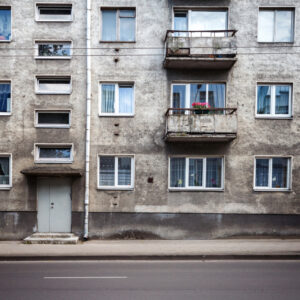
After many years of war and an economy strained by the “Special Military Operation” in Ukraine, it seems the bloodletting is not only in the muddy meat grinder fields of Ukraine but also in the everyday lives of Russians. The middle class is disappearing, as they are absorbed into the lower classes. The uber-rich, of course, are shielded by the economic downturn, but even they are feeling some of the effects of the prolonged war on Russia.
General prices in supermarkets, for example, are now reaching the levels of Europe but are still not as high as in the UK, which has the worst cost of living and food inflation anywhere. The difference from Russia is that the average wages are lower than in the UK or Europe.
Life in rural Russia is forgotten by the Russian state, and people are left to survive with little or no resources.
The Ukraine war seems to be grinding down Russia, not only on the battlefield but also their entire nation economically. Between 400,000 and 1.5 million estimated casualties (killed and wounded) during the Russian invasion of Ukraine from 24 February 2022 to November 2025.
The ongoing war is slowly wearing down Russia so that it may eventually collapse completely if it continues its aggression against Ukraine or any other nation.
Drip-feeding death upon a regime that revels in brutality and savagery is a cold hard medicine it will be forced to swallow.
The Russian Wartime Squeeze
Nearly four years into the war in Ukraine, the Russian economy presents a picture of resilience on the surface but mounting strain underneath.
Official forecasts from the Central Bank of Russia project that gross domestic product will expand by only around 0.5 to 1.5 per cent in 2026, a marked slowdown from earlier wartime performance and well below what would be required to boost living standards meaningfully.
The central bank’s key interest rate remains elevated; in February 2026 it was cut to 15.5 per cent from a higher level but still reflects persistent inflationary pressure.
Military expenditure continues to absorb an unusually large share of federal revenue. Intelligence assessments suggest that hundreds of billions of US dollars have been channelled into the conflict in Ukraine, with a substantial portion of this spending hidden in classified budget lines. To sustain military commitments, the Russian government has raised value-added tax from 20 per cent to 22 per cent, increasing the tax burden on consumers and businesses alike.
The video below mirrors the current sentiment amongst ordinary Russians — one of hopelessness and delusion. Millions of Russians are living under delusion after years of state propaganda, gaslighting and blatant lies.
Now, they are slowly waking up to the reality of the situation, especially after they have effectively been priced out of basic foodstuffs in supermarkets.
“By the end of the year, we’re going to be completely f*cked – we’ll crash hard.”
Russian “Z-blogger” Golman said Russians are unwilling to help participants in the so-called “special military operation,” businesses are shutting down, and volunteers can’t even raise money for… pic.twitter.com/6WAYaDRSLI
— Anton Gerashchenko (@Gerashchenko_en) February 17, 2026
Inflation remains a significant concern for ordinary Russians. Official figures show annual inflation in the mid-single digits, around five to six per cent, but many residents feel price increases far more acutely in everyday purchases.
Basic food prices have jumped sharply in recent months, with the cost of some vegetables more than doubling in parts of the country, turning humble items such as cucumbers into symbols of rising living costs.
Utility bills and fuel prices have also climbed, and for many households real wages have failed to keep pace with these increases, eroding purchasing power.
Labour Market
The labour market appears superficially robust, with unemployment remaining low compared with Western economies, but this masks deeper distortions.
Forced mobilisation and demographic decline have reduced the available workforce, creating labour shortages in many civilian industries.
Young and skilled workers have emigrated in significant numbers, and firms outside the defence sector report difficulties in recruiting and retaining qualified staff.
High borrowing costs and limited access to Western financing and technology, a direct result of sustained economic sanctions, have constrained corporate investment and productivity growth.
Oil and Gas
Russia’s reliance on energy exports continues to underpin state revenue, particularly through redirected trade with Asian partners. However, dependency on oil and gas leaves the economy exposed to fluctuations in global commodity prices and uneven demand.
🛳️🛢️ Around 150 million barrels of Russian oil are already sitting on tankers at sea, unable to find a buyer. The collapse was caused by a dramatic decline in exports.
Also, oil reserves currently stored in Russia have reached approximately 16 million barrels. These 160-170… pic.twitter.com/JuWQxQsCAm
— Dzis Maksym (@DzisMaksym) February 17, 2026
Sanctions
At the same time, sanctions have cut off major Western markets and technology transfers, slowing modernisation in key industrial sectors.
For ordinary Russians, the economic impact of the war is felt not as a dramatic collapse but as a persistent squeeze on living standards.
Households are contending with higher taxes, elevated inflation, and the rising cost of essentials, while opportunities for advancement in the private sector remain limited.
Although the state has so far averted systemic economic instability, it has done so by prioritising military expenditure and accepting slower growth in civilian sectors.
Russia’s wartime economy has proved more durable than many predicted at the outset of the conflict in 2022…yet durability is not the same as prosperity.
With GDP growth barely above one percent, inflation running at five to six percent, interest rates at 15.5 percent, and the fiscal weight of the war continuing to rise, the trade-off between sustaining the conflict and maintaining economic well-being for the broader population becomes increasingly pronounced.
We leave you with the words of the Russian Z-blogger who usually touts the Russian situation in a falsely positive manner, mirroring the lies from the Kremlin. This time he seems to be speaking the truth: “By the end of the year, we’re going to be completely fucked.”




STOP SPREADING DISINFO
Russian economy is better than UK or USA.
RUSSIA DOES NOT NEED YOU OR ANYONE.
Do not underestimate the Russians who are very resourceful whatever the situation. Look what they did to the Nazis in WW2.