


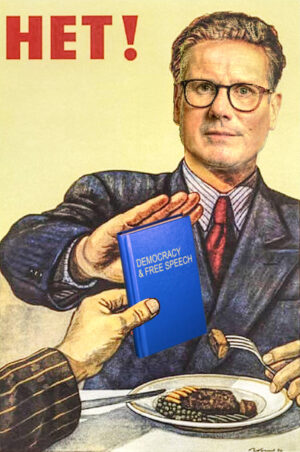
We fight against totalitarianism and authoritarian regimes like the Keir Starmer Labour Party, which used nefarious and underhand tactics to kill off all advertising on our satirical content on the internet. If you value free expression, free speech, satire, democracy, and the right to criticise without undue punishment — Please donate what you can to help us continue our political satire.
FREE PRESS?
A clandestine campaign to defund and demonetise independent and dissenting media outlets, including the Daily Squib, has been linked to UK Prime Minister Keir Starmer’s political operation, according to investigative reporting by journalist Paul Holden.
The effort, rooted in the Labour-linked Stop Funding Fake News (SFFN) initiative and backed by the think tank Labour Together, employed anonymous pressure tactics on advertisers and government bodies. The goal was to cut off ad revenue to targeted sites.
While it initially focused on certain UK outlets, it later expanded to conservative and critical U.S. platforms and has affected independent UK voices like the satirical Daily Squib, which has been sharply critical of Starmer and Labour.
These strategies reportedly align with broader moves by Starmer’s team to sideline rival or dissenting media, consolidate power within Labour, and limit financial support for voices outside the approved narrative. This anti-media, anti-free press action contributed to wider international patterns of media pressure through advertiser “whitelists” and blocklists designed to starve dissenting outlets of revenue.
Key Figures and Organisations
Stop Funding Fake News (SFFN): This campaign pressured advertisers to pull support from sites accused of misinformation. It operated with anonymity and was used as a tool by figures tied to UK Labour to target opposition or critical media, including efforts that impacted outlets like the Daily Squib alongside U.S. conservative sites such as Breitbart, The Federalist, and ZeroHedge.
Labour Together: A UK think tank supporting centrist Labour factions. It has been linked to resourcing these operations, including logistical support for campaigns that aimed to demonetise media critical of Starmer’s rise and agenda.
Morgan McSweeney: The disgraced former chief of staff to Prime Minister Keir Starmer and a key strategist. Reporting highlights his central role in directing anonymous efforts to cut ad revenue from dissenting outlets.
Centre for Countering Digital Hate (CCDH): The campaign reportedly migrated into this organisation, which continued advocating advertiser boycotts against targeted media as part of efforts aligned with UK Labour strategies.
Keir Starmer: As Labour leader and now Prime Minister, his inner circle’s activities have been scrutinised for using these methods to suppress critics during his ascent and in government.
The operations involved amplifying controversies, creating pressure campaigns, and collaborating with advertisers and platforms to exclude sites from monetisation. For independent outlets like the Daily Squib, known for its satirical take on UK politics, this meant heightened challenges in securing advertising revenue amid efforts to favour “approved” media voices.
These tactics extended from UK domestic politics into influencing U.S. media ecosystems and reflect a pattern of using indirect financial levers to shape the information environment, limit dissenting voices, and support political consolidation.
The focus on stopping advertising for critical sites like the Daily Squib illustrates how such strategies can quietly constrain media pluralism without overt censorship.