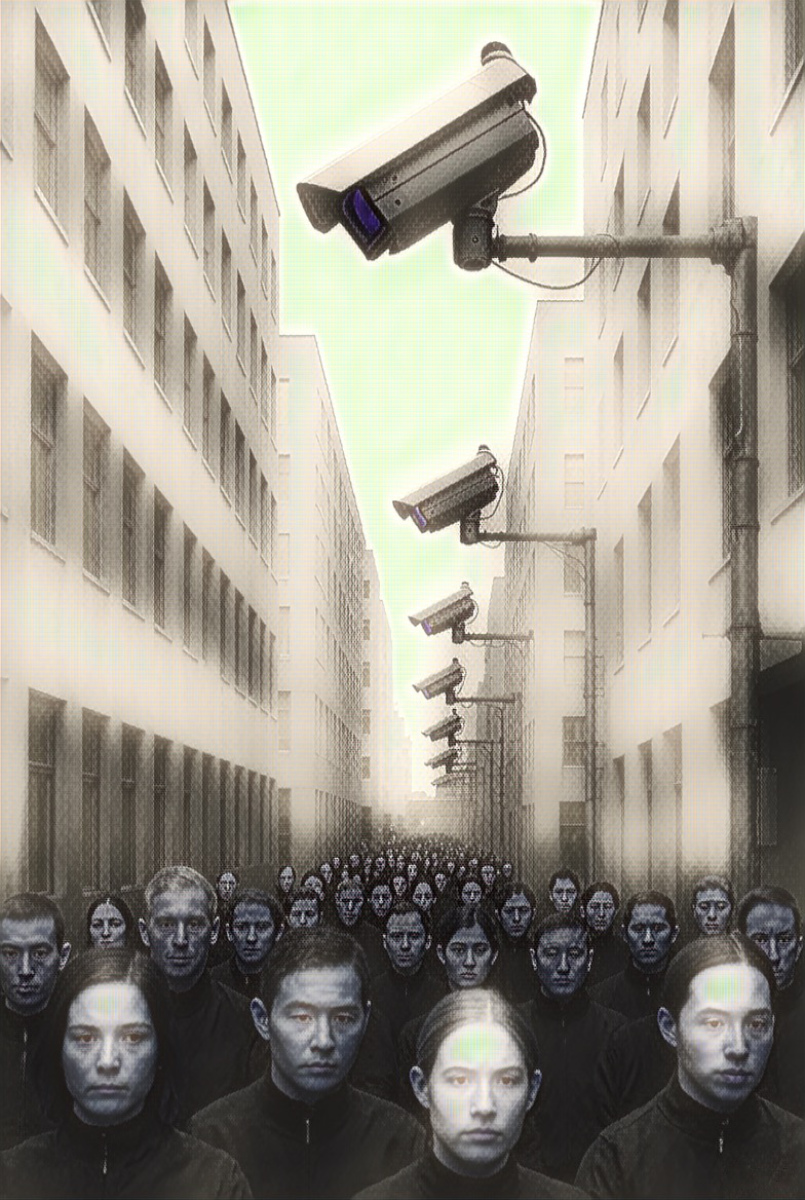
LONDON - England - Before Britons knew it, they were living under a tyranny of algorithmic communist collectivism.
By the end, no decree was needed. The algorithmic communist collectivism system simply became unavoidable.
What emerged in Britain during the late 2020s was not tyranny in the classical sense. There were no tanks on Whitehall, no midnight knocks at the door. Instead, control arrived politely, incrementally, wrapped in the language of fairness, sustainability, and social responsibility. By the time most citizens realised what had been lost, it had already been normalised. The cancellation of elections was another clue to the onward march of rule by decree, but was wholly ignored by citizens and the soon-to-be outlawed political opposition.
This was not the rebirth of the Soviet Union. It was something more efficient, yet ominous.
The End of the Individual Balance Sheet
The first principle to fall was private wealth as a legitimate personal objective.
Savings were quietly reframed as a social inefficiency. In a low-growth, high-debt Labour economy, surplus personal capital was described as “idle”, “unproductive”, even “antisocial”. Cash holdings above approved thresholds attracted escalating penalties. Wealth was no longer owned; it was temporarily tolerated.
Redistribution ceased to be a moral debate and became an automated function. Excess funds were redirected into state-managed social instruments, welfare stabilisation pools, or “national resilience bonds”. Opting out was technically possible, in the same way opting out of taxation once was, legally implausible and socially suspect.
The message was clear: no one needs more than the system decides.
Travel as a Privilege, Not a Right
Freedom of movement followed.
Under Net Zero climate compliance frameworks aligned with European standards, personal carbon budgets were integrated into Digital ID profiles. Travel mileage caps were introduced not as bans, but as allocations. You could still travel; until you couldn’t.
Flights were rationed. Long-distance travel required justification. Private vehicle usage became economically prohibitive beyond approved thresholds. It started with the prohibitive and punitive Pay-Per-Mile Scheme rolled out for EV cars, which essentially killed off the electric vehicle industry in one fell swoop. No one wanted an EV, let alone to travel in one and pay a “Poll-Tax-on-Wheels”. Rail passes were also dynamically priced according to behavioural scores.
Movement was no longer about desire or opportunity. It was about permission.
The old concept of spontaneous travel, of leaving simply because you wished to, was dismissed as an outdated luxury of a reckless age.
The Abolition of Private Property Without Saying So
Private property was never formally abolished. It simply withered.
Homeownership declined year after year, squeezed by credit restrictions, punitive taxation, and planning systems that favoured institutional landlords. Lenin was right when he said: “The way to crush the bourgeoisie is to grind them between the millstones of taxation and inflation.” Renting was rebranded as secure, flexible living. Ownership was portrayed as inefficient, exclusionary, and environmentally irresponsible.
Assets beyond personal effects became liabilities. Land, equity, businesses, anything that could generate independent leverage, was brought under regulatory supervision.
The citizen did not own property.
The citizen occupied it, provisionally.
Speech Without Consequence. Until There Was Consequence
Freedom of expression survived longest, but in hollowed form.
Speech remained “free” provided it aligned with approved narratives. Dissent was not outlawed; it was de-ranked, deplatformed, and delegitimised. Algorithms ensured that non-compliant un-woke views simply failed to circulate.
Digital IDs tied identity to speech. Anonymity became synonymous with subversion. Social penalties replaced legal ones: loss of access, reduced privileges, enhanced scrutiny.
People learned quickly that silence was safer than scepticism.
The state did not need censorship.
The system trained citizens to self-censor.
The New Relationship with Europe
Reintegration with the European regulatory sphere and Customs Union completed the architecture.
Britain re-entered alignment quietly, first on data standards, then climate enforcement, then labour mobility controls. Sovereignty was not surrendered in a single moment; it was dissolved into compliance.
Policy was no longer debated nationally. It was implemented administratively, justified by international obligation. Democratic choice became symbolic, confined to managing outcomes already decided elsewhere.
Welfare as the Ultimate Justification
Every restriction had a rationale.
Every loss of freedom had a beneficiary.
The welfare state expanded dramatically, funded by redistributed wealth and behavioural compliance. Insecurity was reduced, at the cost of autonomy. Stability was achieved by eliminating deviation.
The citizen was promised protection from risk, hardship, and inequality. In exchange, the citizen surrendered ambition, independence, and dissent.
It was not oppression.
It was management.
Compliance as Currency: The Social Credit Turn
Access to life’s essentials became conditional. A reduced score meant restricted travel mileage, slower NHS referrals, exclusion from certain educational opportunities, higher insurance premiums, and diminished eligibility for housing or employment. There were no trials, no appeals in any meaningful sense, only recalibration periods and mandatory “civic responsibility programmes.” Obedience was no longer ideological; it was logistical. Citizens complied not because they believed, but because resistance carried immediate, tangible costs.
The Internalisation of Control
Over time, enforcement became unnecessary. Citizens learned out of perpetual fear to anticipate the system’s response and adjusted their behaviour accordingly. Parents warned children not to ask the wrong questions at school. Employers screened applicants for compliance stability. Friends distanced themselves from low-scoring individuals to avoid associative penalties. The state no longer needed to intimidate; it merely scored, and society did the rest.
This was the system’s greatest success: control without confrontation. The Party-state did not demand loyalty oaths or public devotion. It required only alignment, measured, tracked, and enforced automatically. Freedom was not revoked in dramatic fashion; it was quietly downgraded, one point at a time, until citizens understood that survival itself depended on staying in favour with the algorithm.
The Disappeared Within the System
Employment became impossible, tenancy agreements voided, bank access restricted, and healthcare reduced to emergency-only intervention.
Travel permissions were revoked entirely. Without the ability to rent, work, insure, or transact, these individuals drifted to the margins of cities, invisible by design. They were not imprisoned; they were simply excluded.
Officially, no one was rendered stateless, yet functionally they had no recognised civic presence.
Death, when it came, was recorded as a statistical outcome rather than a moral failure of the system. The state did not kill them; it merely withdrew the mechanisms required to remain alive. Their passing generated no outrage, only quiet adjustments to the algorithm to prevent recurrence. Proof, officials said, that the model was self-correcting.
A Soft Totalitarian Tyranny
This system did not demand loyalty.
It demanded participation.
Those who complied survived. Those who questioned found themselves constrained not by force, but by friction, slower services, fewer options, diminished access.
In the end, Britain did not become Soviet. It became something more subtle, more sinister, and harder to escape.
A society where nothing is owned, everything is monitored, movement is rationed, speech is conditional, and personal wealth is non-existent.
And because it arrived in increments, most people never noticed the moment when freedom stopped being assumed, and started being granted. The Labour, Green Party and Lib Dem dream had finally become a reality. The tyrannical totalitarian rule of algorithmic communist collectivism.
SAMARRA - Iraq - Appointed real estate agents for Harry and Meghan have been searching…
SUFFOLK - England - A Labour Big State Stasi Commissar officer has labelled all black…
WORMWOOD SCRUBBS - England - A wife beater has thanked the Labour Party for his…
MANCHESTER - England - Unelected Comrade Burn'em is selling hope to the hopeless as he…
DATA CENTRE - Unkown Location - With calls to curb AI and many calling it…
NEW YORK - USA - According to the World Economic Forum's Chief Economics Outlook, the…
This website uses cookies.