


Crash-style games have shifted from niche curiosities to a constant background buzz in gaming circles, and mission uncrossable is one of the clearest examples of how that happened. It arrived with a simple loop, a tongue-in-cheek name that nods to blockbuster cinema, and a surprising amount of style. Together, those elements helped the game grow into a favorite for quick-hit sessions.
Crash mechanics meet action blockbuster pacing
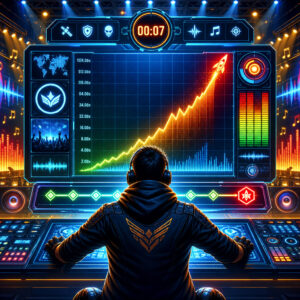
On paper, crash-style gameplay could not be more straightforward. A multiplier climbs in real time and can stop at any point. The whole experience revolves around choosing the moment to bow out before the climb ends. Where mission uncrossable stands out is in how it matches that rising line with the rhythm of an action set piece rather than a bare graph on a blank screen.
From the opening seconds of a round, the pace feels like a countdown before a stunt. The visual language borrows more from movie storyboards than finance charts, and the structure mirrors those classic scenes where the lead character has to cut the right wire or clear the jump before the fuel runs out. That sense of escalation is familiar from film and television, so new players understand the tension almost instantly.
A detailed Mission Uncrossable review will often point out just how carefully that pacing is tuned. The early part of the climb feels generous, the middle moves into nail-biting territory, and the top end turns into pure spectacle. This is crash-style design handled the way an action director would handle a climax, which is a big part of why players talk about “one more round” in the same way they talk about rewatching a favorite chase scene.
Music tension and the countdown rush
Given that much of the site’s audience lives and breathes music, it is worth lingering on what mission uncrossable does with sound. The game leans heavily on rhythmic cues that behave almost like a score. Even when the soundtrack is subtle, there is a musical sense of build and release that makes each round feel like a miniature cue from an action soundtrack.
Producers and composers know that suspense is not only about what the listener hears but when they hear it. In mission uncrossable, the audio design follows the rising multiplier closely. Low-key ambient notes set the scene as the climb begins. As the numbers grow, additional layers slip in, echoing the way a film composer might add percussion or synth lines as a scene approaches its peak. When a round ends, the cut in sound lands as hard as the visual crash.
For music fans, this matters more than it might seem. A well-timed swell in the backing track nudges the brain into feeling like something big is happening, even if the on-screen change is just a smooth line ticking upward. That trick has powered countless movie trailers and score-heavy blockbusters. Mission uncrossable simply borrows that language and applies it to a short-form interactive loop.
Accessible sessions and social conversation
Another factor in the game’s popularity is how easy it is to drop in and out. Rounds are short. There is no sprawling map to learn, no long tutorial to slog through, and no need to remember a complex set of controls. For many people, it fills the same role that a quick rhythm game or match-three level might once have filled. It sits comfortably between songs, before a show, or during a coffee break.
Because sessions are so compact, they lend themselves naturally to sharing clips, reactions, and “you will not believe how high this round went” moments. Social feeds thrive on brief, intense spikes of emotion that can be captured in a few seconds of video. Mission uncrossable is built for exactly that format. Players can highlight a single dramatic climb or a last-second exit and package it as a tiny story with a clear beginning, middle, and end.
Communities soon form around these bite-size highlights. People trade strategies, favorite visual themes, and even custom playlists that they claim match the tempo of their best rounds. That culture mirrors the way fans build headcanon and shared jokes around movies or records. The game becomes more than its mechanics. It turns into a reference point, a shorthand for a particular kind of rush that everyone in the conversation recognizes.
Familiar aesthetics and franchise style branding
The name mission uncrossable is more than a clever title. It taps into decades of iconography around impossible missions, high-tech briefings, and “this message will self-destruct” drama. Without copying any existing property, it conjures up a whole world of daring operations and last-second escapes. That familiarity lowers the barrier to entry. If someone has ever watched a heist montage or a rooftop chase, they instantly understand the vibe.
That aesthetic extends through the interface. Mission layouts feel like they belong on a control-room screen. Countdown moments echo cinematic detonation timers. Even color choices hint at covert-ops tension. This is not an abstract crash chart in bright arcade tones. It is a crash chart that dresses like a third-act infiltration sequence, and that visual story helps players project themselves into the action.
The result is a kind of soft franchise identity. Players talk about “running the mission” rather than simply playing a round. They joke about surviving another operation or pushing further into enemy territory, even though the actual interaction is still just choosing a moment to cash out. That lightweight storytelling layer gives the game more personality than many of its peers.
Legality context and global popularity
In the background of all this, there is the reality that crash-style titles sit inside varied legal frameworks depending on the region. In the United States, for instance, these games fall under the same patchwork of state-by-state rules that affects many interactive wagering formats, which shapes where and how they appear. Yet the overall format has gained a worldwide audience through a mix of licensed platforms, social clips, and streaming exposure.
What is striking is how often players and commentators talk less about technical details and more about feel. They describe how mission uncrossable captures the same kind of anticipation that comes before a beloved movie stunt or an explosive drop in a favorite song. Streamers build entire segments around reading the climb like a sports commentator, complete with catchphrases and improvised sound effects.
For a site steeped in the language of music and pop culture, that crossover is the most interesting part. Mission uncrossable did not succeed only because it was early or because it followed a trend. It resonated because it treated a simple mechanic like a rhythm, matched it to the suspense of an action score, and wrapped the whole thing in imagery that feels instantly familiar. In other words, it behaves less like a bare game and more like a tiny, endlessly looping piece of entertainment culture, which is exactly where today’s audiences like to live.