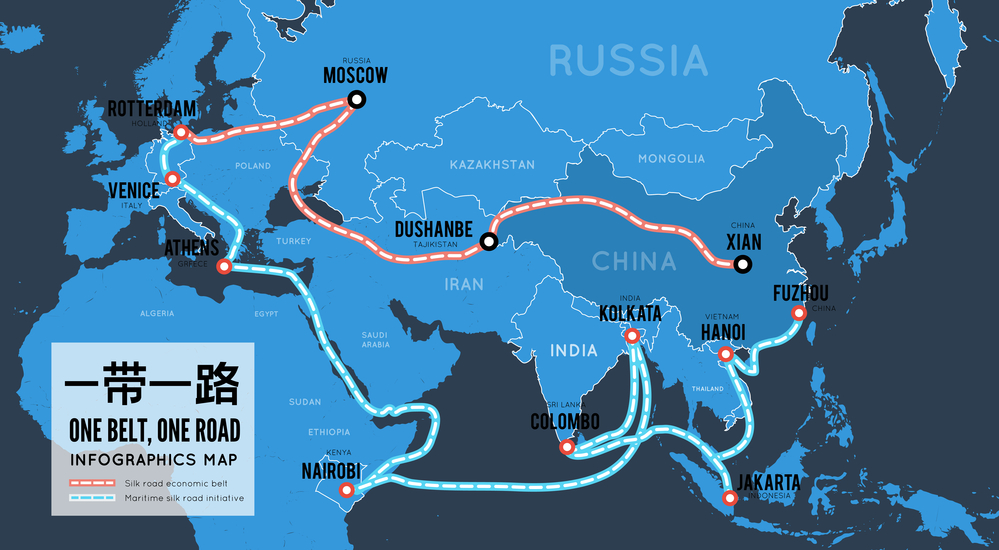
NAIROBI - Kenya - China's PRC "Belt and Road Initiative" BRI is a brutal exploitative mission plundering African natural resources.
The Chinese “Belt and Road Initiative”, launched in 2013, presents itself as a grand vision of infrastructure development and economic cooperation across continents. However, beneath its veneer of mutual benefit lies a complex web of exploitation, particularly evident in its engagement with Africa.
Firstly, the “Belt and Road Initiative” offers loans and investment packages to African countries for the construction of infrastructure projects such as roads, railways, ports, and power plants. While these projects may initially appear beneficial, they often come with strings attached, including high-interest loans, opaque contracts, and a heavy reliance on Chinese companies and labour. This results in a form of debt-trap diplomacy, where African nations become ensnared in unsustainable debt burdens, leading to economic dependency on China.
Secondly, the initiative facilitates resource extraction and exportation from Africa to fuel China’s industrial growth. Chinese investments in African natural resource sectors, such as mining and oil extraction, often prioritize the interests of Chinese companies over local communities and environmental sustainability. This has led to resource exploitation, environmental degradation, and social unrest in many African countries, exacerbating existing inequalities and tensions.
Belt and Road Initiative Forced Labour
Between the macroeconomic ripples of this system is a tragic human cost: forced labour. PRC and host country nationals employed in some BRI construction projects, mining operations, and factories in African, European, Middle Eastern, Asian, Pacific, Latin American, and Caribbean countries experience deceptive recruitment into debt bondage, arbitrary wage garnishing or withholding, contract irregularities, confiscation of travel and identity documentation, forced overtime, and resignation penalties, as well as intimidation and threats, physical violence, denial of access to urgent medical care, poor working and living conditions, restricted freedom of movement and communication, and retaliation for reported abuses. Those who escape often find themselves at the mercy of local immigration authorities, who are not always trained to receive or care for trafficking victims.
Last year, a man from a rural community in the PRC hoping to raise money for his family responded to a recruitment ad for a high-paying steel production job in Indonesia. When he arrived, his employers took his passport, told him he would be paid significantly less than he was promised, and forced him to work hours far beyond the schedule to which he had agreed. Within months, he was sneaking away from his workstation to post surreptitious pictures of himself online with handwritten notes begging for someone to help him get home. His family contacted the local PRC consular services to try and pressure the factory to return his passport, but to no avail. He and four other labourers eventually managed to pool their money to hire a PRC national broker to help them leave the country, but the broker just took their money and brought them to yet another PRC-affiliated industrial park in Indonesia where they toiled for months under similarly abusive conditions. They continued saving money until they could pay a smuggler to take them to Malaysia, but when they reached their destination, the smuggler dumped them in the water off the coast. They had to swim to shore, where they were shot at, arrested, and detained by the local authorities. SOURCE
Furthermore, the “Belt and Road Initiative” promotes Chinese influence and soft power in Africa through strategic investments in sectors such as telecommunications, media, and education. Chinese state-owned enterprises and private companies increasingly dominate key industries in Africa, shaping narratives, influencing decision-making, and fostering dependency on Chinese technology and expertise.
Critics argue that the Chinese approach to investment in Africa lacks transparency, accountability, and adherence to international labour and environmental standards. This raises concerns about governance, corruption, and the long-term socio-economic impacts of Chinese engagement on African development trajectories.
While the Chinese “Belt and Road Initiative” presents itself as a mutually beneficial partnership for infrastructure development and economic growth, its implementation in Africa has raised serious questions about exploitation, debt-trap diplomacy, resource extraction, and the erosion of local sovereignty.
DATA CENTRE - Unkown Location - With calls to curb AI and many calling it…
NEW YORK - USA - According to the World Economic Forum's Chief Economics Outlook, the…
OXFORD - England - New research shows that more than 40% of UK employees may…
MOSCOW - Russia - Four years have passed since the illegal invasion of Ukraine. Russia…
LONDON - England - If you love card games, you're going to love 3 Card…
SCUNTHORPE - England - Say goodbye to the last vestiges of your money as Labour's…
This website uses cookies.